by Plant Circle
Plant Circle investigates: Stephania erecta
Exposed: Every single Stephania erecta on the European market is a poached plant!
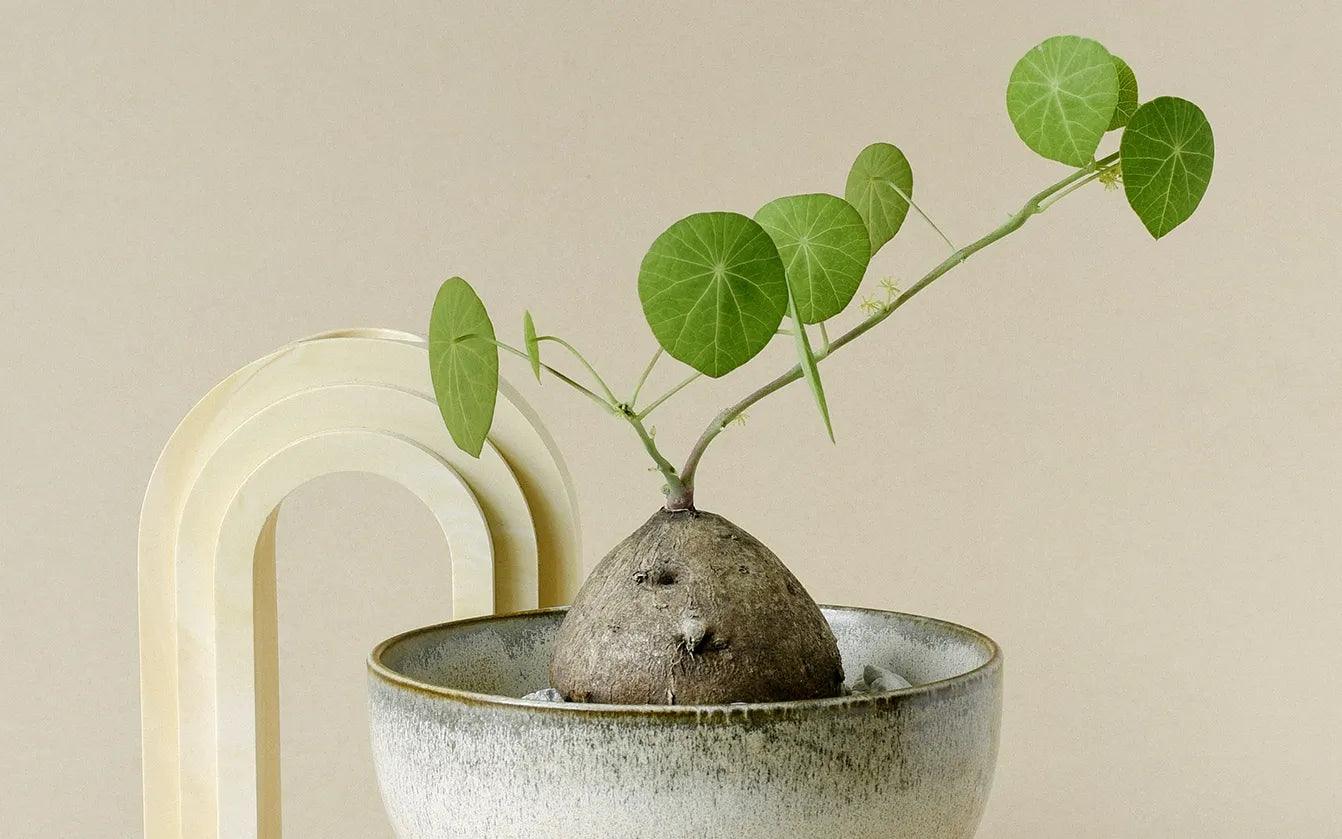
Stephania erecta has been trending in the houseplant community for the past one and a half years. These potato-like, tuberous plants with delicate round leaves have a special aesthetic that appeals to many plant enthusiasts, not only because they make for great pictures on social media, but also because their distinctive look sets them apart from a lot of other houseplants on the market.
The hype around Stephania led wholesalers to source this peculiar plant for the European market and culminated in the sale of probably thousands of them in the last year. However, both experts and sellers now agree that it is most likely all of them were collected from the wild.
“They are probably all poached,” says Rogier van Vugt, Head of Greenhouse at the Botanical Gardens in Leiden, Netherlands
According to him, the wholesalers were “seemingly misled by the Thai sellers who told them all these plants were cultivated. However, one quick glance at the plants makes it clear they are not.”
Plant poaching is the removal of plants from their natural habitat. In the case of Stephania, it is not illegal for the local sellers in Thailand to collect the caudex plants by detaching them from the limestones or digging them out of the forest floor, since they are not endangered. However, the plant community generally deems it unethical to buy or sell plants that have been ripped out of nature, as opposed to having been cultivated professionally at a nursery, mainly due to the detrimental long-term effects poaching can have on the population of certain species.
A lot of the Stephania on the European market come from Dutch wholesaler Ansu. “Last year, we and our Thai partner Suphachadiwong saw that there was demand for rare plants on the market,” says Steef van Adrichem, Commercial Director at Ansu. “We found the caudex family interesting enough to give it a try.” With this move, the company decided not only to bring Stephania erecta to market, but also rarer caudex plants such as Stephania kaweesakii or Impatiens phengklaii, which were sold on to plant shops and consequently to house plant enthusiasts around Europe. “Stephania erecta is kind of a weed in some places,” van Adrichem says, “and it does not harm the environment when you take some out”.Still, van Adrichem acknowledges that the poaching of other caudex plants, which his company imported to Europe, might have had more detrimental effects. “We do not buy Impatiens phengklaii anymore,” he continues. “We also stopped importing Stephania kaweesakii after finding out how they take them from nature.”Ansu now strives to grow their own seedlings instead, in order to ethically cultivate these two rarer species. For this reason, Ansu is collaborating with Rogier van Vugt, who has been conducting research on the cultivation of Stephania and Impatiens.“I’m working on investigating how some of these caudex plants can be propagated by seed,” van Vugt says. “I urged Steef [van Adrichem of Ansu] to ask people in Thailand to do the same.” His experiments have yielded the first results in the form of Stephania erecta and kaweesakii seedlings. “Stephania seeds germinate very easily. It will be interesting to see how fast these will develop a desired caudex size. But I’m sure this will take years.”And therein lies the problem, as Stephania grow very slowly in their natural habitat, which is one of the challenges growers face when trying to cultivate them for profit.
“Many Stephania like the popular S. erecta are lithophytes meaning they grow on rocks or, more specifically, limestone in this case,” says Stefan Burger, an Australian naturalist, habitat guide, and expert on cacti and succulents. “It takes them decades to mature and reach just a few inches in diameter. Under more favourable circumstances, like subtropical climates and nutritious substrates, they can grow quite fast and the caudex may reach a few inches in diameter in only a couple of years,” Burger explains. But the ever-changing houseplant market and drive for new plants often does not allow for such a large timeframe. New, trendy plants need to be saleable as quickly as possible – ideally in a good size and at an accessible price.
“Even though they may grow fast under good circumstances, habitat poaching is the quicker and cheaper alternative for those living near to the native habitats,” says Burger.
While there are no studies on the consequences of Stephania’s rise to popularity and mass poaching so far, it is clear that the harvest of thousands of bulbs in recent years has diminished their population quite a bit.
According to Burger, there is no information on “these specific habitats, but we know that it is obviously having a negative effect“.
While all Stephania were traditionally harvested from habitat, according to Burger, some growers have now begun cultivating them professionally. However, this remains a rare practice. In their home country of Thailand, Stephania suberosa in particular are commonly sold in Asian markets for home decoration and medicinal purposes. A few species of Stephania are toxic, while others are part of the Asian cuisine. The leaves of Stephania japonica, for instance, are commonly used to produce edible green grass jelly in Indonesia.
“It all comes down to whether the Stephania are ethically grown or not,” Burger says. “Plants should only be bought from a CITES-approved nursery for 100% peace of mind.”
The Convention on International Trade in Endangered Species of Wild Fauna and Flora (CITES) regulates the global trade in plants. It categorises endangered plants into three categories, depending on the level of threat they are under. It lists more than 30,000 taxa of plants compared to about 5,000 taxa of animals. Stephanias are not on the CITES list as of now.“Any plants sold via social media direct messages should be treated with suspicion,” Burger says. He strives to educate plant enthusiasts about illegal plant poaching and importing via his Instagram @cactusexplorer_.He also runs cactus exploration tours in South America, where cactus and succulent poaching is of particular concern.
Rogier van Vugt suggests sellers should be more mindful when selling slow-growing caudex plants, such as Stephania. “The plant market should at least stop advertising these plants as a funny, disposable, cheap plant,“ he says.“This way people will have to think a bit more before they buy one. This will limit the demand in numbers, yet can still supply the people in Thailand with an income. Logically, this can only be done with common species.”
Thanks to everyone who generously gave us their time and expertise, so we could put together this article, and to Plant Circle’s Sarah for doing the investigating.If you are one of the people who have been wondering why we haven’t restocked Stephania erecta in ages, now you know that as soon as the reality of where these plants come from came to our attention we stopped selling them in our shop immediately. It is our hope that other plant sellers who haven’t already will consider following suit.If an ethically grown Stephania erecta enters the market we look forward to offering it in our shop again. But until then, let’s be mindful of where our house plants come from and remember that no plant collection or home aesthetic is worth damaging a plant’s natural habitat.