


The Collector's Guide to Peat-Free Potting Mixes for Rare Houseplants
The substrate question is where most European houseplant collections succeed or fail. Not watering frequency. Not fertiliser brand. Substrate. The bag of potting mix from the local Baumarkt or garden centre — formulated for tomatoes and bedding plants — is the single most common cause of root rot, corm rot, and slow decline in rare aroids, velvet-leaf anthuriums, and jewel alocasias. This guide replaces generic advice with genus-specific, peat-free mineral substrate recipes calibrated for European indoor conditions: central heating, low winter light, and the humidity challenges of German, Dutch, French, and British apartments.
Why Peat-Free Mineral Substrates Outperform Standard Potting Soil for Rare Houseplants
Standard potting soils — even premium brands — share a structural problem: they are designed to retain moisture for plants with high, consistent water demand. Rare tropical aroids are not those plants. In their native habitats (the cloud forests of Colombia, the volcanic understory of Sumatra, the rainforests of Borneo), these species grow epiphytically or hemiepiphytically — their roots are exposed to air, rapid drainage, and alternating wet-dry cycles, not sustained moisture.
In a European home, standard potting soil creates three compounding problems:
- Compaction: Peat and fine coir compress within 6–12 months, eliminating the macro-pore structure that delivers oxygen to the root zone. Roots suffocate.
- Anaerobic conditions: Waterlogged, compacted substrate becomes oxygen-depleted. Anaerobic bacteria and Pythium/Phytophthora pathogens proliferate — the direct cause of corm rot and root rot.
- Winter mismatch: Reduced evapotranspiration in low-light European winters (October–March) means substrate stays wet 2–3× longer than in summer. A mix that drains adequately in July can be lethal in January.
A peat-free mineral substrate — built from orchid bark, perlite, pumice, sphagnum moss, and activated charcoal — solves all three problems. It drains rapidly, maintains macro-porosity for 18–30 months, and dries evenly from surface to root zone, giving you an accurate read on when to water.
The Building Blocks: What Each Component Does
Coarse Orchid Bark (10–20 mm)
The structural backbone. Creates the large air pockets (macro-pores) that oxygenate the root zone between waterings. Breaks down slowly — 18–36 months — and maintains a slightly acidic pH (5.5–6.5) suitable for most tropical aroids. Always use coarse grade. Fine bark compacts within months and behaves like soil.
Coarse Perlite (3–6 mm)
Expanded volcanic glass. Inert, pH-neutral, and permanent — it does not decompose. Provides drainage channels and physical separation between organic components. The workhorse of any mineral aroid mix. Widely available across the EU; ensure you source coarse grade (3–6 mm), not the fine grade sold for seed starting.
Pumice (2–5 mm)
A superior complement or alternative to perlite. Higher cation exchange capacity (CEC) means it retains and releases nutrients more effectively than inert perlite. Heavier, providing better pot stability for large specimens. Sold as Bims in Germany and puimsteen in the Netherlands. Particularly valuable for mature Anthurium and Philodendron with extensive root systems.
Long-Fibre Sphagnum Moss (Grade AAA)
The moisture buffer. Retains water while maintaining its fibrous structure, creating a humid micro-environment around fine roots without waterlogging. Naturally antimicrobial and slightly acidic (pH 3.5–4.5). Use sparingly for rot-prone genera — no more than 10–15% for Alocasia and Caladium. Source from CITES-compliant suppliers (New Zealand or Chilean origin).
Coco Husk Chips (10–20 mm)
A peat-free, sustainable structural component with moderate moisture retention. Breaks down more slowly than fine coir and provides similar function to orchid bark with slightly higher water-holding capacity. Ideal for genera that prefer consistently moist conditions: Monstera, Rhaphidophora, Epipremnum.
Horticultural Activated Charcoal
Suppresses anaerobic bacterial growth, neutralises metabolic waste in the root zone, and reduces odour in enclosed growing environments. Use at 5–10% by volume. A supplementary component — not a substitute for correct drainage architecture.
Genus-Specific Peat-Free Substrate Recipes
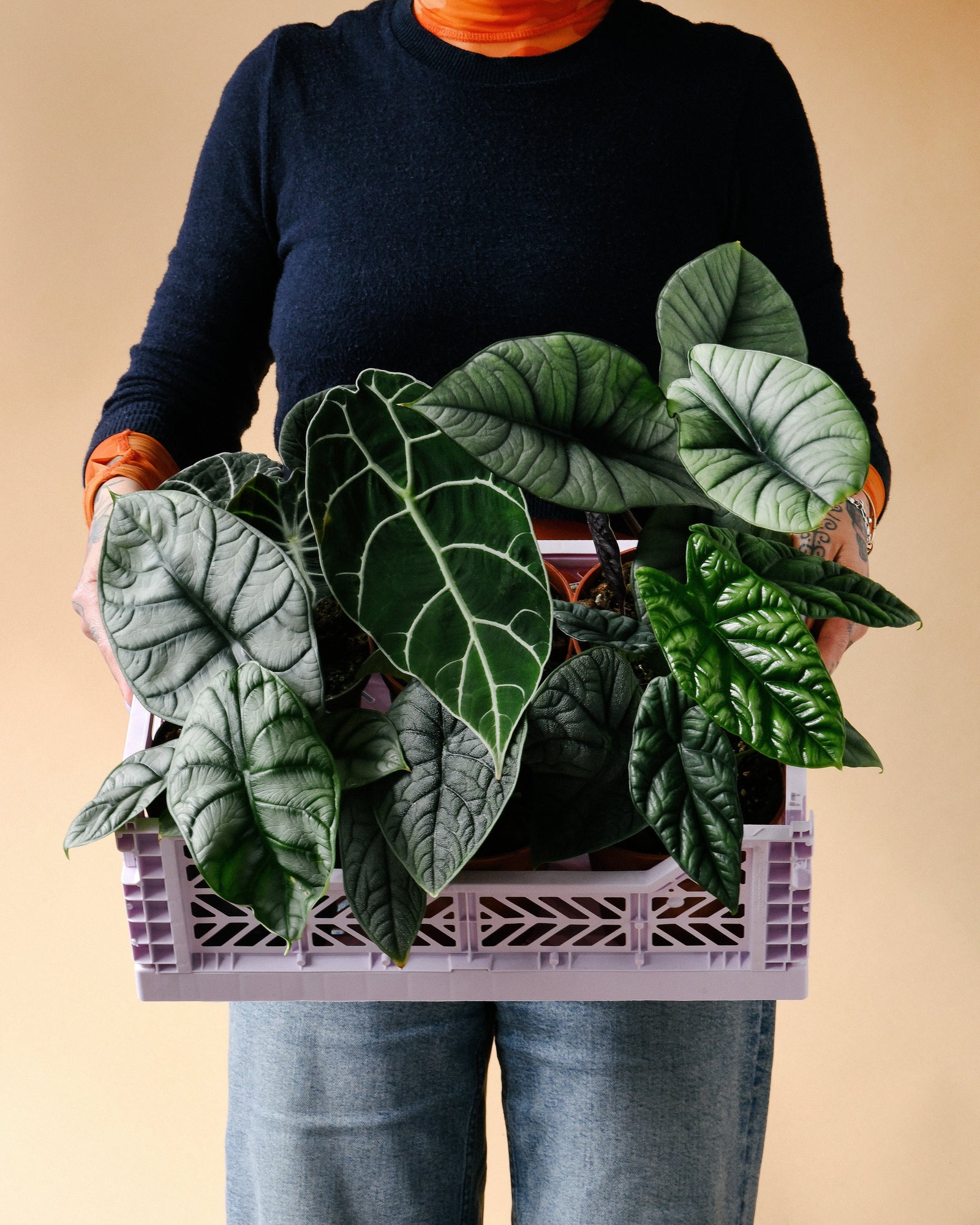
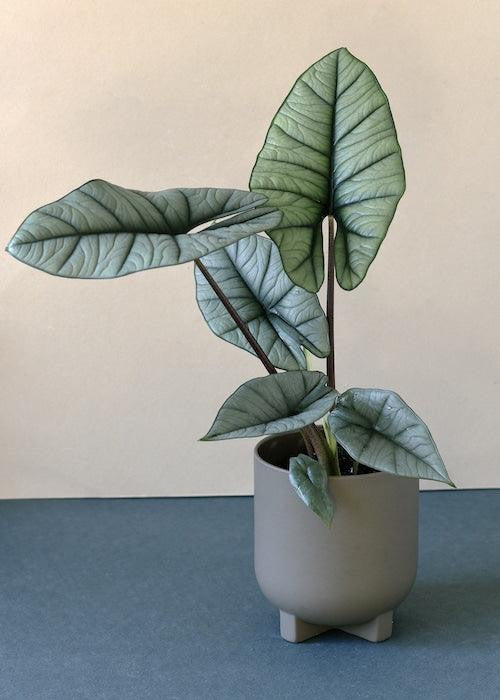
Alocasia (Jewel Species: Silver Nebula, Dragon Scale, Jacklyn, Frydek)
The most substrate-sensitive genus in common cultivation. Corm rot is the primary cause of loss — almost always substrate-induced. The corm must never sit in saturated substrate.
- 30% coarse orchid bark (15–20 mm)
- 30% coarse perlite (3–6 mm)
- 20% coco husk chips
- 10% long-fibre sphagnum moss
- 10% horticultural activated charcoal
Winter adaptation (Oct–Mar): Reduce sphagnum to 5%, increase perlite to 35% to compensate for reduced evapotranspiration in low-light European conditions.
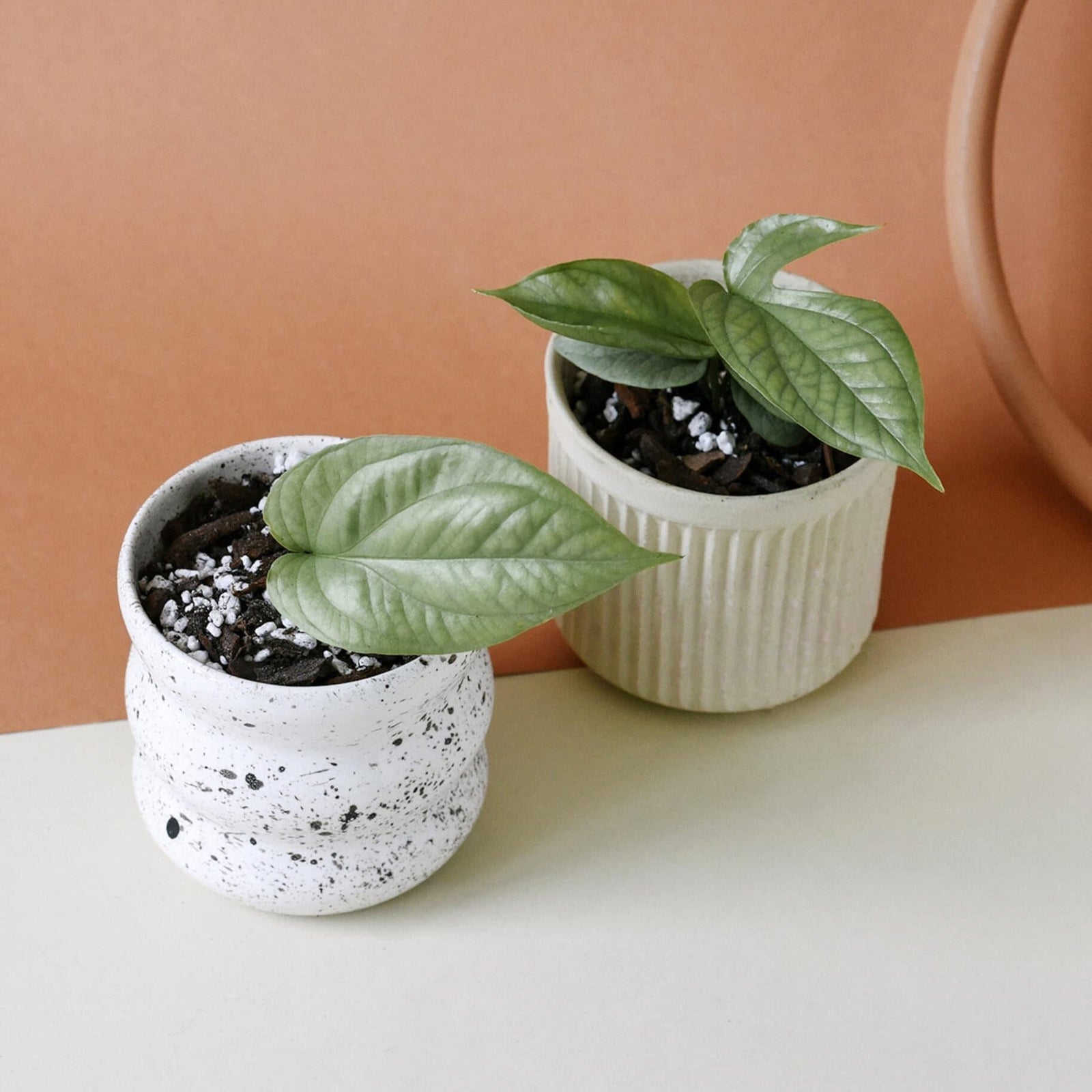
→ See our Alocasia Silver Nebula Baby and the full Rare Houseplants collection. Further reading: Alocasia care guide for European collectors.
Anthurium (Velvet-Leaf: Warocqueanum, Crystallinum, Magnificum, Clarinervium)
Epiphytic by nature. Requires exceptional drainage with consistent moisture at the fine root level. Less corm-rot prone than Alocasia but highly susceptible to root hypoxia in compacted substrate. Pumice is preferred over perlite for mature specimens.
- 35% coarse orchid bark
- 25% pumice (2–5 mm)
- 20% coco husk chips
- 10% long-fibre sphagnum moss
- 10% horticultural activated charcoal
→ See our Anthurium collection, including the Anthurium Warocqueanum (Queen Anthurium) XL.
Philodendron (Hemiepiphytic Climbers: Splendid, Gloriosum, Melanochrysum, Verrucosum)
Tolerates slightly more moisture retention than Anthurium or Alocasia. Climbing species benefit from a moss pole integrated into the substrate setup — roots will colonise the pole, reducing dependence on the pot substrate for moisture.
- 40% orchid bark (10–20 mm)
- 20% coarse perlite
- 20% coco husk chips
- 10% long-fibre sphagnum moss
- 10% activated charcoal
→ See the Philodendron Splendid L and our rare Philodendron selection.
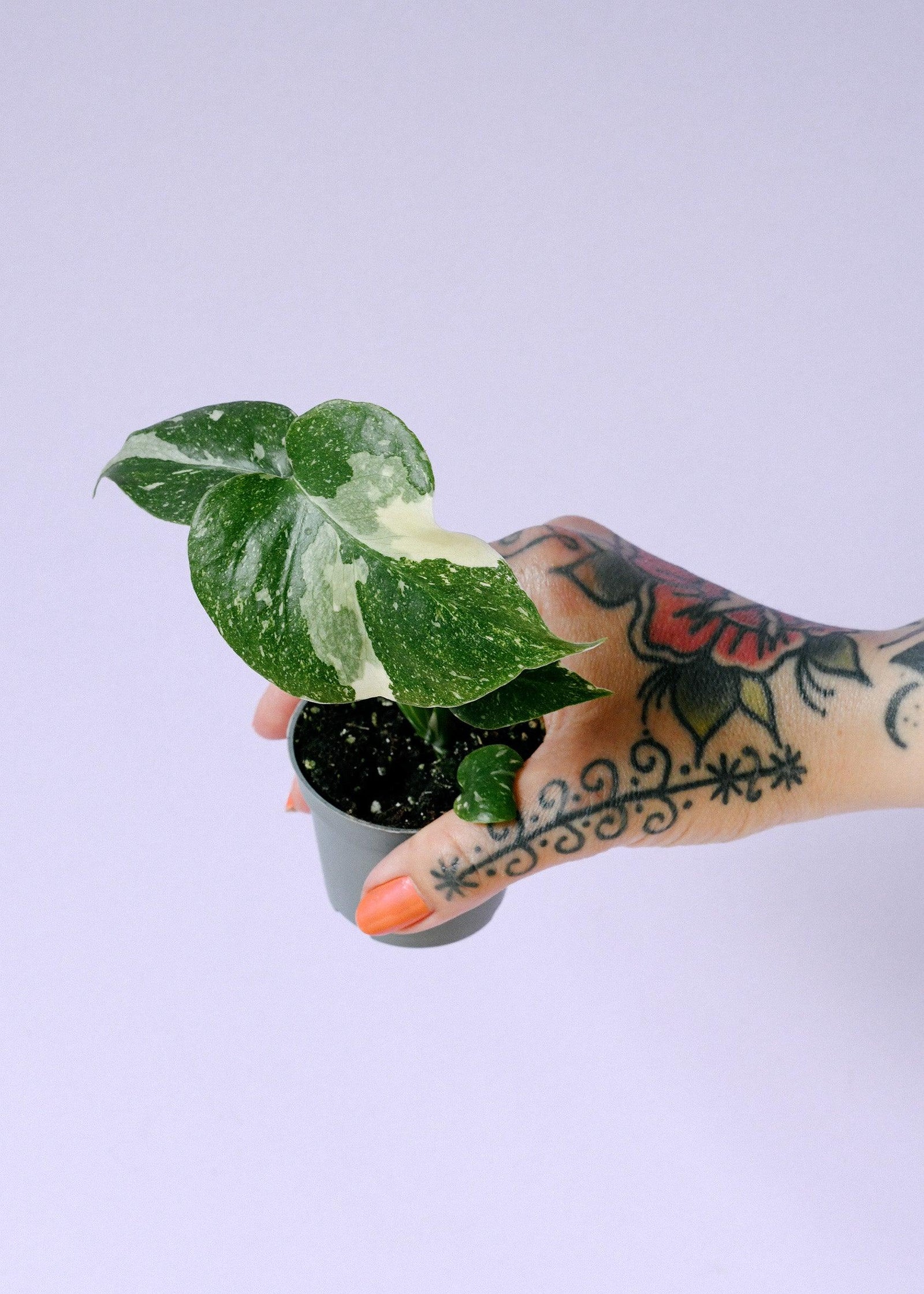
Monstera (Deliciosa, Albo Variegata, Thai Constellation, Adansonii)
The most forgiving genus for substrate composition. Still benefits significantly from a chunky mix over standard potting soil, but tolerates higher moisture retention than velvet-leaf aroids. A 50/50 blend of orchid bark and standard potting soil is a viable entry point for collectors not yet ready to mix from scratch.
- 35% orchid bark
- 25% coco husk chips
- 20% coarse perlite
- 10% long-fibre sphagnum moss
- 10% activated charcoal
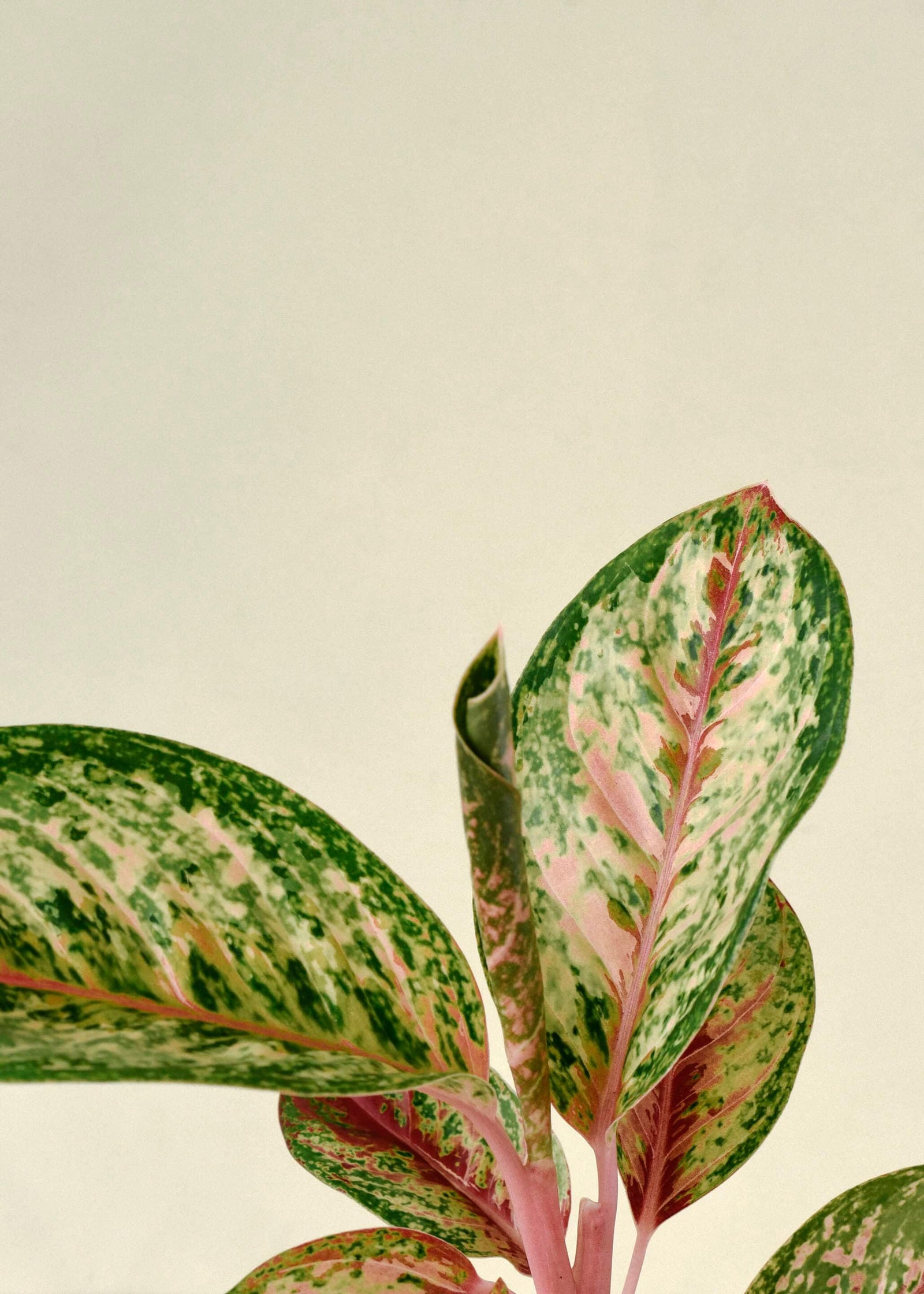
Aglaonema (Pictum Tricolor, Silver Queen, Silver Bay)
Prefers a slightly more moisture-retentive mix than most aroids, but still requires excellent drainage. A slightly acidic pH (5.5–6.5) supports stable variegation expression in tricolor forms. Avoid sphagnum-heavy mixes — they retain too much moisture for this genus in European winter conditions.
- 40% orchid bark
- 30% coarse perlite
- 20% coco husk chips
- 10% activated charcoal
→ See the Aglaonema Pictum Tricolor Baby and Aglaonema 'Silver Queen' Compact Large.
Seasonal Substrate Management for European Collectors
Summer (April – September): Active Growth Phase
- Higher light and temperature increases evapotranspiration — substrate dries faster, reducing rot risk
- Water when the top 2–3 cm of substrate approaches dryness
- Fertilise every 2 weeks with a balanced liquid fertiliser (NPK 3-1-2) at half-strength
- Optimal repotting window: April–June, when root growth is most active
- Increase sphagnum proportion slightly if running a greenhouse cabinet with active humidification
Winter (October – March): Critical Reduction Phase
- Evapotranspiration drops significantly — substrate stays wet 2–3× longer than in summer
- Extend watering intervals; never water on a fixed schedule in winter
- Test moisture at 5–7 cm depth with a skewer or moisture meter before watering — not at the surface
- Cease fertilisation or reduce to monthly at quarter-strength
- Central heating reduces ambient RH to 30–45% in most German and Dutch apartments — use a calibrated hygrometer and active humidification for sensitive genera
- Do not repot in winter unless treating root or corm rot — disturbing roots in low-light conditions delays recovery significantly
Plant Circle Substrate Products
All substrate components referenced in this guide are available peat-free. Browse our curated selection of aroid-specific mixes and individual components:
- → Potting Soils & Substrates collection — ready-to-use aroid mixes and individual components
- → Aroid Substrate Guide — our full technical reference for substrate composition by genus
FAQ: Peat-Free Potting Mixes for Rare Houseplants
What is the best peat-free potting mix for rare aroids in Europe?
There is no single universal mix — the optimal composition depends on genus, pot size, growing environment, and season. As a baseline for most aroids, a mix of 35% coarse orchid bark, 25% perlite or pumice, 20% coco husk chips, 10% sphagnum moss, and 10% activated charcoal provides excellent drainage, root-zone oxygenation, and structural stability for 18–24 months. Adjust sphagnum downward for rot-prone genera (Alocasia, Caladium) and upward for moisture-tolerant genera (Monstera, Epipremnum).
Can I mix my own aroid substrate in Germany or the Netherlands?
Yes — all components are available from EU-based suppliers. Orchid bark and perlite are stocked by orchid specialists and some Baumarkt chains (seek coarse grade). Pumice is sold as Bims (DE) or puimsteen (NL) from succulent suppliers. Long-fibre sphagnum is available from specialist horticultural retailers — ensure CITES-compliant sourcing (New Zealand or Chilean origin). Activated charcoal is available from aquarium and horticultural suppliers.
How do I know if my potting mix is causing root rot?
Signs of substrate-induced root rot include: yellowing lower leaves that do not respond to watering adjustments, a sour or sulphurous odour from the substrate, roots that appear brown, mushy, or absent when the plant is removed from the pot, and substrate that remains wet at depth 7–10 days after watering. If you observe these signs, remove the plant, trim all affected roots to healthy tissue, treat cut surfaces with activated charcoal or cinnamon powder, and repot into a fresh mineral substrate. Do not reuse the old mix.
How long does a mineral aroid substrate last before it needs replacing?
A well-formulated mineral substrate with coarse orchid bark and pumice or perlite maintains its structure for 18–30 months. Signs that replacement is needed: substrate no longer drains freely within 60 seconds of watering, visible compaction or breakdown of bark particles, salt crust forming on the surface from fertiliser accumulation, or roots circling the base of the pot with no room for expansion. Spring (April–May) is the optimal repotting window for European collectors.
Is perlite or pumice better for aroid potting mixes?
Both are effective drainage and aeration components. Perlite is inert, lightweight, and universally available across the EU — the practical default for most collectors. Pumice has a higher cation exchange capacity (CEC), retaining and releasing nutrients more effectively, and is heavier, providing better pot stability for large specimens. For mature, large-format aroids (Anthurium Warocqueanum XL, Philodendron Gloriosum), a 50/50 pumice/perlite blend is a meaningful upgrade over perlite alone.
Should I use a different potting mix in winter than in summer?
The substrate composition itself does not need to change seasonally, but your watering behaviour must adapt significantly. In winter, reduced light and lower temperatures decrease evapotranspiration, meaning substrate stays wet 2–3× longer than in summer. If you find yourself consistently overwatering in winter despite best intentions, reducing the sphagnum proportion in your mix by 5–10% and increasing perlite accordingly will give you a wider margin for error. Never repot into a new mix in winter unless treating active rot.