


Secure packaging for delicate plants
Small business in Berlin
★★★★★ 4.87 Avg. Review


Aeschynanthus radicans ‘Pink Polka’
Aeschynanthus radicans 'Pink Polka' is a selected cultivar of the lipstick plant noted for its pale‑pink tubular flowers marked with darker polka‑dot spots. A trailing evergreen vine for hanging displays, it has glossy leaves and pendant stems and flowers best when mature in bright, indirect light and higher humidity. Ideal for decorative hanging spots and collectors of patterned blooms, it is generally considered non‑toxic to cats and dogs.
- height Height
- 30 cm
- swap_horiz Pot Size
- 15 cm
- volunteer_activism Care
- Easy
- wb_sunny Light Needs
- Bright indirect light
- water_drop Watering Needs
- Medium
check_circle In Stock
Quick care table
Plant care at a glance
- Botanical name
- Aeschynanthus radicans 'Pink Polka'
- Common name
- lipstick plant, Aeschynanthus 'Pink Polka', Pink Polka (lipstick plant), and Aeschynanthus radicans ‘Pink Polka’
- Difficulty
- Easy
- Light
- Bright indirect light
- Water
- Moderate and Low
- Humidity
- Medium
- Pet safe
- Yes, non-toxic to pets
- Best for
- Indoors and Outdoors
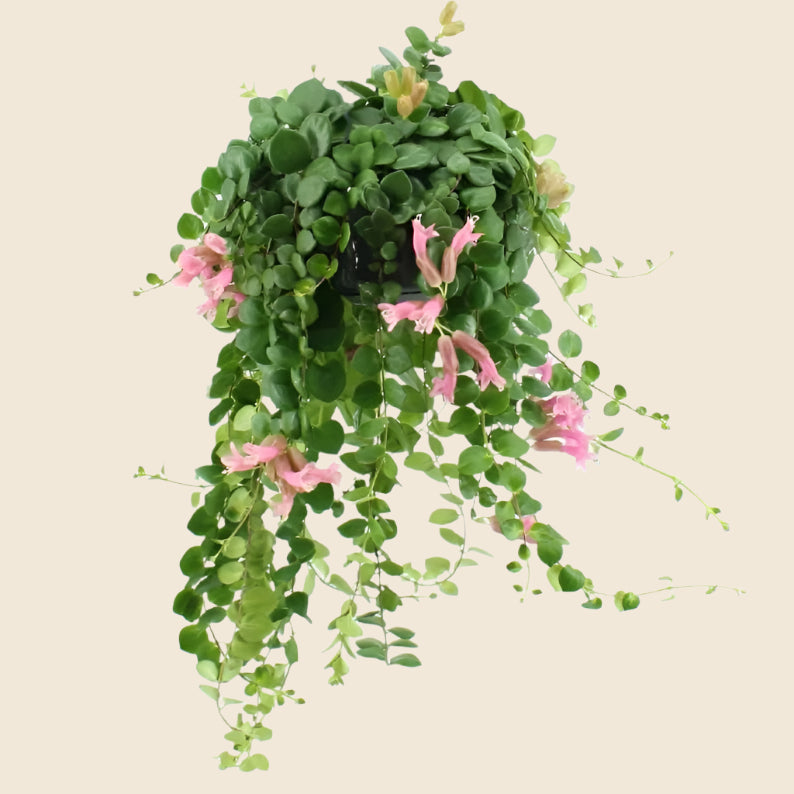
Spotted pale‑pink tubular blooms on a trailing lipstick plant
The defining sight here is the pale‑to‑creamy pink tubular flowers, each dusted with darker pink polka‑dot spotting concentrated toward the tip — the cultivar’s signature novelty. These appear in small terminal clusters above glossy, fleshy, ovate dark‑green leaves and produce a dense, pendant mass of foliage when grown in a hanging display. You’ll notice the narrow corolla shape and the contrast between the spotted blooms and the deep green leaf backdrop.
This is a selected cultivar that develops as a true trailing houseplant: long cascading stems lengthen with age and flower clusters appear on mature, well‑established growth. Pruning back longer stems encourages branching and a fuller trailing habit; newly potted or juvenile plants commonly flower less until they settle and receive steady bright, indirect light.
In everyday ownership expect moderate growth and the usual sensitivities of lipstick plants — they favour bright, filtered light and higher humidity, respond poorly to very low light, and show yellowing with persistent overwatering. One honest trade‑off: the attractive spotted flowers are most reliable on mature, well‑lit specimens, so bloom display may be limited at first.
Best suited to hanging baskets, high shelves or any spot where long stems can spill freely; this trade selection is offered as a medium hanging‑sized plant and makes a decorative flowering option for living rooms, bathrooms or well‑lit bedrooms.
Shipping Information
expand_more
- All orders are subject to a €25 minimum order value requirement
- All orders are hand-picked and shipped from the Netherlands
- Plastic-free materials when possible
- Orders are usually processed in 1-3 working days and shipped via DPD and their international partner carriers
- At times, orders may take up to 7 days to ship
- Orders to Germany Free shipping over €60. Free shipping all other EU countries* at €100 (Except Malta and Cyprus)
- Shipping costs are calculated at checkout based on delivery country:
See our FAQ and Shipping Guarantee for any further Questions!

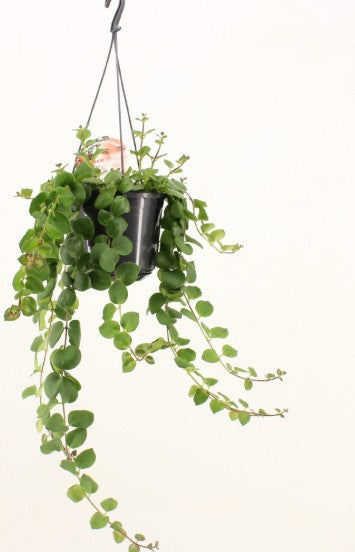
Size: Medium - P15 H30
Plant questions, answered
What makes Aeschynanthus radicans ‘Pink Polka’ different from other lipstick plants?
expand_more
Aeschynanthus radicans ‘Pink Polka’ is defined by its pale‑pink, tubular corollas decorated with darker polka‑dot spotting—this spotted flower pattern is the cultivar’s novel trait. It’s a nursery selection propagated for that decorative bloom pattern rather than a formally registered botanical cultivar. Expect the visual interest to come from the flowers, not the leaves.
Will Aeschynanthus 'Pink Polka' flower indoors, and what encourages blooms?
expand_more
It flowers most reliably on mature, well‑settled plants grown in bright, indirect light. Good light, steady warmth, higher humidity and an airy potting mix encourage terminal clusters of tubular flowers; recently potted or juvenile specimens often produce few or no blooms until established. Patience and a bright spot help.
Are the leaves of 'Pink Polka' actually pink‑speckled as some listings claim?
expand_more
No — the defining polka‑dot feature refers to the corolla (flowers), not the foliage. Aeschynanthus radicans ‘Pink Polka’ typically has glossy, dark green, ovate leaves; some retail descriptions conflate flower spotting with leaf variegation, so don’t expect pink‑speckled leaves.
How should I display and support this trailing plant at home?
expand_more
This trailing epiphytic vine performs best in hanging baskets or raised pots so stems can cascade freely. Use a light, well‑draining, aerated mix and provide bright, indirect light and good air circulation; prune long stems to encourage branching and a fuller pendant display. Higher humidity improves flowering and leaf condition.
Is Aeschynanthus 'Pink Polka' safe around pets?
expand_more
Yes, Aeschynanthus species, including commonly traded lipstick plants, are generally listed as non‑toxic to dogs and cats in common pet‑plant references. That said, individual sensitivities vary and any ingestion can still upset a pet’s stomach, so keep plants where curious animals cannot chew them.
Is 'Pink Polka' a rare collector’s plant?
expand_more
No — while valued by collectors for its spotted pale‑pink flowers, 'Pink Polka' is widely offered by European and UK nurseries and should be considered a common commercial cultivar rather than a genuinely rare taxon. Collectors buy it for its decorative blooms, not scarcity.
Plant care guide
Light
expand_more
Water
expand_more
Soil and repotting
expand_more
Humidity and temperature
expand_more
Feeding
expand_more
Growth and support
expand_more
Common concerns
expand_more
Yellowing leaves often indicate overwatering or poor drainage; wilting stems result from underwatering or very dry air; low light leads to leggy growth and reduced flowering. Note: trade naming can be inconsistent, causing occasional misidentification with other pink Aeschynanthus selections.
Pet safety
expand_more
You might also like
Much better than the first one I got from you
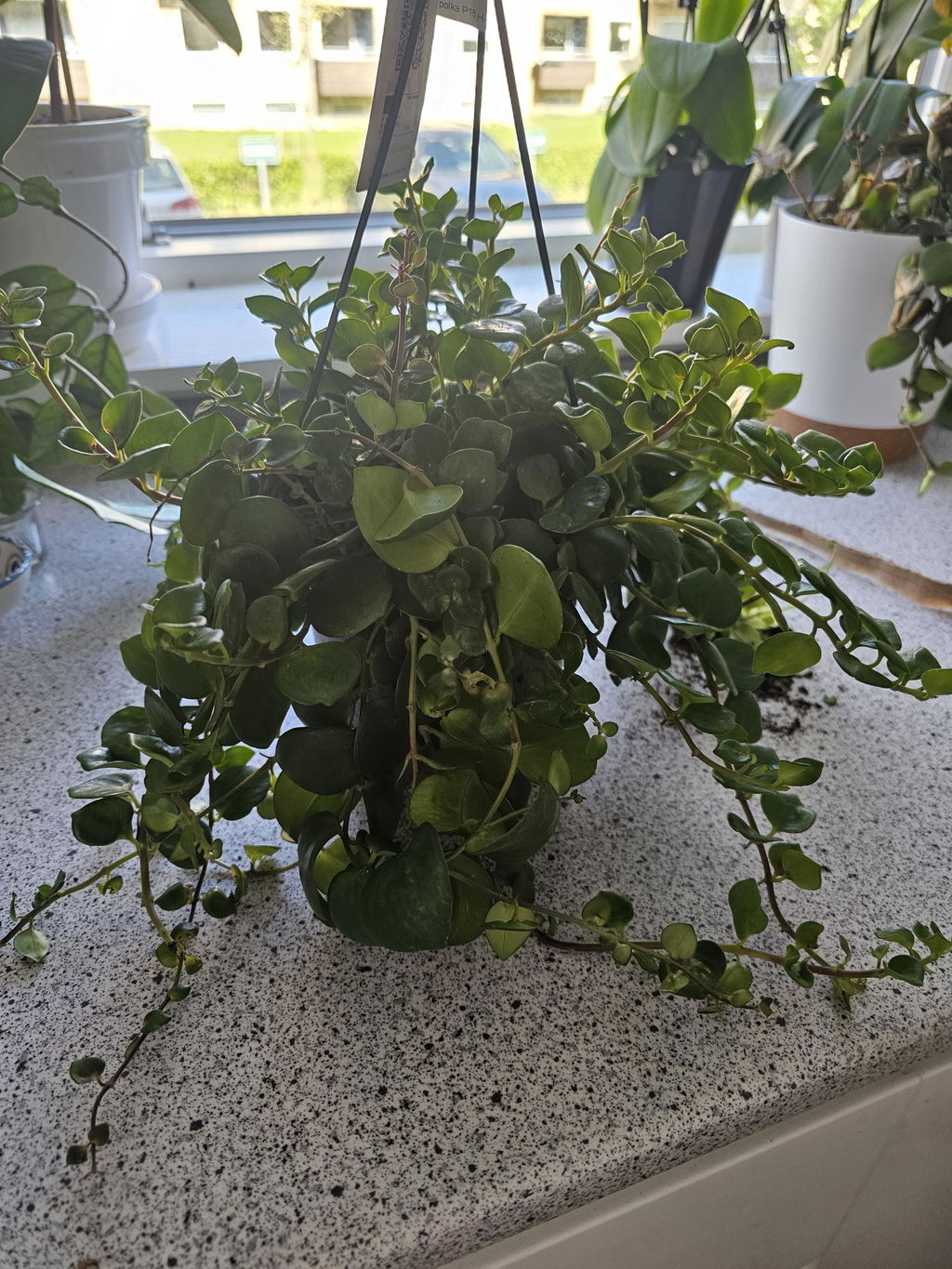
Hi Lis, we're so glad this one arrived better! Enjoy your new Pink Polka :)