

Secure packaging for delicate plants
Small business in Berlin
★★★★★ 4.87 Avg. Review


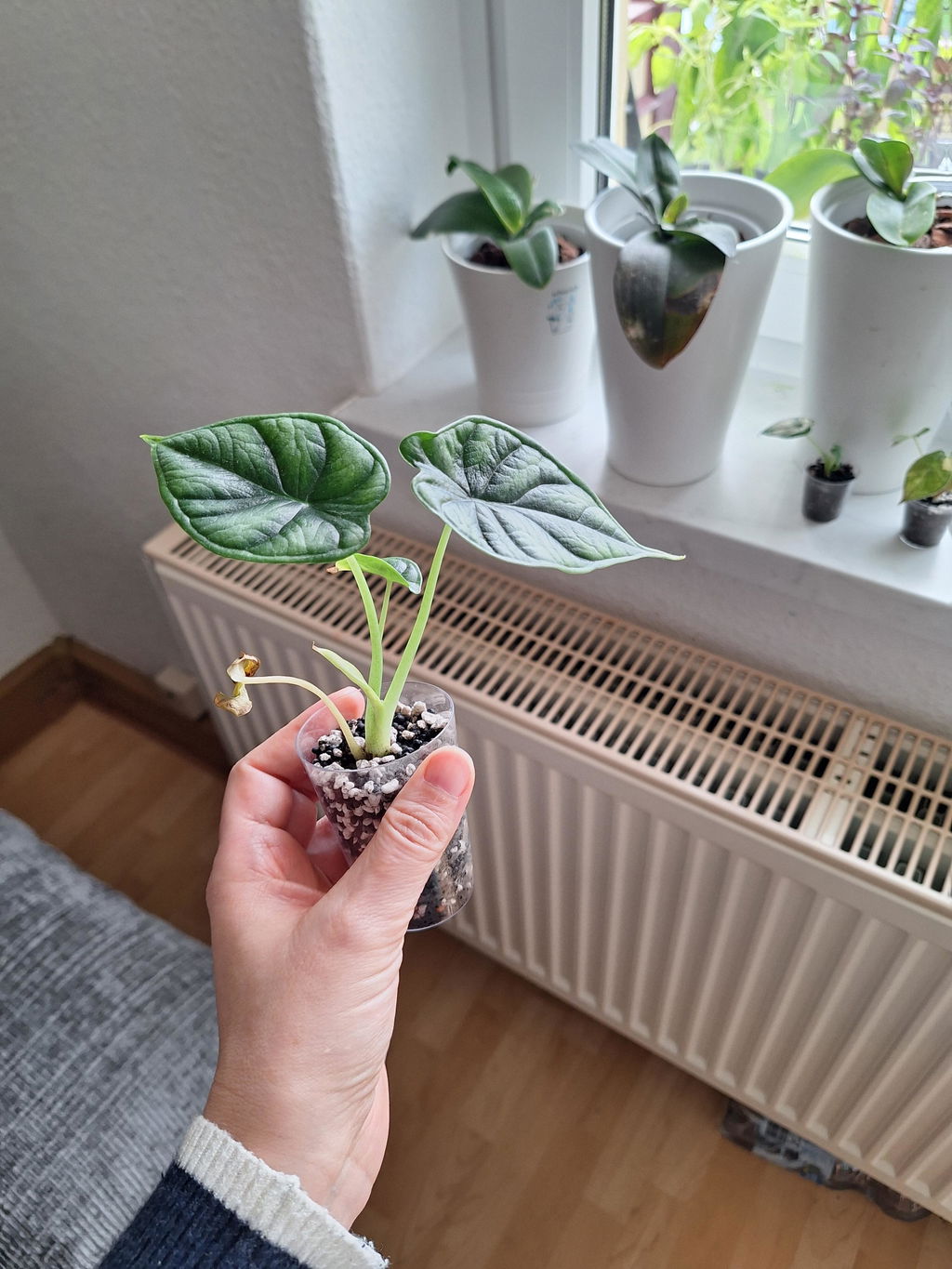
Alocasia baginda 'Dragon Scale'
Alocasia baginda 'Dragon Scale' is a selected jewel‑type Alocasia with a compact, upright habit and pronounced bullate (sculpted) silver‑green leaves framed by dark veins that form a scale‑like texture. It grows from a central crown on shelves or stands and suits buyers wanting a small architectural aroid, but it prefers stable warmth, higher humidity and careful watering and is toxic if ingested — keep away from pets and children.
- height Height
- 12 cm
- swap_horiz Pot Size
- 6 cm
- volunteer_activism Care
- Medium
- wb_sunny Light Needs
- Bright indirect light
- pets Not Pet Friendly
- water_drop Watering Needs
- Medium
check_circle In Stock
Quick care table
Plant care at a glance
- Botanical name
- Alocasia baginda 'Dragon Scale'
- Common name
- Dragon Scale Alocasia, Alocasia 'Dragon Scale', Dragon Scale, and Jewel Alocasia
- Difficulty
- Medium
- Light
- Bright indirect light
- Humidity
- Medium
- Pet safe
- No, toxic if ingested
- Best for
- Indoors, Living room, Bedroom, Bathroom, Kitchen, Hallway, and Office
Pronounced sculpted leaves in a compact jewel Alocasia
Alocasia baginda 'Dragon Scale' has thick, deeply bullate leaves that form a raised, scale‑like surface: silvery‑green to pale‑grey interveinal areas sit between dark, sharply defined veins. The foliage is noticeably coriaceous (leathery) and the plant holds an upright, architectural silhouette that reads strong even at a small size. Compared with Alocasia baginda 'Silver Dragon', this cultivar usually shows greyer‑green bullation and higher vein contrast rather than a paler silvery tone.
Young leaves are often flatter and paler; individual leaves gain more pronounced texture, sheen and vein contrast as they mature. The plant grows from a central crown and forms a compact, upright clump — it does not climb or trail. Growth can slow in darker months, with the most dramatic bullation appearing on mature summer leaves.
Owners should expect slightly higher attention than with very easy houseplants: steady warmth, bright indirect light and moderate‑to‑high humidity bring out the best contrast, while inconsistent watering or prolonged wet soil can cause yellowing or soft stems. Take care where pets or children are present — the plant is toxic if ingested — and be alert for spider mites or thrips in warm, dry conditions.
This Alocasia sits well on a bright shelf, stand or side table with good airflow. Choose the Baby option as a small‑shelf grow‑on to watch texture develop; the Medium gives broader foliage and a fuller display for greater visual impact.
Shipping Information
expand_more
- All orders are subject to a €25 minimum order value requirement
- All orders are hand-picked and shipped from the Netherlands
- Plastic-free materials when possible
- Orders are usually processed in 1-3 working days and shipped via DPD and their international partner carriers
- At times, orders may take up to 7 days to ship
- Orders to Germany Free shipping over €60. Free shipping all other EU countries* at €100 (Except Malta and Cyprus)
- Shipping costs are calculated at checkout based on delivery country:
See our FAQ and Shipping Guarantee for any further Questions!

Size: Baby - P6 H12


Plant questions, answered
What makes Alocasia baginda 'Dragon Scale' different from other Alocasias?
expand_more
Alocasia baginda 'Dragon Scale' is a selected cultivar prized for its pronounced bullate (sculpted) leaf surface: raised, silvery‑green interveinal areas contrast strongly with dark, defined veins. This three‑dimensional, scale‑like texture gives it a compact, architectural look that collectors prize compared with less sculpted baginda forms.
Is Alocasia 'Dragon Scale' difficult to care for?
expand_more
It has moderate care needs and suits attentive owners. Alocasia baginda 'Dragon Scale' prefers bright, indirect light, stable warmth and moderate to high humidity, plus careful watering to avoid waterlogging or drought. Expect slightly higher attention than very easy houseplants, especially in dry or fluctuating indoor conditions.
How will the leaf texture and colour change as my Dragon Scale matures?
expand_more
Leaf texture, sheen and vein/interveinal contrast usually increase as leaves mature. Juvenile leaves on Alocasia baginda 'Dragon Scale' can appear flatter and paler; later leaves develop the deeper bullation and stronger grey/green versus dark vein contrast. Be patient—visual impact typically grows with each mature leaf.
Are variegated Dragon Scale plants common, and can I expect variegation?
expand_more
Variegated (albo or 'mint') selections of Alocasia baginda 'Dragon Scale' exist but are commercially rarer than the standard green/grey cultivar. Variegation is a distinct selection and can be unstable; do not expect variegation unless the listing explicitly states a variegated selection or provenance is provided.
Which size should I choose: Baby (P6 H12) or Medium (P12 H25)?
expand_more
Choose 'Baby' (P6 H12) as a small grow‑on option for a shelf or desk and to watch new leaves develop; choose 'Medium' (P12 H25) for broader foliage and a more immediate, fuller display. Pick based on space and whether you want instant impact or a smaller, developing plant.
Plant care guide
Light
expand_more
Water
expand_more
Soil and repotting
expand_more
Humidity and temperature
expand_more
Feeding
expand_more
Growth and support
expand_more
Common concerns
expand_more
Yellowing or soft stems usually indicate overwatering and possible rot; brown leaf edges often follow dry air or inconsistent watering. Check for spider mites and thrips in warm, dry conditions.
Pet safety
expand_more
You might also like
Stunning plant! Very well wrapped, fast delivery
Plant is beautiful and arrived healthy!! *****
...package could've been better (soil got all over the plants), if you could cap the substrate somehow, so it stays in the pot.
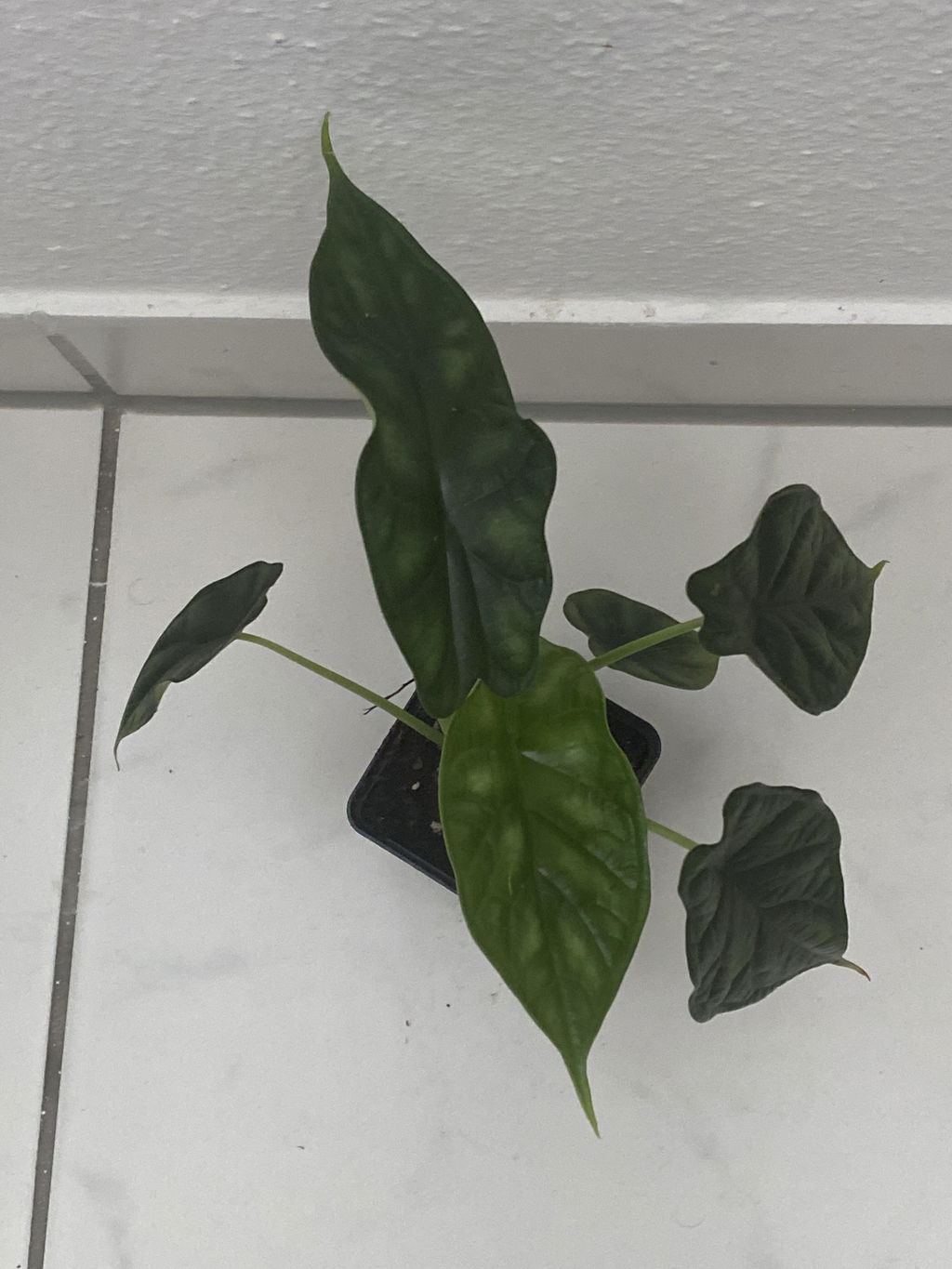
Alocasia Baginda 'Dragon Scale' Baby
The Plants were well packed but still toppled upon arrival- thanks to the good wrap the leaves were ok, the soil was moist (so not too much loose potting ground)- I repotted immediately and the plant seems happy so far, new leaves were showing on all of them. Delivery was super fast.
Reviews in Other Languages
Sie ist wunderschön