


Secure packaging for delicate plants
Small business in Berlin
★★★★★ 4.87 Avg. Review


Alocasia 'Tiny Dancers'
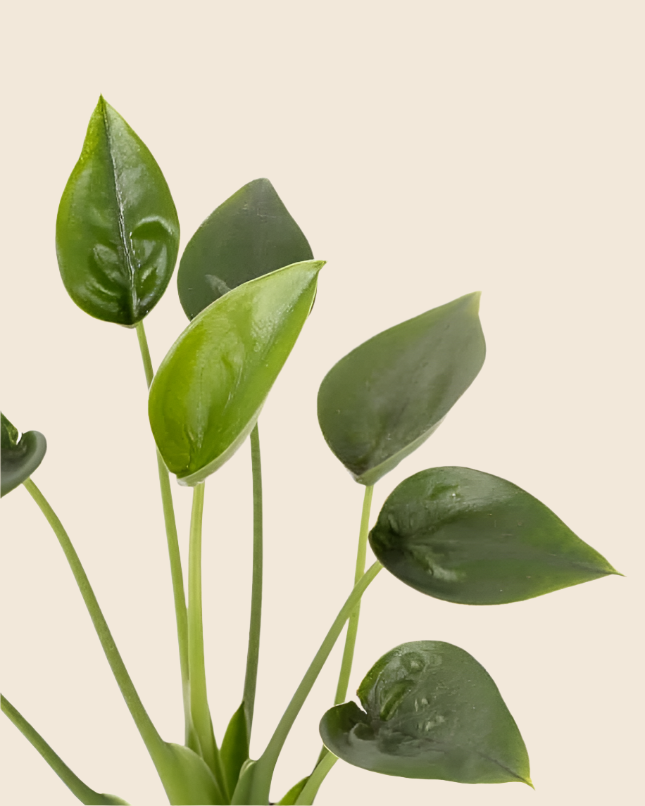
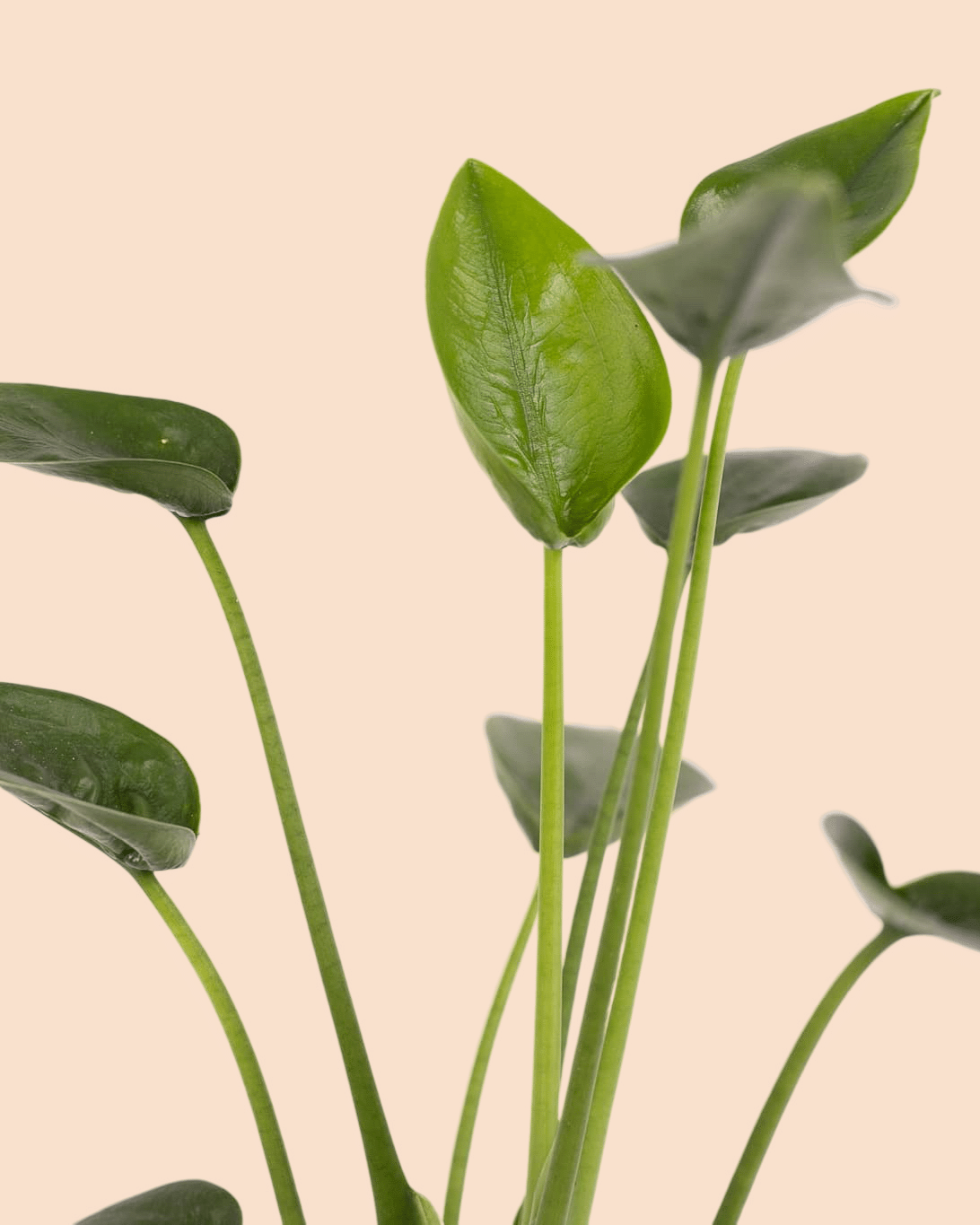
Alocasia 'Tiny Dancers' is a patented interspecific hybrid with a dwarf, upright clumping habit and uniquely teardrop-shaped leaves on long, slender petioles that create a ‘dancing’ silhouette. It grows as a compact tabletop plant with many small leaves, making it great for desks, sideboards or collectors seeking a named cultivar, but it is toxic to pets and children.
- height Height
- 40 cm
- swap_horiz Pot Size
- 12 cm
- volunteer_activism Care
- Medium
- wb_sunny Light Needs
- Bright indirect light
- water_drop Watering Needs
- Medium
check_circle In Stock
Quick care table
Plant care at a glance
- Botanical name
- Alocasia 'Tiny Dancers'
- Common name
- Alocasia 'Tiny Dancers', Tiny Dancers Alocasia, Tiny Dancer (informal/misused), and List of least concern plants
- Difficulty
- Medium
- Light
- Bright indirect light
- Humidity
- Medium
- Best for
- Indoors
Dwarf hybrid with teardrop leaves for tabletops
Alocasia 'Tiny Dancers' shows off a compact, many‑leaf crown of small, teardrop‑to‑lanceolate leaves in plain green. Each smooth, slightly cupped blade sits on a long, slender petiole, so the stems rise and sway together to create a light, dancing silhouette rather than the broad elephant‑ear look of larger Alocasias.
This cultivar stays purposely small in trade — growers report specimens commonly around 30–40 cm — and it develops from a juvenile clump into a denser, many‑leaved plant as it matures. It does not reliably set seed, so hobbyists propagate it by division or offsets; expect more leaves rather than much larger leaves as it ages.
In everyday ownership it behaves like a tidy tabletop aroid: it prefers bright, indirect light and higher humidity, and it can be sensitive to dry air (spider mites) and to fluctuating moisture (yellowing from overwatering). One clear trade‑off is that all parts are toxic if chewed, so keep it away from children and pets. Collectors value the named hybrid for its consistent dwarf habit and sculptural form, though it is commercially available rather than truly rare.
Best suited to desks, sideboards or small seating corners, this plant is typically sold in compact nursery pots that make it display‑ready on arrival. Compared with Alocasia odora (the giant ‘elephant‑ear’ type), expect a much smaller footprint and finely held leaves — the tropical look in a much more space‑friendly package.
Shipping Information
expand_more
- All orders are subject to a €25 minimum order value requirement
- All orders are hand-picked and shipped from the Netherlands
- Plastic-free materials when possible
- Orders are usually processed in 1-3 working days and shipped via DPD and their international partner carriers
- At times, orders may take up to 7 days to ship
- Orders to Germany Free shipping over €60. Free shipping all other EU countries* at €100 (Except Malta and Cyprus)
- Shipping costs are calculated at checkout based on delivery country:
See our FAQ and Shipping Guarantee for any further Questions!
Size: Medium - P12 H40


Plant questions, answered
How does Alocasia 'Tiny Dancers' differ from other Alocasias?
expand_more
Alocasia 'Tiny Dancers' is an intentionally bred, patented interspecific hybrid notable for a dwarf habit and uniquely teardrop‑shaped small leaves on long, delicate petioles. Unlike large elephant‑ear Alocasia such as A. odora, it forms a dense, many‑leaf clump at a small, tabletop scale, giving a distinct ‘dancing’ silhouette prized by collectors.
Is Alocasia 'Tiny Dancers' suitable for small spaces or desks?
expand_more
Yes — Alocasia 'Tiny Dancers' is a compact, tabletop‑friendly cultivar marketed at roughly 30–40 cm tall. It gives a tropical Alocasia look in a much smaller footprint, but still needs bright, indirect light, warmth and higher humidity than average houseplants, so place it where those conditions can be met (for example a bright bathroom or grouped plant display).
Can I propagate Alocasia 'Tiny Dancers' from seed or cuttings?
expand_more
No — the cultivar is reported not to set seed and propagation is by division or vegetative means only. The patent notes an inability to produce seed, so growers propagate offsets during repotting; handle divisions gently and repot into a loose, moisture‑retentive mix to encourage establishment.
What pests and common problems should I watch for with Alocasia 'Tiny Dancers'?
expand_more
Expect typical Alocasia issues: spider mites and other sap‑sucking pests in warm, dry air, yellowing from overwatering/poor drainage, and crispy leaf margins from low humidity or cold drafts. Monitor humidity and substrate moisture, provide good airflow, and treat pests promptly with appropriate, safe controls to reduce spread.
Is Alocasia 'Tiny Dancers' safe for pets and children?
expand_more
No — Alocasia 'Tiny Dancers' is not safe for pets or children. All parts contain insoluble calcium oxalate crystals (raphides) that can cause oral and skin irritation if ingested or handled improperly; keep the plant out of reach and use caution (gloves) when handling or repotting.
Plant care guide
Light
expand_more
Water
expand_more
Soil and repotting
expand_more
Humidity and temperature
expand_more
Feeding
expand_more
Growth and support
expand_more
Common concerns
expand_more
Common issues: spider mites in warm, dry air; overwatering/root rot causing yellowing leaves; crispy leaf edges from low humidity or cold drafts. Inspect regularly and address pests early.
Pet safety
expand_more
You might also like
Reviews in Other Languages
Tudo ok como de costume obrigado