


Secure packaging for delicate plants
Small business in Berlin
★★★★★ 4.87 Avg. Review


Epipremnum pinnatum 'Marble Variegata'
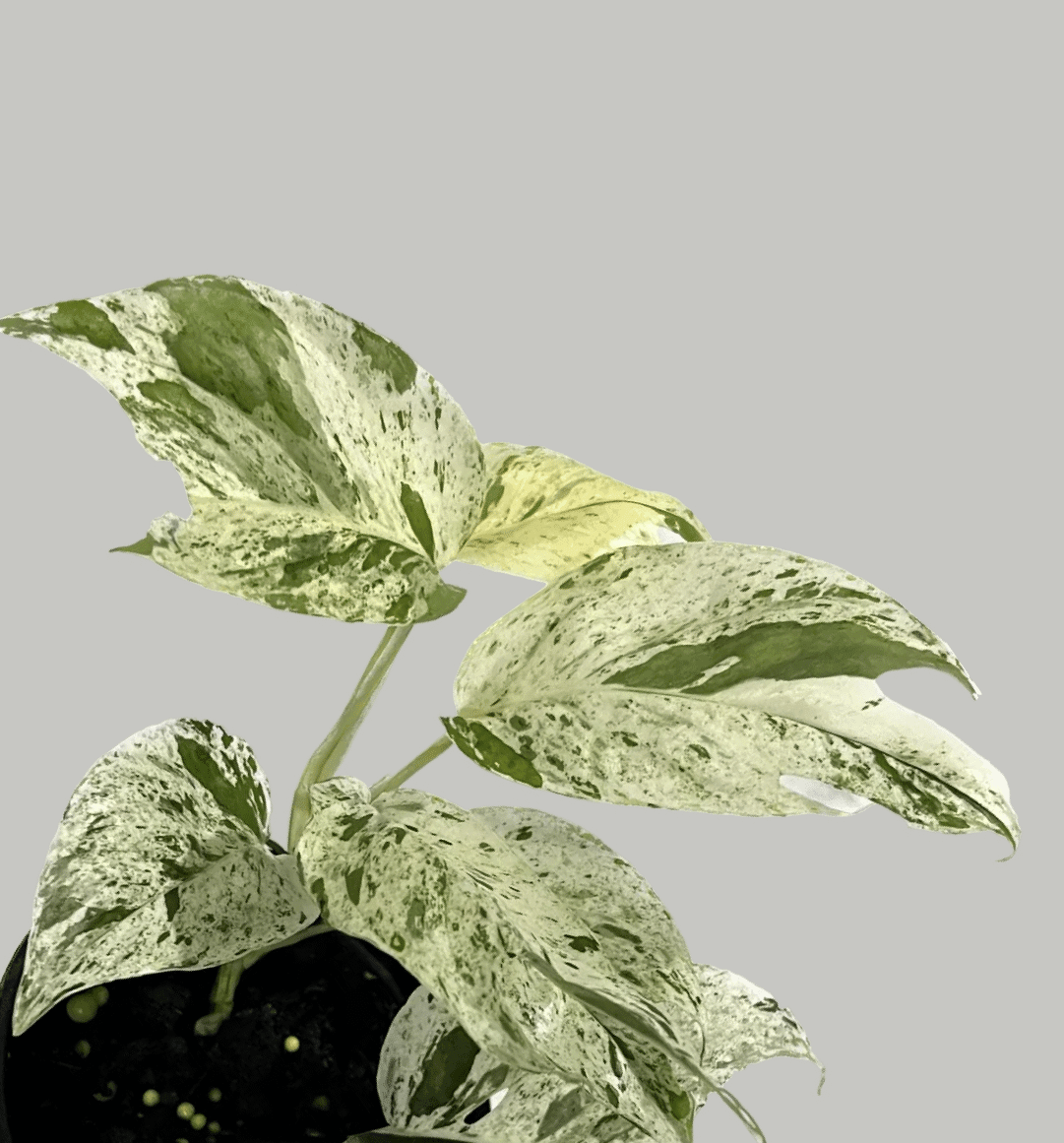
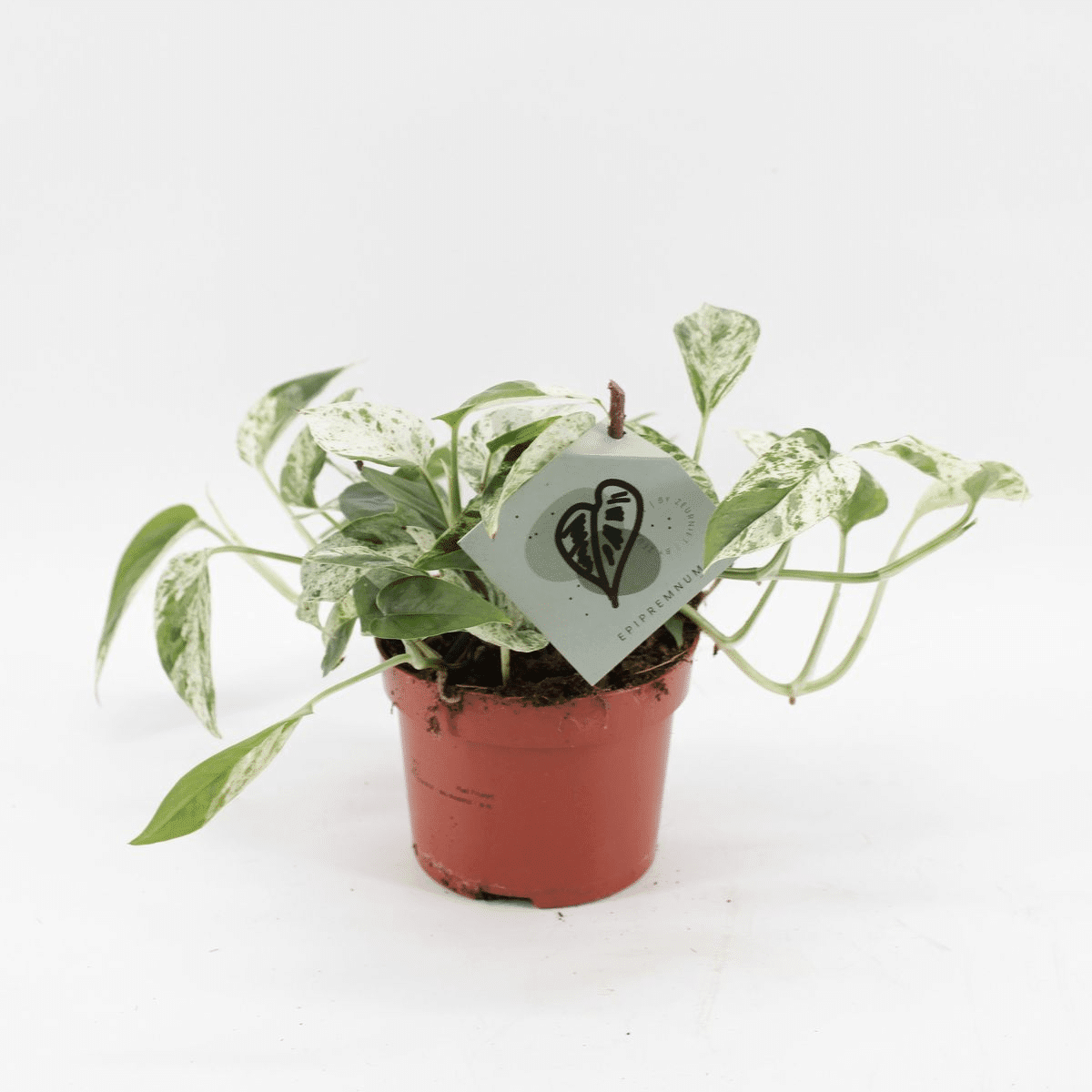
Epipremnum pinnatum 'Marble Variegata' is a selected variegated Epipremnum pinnatum — a climbing evergreen vine notable for irregular creamy-white marbling across narrower, lance-shaped leaves and a tendency to form leaf lobes and fenestrations (holes or splits). Indoors it will trail or climb a pole and suits collectors or buyers after dramatic foliage, but be aware it is not pet-safe.
- height Height
- 20 cm
- swap_horiz Pot Size
- 12 cm
- volunteer_activism Care
- Medium
- wb_sunny Light Needs
- Bright indirect light
- pets Not Pet Friendly
- water_drop Watering Needs
- Medium
check_circle In Stock
Quick care table
Plant care at a glance
- Botanical name
- Epipremnum pinnatum 'Marble Variegata'
- Common name
- Epipremnum pinnatum 'Marble Variegata', Epipremnum pinnatum 'Marble', and Marble Epipremnum pinnatum (trade name)
- Difficulty
- Medium
- Light
- Bright indirect light
- Humidity
- Medium
- Pet safe
- No, toxic if ingested
- Best for
- Hallway, Office, Bedroom, and Kitchen
Creamy-white marble variegation with narrow, fenestrating leaves
This selection features irregular cream-to-white marbling splashed across glossy green leaves — no two leaves are identical. Juvenile foliage is narrow and lance-shaped with a flexible, glossy surface; variegated sectors can be thinner and slightly more prone to sunscorch in very strong light. Visually it reads as high-contrast marbling rather than the broad albo patches found on some pothos varieties.
Indoors it will trail freely when unsupported and climb eagerly when given a pole or stake; climbing encourages the characteristic pinnate lobes and internal fenestrations (holes or splits) that appear as the plant matures. New growth may be more entire and undivided until a stem begins to climb, and seasonal slowdown in winter will reduce new leaf production.
In everyday ownership expect a plant that rewards brighter, indirect light to maintain its cream variegation — the trade-off is that variegated sectors have less chlorophyll, so growth can be slower and variegation may fade toward greener shoots in low light. Also note this species contains calcium oxalate crystals and is not safe to ingest by pets or children. Expect normal aroid sensitivities: avoid persistent waterlogging and protect pale sectors from harsh direct sun.
Best suited to a bright shelf, hanging display or a small moss pole in urban apartments, this listing is offered as a compact medium (P12, ~20 cm) that fits desks and shelves. Epipremnum pinnatum 'Marble Variegata' differs from Epipremnum aureum 'Marble Queen' by its narrower juvenile leaves and earlier tendency to develop lobes and fenestration when trained to climb.
Shipping Information
expand_more
- All orders are subject to a €25 minimum order value requirement
- All orders are hand-picked and shipped from the Netherlands
- Plastic-free materials when possible
- Orders are usually processed in 1-3 working days and shipped via DPD and their international partner carriers
- At times, orders may take up to 7 days to ship
- Orders to Germany Free shipping over €60. Free shipping all other EU countries* at €100 (Except Malta and Cyprus)
- Shipping costs are calculated at checkout based on delivery country:
See our FAQ and Shipping Guarantee for any further Questions!

Size: Medium - P12 H20
Plant questions, answered
Is Epipremnum pinnatum 'Marble Variegata' suitable for European apartments and indoor living spaces?
expand_more
Yes — Epipremnum pinnatum 'Marble Variegata' adapts well to European apartments. It tolerates average indoor humidity and performs best in bright, indirect light to preserve its cream-on-green marbling. Place it where it can trail or climb and expect moderate growth; higher humidity and good light will help maintain its decorative variegation.
How can I keep the marble variegation from fading or reverting to green?
expand_more
Keep bright, indirect light — variegation often declines in low light and stressed plants can produce greener new shoots. Epipremnum pinnatum 'Marble Variegata' needs a light balance: more light helps maintain cream sectors but very strong direct sun can scorch pale areas. Prune back plain green growth and provide steady, brighter indirect light to encourage variegated shoots.
How is this different from Epipremnum aureum 'Marble Queen'?
expand_more
Epipremnum pinnatum 'Marble Variegata' differs in leaf shape and fenestration timing from E. aureum 'Marble Queen'. Pinnatum has narrower juvenile leaves that tend to develop pinnate lobes and internal fenestrations earlier, and shows irregular cream-white marbling rather than the broader heart-shaped albo variegation of many E. aureum selections. Choose pinnatum for earlier splits and marbled patterning.
Will my Marble Variegata develop splits or fenestrations, and how do I encourage them?
expand_more
Yes — Epipremnum pinnatum 'Marble Variegata' commonly produces pinnate lobes and internal fenestrations when allowed to climb. Juvenile leaves are usually entire; training the plant up a moss pole or other vertical support promotes larger, divided leaves. Practical implication: provide a climbable support and patience for the species' typical architectural development.
Is Epipremnum pinnatum 'Marble Variegata' safe around pets and children?
expand_more
No — Epipremnum pinnatum 'Marble Variegata' is not pet-safe. Like other Epipremnum species, it contains insoluble calcium oxalate crystals that can cause oral irritation and gastrointestinal symptoms if chewed or swallowed. Keep the plant well out of reach of pets and small children and avoid assuming any variegated selection is non-toxic.
Plant care guide
Light
expand_more
Water
expand_more
Soil and repotting
expand_more
Humidity and temperature
expand_more
Feeding
expand_more
Growth and support
expand_more
Common concerns
expand_more
Loss of variegation in low light or after stress (reversion); yellowing leaves from overwatering or poor drainage; brown leaf tips from low humidity, inconsistent watering or salt buildup; variegation can be unstable and may require pruning to restore variegated growth.