


Secure packaging for delicate plants
Small business in Berlin
★★★★★ 4.87 Avg. Review

Euphorbia abyssinica var. erythraeae 'Canarias'
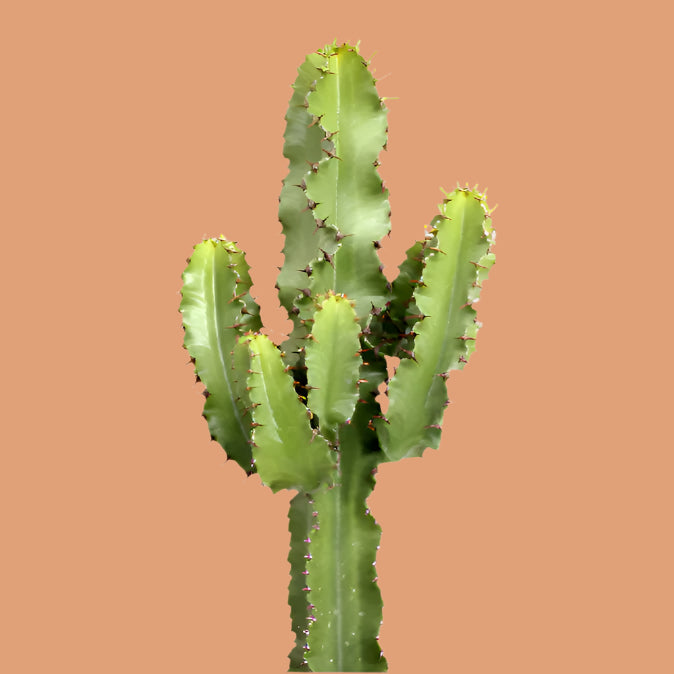
Euphorbia abyssinica var. erythraeae 'Canarias' is a tree-like, candelabra succulent with upright columnar stems and notably fleshy, dark green ribs edged by triangular spine‑shields. Indoors it remains slow-growing and architectural, suiting sunny flats or conservatories and collectors seeking a desert‑candle look, but it is not pet-safe—the milky sap irritates and it needs very bright light plus sharply draining soil. Note that 'Canarias' appears to be a trade/selection name rather than a formally registered cultivar.
- height Height
- 70 cm
- swap_horiz Pot Size
- 19 cm
- volunteer_activism Care
- Easy
- wb_sunny Light Needs
- Bright indirect light
- water_drop Watering Needs
- Low
check_circle In Stock
Quick care table
Plant care at a glance
- Botanical name
- Euphorbia abyssinica 'Var Erythraeae Canarias'
- Common name
- Euphorbia abyssinica var. erythraeae 'Canarias' (retailer trade name), desert candle, candelabra spurge, and Euphorbia abyssinica var. erythraeae 'Canarias'
- Difficulty
- Easy
- Light
- Bright indirect light
- Humidity
- Low
- Best for
- Outdoors, Hallway, Office, Bedroom, Kitchen, Living room, and Indoors
Canary selection with plump, dark‑ribbed candle stems
This is a tall, architectural succulent with upright, candelabra‑style stems: deep glossy green columns made up of commonly five to eight distinct ribs, rib‑edge triangular spine‑shields and short reddish spines that give the stems a crisp, sculptural texture. The overall silhouette is vertical and columnar, a clear ‘desert candle’ effect that reads like living architecture in a bright room. Euphorbia abyssinica var. erythraeae 'Canarias'.
Indoors you’ll see ontogenetic change: new shoots may carry small, transient leaves at the rib protuberances, but mature stems age to largely leafless, woody columns that branch into candelabra arms. Growth slows markedly in cooler seasons and the plant prefers strong direct light or conservatory conditions to keep its compact, upright branching.
In real homes this selection rewards sunny, dry spots and low‑frequency watering, but there are trade‑offs: the sap is an irritant and toxic if swallowed, so it’s not suitable for households with curious children or pets and handling should be done with gloves. It also benefits from a solid, heavy pot and stable placement as it gains height; overwatering and poor drainage remain the main care risks.
Best for minimalist, Mediterranean or conservatory settings where tall, architectural plants suit the room. This plant is offered as a large potted specimen—expect a ready‑to‑place column that shows the darker, plumper ribs and pronounced spine‑shields that distinguish var. erythraeae selections from the typical E. abyssinica form; such trade‑named selections are more often found via specialist succulent sources rather than general retail.
Shipping Information
expand_more
- All orders are subject to a €25 minimum order value requirement
- All orders are hand-picked and shipped from the Netherlands
- Plastic-free materials when possible
- Orders are usually processed in 1-3 working days and shipped via DPD and their international partner carriers
- At times, orders may take up to 7 days to ship
- Orders to Germany Free shipping over €60. Free shipping all other EU countries* at €100 (Except Malta and Cyprus)
- Shipping costs are calculated at checkout based on delivery country:
See our FAQ and Shipping Guarantee for any further Questions!

Size: Large - P19 H70
Plant questions, answered
Is 'Canarias' a true cultivar and is this plant from the Canary Islands?
expand_more
This is a retailer trade name for a selection of Euphorbia abyssinica var. erythraeae, not a formally registered cultivar. The scientific variety erythraeae is recognised, but 'Canarias' has no independent registration found. The species is native to the Horn of Africa, so the trade name should not be taken as proof the plant is a Canary Islands endemic.
How does Euphorbia abyssinica var. erythraeae 'Canarias' differ from the typical Euphorbia abyssinica?
expand_more
This selection emphasises slightly plumper, darker green ribs and pronounced triangular spine‑shields along the rib margins, while keeping the classic candelabra, columnar habit of Euphorbia abyssinica. Those rib fleshiness and spine‑shield details give a more sculptural, textured look compared with the typical form and help buyers seeking that specific appearance.
What light and placement does this Euphorbia need indoors?
expand_more
Euphorbia abyssinica var. erythraeae 'Canarias' needs very bright, direct light—ideally a south‑facing window or conservatory. It tolerates low indoor humidity and dry Mediterranean conditions. Insufficient light tends to produce weak, elongated stems, so choose a consistently bright spot and protect the plant from frost if placed outdoors seasonally.
What are the main care risks and safety concerns I should expect?
expand_more
The main cultural risk is root rot from overwatering or poor drainage; use a sharply draining cactus/succulent mix and err on the dry side. All parts contain milky latex that irritates skin and eyes and is toxic if ingested—wear gloves and eye protection when cutting and keep the plant away from children and pets. Watch for mealybugs or scale.
What size will I receive and what growth should I expect?
expand_more
You will receive the listed Large variant: pot approximately 19 cm (P19) and about 70 cm tall (H70). Euphorbia abyssinica grows slowly and can become taller and woody; large specimens are heavy and benefit from a stable pot or permanent placement. Repot infrequently and expect slow seasonal height gain rather than rapid changes.
Plant care guide
Light
expand_more
Water
expand_more
Soil and repotting
expand_more
Humidity and temperature
expand_more
Feeding
expand_more
Growth and support
expand_more
Common concerns
expand_more
Main risks are root rot from overwatering or poor drainage, sap‑contact irritation, and occasional mealybug or scale on slow‑growing stems.
Pet safety
expand_more
You might also like
bb