


Secure packaging for delicate plants
Small business in Berlin
★★★★★ 4.87 Avg. Review


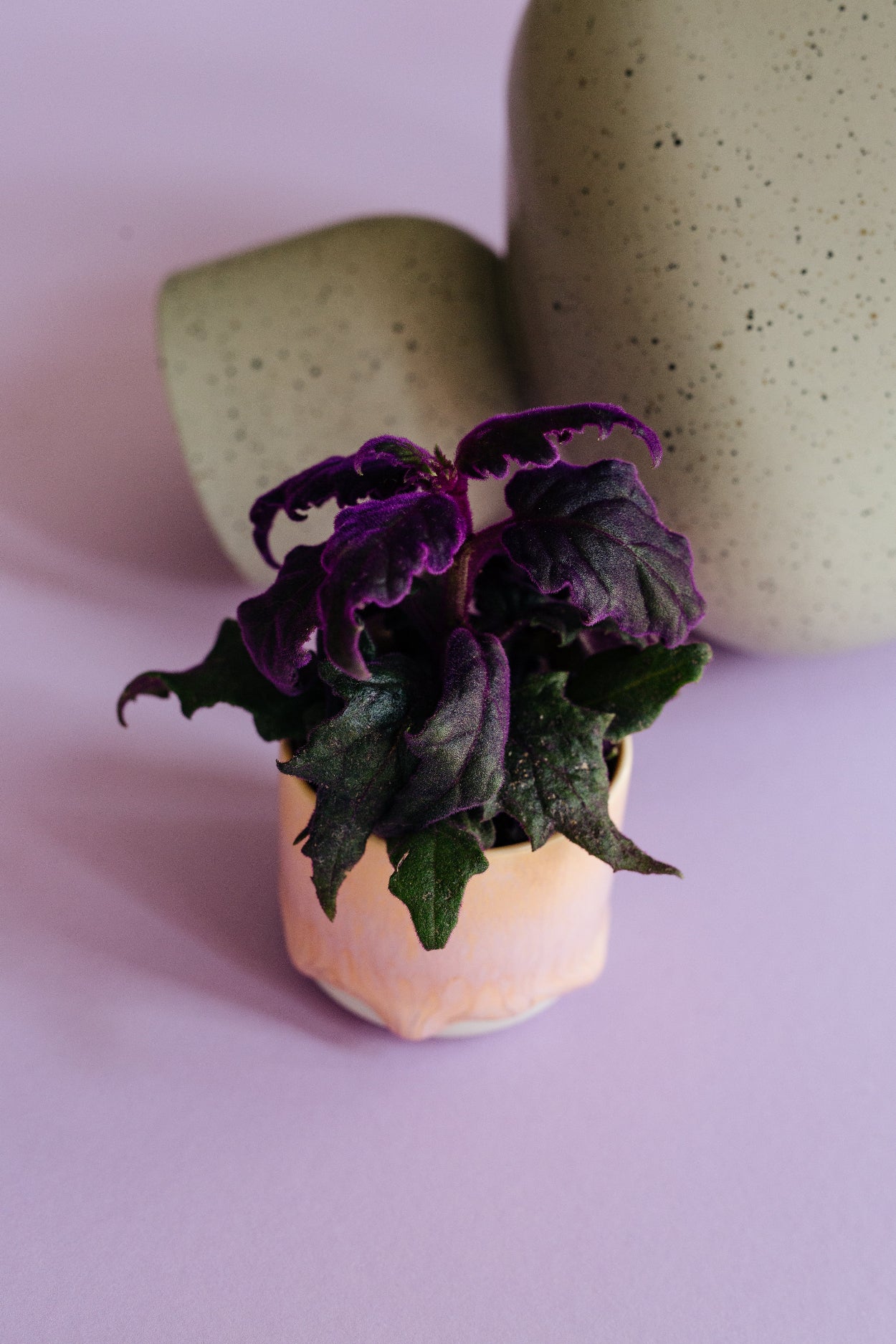
Gynura aurantiaca aka Purple Velvet Plant
Gynura aurantiaca aka Purple Velvet Plant is a herbaceous perennial houseplant noted for its dense purple/reddish hairs that create a velvety purple sheen over green leaves. It tends to sprawl or trail indoors and suits hanging baskets or collectors who want bold, tactile foliage, but it will become leggy without regular pinching and may produce small, often malodorous, orange‑yellow flowers.
- height Height
- 12 cm
- swap_horiz Pot Size
- 6 cm
- volunteer_activism Care
- Medium
- wb_sunny Light Needs
- Bright indirect light
- water_drop Watering Needs
- Medium
cancel Sold out
Quick care table
Plant care at a glance
- Botanical name
- Gynura aurantiaca
- Common name
- Purple Velvet Plant, Purple Passion Plant, Velvet Plant, Purple Passion Vine, Royal Velvet Plant, and Gynura aurantiaca aka Purple Velvet Plant
- Difficulty
- Medium
- Light
- Bright indirect light
- Humidity
- Medium
- Best for
- Indoors
Dense Purple Velvet Foliage, Bold Textured Houseplant
Leaves are ovate to lanceolate with coarsely toothed edges and a striking velvety overlay: short purple‑reddish hairs carpet the leaf and stem surface so the green blade reads as a purple sheen that you can both see and feel. The overall silhouette is loose and softly textured rather than architectural; occasional orange‑yellow flower clusters may form but are often removed by growers because of the scent. This is Gynura aurantiaca aka Purple Velvet Plant.
Young stems can be more upright, but with age the plant tends to sprawl, trail or twine—making it useful in pots or hanging baskets. Pinching new shoots encourages a bushier habit; without it many plants become elongated. Compared with variegated Gynura selections, this standard form shows a uniform green lamina topped by dense purple hairs rather than cream or white leaf variegation. Related decumbent types such as Gynura x sarmentosa ('Purple Passion') are often noted for an even stronger trailing habit.
In everyday care expect a preference for bright, indirect light to maintain the purple overlay, moderate–high humidity for best appearance and watering that allows the topsoil to dry a little between sessions. The trade‑off: it grows fast but will become leggy unless regularly pinched back. Avoid waterlogged compost to reduce root‑rot risk and watch for common pests like spider mites and mealybugs.
Best for colourful shelves, hanging baskets or mixed containers where its tactile foliage can be seen up close. Supplied as a baby plant, it’s a compact starter that rewards regular pinching and light training as it matures and begins to trail.
Shipping Information
expand_more
- All orders are subject to a €25 minimum order value requirement
- All orders are hand-picked and shipped from the Netherlands
- Plastic-free materials when possible
- Orders are usually processed in 1-3 working days and shipped via DPD and their international partner carriers
- At times, orders may take up to 7 days to ship
- Orders to Germany Free shipping over €60. Free shipping all other EU countries* at €100 (Except Malta and Cyprus)
- Shipping costs are calculated at checkout based on delivery country:
See our FAQ and Shipping Guarantee for any further Questions!

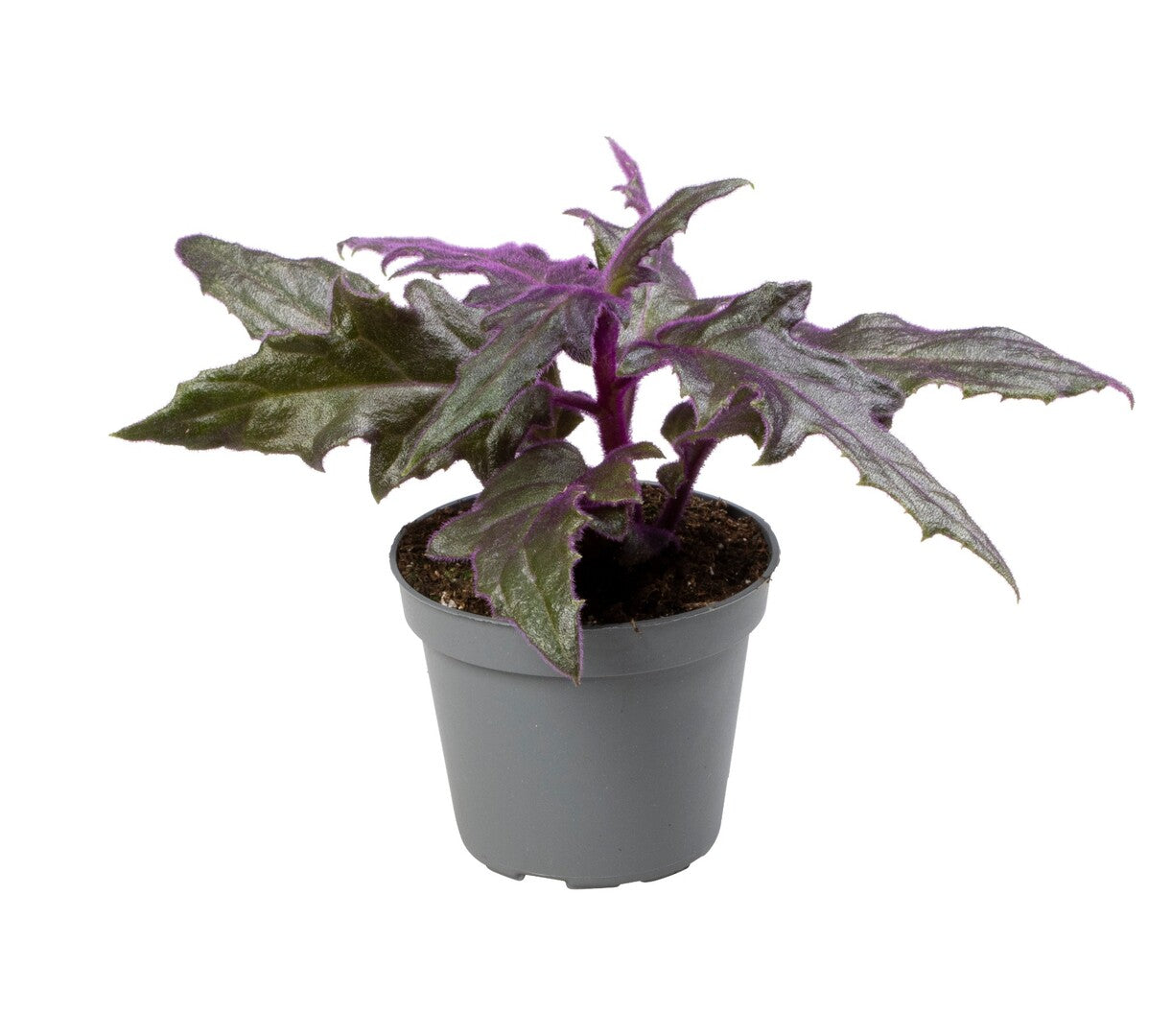
Size: Baby - P6 H12
Plant questions, answered
What exactly is this "Purple Velvet Plant" and what makes it special?
expand_more
Gynura aurantiaca (sold as Purple Velvet Plant) is a species prized for a dense purple/reddish indumentum (short hairs) that overlays green leaves, creating a velvety purple sheen. This tactile hair covering—not true purple leaf tissue—is the species’ principal ornamental trait; collectors value this bold colour-and-texture effect versus variegated Gynura selections that show white or cream patterning beneath the hairs.
Will my Purple Velvet Plant stay purple or turn green?
expand_more
Colour depends on light: bright, indirect light helps maintain the purple sheen, while lower interior light often reduces the purple overlay and produces greener, leggier growth. The purple look comes from hairs on the green leaf surface, so exposure and pinching to encourage bushiness are practical ways to keep the striking purple effect.
Is Gynura aurantiaca safe for pets?
expand_more
Sources conflict: the ASPCA lists Gynura aurantiaca as non‑toxic to dogs, cats and horses, but some horticultural guides report possible mild toxicity if ingested. Follow veterinary advice for any exposure and keep curious pets away from foliage; the disagreement means erring on the side of caution is sensible.
How does this plant grow and where should I place it?
expand_more
Gynura aurantiaca starts more erect when young but commonly sprawls, trails or twines as it matures, so it suits hanging baskets or a light trellis. Pinch or prune to avoid legginess, expect possible malodorous orange‑yellow flowers (many growers remove buds), and aim for moderate to high humidity for best foliage appearance.
What size plant will I receive?
expand_more
You will receive the Baby - P6 H12 option: supplied in a 6 cm pot at approximately 12 cm height. This is a young, compact specimen that may become more trailing and vigorous with time; it benefits from pinching and brighter light to develop fuller, bushier growth.
Plant care guide
Light
expand_more
Water
expand_more
Soil and repotting
expand_more
Humidity and temperature
expand_more
Feeding
expand_more
Growth and support
expand_more
Common concerns
expand_more
Tends to become leggy in low light (pinch back to encourage bushiness); orange‑yellow flowers can be malodorous and are often removed; pests include spider mites, aphids, mealybugs and whitefly; risk of root rot in waterlogged or poorly drained media.
Pet safety
expand_more
You might also like
Very nice!
Unbelievably beautiful baby!
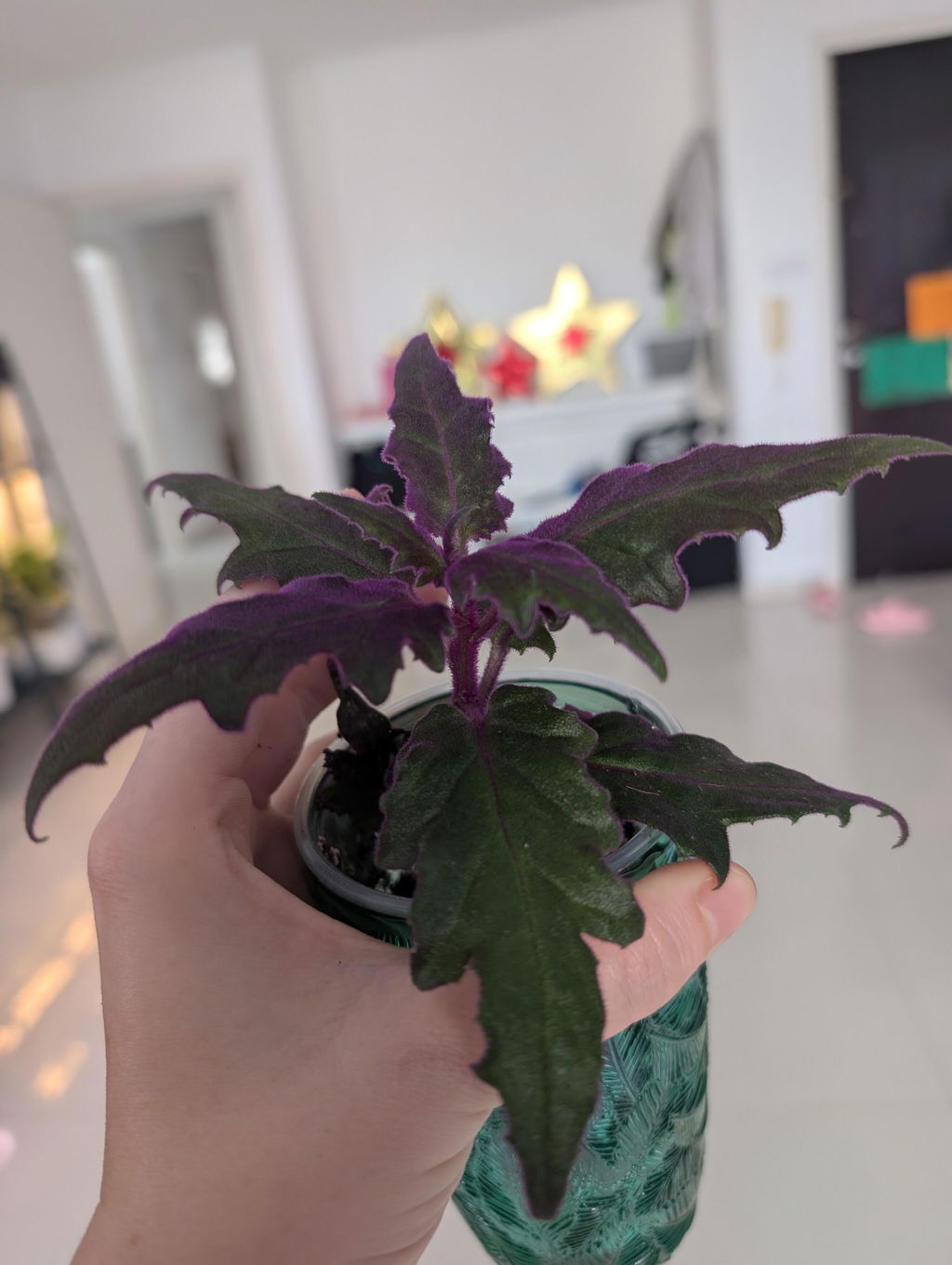
It‘s great
Gynura came to me in perfect state. She's young and strong with good roots. I've already transplanted the plant and it feels great on my windowsill. Thanks for careful packing of items!
Thanks for the feedback Eva, so happy you love your new plant!