


Secure packaging for delicate plants
Small business in Berlin
★★★★★ 4.87 Avg. Review


Maranta leuconeura 'Lemon Lime' Medium
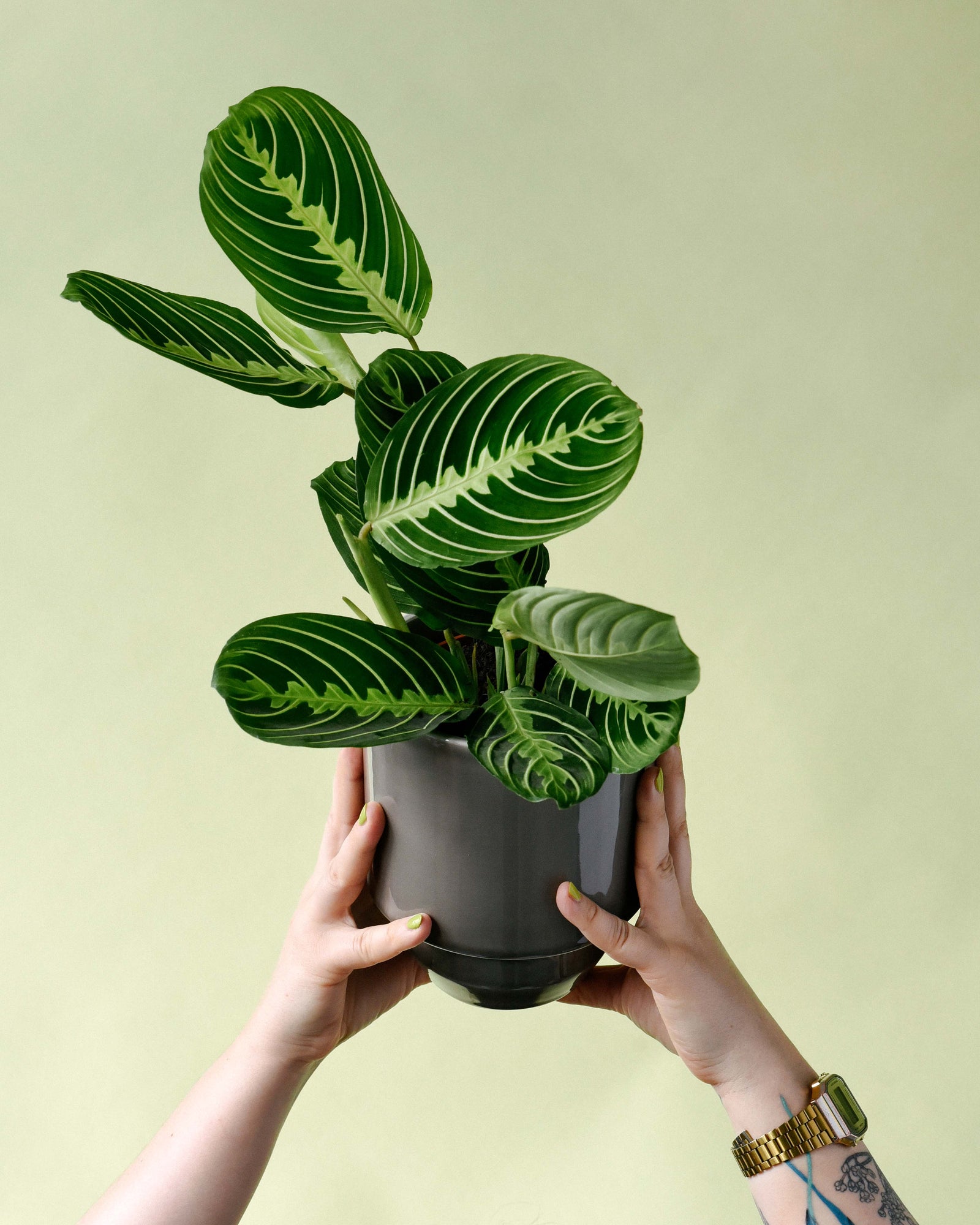
Maranta leuconeura 'Lemon Lime' Medium is a selected, compact clumping prayer plant prized for its bright chartreuse, lemon‑lime venation over dark, velvety leaves. It spreads sideways on horizontal/trailing stems so it suits shelves or hanging spots and is listed non‑toxic for homes with pets, but it prefers bright indirect light and higher humidity to keep leaf contrast and avoid crispy edges.
- height Height
- swap_horiz Pot Size
- volunteer_activism Care
- Easy
- wb_sunny Light Needs
- Indirect light
- pets Pet Friendly
- water_drop Watering Needs
- Medium
check_circle In Stock
Quick care table
Plant care at a glance
- Botanical name
- Maranta leuconeura 'Lemon Lime'
- Common name
- Lemon Lime prayer plant and Lemon-Lime Maranta
- Difficulty
- Easy
- Light
- Indirect light
- Humidity
- Medium
- Pet safe
- Yes, non-toxic to pets
- Growth habit
- Compact, clumping with horizontal/Trailing stems (spreads sideways rather than Upright); suitable for shelves or hanging displays.
- Best for
- Indoors
Bright lemon‑lime venation — Maranta leuconeura 'Lemon Lime' Medium
The leaves are the show: dark to medium green, velvety surfaces shot through with a dense network of chartreuse to lemon‑lime veins that give a crisp, graphic appearance. Leaves are oval to elliptic with slightly paler central areas on some plants, producing a bright contrast that reads well on a shelf or tabletop. The overall silhouette is low and bushy rather than tall, so the foliage creates a compact, horizontal spread.
Indoors this selection grows as a clumping, spreading plant with horizontal or trailing stems rather than an upright habit. New leaves often open paler and build contrast as they mature, and the foliage performs the classic prayer‑plant night fold (leaves lift slightly at dusk). It won’t develop splits or holes — its interest is in the bold venation and nightly movement rather than dramatic leaf division.
In everyday ownership expect moderate water and medium–high humidity to keep the lemon contrast bright and to avoid crisp brown edges; the trade‑off is a sensitivity to direct sun and dry air. Watch for spider mites in very dry rooms. The species is listed non‑toxic to cats and dogs by the ASPCA, though chewing any plant can still cause mild upset. Collectors prize this selection for the high‑contrast venation, while trade sources note it as a widely offered nursery selection rather than a newly registered cultivar.
Best placed where it receives bright, indirect light — living rooms, kitchens with filtered windows or bright offices. This listing is for the Medium size, a compact option that suits shelves, benches or small hanging spots where its trailing stems can spread.
Shipping Information
expand_more
- All orders are subject to a €25 minimum order value requirement
- All orders are hand-picked and shipped from the Netherlands
- Plastic-free materials when possible
- Orders are usually processed in 1-3 working days and shipped via DPD and their international partner carriers
- At times, orders may take up to 7 days to ship
- Orders to Germany Free shipping over €60. Free shipping all other EU countries* at €100 (Except Malta and Cyprus)
- Shipping costs are calculated at checkout based on delivery country:
See our FAQ and Shipping Guarantee for any further Questions!




Plant questions, answered
What is Maranta leuconeura 'Lemon Lime' and how does it differ from other Maranta cultivars?
expand_more
It's a selected commercial cultivar notable for bright chartreuse/lemon‑lime venation over dark green, velvety leaves. Unlike red‑veined forms such as Maranta 'Erythroneura', 'Lemon Lime' replaces red/pink veins with a cooler lime network. It is widely traded as a visual alternative rather than a recently registered botanical cultivar.
Is Maranta leuconeura 'Lemon Lime' safe to have around pets?
expand_more
Yes — Maranta leuconeura 'Lemon Lime' is listed as non‑toxic to cats and dogs by ASPCA references for prayer plants. That said, 'non‑toxic' does not mean chewing is harmless; ingestion can still cause mild gastrointestinal upset, so discourage pets from eating the leaves.
How should I place this plant to keep its lemon‑lime contrast strong?
expand_more
Bright, indirect light keeps the lemon‑lime venation most vivid; the plant tolerates medium indirect light but contrast often weakens in low light. Avoid direct sun to prevent leaf scorch and place the Maranta where morning or filtered light reaches it for best colour and form.
What common problems should I expect and how can I troubleshoot them?
expand_more
Expect crispy brown edges from low humidity or underwatering, leaf scorch from direct sun, and occasional spider mites in dry conditions. Increase ambient humidity, avoid direct sunlight and keep the substrate evenly moist (not waterlogged). Note: venation contrast can dull under low light, so adjust placement first.
What does the 'Medium' size listing mean — how large will the plant be when it arrives?
expand_more
This listing is the 'Medium' variant and describes a compact, bushy Maranta that spreads via horizontal stems, ideal for shelves and tabletops. Retail nursery trade commonly sells Lemon Lime in small pots (often around 8–15 cm), but exact pot and plant dimensions for this specific listing may vary by shipment.
Plant care guide
Light
expand_more
Water
expand_more
Soil and repotting
expand_more
Humidity and temperature
expand_more
Feeding
expand_more
Growth and support
expand_more
Common concerns
expand_more
- Crispy leaf edges: usually caused by low humidity or underwatering — increase humidity and keep soil evenly moist.
- Leaf scorch: direct sun can scorch leaves — move to bright, indirect light.
- Spider mites: more likely in dry conditions — raise humidity and treat with insecticidal soap or neem oil if needed.
- Dulling of venation: low light or poor conditions reduce contrast — provide brighter indirect light to maintain lemon‑lime pattern.
Pet safety
expand_more
You might also like
Love it
Great plant