


Secure packaging for delicate plants
Small business in Berlin
★★★★★ 4.87 Avg. Review


Philodendron 'Birkin'
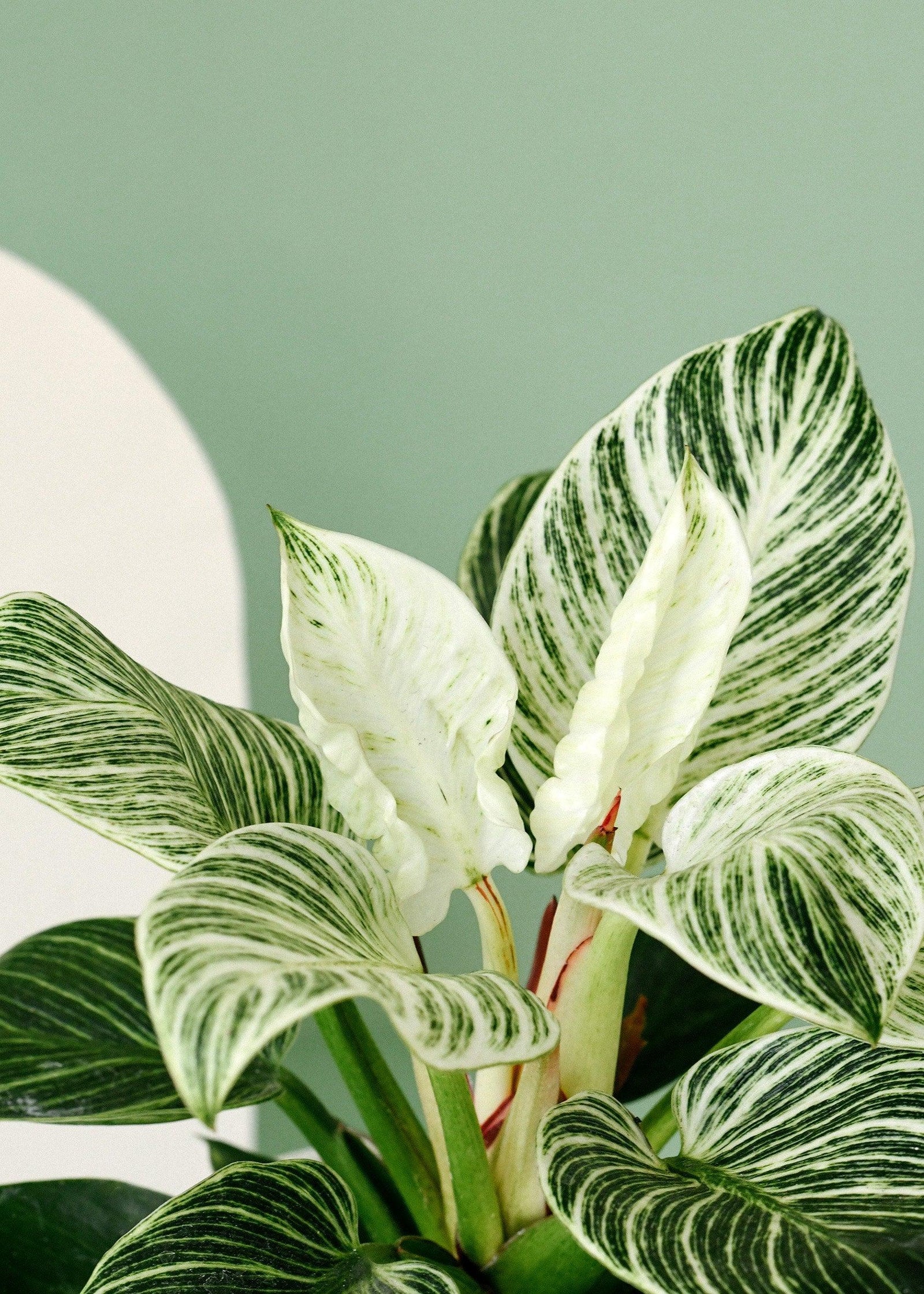
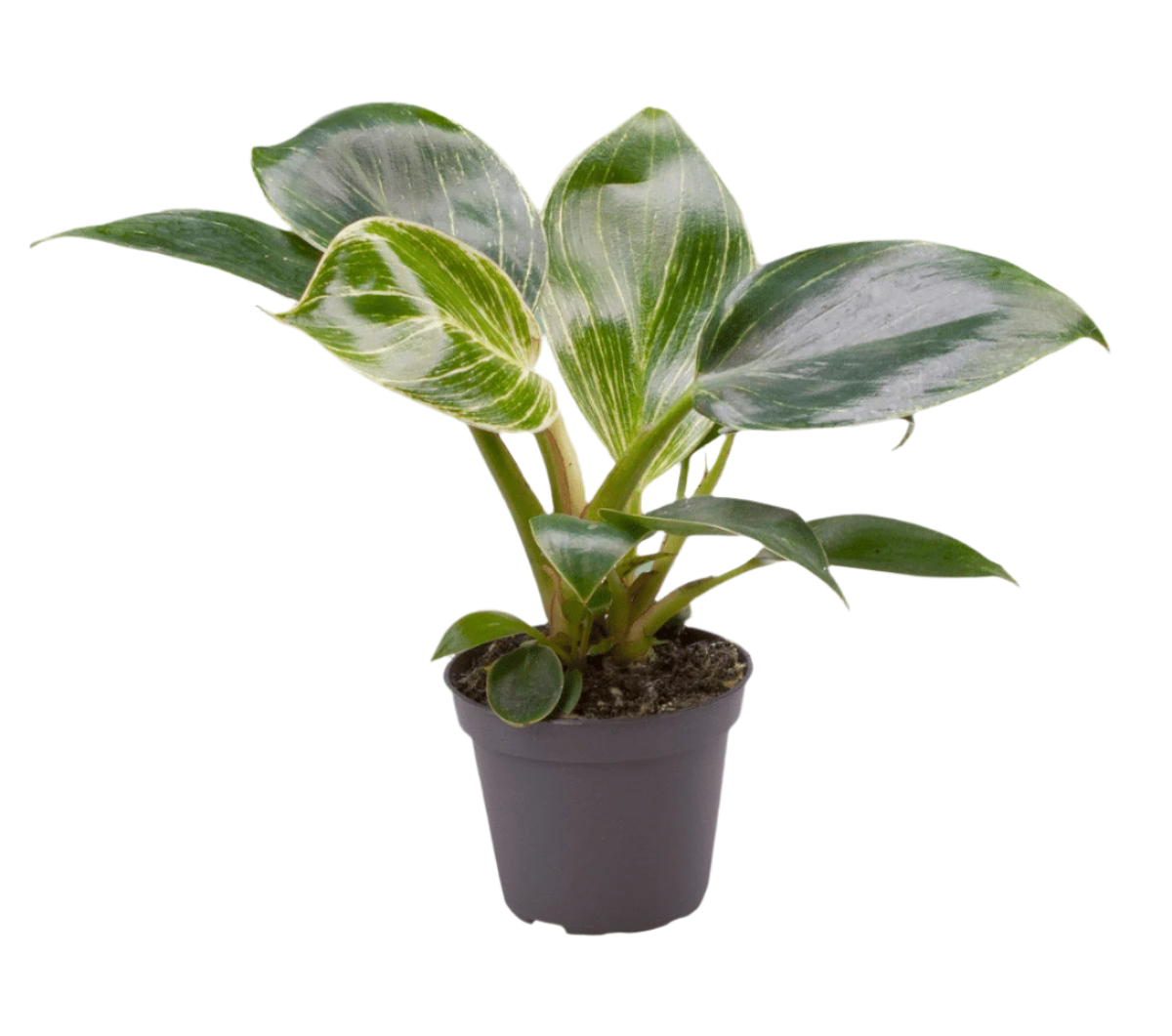
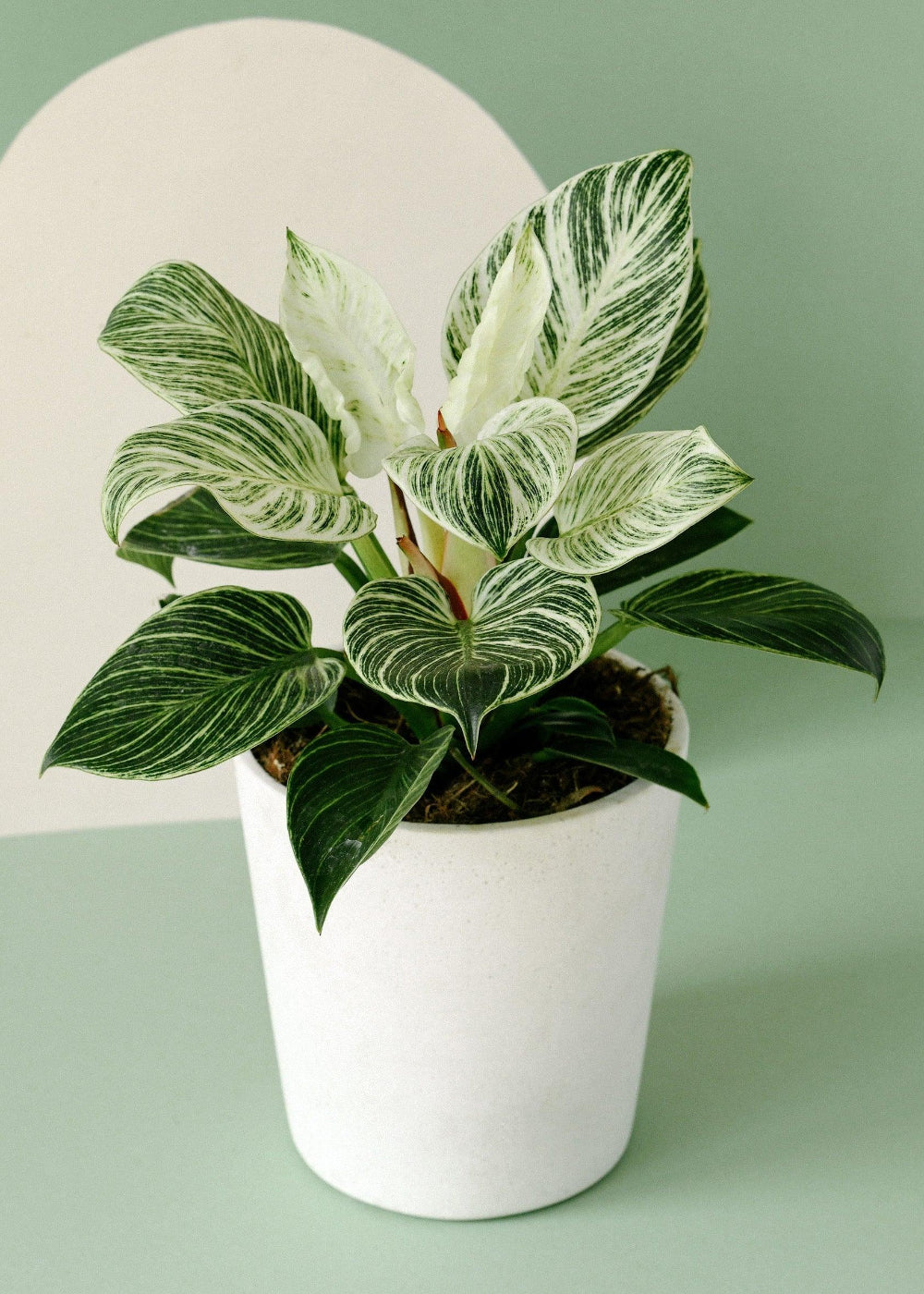
Philodendron 'Birkin' (Philodendron birkin) is a compact, self-heading houseplant with glossy dark green leaves marked by narrow creamy-white pinstripes radiating from the midrib — a sport-derived cultivar prized for that fine linear variegation. It grows as an upright clumping rosette suited to desks, shelves and collectors seeking stylish foliage, but variegation can fluctuate or revert and the plant is toxic if ingested by pets or people.
- height Height
- 10 cm
- swap_horiz Pot Size
- 6 cm
- volunteer_activism Care
- Easy
- wb_sunny Light Needs
- Bright indirect light
- pets Not Pet Friendly
- water_drop Watering Needs
- Medium
check_circle In Stock
Quick care table
Plant care at a glance
- Botanical name
- Philodendron birkin
- Common name
- Philodendron 'Birkin', Birkin, White Wave, and White Measure
- Difficulty
- Easy
- Light
- Bright indirect light
- Water
- Medium
- Humidity
- Medium
- Pet safe
- No, toxic if ingested
- Growth habit
- Bushy and Upright
- Best for
- Hallway, Office, Bedroom, Kitchen, Bathroom, and Living room
Fine creamy pinstripes on compact glossy rosettes
Philodendron 'Birkin' has glossy, dark-green oval leaves marked by numerous fine creamy-white pinstripes that radiate from the midrib toward the margins. The leaf surface is smooth and reflective; individual leaves are typically rounded at the tip, creating a neat, compact rosette that reads as modern and structured on a shelf.
This cultivar is self-heading rather than a climber, so you’ll see upright, clumping growth with new leaves emerging from a central crown. Variegation expression changes as the plant develops—many leaves keep the narrow radiating stripes, but individual stems can produce plain, Rojo Congo–like green growth (reversion) if the sport isn’t maintained. No pole or trellis is needed for its natural, bushy habit.
In everyday ownership you can expect a compact, slow-to-moderate grower that suits small indoor spaces; the trade-off is variegation instability, so owners who want consistently striped foliage should monitor and remove reverted shoots. Like other Congo-type philodendrons it is sensitive to prolonged waterlogging and can be prone to common pests in stagnant conditions; it’s also toxic if ingested, so place it out of reach of pets and children.
Best fit: desks, small shelves or grouped displays where the pinstriped leaves can be seen up close. Smaller “Baby” pots make good grow-on or gift options for tight spaces, while the “Small” pot gives a fuller presence on a side table or larger shelf.
Shipping Information
expand_more
- All orders are subject to a €25 minimum order value requirement
- All orders are hand-picked and shipped from the Netherlands
- Plastic-free materials when possible
- Orders are usually processed in 1-3 working days and shipped via DPD and their international partner carriers
- At times, orders may take up to 7 days to ship
- Orders to Germany Free shipping over €60. Free shipping all other EU countries* at €100 (Except Malta and Cyprus)
- Shipping costs are calculated at checkout based on delivery country:
See our FAQ and Shipping Guarantee for any further Questions!

Size: Baby - P6 H10
Plant questions, answered
What makes Philodendron 'Birkin' different from other philodendrons?
expand_more
Philodendron 'Birkin' is a sport-derived cultivar prized for its fine creamy-white 'pinstripe' variegation on a dark glossy leaf ground. It originated as a spontaneous chimeric mutation in Congo-type stock and is now widely available via tissue culture. The pinstripe pattern is the primary reason collectors and buyers choose Birkin for visual impact.
Will the pinstripe variegation stay consistent as the plant grows?
expand_more
Variegation can be variable and sometimes unstable; Birkin plants may produce both strongly striped and all-green shoots. Reversion to Rojo Congo‑like solid foliage is documented, so monitor new growth and remove reverted stems if you want to maintain striping. Light and stock stability also influence stripe intensity.
What light and general care conditions bring out the best pinstripe contrast?
expand_more
Bright, indirect light usually produces the best contrast in the pinstripe variegation; Birkin tolerates medium light but striping often dulls in low light. Avoid harsh direct sun to prevent leaf scorch. Care follows typical rosette/congo‑type philodendron needs: avoid constant waterlogging and provide good drainage for healthy foliage.
Is Philodendron 'Birkin' safe around pets and children?
expand_more
No — Philodendron 'Birkin' is toxic if ingested. Like other philodendrons, it contains insoluble calcium oxalate crystals that can cause oral or skin irritation in pets and people. Keep the plant out of reach and handle with care, and seek professional advice if ingestion or severe contact occurs.
Which size will I receive and where does each fit best in my home?
expand_more
Choose between Baby (P6, 6 cm pot, approx. 10 cm tall) or Small (P11, 11 cm pot, approx. 25 cm tall) variants as listed. The Baby suits a small shelf, desk or as a grow‑on option; the Small works well on a shelf, side table or for a fuller display with greater visual impact.
Plant care guide
Light
expand_more
Water
expand_more
Soil and repotting
expand_more
Humidity and temperature
expand_more
Feeding
expand_more
Growth and support
expand_more
Common concerns
expand_more
Variegation can be unstable and occasional shoots may revert to all‑green; yellowing leaves often indicate overwatering or poor drainage; leaf scorch can occur in direct sun; watch for spider mites and mealybugs and treat infestations promptly.
Pet safety
expand_more
You might also like
Reviews in Other Languages
Bébé bien portant
mega!! sehr schöne Pflanze & mega Qualität!! Der Topf war schon sehr klein, musste sie gleich in einen 10cm Topf umtopfen + es kommt ein neues Blatt :))
