


Secure packaging for delicate plants
Small business in Berlin
★★★★★ 4.87 Avg. Review


Philodendron 'Prince of Orange'
Philodendron 'Prince of Orange' is a self-heading, compact rosette houseplant cultivar noted for its consistent bright orange new leaves that mature through copper and chartreuse to green. It grows upright without a moss pole, suits desks, shelves and other small spaces in medium to bright indirect light, and is toxic if eaten so keep it away from pets and small children.
- height Height
- 10 cm
- swap_horiz Pot Size
- 6 cm
- volunteer_activism Care
- Easy
- wb_sunny Light Needs
- Bright indirect light
- pets Not Pet Friendly
- water_drop Watering Needs
- Medium
check_circle In Stock
Quick care table
Plant care at a glance
- Botanical name
- Philodendron 'Prince of Orange'
- Common name
- Prince of Orange Philodendron, Philodendron 'Prince of Orange', and Prince of Orange
- Difficulty
- Easy
- Light
- Bright indirect light
- Water
- Medium
- Humidity
- Medium
- Pet safe
- No, toxic if ingested
- Best for
- Hallway, Office, Bedroom, Kitchen, Bathroom, and Living room
Orange new leaves in a compact upright rosette
Philodendron 'Prince of Orange' opens bright, glossy orange leaves that age through apricot and chartreuse into a medium green. Leaves are narrowly ovate with a leathery, glossy finish and a prominent flattened midrib; petioles and juvenile veins often show pinkish tones, which adds contrast across the compact crown. The overall silhouette is a tidy, upright rosette rather than a trailing or vining shape.
New growth is reliably different from mature foliage: the orange juvenile leaves appear at the centre and gradually change colour as they expand, so several stages can be visible at once. This cultivar stays self-heading and does not produce climber stems or leaf splits (no fenestration), so it keeps a stable, free-standing form and usually doesn’t need a moss pole or staking.
In everyday homes it suits smaller spots where a splash of warm colour is wanted without training. Expect clearer orange tones with medium to bright indirect light, and watch for yellowing if soil stays too wet — overwatering can be a real limitation and prolonged wetness risks rot. The plant is a hybrid with an established patent history, prized for repeatable juvenile colour cycles; it is commonly traded rather than rare. Note: it is toxic if eaten, so keep away from pets and children.
Best for desks, small shelves or side tables; choose a Baby size to observe fresh orange growth, a Medium for a balanced shelf display, or a Large for a fuller visual impact on a stand or table.
Shipping Information
expand_more
- All orders are subject to a €25 minimum order value requirement
- All orders are hand-picked and shipped from the Netherlands
- Plastic-free materials when possible
- Orders are usually processed in 1-3 working days and shipped via DPD and their international partner carriers
- At times, orders may take up to 7 days to ship
- Orders to Germany Free shipping over €60. Free shipping all other EU countries* at €100 (Except Malta and Cyprus)
- Shipping costs are calculated at checkout based on delivery country:
See our FAQ and Shipping Guarantee for any further Questions!

Size: Baby - P6 H10


Plant questions, answered
What makes Philodendron 'Prince of Orange' different from other Philodendron cultivars?
expand_more
Philodendron 'Prince of Orange' is a named, patented cultivar prized for its consistent orange juvenile foliage that matures through apricot/chartreuse to green. It is a self‑heading, compact rosette with pinkish petioles and narrowly ovate, leathery leaves—features that set it apart from other red‑leaf Philodendron selections and make it desirable for collectors seeking repeatable colour cycles.
How do I encourage vivid orange new leaves on Philodendron 'Prince of Orange'?
expand_more
Bright, filtered (medium to bright indirect) light helps produce more vivid orange new leaves on Philodendron 'Prince of Orange'. Avoid harsh direct sun that can scorch foliage. Adequate light combined with regular rotation and good drainage lets the plant cycle fresh orange growth from the centre without stressing the plant.
Does Philodendron 'Prince of Orange' need a moss pole or climbing support?
expand_more
No. Philodendron 'Prince of Orange' is a self‑heading, non‑climbing cultivar that forms a compact upright rosette and typically does not require a moss pole or staking. Place it on a desk, shelf or plant stand and rotate occasionally for even growth instead of training it up a support.
Is Philodendron 'Prince of Orange' safe for homes with pets or children?
expand_more
No. Philodendron 'Prince of Orange' is toxic if ingested and contains irritating calcium oxalate crystals like other Philodendron/Araceae. Keep the plant well out of reach of cats, dogs and small children and avoid placing it where curious pets can nibble leaves.
Why are some leaves turning yellow or brown on my Philodendron 'Prince of Orange'?
expand_more
Yellowing commonly indicates persistently wet soil or poor drainage, while brown edges often follow inconsistent watering, dry indoor air or occasional direct sun damage. Check pot drainage, let the top portion of the mix dry between thorough waterings, adjust light if growth appears pale, and increase ambient humidity if air is very dry.
Which plant size should I choose when buying Philodendron 'Prince of Orange'?
expand_more
Choose 'Baby' (P6, 6 cm pot, ~10 cm height) to watch orange colour develop from an early stage, or 'Large' (P17, 17 cm pot, ~40 cm height) for an immediate, fuller display. The listed Medium (P12) may be unavailable; pick size based on whether you prefer a grow‑on plant or a ready display.
Plant care guide
Light
expand_more
Water
expand_more
Soil and repotting
expand_more
Humidity and temperature
expand_more
Feeding
expand_more
Growth and support
expand_more
Common concerns
expand_more
Yellowing leaves often indicate persistently wet soil or overwatering. Pale or faded new growth suggests insufficient indirect light. Brown leaf edges can follow inconsistent watering, dry indoor air or occasional direct sun exposure. Avoid prolonged leaf wetness or waterlogged soil to reduce risk of bacterial or soft rots.
Pet safety
expand_more
You might also like
Everything is good.
Great little baby!
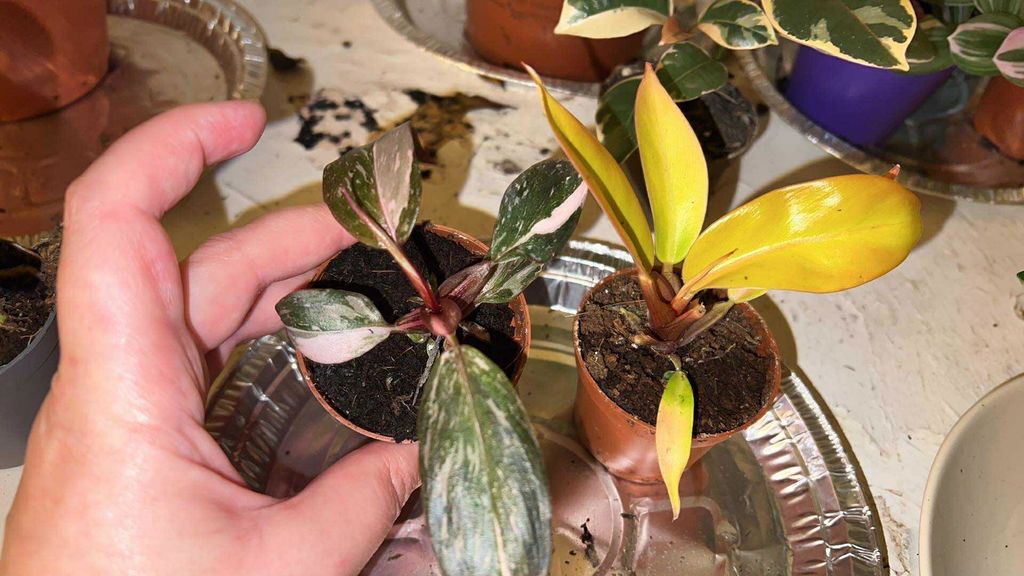
Arrived alive and no pests.
Ordered some plants for my mother for Christmas. All arrived in pristine condition & I believe are all very nice. I didn’t see them myself because I’m in another eurozone country. Only problem with the plants is that they arrived without any name tags which is a little disappointing
Plant is beautiful and arrived healthy!! *****
...package could've been better (soil got all over the plants), if you could cap the substrate somehow, so it stays in the pot.
Reviews in Other Languages
Sehr schöne Pflanze, bis jetzt allerdings rein Grün. Hoffe die Farbe kommt noch.
Alles bestens