


Rare and Variegated Plants
Secure packaging for delicate plants
Small business in Berlin
★★★★★ 4.87 Avg. Review
Secure packaging for delicate plants
Small business in Berlin
★★★★★ 4.87 Avg. Review
Secure packaging for delicate plants
Small business in Berlin
★★★★★ 4.87 Avg. Review


Philodendron Red Congo Variegata is a self‑heading rosette philodendron featuring sectoral albo variegation—broad cream, pink or mint patches on large glossy leaves with red new growth—and is an emergent variegated selection propagated in limited tissue‑culture runs. It grows upright as a compact indoor clump, suits collectors seeking dramatic foliage, but expect variable stability (reversion possible) and brighter light plus higher humidity to hold variegation; keep away from pets and children as philodendrons are toxic if chewed.
check_circle In Stock
Quick care table
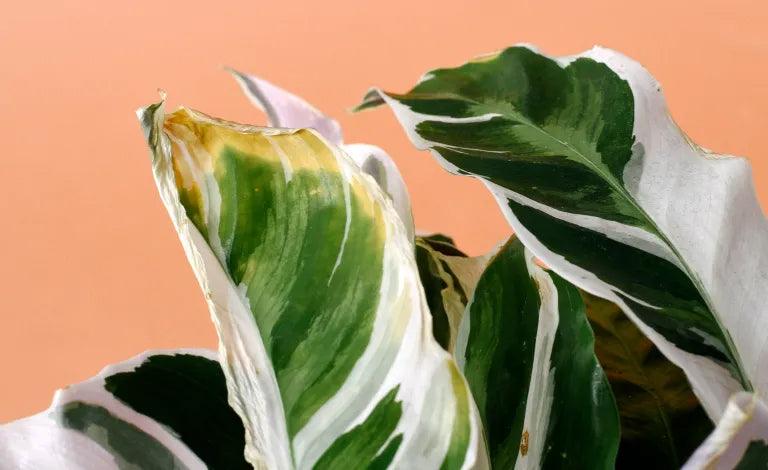
Leaves are large, glossy and paddle-shaped, with broad, irregular patches and streaks of cream, white, pale pink or mint against dark green — the striking contrast is amplified by new foliage and petioles that often emerge red to burgundy. The plant’s silhouette is compact and upright: thick stems form a self-heading clump rather than long vines, so the overall effect is bold, sculptural foliage rather than trailing tendrils.
As a variegated selection, Philodendron Red Congo Variegata keeps the classic Rojo Congo traits — red new growth and sturdy, upright habit — while adding sectoral (albo/marbled) variegation that can appear differently on each leaf. Young leaves show the brightest red tones; mature leaves develop larger, more settled variegation. Unlike climbing philodendrons this selection doesn’t produce splits or fenestration, and collectors note that its marbled pattern is broader and chunkier than the fine white pinstripes you see on a Birkin.
In daily care you’ll notice the trade-offs: variegation is light-sensitive and can fade or revert to plain green if kept too dim, and these selections respond best to bright, indirect light and higher humidity. They prefer moderate watering and well-draining mix; overwatering risks root rot. Also: like other philodendrons this cultivar contains calcium oxalate crystals and can irritate skin or be harmful if chewed — keep out of reach of pets and children.
This plant is usually offered as a young, “baby” option; buying a small, younger specimen means you’ll enjoy watching the clump fill out over time. Because variegated Red Congo selections have been produced in limited tissue-culture runs, availability can be intermittent and they carry extra collector interest and cost compared with the common non-variegated Rojo Congo.
Shipping Information
expand_moreSee our FAQ and Shipping Guarantee for any further Questions!

Variants: Baby - P6 H15


How does Philodendron 'Red Congo' Variegata differ from the regular Rojo/Red Congo or other red philodendrons?
expand_moreThis is a variegated selection of the Rojo/Red Congo that keeps the cultivar’s self‑heading habit and red new growth but adds sectoral/albo variegation. Philodendron 'Red Congo' Variegata shows broad cream/white/pink or mint patches or marbling on large glossy leaves, unlike the solid colouring of Imperial Red or the pinstripe look of a Birkin.
How can I keep the variegation looking good at home?
expand_moreGood light and humidity help: Philodendron 'Red Congo' Variegata needs bright, indirect light and higher humidity to hold its variegation. Variegation expression is variable and can revert in low light, so give steady bright light, avoid sun scorch, and maintain humidity—otherwise you may see more green, non‑variegated shoots over time.
Is this plant suitable for beginners?
expand_moreNot ideal for complete beginners. The variegated Philodendron 'Red Congo' requires more reliable light and humidity than the non‑variegated Rojo Congo, and variegation can be unstable. If you’re comfortable monitoring light, avoiding overwatering and managing humidity, it’s a rewarding—but moderate‑difficulty—houseplant to grow.
Is Philodendron 'Red Congo' Variegata safe around pets and children?
expand_moreNo—Philodendron 'Red Congo' Variegata contains insoluble calcium oxalate crystals and is toxic if chewed or ingested; sap can irritate skin. Keep it well out of reach, and contact your vet or local poison control if ingestion is suspected. This toxicity applies to Philodendron cultivars generally.
What is the growth habit and what should I expect as it matures?
expand_moreExpect a self‑heading, rosette habit rather than a climbing vine—Philodendron 'Red Congo' Variegata forms compact upright clumps with thick stems and large paddle leaves. It doesn’t typically produce long vines or fenestration; growth stays relatively upright, though leaf size and variegation can change between growth flushes and plants.
What size will I receive if I order this plant?
expand_moreYou’ll receive the Baby - P6 H15 variant: a young Philodendron 'Red Congo' Variegata in a 6 cm nursery pot with an approximate plant height of 15 cm. As a small specimen, expect modest leaf count and ongoing development; variegation and leaf size can change as the plant grows.
Light
expand_moreWater
expand_moreSoil and repotting
expand_moreHumidity and temperature
expand_moreFeeding
expand_moreGrowth and support
expand_moreCommon concerns
expand_morePet safety
expand_moreBe the first to know about newly stocked plants and accessories, sales and exclusive offers.