


Secure packaging for delicate plants
Small business in Berlin
★★★★★ 4.87 Avg. Review

Syngonium Erythrophyllum ‘llano carti road’
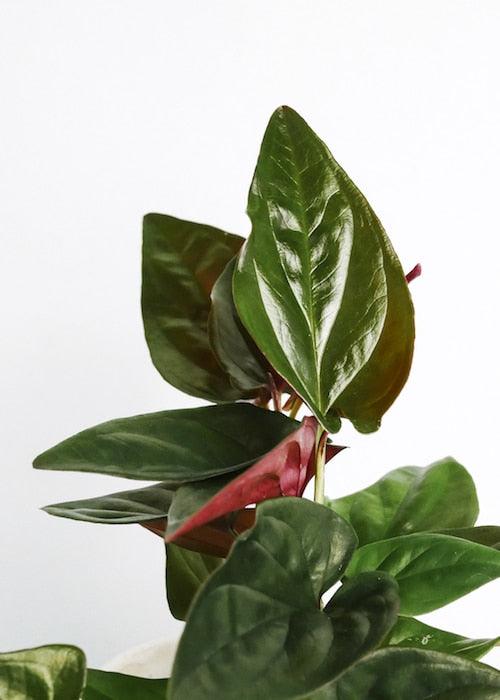
Syngonium Erythrophyllum ‘llano carti road’ is an evergreen tropical climber prized for its extremely dark, deep‑purple upper leaves contrasted with a vivid maroon underside—a locality selection from El Llano–Cartí Road in Panama. Indoors it trails as a juvenile and will climb with a pole, suiting collectors and hobbyists seeking dramatic foliage; note the name is a trade/locality selection rather than a formally registered cultivar and is mainly sold by specialist nurseries.
- height Height
- 25 cm
- swap_horiz Pot Size
- 12 cm
- volunteer_activism Care
- Easy
- wb_sunny Light Needs
- Bright indirect light
- water_drop Watering Needs
- Medium
cancel Sold out
Quick care table
Plant care at a glance
| Care factor | Syngonium Erythrophyllum ‘llano carti road’ |
|---|---|
| Botanical name | Syngonium erythrophyllum 'Llano Carti Road' |
| Common name | Syngonium erythrophyllum 'Llano Carti Road', Llano Carti Road (Llano‑Carti Road, Llano Carti Rd.), Red Arrow, Red Arrow Syngonium, and Arrowhead plant (generic) |
| Difficulty | Easy |
| Light | Bright indirect light |
| Humidity | Medium |
| Best for | Hallway, Office, Bedroom, Kitchen, Living room, and Bathroom |
Deep purple foliage with red reverse – Syngonium Erythrophyllum ‘llano carti road’
This selection shows very dark, nearly purple upper leaf surfaces that contrast sharply with vivid maroon to brick‑red undersides. Juvenile leaves are classic arrowhead shapes with a glossy sheen and visible veins; the two‑toned effect is immediate and dramatic in a pot, giving a compact, textured silhouette of overlapping arrows.
Growers report a clear development shift indoors: young plants trail or vine with arrowhead leaves, then climb and produce more deeply lobed, adult leaves when given a pole or other vertical support. Colour is strongest in the juvenile and climbing stages, so a short support will reveal both the dark tops and the red reverses more clearly as the plant matures.
In everyday ownership expect a plant that rewards brighter indirect light and higher humidity with richer colour, but colour intensity will soften in lower light — that’s the main trade‑off. It is sensitive to hot direct sun (which can scorch leaves) and, like other Syngonium, contains calcium oxalate crystals so avoid ingestion by pets or children. Availability tends to be through specialist sellers rather than mainstream garden centres.
Best suited to bright, humid indoor spots, small moss poles or hanging baskets where the two‑toned leaves can be seen. This trade/locality material is treated in commerce as a named selection rather than a formally registered cultivar; you may also encounter it sold under the trade name Red Arrow, usually supplied as a medium potted specimen ready to trail or begin climbing.
Shipping Information
expand_more
- All orders are subject to a €25 minimum order value requirement
- All orders are hand-picked and shipped from the Netherlands
- Plastic-free materials when possible
- Orders are usually processed in 1-3 working days and shipped via DPD and their international partner carriers
- At times, orders may take up to 7 days to ship
- Orders to Germany Free shipping over €60. Free shipping all other EU countries* at €100 (Except Malta and Cyprus)
- Shipping costs are calculated at checkout based on delivery country:
See our FAQ and Shipping Guarantee for any further Questions!

Size: Medium - P12 H25
Plant questions, answered
What makes Syngonium erythrophyllum 'Llano Carti Road' different from other Syngonium sold in garden centres?
expand_more
This is a trade/locality selection prized for an unusually dark adaxial leaf surface and a vivid maroon abaxial reverse. Syngonium erythrophyllum 'Llano Carti Road' is presented in the trade as a wild‑collected selection from Panama, producing a dramatic two‑toned look unlike the common green or variegated Syngonium cultivars.
Will the dark upper leaf and red underside keep their colour indoors?
expand_more
Usually the dark upper surface and maroon underside persist, but intensity depends on growing conditions. Syngonium erythrophyllum 'Llano Carti Road' shows stronger colour in bright, indirect light and higher humidity; lower light will soften the contrast and very bright direct sun can cause leaf scorch or colour loss.
Should I grow Syngonium erythrophyllum 'Llano Carti Road' as a hanger or give it a support to climb?
expand_more
Both options work: juvenile plants trail well in hanging pots, while a support encourages climbing and adult lobed leaves. Syngonium erythrophyllum 'Llano Carti Road' will develop more pedately‑lobed adult foliage when given a pole or other vertical support and aerial‑root contact.
Is Syngonium erythrophyllum 'Llano Carti Road' rare and worth buying for collectors?
expand_more
It is uncommon in mainstream garden centres but commonly offered by specialist nurseries and hobby sellers, so collectors seek it for its locality origin and dramatic colouring. Syngonium erythrophyllum 'Llano Carti Road' is a trade/locality name rather than a formally registered cultivar; availability is variable but not evidence of legal rarity.
Are there any safety or common care risks with Syngonium erythrophyllum 'Llano Carti Road'?
expand_more
This plant contains calcium oxalate crystals and can irritate skin or be toxic if ingested by pets or children. Syngonium erythrophyllum 'Llano Carti Road' is also prone to leaf scorch in strong direct sun, leggy growth in low light, and root rot from poor drainage—handle with care and avoid waterlogged substrate.
Plant care guide
Light
expand_more
Water
expand_more
Soil and repotting
expand_more
Humidity and temperature
expand_more
Feeding
expand_more
Growth and support
expand_more
Common concerns
expand_more
Leaf scorch or 'melting' from strong direct sun; leggy, sparse growth in persistently low light; root rot from sustained overwatering or poor drainage; irritation from sap/contact.
Pet safety
expand_more
You might also like
beautiful