


Secure packaging for delicate plants
Small business in Berlin
★★★★★ 4.87 Avg. Review


Syngonium Pixie
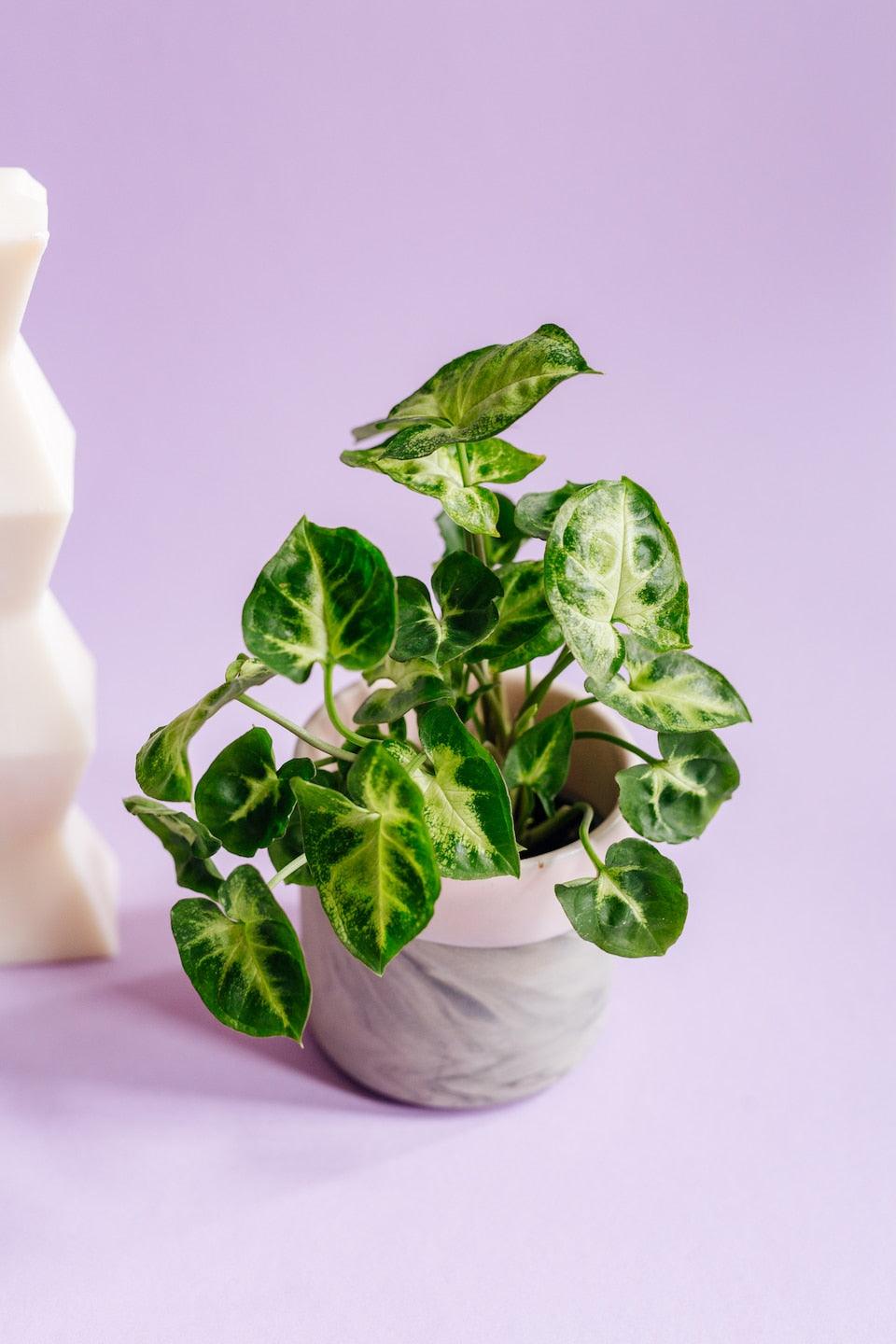
Syngonium Pixie (Syngonium pixie) is a selected dwarf cultivar of Syngonium podophyllum, an evergreen, compact clumping houseplant noted for small juvenile arrowhead leaves with cream-to-white areas radiating from the veins against dark green. Indoors it stays tidy in small pots or terraria and suits desks or space‑limited collections, but it is toxic if ingested and prefers consistent moisture and higher humidity.
- height Height
- 12 cm
- swap_horiz Pot Size
- 6 cm
- volunteer_activism Care
- Easy
- wb_sunny Light Needs
- Bright indirect light
- water_drop Watering Needs
- Medium
check_circle In Stock
Quick care table
Plant care at a glance
- Botanical name
- Syngonium podophyllum 'Pixie'
- Common name
- Syngonium 'Pixie', Pixie (arrowhead plant), and dwarf/mini arrowhead plant
- Difficulty
- Easy
- Light
- Bright indirect light
- Humidity
- Medium
- Best for
- Hallway, Office, Bedroom, Kitchen, Living room, and Bathroom
Dwarf variegated selection: Syngonium Pixie for small pots
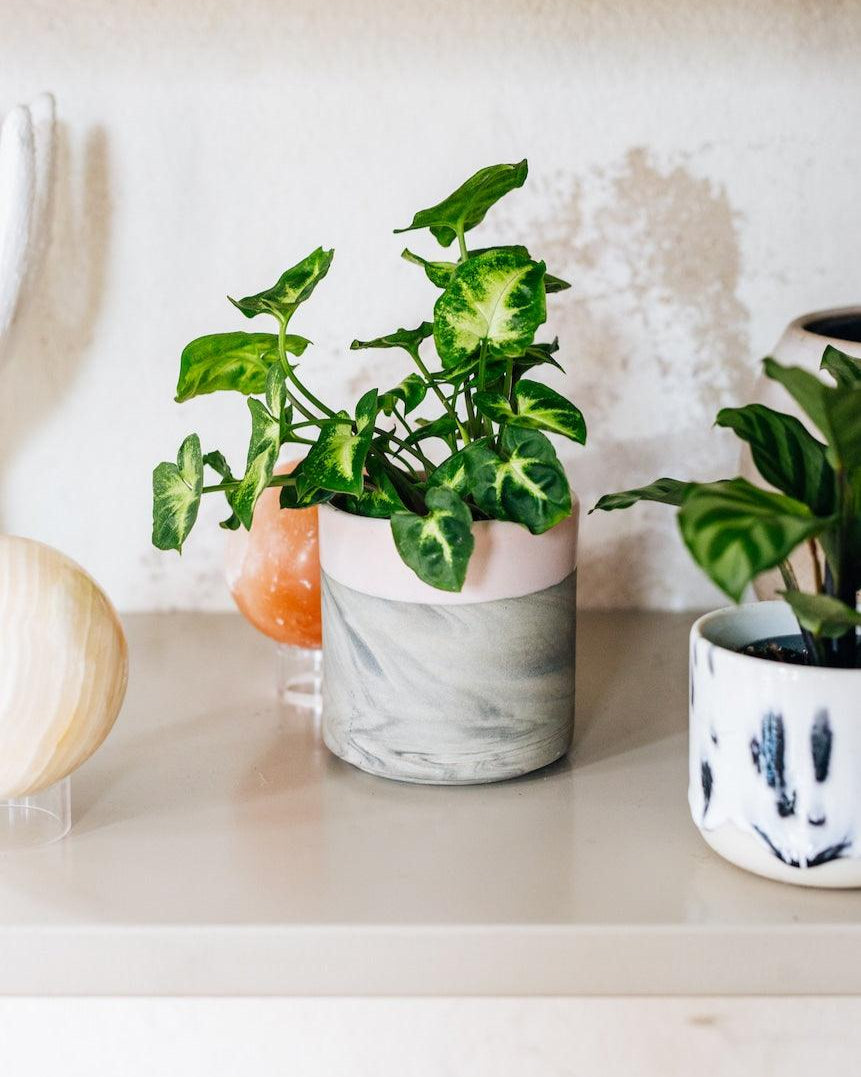
A compact houseplant with narrowly arrow-shaped juvenile leaves, this selected cultivar shows cream-to-white areas radiating from the central veins against darker green margins. Short internodes and a tight, clumping silhouette give a neat, textured surface of many small leaves rather than large, split foliage — the overall effect is one of high-contrast, miniature arrowhead foliage suited to close viewing.
Sold and grown in its juvenile form, the plant typically keeps small, sagittate (arrowhead) leaves; if stems are allowed to climb or given a support, the foliage can lengthen and eventually produce larger, more lobed adult leaves as seen in standard Syngonium forms. However, most owners will see and enjoy the compact, non-vigorous habit used for terraria and desk displays.
In everyday ownership this cultivar is valued for fitting tight spaces and for its clear cream radiations from the veins, but expect trade-offs: variegation and reliable leaf expansion weaken in low light and low humidity, and all parts are toxic if ingested. It does not behave like a fast-growing climber unless intentionally trained, so patience is part of the experience.
Best for small pots, terrariums or tabletops where a compact, variegated Syngonium is wanted. Typically sold as a juvenile or “baby” plant, starting small means it’s immediately space-friendly and will slowly fill a pot or climb a support if you choose to train it later.
Shipping Information
expand_more
- All orders are subject to a €25 minimum order value requirement
- All orders are hand-picked and shipped from the Netherlands
- Plastic-free materials when possible
- Orders are usually processed in 1-3 working days and shipped via DPD and their international partner carriers
- At times, orders may take up to 7 days to ship
- Orders to Germany Free shipping over €60. Free shipping all other EU countries* at €100 (Except Malta and Cyprus)
- Shipping costs are calculated at checkout based on delivery country:
See our FAQ and Shipping Guarantee for any further Questions!

Size: Baby - P6 H12
Plant questions, answered
What makes Syngonium 'Pixie' different from a standard arrowhead plant (Syngonium podophyllum)?
expand_more
Syngonium 'Pixie' is a selected dwarf cultivar of Syngonium podophyllum, chosen for its compact habit and small juvenile arrowhead leaves. It typically shows cream or white areas radiating from the veins, contrasting with dark-green zones — a distinctive vein-centred variegation. That compact, variegated form is why collectors and small-space buyers seek 'Pixie'.
Is Syngonium 'Pixie' suitable for terraria and small pots?
expand_more
Yes — Syngonium 'Pixie' is commonly sold and valued for its predictable compactness and much smaller leaves, making it well suited to terraria, small pots and desks. Buyers should still provide bright, indirect light and moderate-to-high humidity for reliable leaf expansion and colour.
What light and humidity does Syngonium 'Pixie' need to keep its variegation and healthy leaves?
expand_more
Bright, indirect light and moderate-to-high humidity help maintain the cream/white radiating variegation and steady leaf growth. Lower light will reduce variegation and produce smaller, paler leaves; very strong direct sun can scorch variegated areas. Higher humidity also speeds reliable leaf unfurling and reduces pest stress.
Will Syngonium 'Pixie' stay a compact clumping plant or will it climb and produce larger lobed leaves?
expand_more
It is usually sold and kept in the juvenile, compact clumping form, but if given a support or prolonged vigorous growth it can climb and produce larger, more lobed adult leaves. Expect a predictable compact habit for typical indoor culture; climbing conditions may change leaf size and shape over time.
Is Syngonium 'Pixie' safe around pets and children?
expand_more
No — Syngonium 'Pixie' is toxic if ingested. Like other Syngonium (arrowhead plant) cultivars, all parts contain insoluble calcium oxalate crystals that cause oral and mucous‑membrane irritation. Keep the plant out of reach of children and pets and handle with care.
What size will I receive when I buy Syngonium 'Pixie' from this listing?
expand_more
You will receive the 'Baby - P6 H12' option, supplied as a young, compact plant in a small nursery pot (pot size indicated as P6, height H12). This listing is for a juvenile, desk/terrarium‑ready plant rather than a mature, climbing specimen.
Plant care guide
Light
expand_more
Water
expand_more
Soil and repotting
expand_more
Humidity and temperature
expand_more
Feeding
expand_more
Growth and support
expand_more
Common concerns
expand_more
Overwatering and root rot; loss or fading of variegation and reduced leaf size in low light; spider mites and mealybugs on dry/low-humidity plants; leaves slow to unfurl if humidity or light are insufficient.