

Secure packaging for delicate plants
Small business in Berlin
★★★★★ 4.87 Avg. Review


Thaumatophyllum Spruceanum (Philodendron Goeldii, Green Wonder)
Thaumatophyllum Spruceanum (Philodendron Goeldii, Green Wonder) is an arborescent, palm-like aroid whose glossy, long, narrow-lobed leaves create a Schefflera-like silhouette rather than typical heart-shaped philodendron foliage. It grows upright indoors, forming a short trunk and architectural crown for buyers who want a bold statement plant, but it contains calcium oxalate crystals and is toxic if chewed—keep away from pets and small children.
- height Height
- 100 cm
- swap_horiz Pot Size
- 24 cm
- volunteer_activism Care
- Medium
- wb_sunny Light Needs
- Bright indirect light
- water_drop Watering Needs
- Medium
check_circle In Stock
Quick care table
Plant care at a glance
| Care factor | Thaumatophyllum Spruceanum (Philodendron Goeldii, Green Wonder) |
|---|---|
| Botanical name | Thaumatophyllum spruceanum Schott |
| Common name | Green Wonder, Philodendron goeldii, Goeldii, Fun Bun, Funnel (tree) philodendron, and Thaumatophyllum Spruceanum (Philodendron Goeldii |
| Difficulty | Medium |
| Light | Bright indirect light |
| Humidity | Medium |
| Best for | Hallway, Office, Bedroom, Kitchen, Bathroom, and Living room |
Palm-like Architecture, Sculptural Green Indoor Foliage
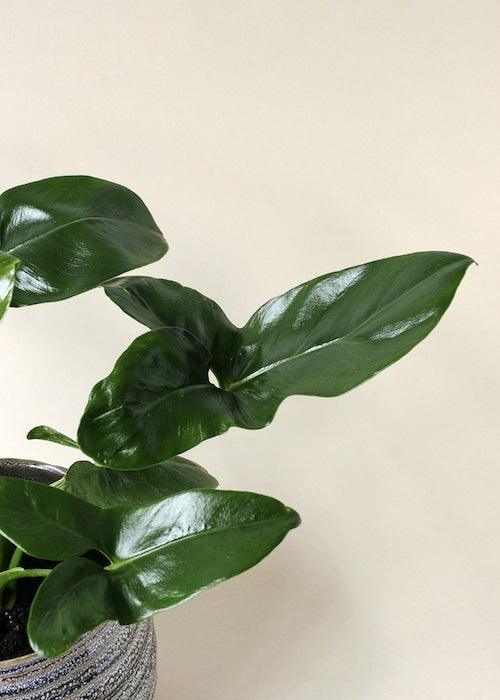
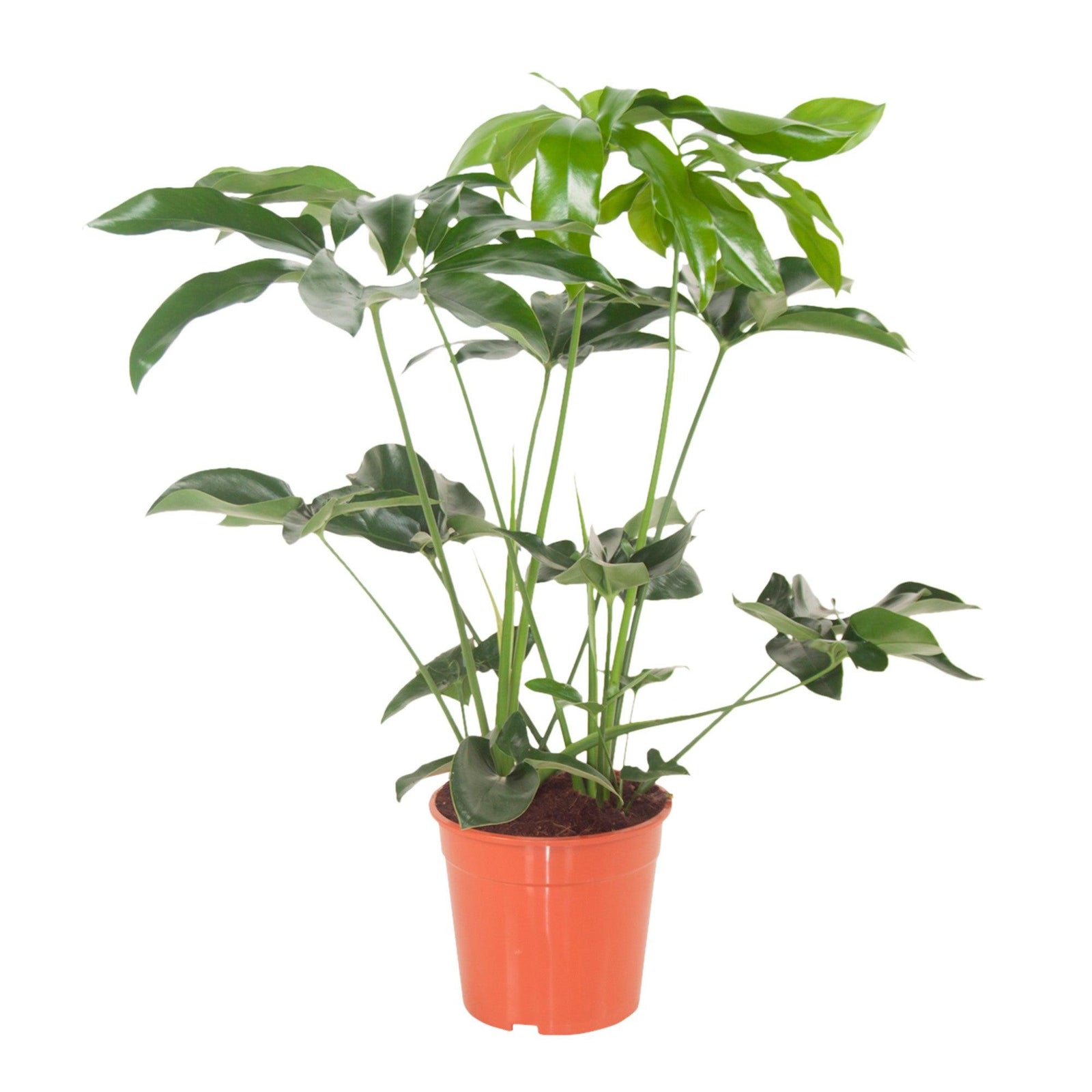
This Thaumatophyllum Spruceanum (Philodendron Goeldii, Green Wonder) shows large, palm-like leaves made of long, narrow lobes rather than the simple heart shapes familiar from many philodendrons. Leaves are glossy to semi-glossy deep green, rising from a radial crown to form an open, airy canopy with an overall Schefflera- or small-palm silhouette. Most nursery material is unvariegated, so the plant’s shape and texture are the main visual features.
Young plants start more compact with simpler, less-lobed leaves; as they mature the foliage becomes more regularly palmate and the stems can thicken into a short, trunk-like form. The crown often develops a mild spiral as new leaves emerge. It is generally self-supporting as an upright, arborescent specimen rather than a climber, though a roomy pot or light staking can stabilise a developing trunk.
In everyday homes it rewards space and moderate humidity: in lower light it will grow more upright and produce smaller leaves, and it is sensitive to prolonged waterlogging and typical dry-condition pests. One honest trade-off is scale—this species often becomes an architectural plant that needs room rather than a tiny desktop specimen. Note also it contains insoluble calcium oxalate crystals and can irritate if chewed by pets or children.
Best suited to living rooms, hallways or offices where a palm-like green form is wanted. Choosing a more mature specimen gives an immediate trunk and fuller crown, while smaller plants are compact and need time to develop that arborescent habit. This is a species-level plant that appeals to collectors for its distinctive foliage and taxonomic history; it’s more common from specialist nurseries than in mainstream chains.
Shipping Information
expand_more
- All orders are subject to a €25 minimum order value requirement
- All orders are hand-picked and shipped from the Netherlands
- Plastic-free materials when possible
- Orders are usually processed in 1-3 working days and shipped via DPD and their international partner carriers
- At times, orders may take up to 7 days to ship
- Orders to Germany Free shipping over €60. Free shipping all other EU countries* at €100 (Except Malta and Cyprus)
- Shipping costs are calculated at checkout based on delivery country:
See our FAQ and Shipping Guarantee for any further Questions!

Size: XXL - P24 H100
Plant questions, answered
What makes Thaumatophyllum spruceanum (Green Wonder) different from other philodendrons?
expand_more
Its most distinguishing feature is the palm-like palmate leaves with long, narrow lobes that form an airy, architectural crown. Thaumatophyllum spruceanum produces a radial rosette and, with age, an arborescent trunk—unlike many heart‑leaved philodendrons. Expect a sculptural, palm-esque silhouette rather than the simple heart-shaped foliage of common philodendrons.
Will the leaf shape change as the plant matures?
expand_more
Yes — juvenile leaves are usually less divided and smaller than mature foliage. As Thaumatophyllum spruceanum ages it often produces more deeply lobed, regularly palmate leaves and can develop a short, trunk-like stem and clearer radial crown. Expect a noticeable change in leaf form as the plant matures.
Is this plant suitable for indoor conditions and what light does it need?
expand_more
This species suits indoor conditions under bright, indirect light but tolerates lower light with slower, more upright growth. Prolonged direct midday sun can scorch the lobed leaves. Thaumatophyllum spruceanum prefers moderate to high humidity, so drier rooms may produce smaller new leaves and brown tips.
Is Thaumatophyllum spruceanum safe for homes with pets or children?
expand_more
No — Thaumatophyllum spruceanum contains insoluble calcium oxalate crystals and is toxic if chewed or ingested. Contact can cause oral irritation, swelling and drooling; handle with care, keep out of reach of children and pets, and avoid touching sap to skin or eyes without protection.
Is this plant rare or of special interest to collectors?
expand_more
It is sought after by some collectors for its palm-like architecture and the taxonomic history (formerly sold as Philodendron goeldii), but it is not extremely rare. Availability is uncommon in big‑box retailers yet widespread among specialist and online nurseries, so it’s collectible but not generally trade-limited.
What size should I expect if I order this listing?
expand_more
The current listing records an XXL - P24 H100 variant (pot noted as 24 cm, height noted as 100 cm), but the product metadata flags dimensions as potentially unreliable. You should therefore expect an architectural, trunk‑forming specimen, while actual pot and plant dimensions on arrival may vary.
Plant care guide
Light
expand_more
Water
expand_more
Soil and repotting
expand_more
Humidity and temperature
expand_more
Feeding
expand_more
Growth and support
expand_more
Common concerns
expand_more
Watch for overwatering and poor drainage (root rot), leaf scorch from direct sun, low humidity causing brown tips and smaller new leaves, and common pests such as mealybugs or spider mites in dry or stressed plants.
Pet safety
expand_more
You might also like
The Philodendron ‘Prince of Orange’ arrived safely and was well packed. The plant looked healthy and had beautiful colors. It adapted well after shipping and I’m very happy with it. It is also growing very well — in almost two months it has already produced three new leaves, maybe even four.
The Philodendron Billietiae arrived in good condition and was packed carefully. It is a beautiful plant with lovely leaves and strong potential. I’m very happy to have it in my collection.
It have got two new big leaves 🫶
Very pretty
👍
It traveled during winter and survived(unluckily the other philo didnt make it and plant circle gave it another try🙏🏻)
It seems to be hard to kill, beautiful, fast growing! I really loved it!
Reviews in Other Languages
Sehr schöne gesunde Pflanze. Ich bin sehr auf ihre nächsten Blätter gespannt.
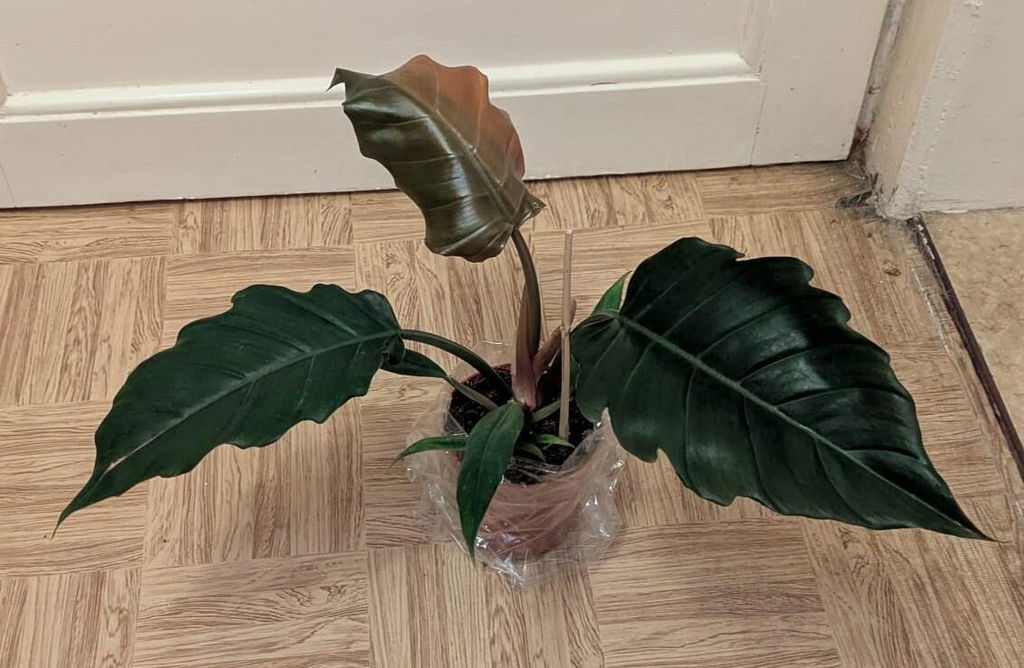
Sehr schöne gesunde Pflanze. Ich hoffe, sie wird sich bei mir wohlfühlen.
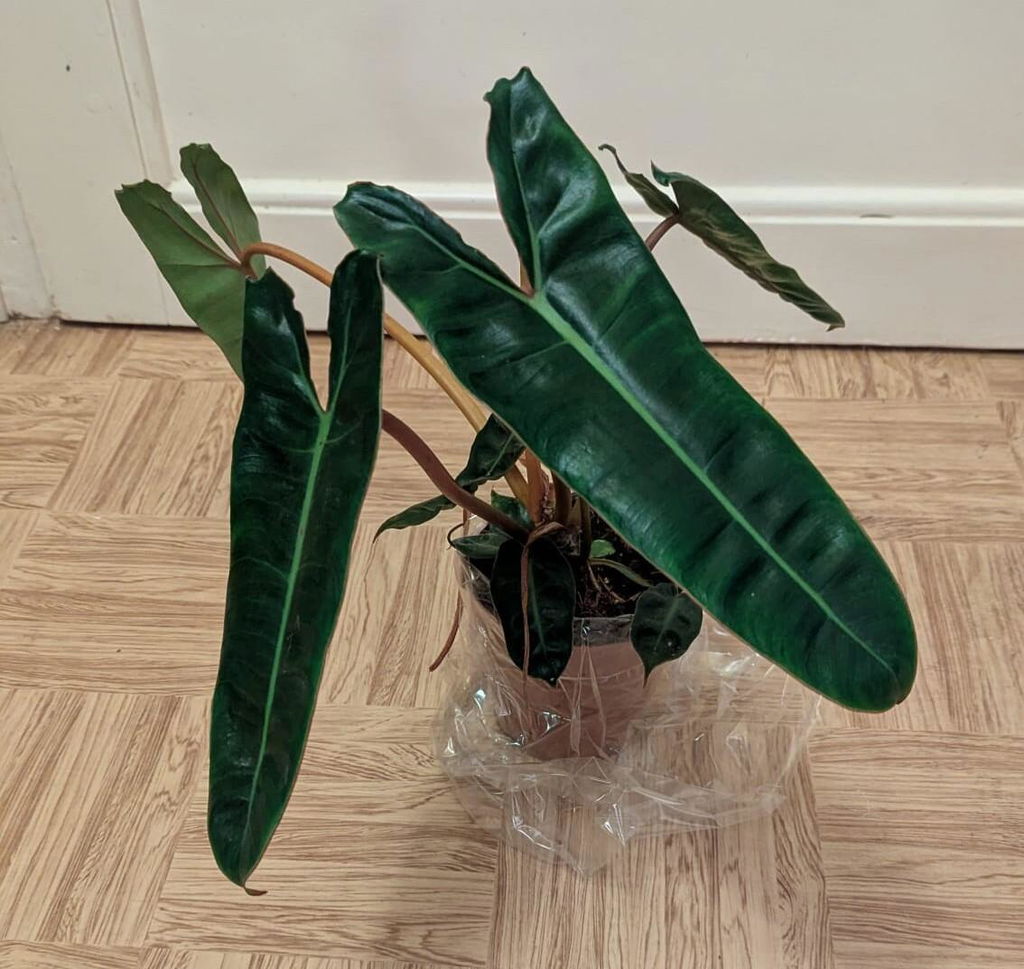
Sehr schöne gesunde Pflanze. Ich hoffe, sie wird sich bei mir wohlfühlen.