


Secure packaging for delicate plants
Small business in Berlin
★★★★★ 4.87 Avg. Review


Aglaonema 'Red Joy'
Aglaonema 'Red Joy' is a selected Aglaonema cultivar marketed for its strong red/pink leaf flushing—many leaves can be heavily red while others keep green margins—producing a bold, high-contrast appearance. This compact, clump-forming houseplant grows as a small upright specimen that tolerates medium to low indoor light and suits buyers wanting vivid colour with easy care, but it is toxic to pets so keep it away from cats and dogs.
- height Height
- 30 cm
- swap_horiz Pot Size
- 12 cm
- volunteer_activism Care
- Easy
- wb_sunny Light Needs
- Indirect light
- water_drop Watering Needs
- Medium
check_circle In Stock
Quick care table
Plant care at a glance
| Care factor | Aglaonema 'Red Joy' |
|---|---|
| Botanical name | Aglaonema 'Red Joy' |
| Common name | Chinese evergreen 'Red Joy', Chinese evergreen, and Aglaonema 'Red Joy' |
| Difficulty | Easy |
| Light | Indirect light |
| Water | Medium |
| Humidity | Medium |
| Pet safe | No, toxic if ingested |
| Best for | Indoors |
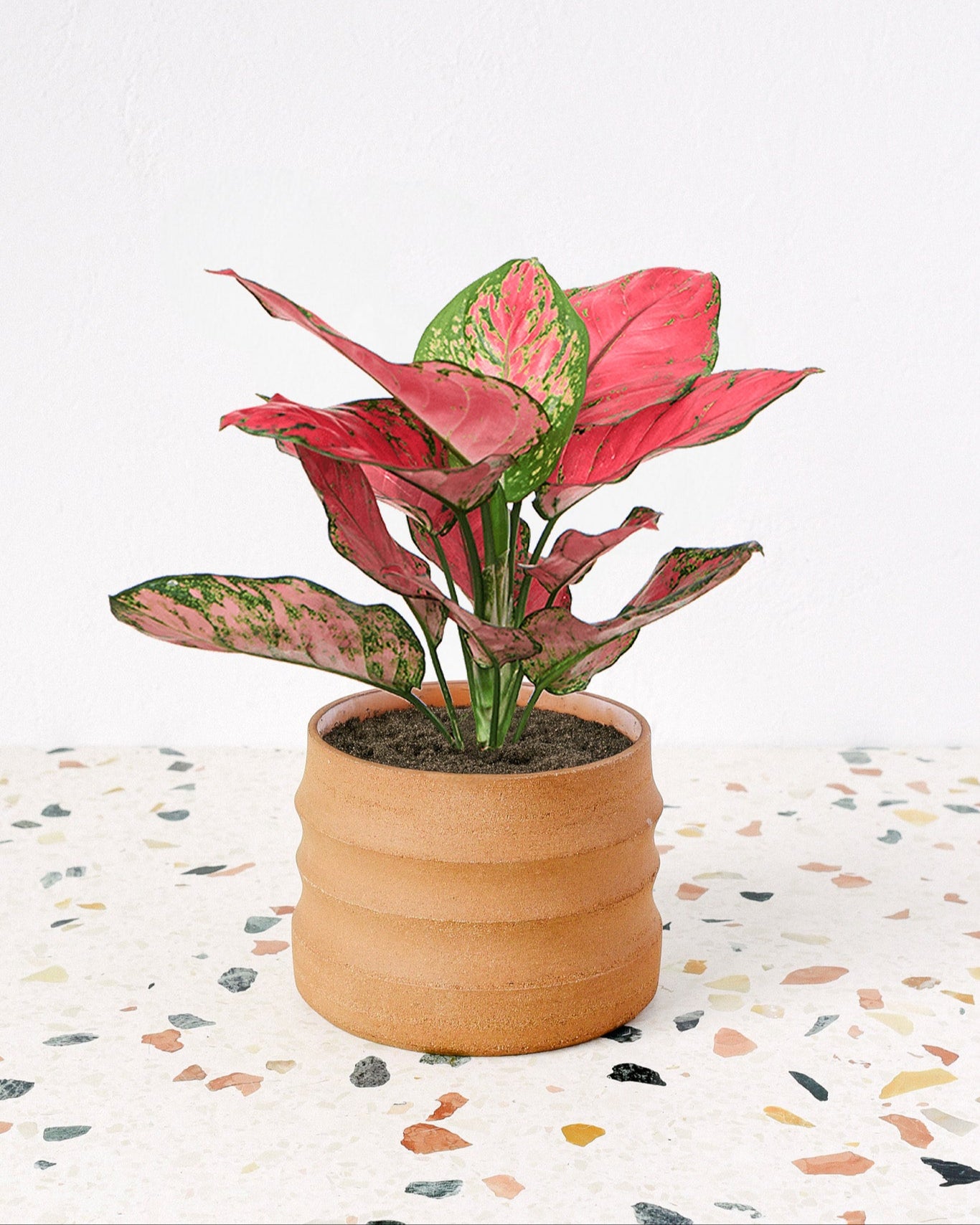
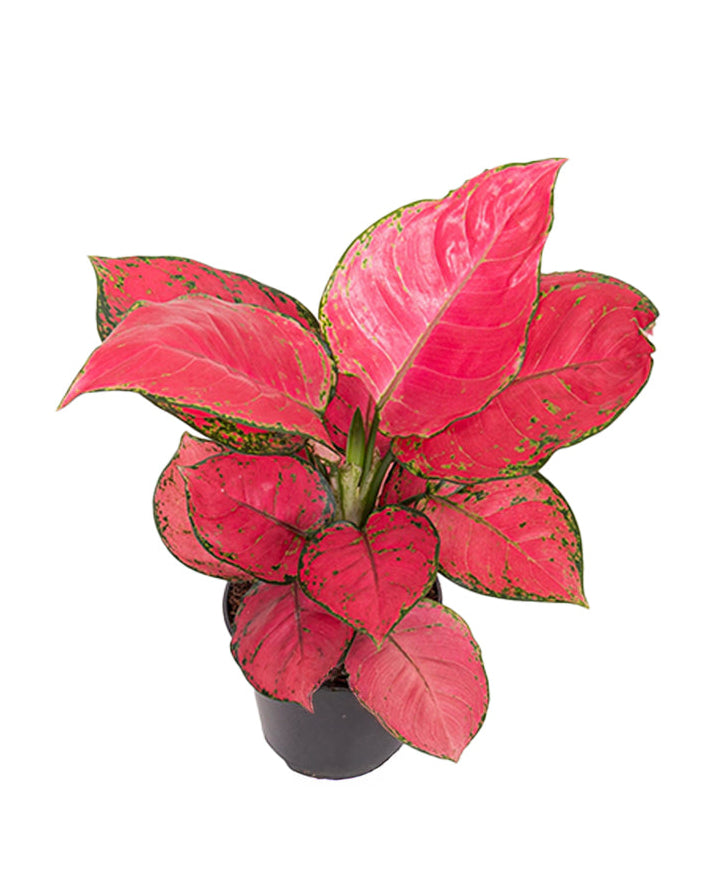
Vivid red-pink foliage: Aglaonema 'Red Joy' houseplant
Leaves are the main show: many emerge with strong red to deep-pink flushing that matures into bold colour alongside clear green margins and crimson venation. The glossy, lance-shaped leaves sit on short petioles in a compact, arching rosette, giving a warm, textured splash of colour rather than a single flat tone. Expect visible leaf-to-leaf variation—some leaves can be nearly all red while neighbours keep wide green edges.
As an indoor plant it stays a tidy, clump-forming specimen rather than a climber or trailer. New foliage often appears paler and deepens to stronger red/pink as it matures, but the shape of the leaves remains consistent; there’s no split or hole development. The overall habit is upright-to-arching with close internodes, so it fills a small pot without sprawling.
Real-world ownership means ready colour with straightforward display needs: it suits desks, shelves or compact corners and rewards regular dusting to keep the glossy leaves bright. One trade-off to expect is the colour variability—your plant will show a mix of red and green leaves rather than uniformly red foliage. Also note this selection is not safe to ingest, so keep it away from pets and children.
This plant is sold as a selected Aglaonema cultivar marketed for its red-pigmented leaves rather than a formally registered breeder variety; it’s popular with collectors for its colour but is widely offered by growers. Supplied as a compact, retail-ready potted specimen, it’s a quick way to add warm tone to small indoor spaces.
Shipping Information
expand_more
- All orders are subject to a €25 minimum order value requirement
- All orders are hand-picked and shipped from the Netherlands
- Plastic-free materials when possible
- Orders are usually processed in 1-3 working days and shipped via DPD and their international partner carriers
- At times, orders may take up to 7 days to ship
- Orders to Germany Free shipping over €60. Free shipping all other EU countries* at €100 (Except Malta and Cyprus)
- Shipping costs are calculated at checkout based on delivery country:
See our FAQ and Shipping Guarantee for any further Questions!

Size: Medium - P12 H30


Plant questions, answered
What is Aglaonema 'Red Joy' and how does it differ from other Chinese evergreens?
expand_more
Aglaonema 'Red Joy' is a selected cultivar valued for strong red/pink foliar flushing and crimson venation rather than a formally registered breeder variety. Compared with typical Aglaonema (often sold as A. commutatum), it is chosen for its bold red colouration and compact, dense clumping habit. Expect pronounced decorative colour but treat the cultivar name as a trade selection rather than a documented registered cultivar.
Will every leaf on my Aglaonema 'Red Joy' be bright red like pictured plants?
expand_more
No — leaf colour commonly varies within the same plant. Many leaves can be heavily flushed red while others keep wide green margins; new leaves often emerge paler and deepen in red/pink as they mature. This within-plant variability is normal and part of the cultivar’s visual character.
Is Aglaonema 'Red Joy' suitable for low-light rooms?
expand_more
Usually suitable — Aglaonema 'Red Joy' prefers bright, indirect light but tolerates medium to lower indoor light. Intense direct sun should be avoided as it can scorch leaves; in very low light the red intensity and contrast may be reduced. Place it where the colour will be visible but out of harsh sunlight.
Is Aglaonema 'Red Joy' safe around pets or children?
expand_more
No — Aglaonema 'Red Joy' is not pet-safe. Like other Aglaonema, it contains insoluble calcium oxalate crystals that can cause oral irritation, drooling, vomiting and possible swelling if chewed or ingested. Keep the plant out of reach and avoid letting curious pets or children nibble the foliage.
What common problems should I watch for with Aglaonema 'Red Joy'?
expand_more
Overwatering, low humidity and dry-air pests are the most frequent issues. Overwatering typically leads to yellowing leaves and root problems, while low humidity produces brown leaf tips; spider mites and other sap-suckers appear in dry indoor conditions. Use a well-draining mix, avoid prolonged waterlogging and raise humidity if you see brown tips or pests.
Is Aglaonema 'Red Joy' rare or worth collecting?
expand_more
It is sought after for its vivid red colour but is commercially common across many EU retailers. Collectors prize its striking red/pink foliage, yet the plant appears widely available rather than narrowly rare or exclusive. Expect strong decorative impact without assuming breeder-registered rarity or investment-grade scarcity.
Plant care guide
Light
expand_more
Water
expand_more
Soil and repotting
expand_more
Humidity and temperature
expand_more
Feeding
expand_more
Growth and support
expand_more
Common concerns
expand_more
Overwatering is the most common issue (leading to yellowing and root problems). Low indoor humidity can cause brown leaf tips. Watch for spider mites and other sap-sucking pests in dry conditions.