

Secure packaging for delicate plants
Small business in Berlin
★★★★★ 4.87 Avg. Review


Alocasia Cuprea 'Red Secret'
Alocasia Cuprea 'Red Secret' (Alocasia cuprea 'Red Secret') is a compact aroid prized for its pronounced copper‑red sheen and deeply impressed darker veins that create a sculptural, jewel-like look. Indoors it stays upright and forms offsets for shelf or desk display, suiting collectors or owners who can provide high humidity and attentive watering, and it is toxic to pets if ingested.
- height Height
- 12 cm
- swap_horiz Pot Size
- 6 cm
- volunteer_activism Care
- Medium
- wb_sunny Light Needs
- Bright indirect light
- pets Not Pet Friendly
- water_drop Watering Needs
- High
check_circle In Stock
Quick care table
Plant care at a glance
- Botanical name
- Alocasia cuprea 'Red Secret'
- Common name
- Alocasia cuprea 'Red Secret', Jewel Alocasia, Metallic Alocasia, Mirror plant, and Copper Alocasia
- Difficulty
- Medium
- Light
- Bright indirect light
- Water
- Medium
- Humidity
- High
- Pet safe
- No, toxic if ingested
- Best for
- Indoors, Living room, Bedroom, Bathroom, Kitchen, Hallway, and Office
Pronounced metallic copper–red sheen on compact jewel leaves
Leaves carry a strong metallic copper–red surface that catches light, with deeply impressed, darker veins and a glossy finish that reads almost sculptural on a small plant. Many specimens show dark purple to wine-red undersides, and the heart/arrow leaf shape remains relatively compact compared with larger Alocasia species, giving a dense, architectural silhouette.
Development is upright and clumping from a short rhizome rather than climbing; juvenile foliage typically shows the most intense copper-red sheen while older leaves can shift greener with age or different light and humidity. The plant produces offsets suitable for division, remains non-fenestrate, and does not require staking.
Owners should expect an attention-needing specimen: it prefers high humidity and consistent moisture and is prone to spider mites or thrips in dry conditions, with browning edges signalling stress. It is also sensitive to cool temperatures and is toxic if ingested. Note the cultivar status is a trade-name or uncertain selection—'Red Secret' is an established trade label used by growers, but its application is variable across suppliers rather than a formally registered cultivar.
Best suited to humid cabinets, bright shelves or a side table where the sheen can be seen up close. Supplied sizes reflect different uses: the Baby (grow-on) suits small shelves and desks as a developing specimen, while the Medium offers a fuller display and more mature leaf character for shelves or side tables.
Shipping Information
expand_more
- All orders are subject to a €25 minimum order value requirement
- All orders are hand-picked and shipped from the Netherlands
- Plastic-free materials when possible
- Orders are usually processed in 1-3 working days and shipped via DPD and their international partner carriers
- At times, orders may take up to 7 days to ship
- Orders to Germany Free shipping over €60. Free shipping all other EU countries* at €100 (Except Malta and Cyprus)
- Shipping costs are calculated at checkout based on delivery country:
See our FAQ and Shipping Guarantee for any further Questions!

Size: Baby - P6 H12


Plant questions, answered
What makes Alocasia cuprea 'Red Secret' different from other Alocasias?
expand_more
Usually distinguished by a pronounced metallic copper–red sheen, glossy surface and deeply impressed veins, Alocasia cuprea 'Red Secret' offers a jewel-like, sculptural look with often dark purple undersides. The name is a trade selection rather than a formally registered cultivar, so the visual effect—intense colour and sheen—is the primary buyer-relevant difference.
Will the leaf colour or sheen change as the plant matures or with different conditions?
expand_more
Usually the metallic copper–red sheen is strongest on juvenile leaves and under bright, humid conditions; leaves often become greener and less red-toned with age or lower light/humidity. For Alocasia cuprea 'Red Secret' expect colour intensity to vary, so manage light and humidity if you want to preserve the jewel-like appearance.
Which size should I choose: Baby or Medium?
expand_more
Usually choose Baby (P6 H12) if you want a compact grow-on option for a small shelf, desk or to develop further; it’s suited to tight displays. Choose Medium (P12 H30) for a fuller display and greater visual impact on a shelf or side table—expect it to need slightly more consistent humidity and space to show mature foliage character.
Is Alocasia cuprea 'Red Secret' safe around pets?
expand_more
No — Alocasia cuprea 'Red Secret' is toxic if ingested because it contains calcium oxalate crystals; chewing causes oral irritation and vomiting. Keep the plant well out of reach of cats and dogs, avoid low placements where curious pets can nibble leaves, and consider barriers or high placements to reduce risk.
Plant care guide
Light
expand_more
Water
expand_more
Soil and repotting
expand_more
Humidity and temperature
expand_more
Feeding
expand_more
Growth and support
expand_more
Common concerns
expand_more
Prone to spider mites and thrips in low humidity; browning leaf edges often indicate low humidity or fertiliser burn. Sensitive to cold — keep above about 18°C and avoid drafts. At risk of root rot if kept consistently waterlogged or in poorly draining media.
Pet safety
expand_more
You might also like
good
Very nice plant!
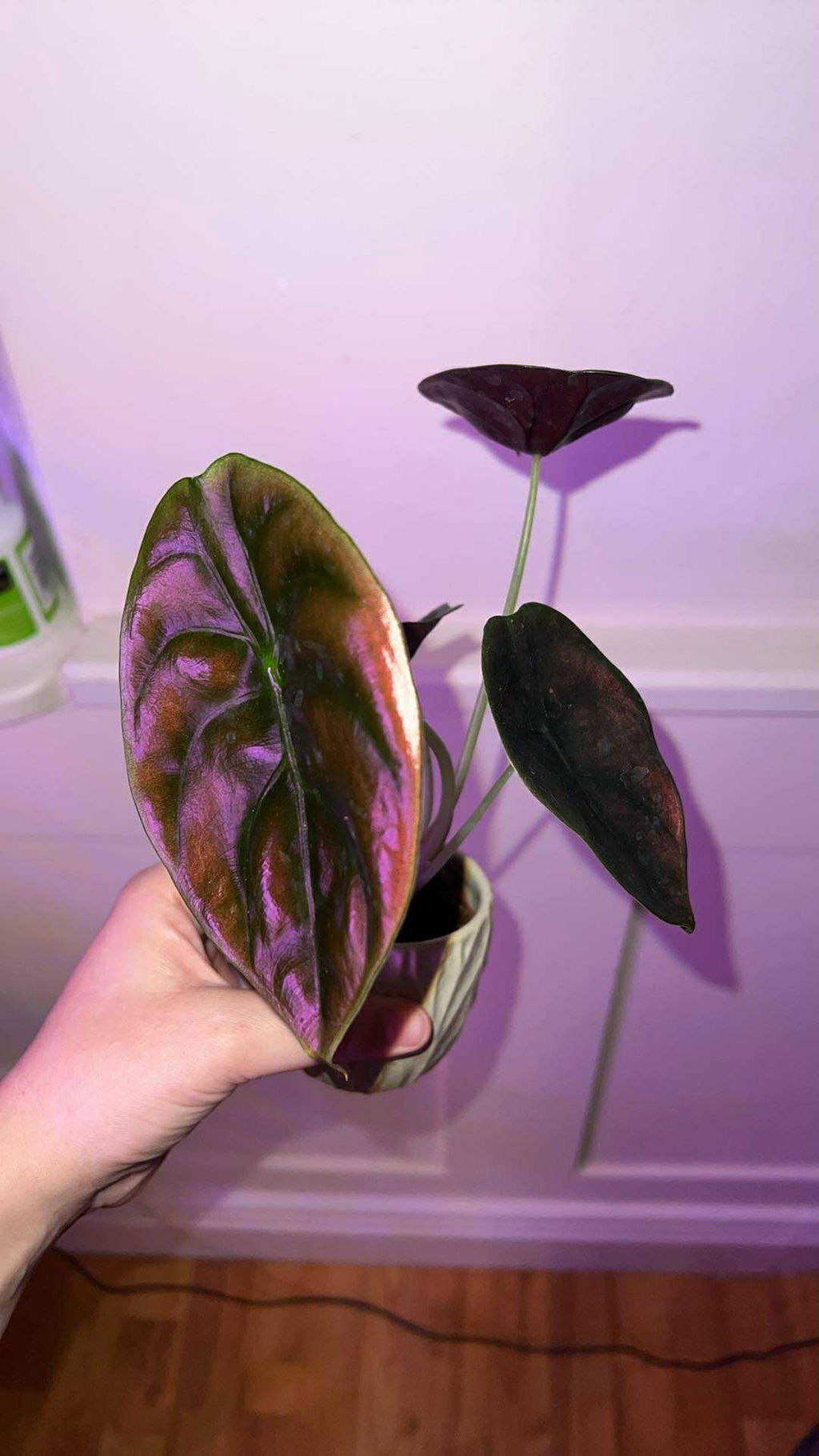
Beautiful little plant ❤️❤️
Beautiful plants and excellent customer service
Beautiful plant.Fast delivery. Recommended 💚
Reviews in Other Languages
Bin sehr zufrieden,vielen Dank