


Secure packaging for delicate plants
Small business in Berlin
★★★★★ 4.87 Avg. Review


Aspidistra elatior 'Large' (Large - P17 H70)
Aspidistra Elatior is a clumping, rhizomatous houseplant (grows from a creeping underground stem) with dark, glossy, leathery strap-shaped leaves held close to the soil. It suits shaded apartments and offices thanks to strong low‑light tolerance and slow, steady growth, but be careful— it is sensitive to prolonged waterlogging and prefers well‑draining soil.
- height Height
- 70 cm
- swap_horiz Pot Size
- 17 cm
- volunteer_activism Care
- Medium
- wb_sunny Light Needs
- Low light
- water_drop Watering Needs
- Medium
check_circle In Stock
Quick care table
Plant care at a glance
- Botanical name
- Aspidistra elatior
- Common name
- cast‑iron plant, bar‑room plant, and Aspidistra elatior
- Difficulty
- Medium
- Light
- Low light
- Humidity
- Medium
- Best for
- Indoors
Aspidistra Elatior — Dark, Glossy Cast‑Iron Foliage
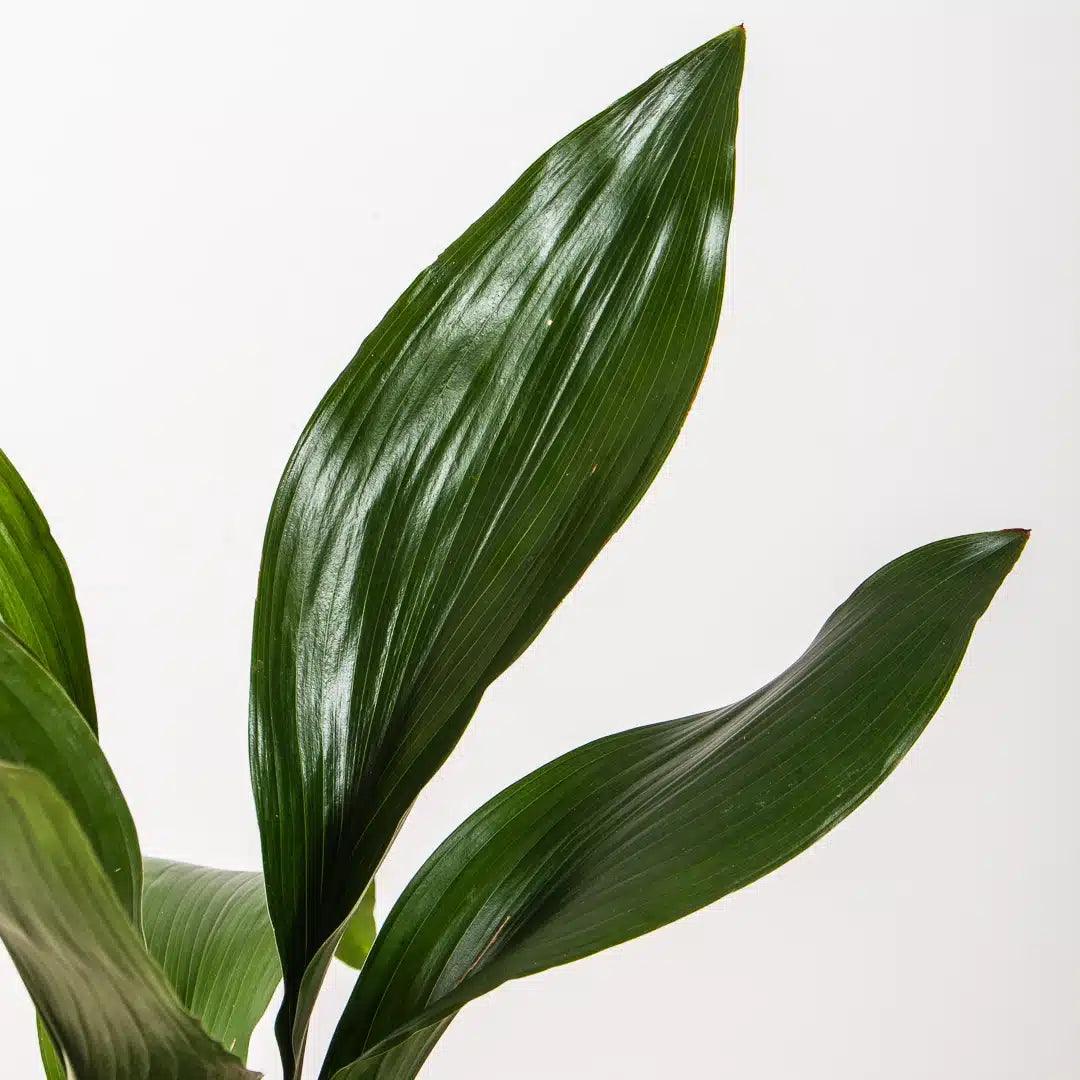
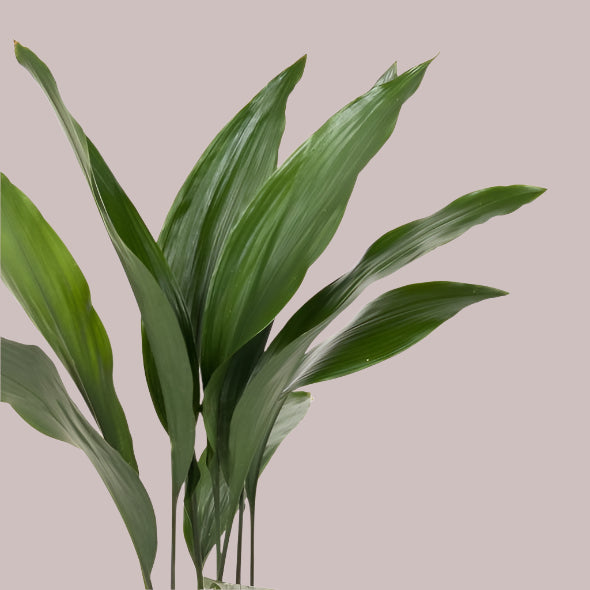
Broad, dark‑green leaves form a low, architectural clump: strap‑to‑lanceolate blades rise singly on short petioles from a creeping rhizome, with strong parallel veins and a leathery (coriaceous) sheen. The overall silhouette is a dense basal rosette held close to the soil, giving a steady green presence rather than a spiky or airy look.
Indoors it stays a clumping, non‑climbing plant — you won’t see juvenile-versus‑mature leaf drama or split leaves like Philodendron or Monstera. Growth is slow to moderate in height (commonly appearing 40–70 cm in cultivation), with each new leaf unfurling from the rhizome; it also has a predictable winter slowdown when top‑growth eases off.
In everyday ownership this species is forgiving in low to medium light and tolerates average indoor humidity; expect occasional browning at the tips if air is very dry or watering is irregular. It prefers moderate moisture and can suffer from yellowing if kept waterlogged — that trade‑off (slow growth but sensitivity to overwatering) is worth noting. It is listed as non‑toxic to cats and dogs, and is normally divided into new plants every few years rather than trained or staked.
Best suited to shaded corners, low tables or office corridors, the listing is supplied in a Large (P17 H70) size so you receive a fuller, taller clump ready to fill space. If you were seeking variegation or a compact ‘Minor’ look, seek that named selection specifically — the plain green species here differs clearly from variegated cultivars in long, uniform dark blades.
Shipping Information
expand_more
- All orders are subject to a €25 minimum order value requirement
- All orders are hand-picked and shipped from the Netherlands
- Plastic-free materials when possible
- Orders are usually processed in 1-3 working days and shipped via DPD and their international partner carriers
- At times, orders may take up to 7 days to ship
- Orders to Germany Free shipping over €60. Free shipping all other EU countries* at €100 (Except Malta and Cyprus)
- Shipping costs are calculated at checkout based on delivery country:
See our FAQ and Shipping Guarantee for any further Questions!
Size: Large - P17 H70

Plant questions, answered
Is Aspidistra elatior suitable for very low‑light rooms or corridors?
expand_more
Yes — Aspidistra elatior (cast‑iron plant) is well suited to low‑to‑medium indirect light and tolerates deep shade better than many houseplants. It performs poorly in strong direct sun, so place it in dim corners, hallways or north‑facing rooms. Practical implication: choose locations without hot sunlight and expect steady, slow growth in low light.
How does this plain green Aspidistra differ from variegated selections?
expand_more
This listing is the unvariegated species Aspidistra elatior, not a named variegated cultivar. Variegated selections (e.g. 'Variegata' or 'Milky Way') show striping, spots or pale margins and are treated as distinct trade selections. Practical implication: buy a named cultivar if you want stable variegation rather than the consistent dark glossy blades of the species.
Is Aspidistra elatior safe to have around pets and children?
expand_more
Non‑toxic — Aspidistra elatior is listed as non‑toxic to cats and dogs by the ASPCA. This makes the cast‑iron plant a suitable choice for homes with pets and children. Practical implication: it is appropriate for busy households, though it’s still sensible to discourage pets from chewing on foliage.
What common problems should I watch for and how do I fix them?
expand_more
Expect browning leaf tips from irregular watering or very dry air, and yellowing or soft leaves from overwatering and poor drainage. Aspidistra elatior can also attract scale occasionally. Practical implication: allow the top ~3 cm of soil to dry between waterings, improve drainage or humidity as needed, and inspect/treat any sap‑feeding pests promptly.
What does the size label ‘Large - P17 H70’ mean for the plant I receive?
expand_more
It describes the commercial size: this variant is offered in a 17 cm pot with an approximate presentation height of 70 cm and is a size descriptor, not a cultivar name. Actual leaf number and exact height can vary with seasonal growth and shipping. Practical implication: choose this option if you want a substantial, floor‑suitable cast‑iron plant rather than a small tabletop specimen.
Plant care guide
Light
expand_more
Water
expand_more
Soil and repotting
expand_more
Humidity and temperature
expand_more
Feeding
expand_more
Growth and support
expand_more
Common concerns
expand_more
Browning leaf tips often result from irregular watering or very dry indoor air. Yellowing or soft leaves indicate overwatering or poor drainage. Occasional scale or other sap‑feeding pests can occur—inspect and treat if found. Wipe leaves occasionally to remove dust and keep blades glossy.