


Secure packaging for delicate plants
Small business in Berlin
★★★★★ 4.87 Avg. Review


Ctenanthe Burle Marxii
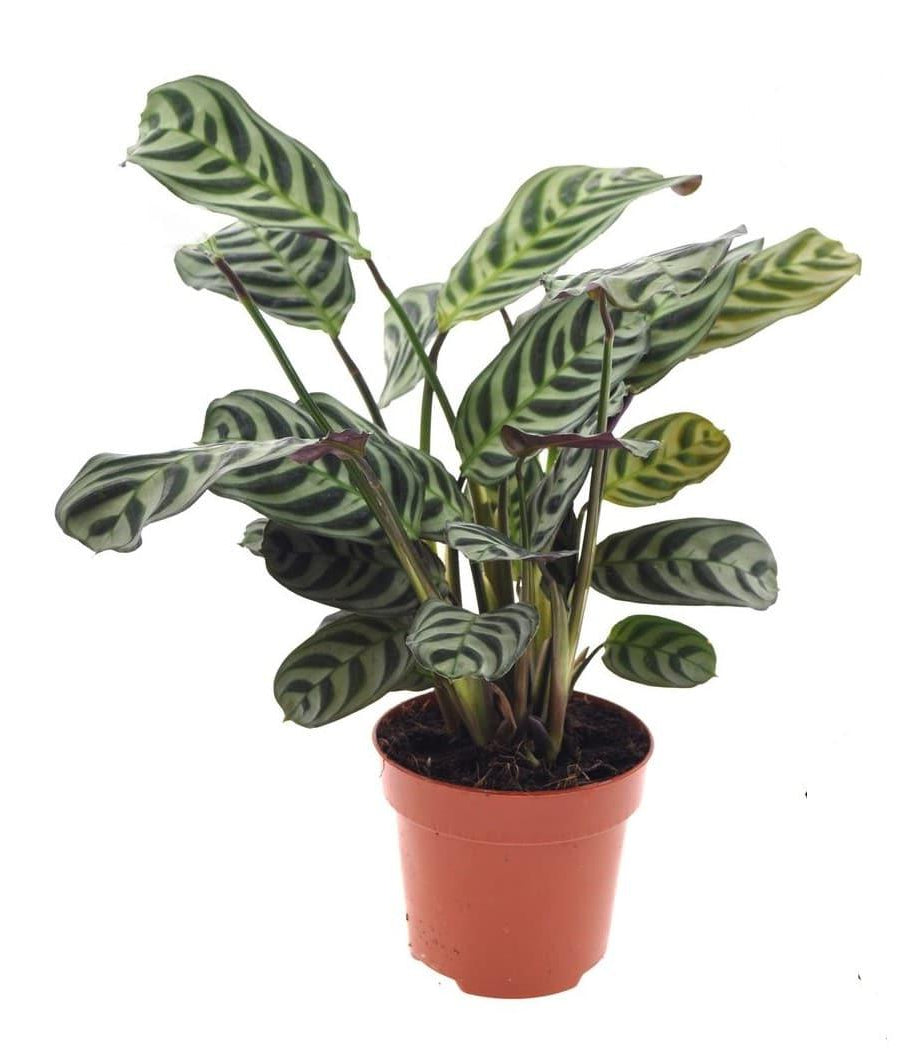
Ctenanthe Burle Marxii is a clump-forming prayer plant prized for silvery‑green, paddle-shaped leaves patterned with bold dark fishbone (herringbone) stripes. Ctenanthe burle-marxii H.Kenn. grows as a compact upright clump indoors, suits foliage collectors or anyone wanting striking patterned foliage, and is not known to be toxic to pets; it prefers bright, indirect light and moderate–high humidity to keep leaves healthy.
- height Height
- 25 cm
- swap_horiz Pot Size
- 12 cm
- volunteer_activism Care
- Easy
- wb_sunny Light Needs
- Indirect light
- pets Pet Friendly
- water_drop Watering Needs
- Medium
check_circle In Stock
Quick care table
Plant care at a glance
- Botanical name
- Ctenanthe burle-marxii H.Kenn.
- Common name
- Fishbone Prayer Plant, Fishbone Plant, Never Never Plant, and Burle-Marxii
- Difficulty
- Easy
- Light
- Indirect light
- Humidity
- Medium
- Pet safe
- Yes, non-toxic to pets
- Best for
- Indoors
Distinctive fishbone pattern and silvery leaves
Ctenanthe Burle Marxii, the Fishbone Prayer Plant, shows pale to silvery‑green, paddle‑shaped leaves patterned with bold, dark herringbone or “fishbone” bands that run diagonally toward the midrib. Leaves have a smooth, satiny surface and the undersides and petioles often show a purple‑tinge, giving the clump a two‑toned appearance and a gentle, rhythmic look on a shelf or table.
This species grows as an upright, clump‑forming plant from creeping rhizomes rather than a trailing vine. New leaves emerge folded and may show lower contrast until fully unfurled, and you’ll notice nightly movement (leaves folding or raising at dusk) — the familiar prayer‑plant behaviour. It stays a medium, bushy clump in ordinary indoor culture and does not produce long trailing stems.
In everyday ownership expect a decorative, pattern‑driven plant that responds to light and humidity: the fishbone striping is clearest in bright, indirect light and may wash out in very low light; low humidity often causes leaf tip browning. It also dislikes prolonged waterlogging (root rot is a real risk if the mix stays soggy), and occasional pests like spider mites can appear in dry air.
Best for bright, humid corners, bathrooms with good light or grouped tropical displays. Supplied as a medium (P12, approx. 12 cm pot and 25 cm overall height), this size offers a compact, mature clump ready for grouping or shelf display. Compared with Ctenanthe lubbersiana (‘Golden Mosaic’), burle‑marxii is cooler‑toned with silvery ground and clear fishbone bands rather than warm golden patches.
Shipping Information
expand_more
- All orders are subject to a €25 minimum order value requirement
- All orders are hand-picked and shipped from the Netherlands
- Plastic-free materials when possible
- Orders are usually processed in 1-3 working days and shipped via DPD and their international partner carriers
- At times, orders may take up to 7 days to ship
- Orders to Germany Free shipping over €60. Free shipping all other EU countries* at €100 (Except Malta and Cyprus)
- Shipping costs are calculated at checkout based on delivery country:
See our FAQ and Shipping Guarantee for any further Questions!

Size: Medium - P12 H25

Plant questions, answered
What makes Ctenanthe burle-marxii different from other prayer plants?
expand_more
Ctenanthe burle-marxii is the species (not a named cultivar) prized for a silvery-green leaf ground with bold, dark herringbone or fishbone stripes. It shows nightly leaf-folding (nyctinasty) and often a purple-tinged underside, forming a compact clump—traits that make its cool-toned, patterned foliage distinct and guide placement in bright, humid spots.
Is Ctenanthe burle-marxii safe for my cat or dog?
expand_more
Not known to be toxic to cats or dogs. Ctenanthe species are treated as pet-safe in horticultural trade and prayer-plant family entries (Calathea/Maranta) are listed non-toxic by ASPCA, but Ctenanthe is not always separately enumerated in every database. If ingestion occurs consult your vet or local poison-control service for advice.
What light, water and humidity does this Fishbone Prayer Plant need?
expand_more
Bright, indirect light, evenly to lightly moist soil and moderate–high humidity suit Ctenanthe burle-marxii best. The fishbone pattern will fade in very low light and direct sun can bleach or singe leaves. Allow the top growing medium to dry slightly between thorough waterings and avoid prolonged waterlogging to reduce root-rot risk.
What size will I receive if I order this plant?
expand_more
You will receive the Medium option labelled “P12 H25”: a 12 cm pot with the plant delivered at about 25 cm height. Ctenanthe burle-marxii grows as a low-to-medium upright clump from rhizomes and typically stays compact in that pot size, though new shoots may increase the clump over time.
How can I tell Ctenanthe burle-marxii apart from similar Ctenanthe species?
expand_more
Visually, burle-marxii has a silvery-green ground with bold fishbone stripes, unlike Ctenanthe lubbersiana which shows golden/cream mosaic patches, or C. setosa which has narrower, greyer leaves and often stronger purple undersides. Choose burle-marxii for cool-toned, bold striping and a paddle-shaped leaf habit.
What common problems should I watch for and how do I fix them?
expand_more
Brown leaf tips or crisp edges usually indicate low humidity or fertilizer build-up; brown patches or sudden leaf drop often come from inconsistent watering or poor drainage. Increase humidity, improve air stability, check potting mix and drainage, reduce fertiliser strength, and inspect for spider mites or scale in dry conditions to help recovery.
Plant care guide
Light
expand_more
Water
expand_more
Soil and repotting
expand_more
Humidity and temperature
expand_more
Feeding
expand_more
Growth and support
expand_more
Common concerns
expand_more
Leaf tip browning and edge crisping from low humidity or over-fertilisation; brown patches or leaf drop from inconsistent watering or poor drainage (root rot); faded or lost leaf pattern under too little light and bleached spots from direct sun; occasional spider mites and scale in dry indoor air.