



Sansevieria (Snake Plants)
Secure packaging for delicate plants
Small business in Berlin
★★★★★ 4.87 Avg. Review
Secure packaging for delicate plants
Small business in Berlin
★★★★★ 4.87 Avg. Review
Secure packaging for delicate plants
Small business in Berlin
★★★★★ 4.87 Avg. Review


Dracaena (Sansevieria) trifasciata 'Superba' is an upright, clumping rosette snake plant cultivar, an established commercial selection noted for gray‑green leaves with clear yellow‑gold marginal variegation and subtle transverse banding. It makes a compact architectural houseplant that tolerates low light and sparse watering, appealing to beginners and style-conscious buyers, but it is toxic to pets and may lose margin colour in very low light.
check_circle In Stock
Quick care table
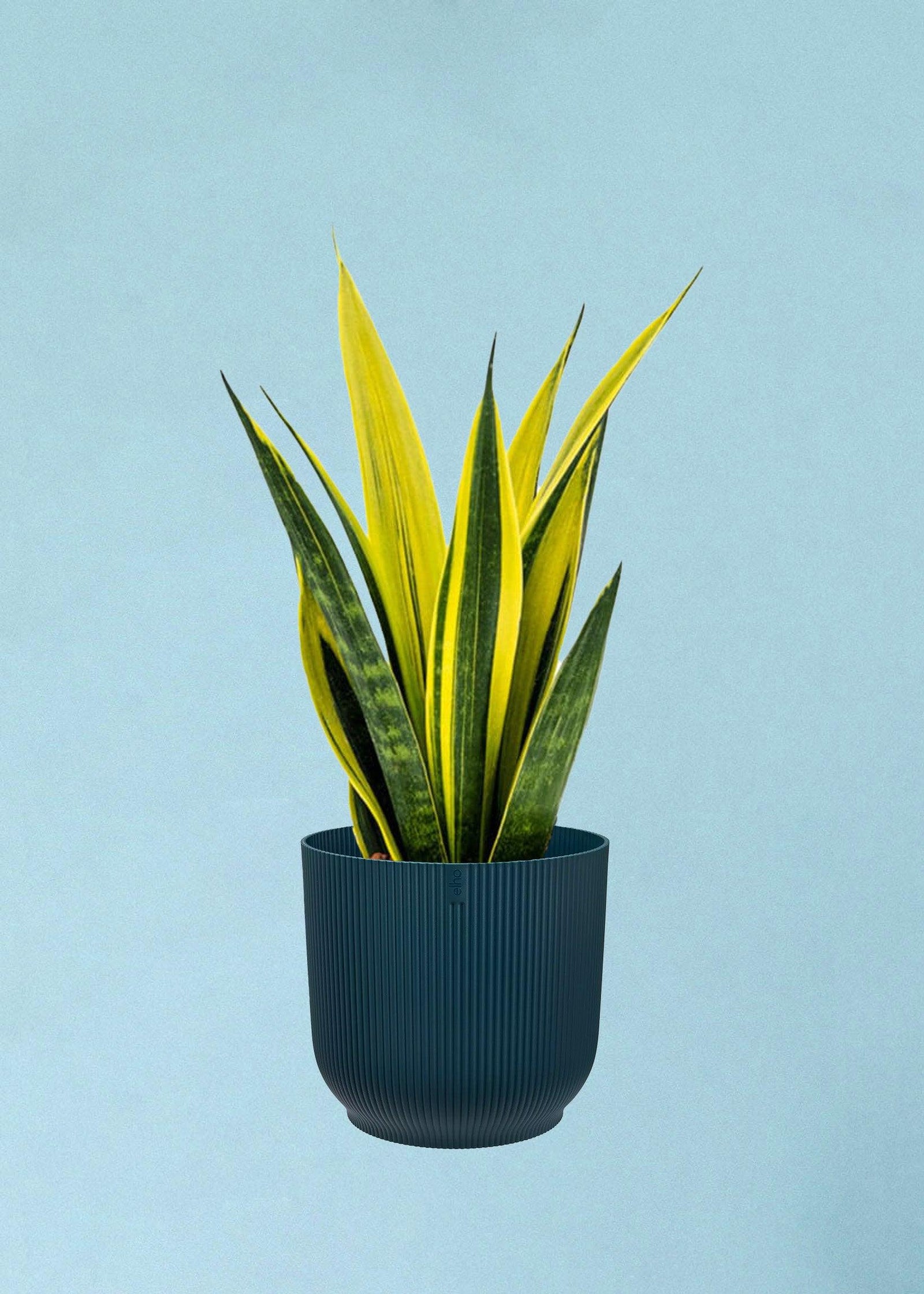
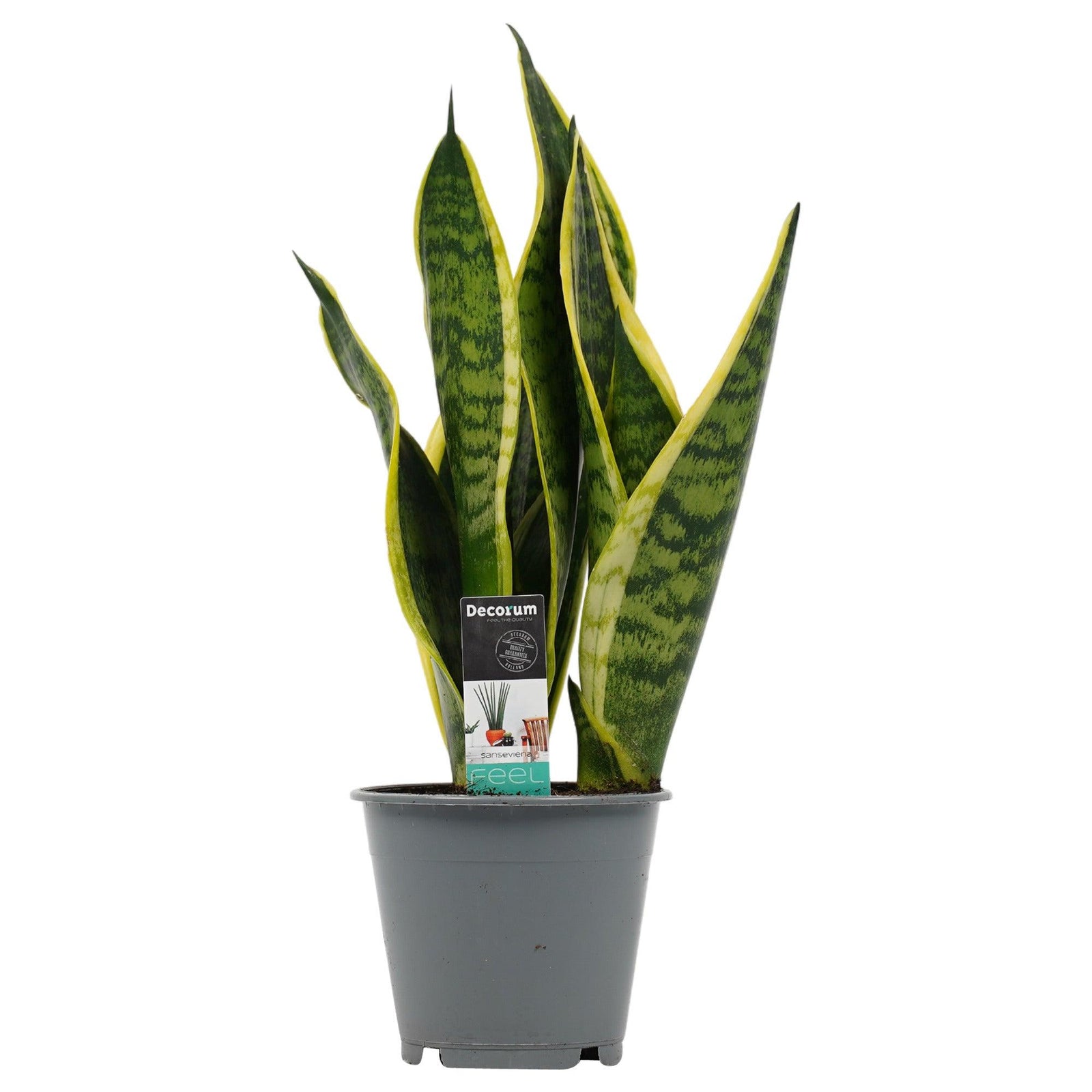
Broad, gray‑green leaves rise in a tight, upright cluster with clear yellow‑gold margins and subtle transverse banding across each blade. The contrast between the blue‑green leaf surface and the clean golden edges gives a crisp, architectural silhouette that reads well in modern interiors. Texture is smooth and firm, with relatively broad, erect leaves forming a compact rosette rather than long, arching swords.
This selected cultivar is commonly traded as Dracaena (Sansevieria) trifasciata 'Superba' (also sold as 'Futura Superba'), and its primary visible novelty is the yellow‑gold marginal variegation combined with the darker‑green horizontal striping. New leaves produced in lower light may show reduced gold margins, so the variegation is most pronounced with brighter, indirect light. Compared with 'Laurentii', 'Superba' tends to be shorter and broader; unlike 'Moonshine', it keeps yellow margins rather than an overall silvery tone.
In everyday care this snake plant behaves as a compact, architectural clumping rosette: slow to moderate grower that tolerates a range of indoor light but is vulnerable to overwatering and cold damage. Expect occasional mealybug or scale issues and remember the plant contains saponins, so it’s toxic to pets if chewed — an honest trade‑off for its bold look.
Best for desks, narrow hallways or minimalist living spaces where a tidy vertical form is wanted. Supplied as a single medium potted option, it arrives as a ready‑to‑display, compact plant rather than a choice between multiple size options.
Shipping Information
expand_moreSee our FAQ and Shipping Guarantee for any further Questions!

Size: Medium - P12 H35

What exactly is Dracaena (Sansevieria) trifasciata 'Futura Superba' and what makes it different from other snake plants?
expand_moreDracaena trifasciata 'Futura Superba' is a selected cultivar known for gray‑green leaves with clear yellow‑gold marginal variegation and transverse banding. Its novelty is the combination of bright margins with a compact, broad‑leaf rosette habit, which gives a cleaner margin than some other trifasciata selections and predictable decorative impact for interiors.
Will the yellow margins stay bright in typical indoor light?
expand_moreThe yellow‑gold margins can fade if the plant is kept in consistently low light. Dracaena trifasciata 'Futura Superba' tolerates low light but requires brighter, indirect light to retain strong marginal variegation; expect paler edges on new leaves produced in darker conditions and adjust placement if you want to maintain vivid colour.
How does 'Futura Superba' compare to the popular 'Laurentii' form?
expand_more'Futura Superba' is generally more compact with broader, erect leaves and a cleaner yellow margin, while D. trifasciata 'Laurentii' tends to be taller with more elongated leaves and a zigzag or lighter‑green internal pattern. Use 'Futura Superba' for a denser, architectural clumping look versus the taller habit of 'Laurentii'.
What are the main care risks or common problems for this cultivar?
expand_moreOverwatering is the primary risk for Dracaena trifasciata 'Futura Superba' and can lead to root rot. Mealybugs and scale are occasional pests, and cold exposure can cause damage. Provide well‑draining mix, avoid waterlogging, and inspect leaves periodically to reduce these typical problems.
Is this plant safe around pets and children?
expand_moreNo — the snake plant contains saponins and is toxic to dogs and cats if ingested, typically causing gastrointestinal signs. Keep Dracaena trifasciata 'Futura Superba' out of reach of curious pets and children and contact a veterinary poison resource if ingestion is suspected.
What size will I receive if I order this listing?
expand_moreThis listing is for the Medium - P12 H35 option: a plant supplied in a 12 cm pot with an approximate plant height of 35 cm. Expect a compact, clumping rosette typical of D. trifasciata 'Futura Superba'; exact leaf pattern and growth may vary between individual plants.
Light
expand_moreWater
expand_moreSoil and repotting
expand_moreHumidity and temperature
expand_moreFeeding
expand_moreGrowth and support
expand_moreCommon concerns
expand_morePet safety
expand_moreBe the first to know about newly stocked plants and accessories, sales and exclusive offers.
