


Secure packaging for delicate plants
Small business in Berlin
★★★★★ 4.87 Avg. Review


Epipremnum aureum 'N'Joy'
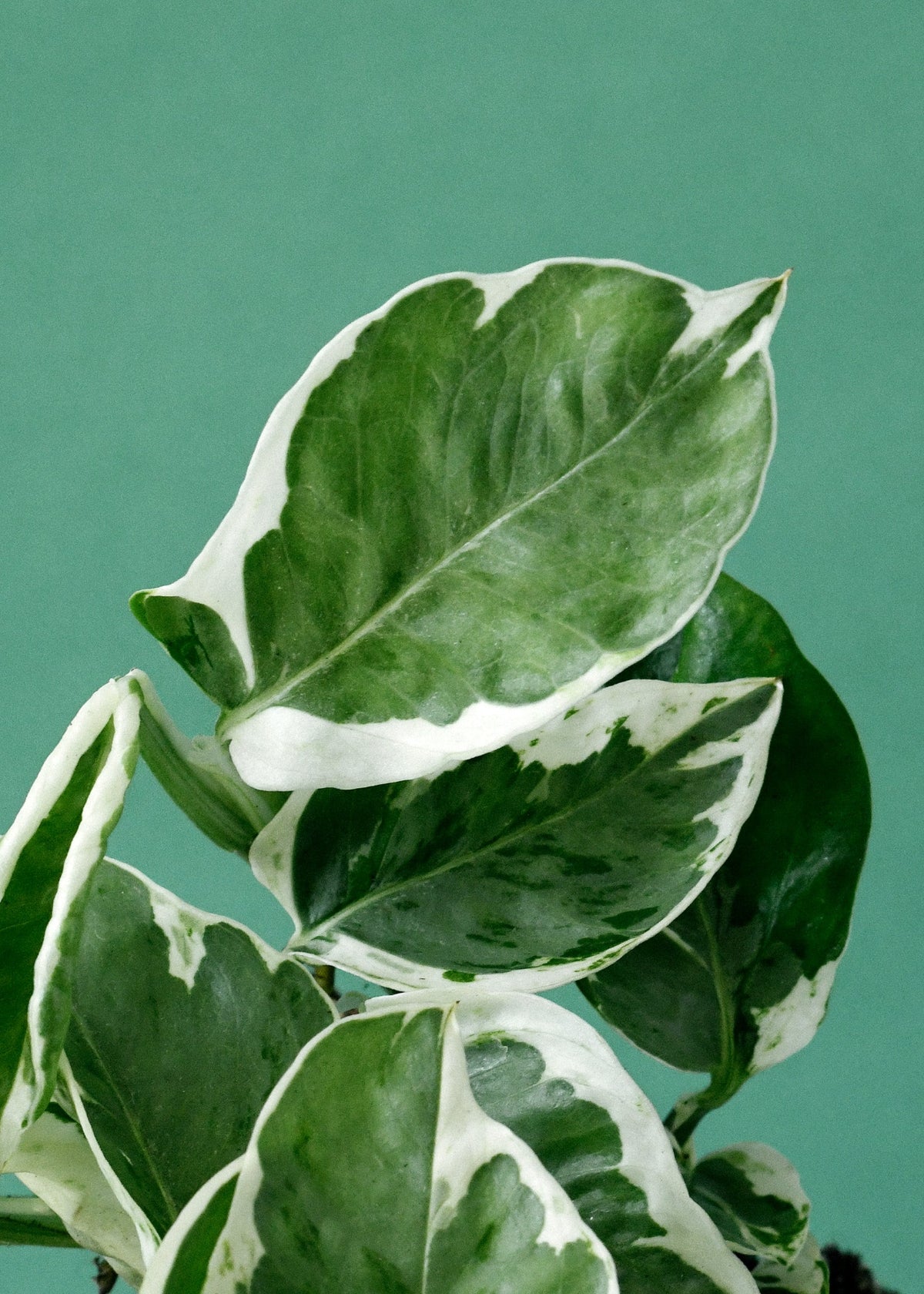
Epipremnum aureum 'N'Joy' is a compact, selected cultivar pothos valued for its bushier, small‑leaf habit and clean, high‑contrast cream‑and‑green variegation—many leaves show a prominent central green patch with crisp cream margins. It grows as a trailing or small climbing houseplant indoors, ideal for shelves, hanging baskets or collectors seeking a predictable compact variegate, and it’s toxic if ingested, so keep it away from pets and children.
- height Height
- 15 cm
- swap_horiz Pot Size
- 12 cm
- volunteer_activism Care
- Medium
- wb_sunny Light Needs
- Indirect light
- pets Not Pet Friendly
- water_drop Watering Needs
- Medium
check_circle In Stock
Quick care table
Plant care at a glance
- Botanical name
- Epipremnum aureum 'N'Joy'
- Common name
- N'Joy pothos, Pothos 'N'Joy', Epipremnum 'N'Joy', and Epipremnum aureum 'N'Joy'
- Difficulty
- Medium
- Light
- Indirect light
- Humidity
- Medium
- Pet safe
- No, toxic if ingested
- Best for
- Indoors
Compact high-contrast variegation for small spaces
A selected cultivar prized for compact, bushy growth and clean, high‑contrast cream‑and‑green leaves, this plant shows many leaves with a central green patch framed by creamy margins. Leaves are small to medium, glossy with a slightly puckered or undulate surface, and the overall silhouette is dense rather than lanky — a neat, textured look that suits shelves and hanging baskets alike.
In indoor settings the foliage typically stays juvenile and non‑fenestrated: it will trail naturally and branch into a bushy mass, or climb if trained on a moss pole where aerial roots may help support larger leaves. Variegation holds best in bright, indirect light; in lower light the cream areas can reduce and the plant will produce more green. Reports of larger, more divided leaves exist when grown vigorously to climb outdoors or in greenhouse conditions, but that is not the everyday retail form.
Ownership is straightforward but with a clear trade‑off: to keep the bold cream pattern you’ll need good light — variegation fades with dim conditions. Expect a compact, moderate‑growth houseplant that responds to regular pruning and dislikes constant waterlogging; brown edges and yellowing usually point to sun or water stresses. Note: it is toxic if ingested, so keep away from children and pets.
Best for small to medium displays — shelves, side tables or hanging baskets — it’s offered in medium pot options (a more compact medium for desks/shelves and a slightly larger medium for a fuller display). Choosing Epipremnum aureum 'N'Joy' gives you a predictable, high‑contrast variegate that many collectors value for its breeder history and tidy habit.
Shipping Information
expand_more
- All orders are subject to a €25 minimum order value requirement
- All orders are hand-picked and shipped from the Netherlands
- Plastic-free materials when possible
- Orders are usually processed in 1-3 working days and shipped via DPD and their international partner carriers
- At times, orders may take up to 7 days to ship
- Orders to Germany Free shipping over €60. Free shipping all other EU countries* at €100 (Except Malta and Cyprus)
- Shipping costs are calculated at checkout based on delivery country:
See our FAQ and Shipping Guarantee for any further Questions!

Size: Medium - P12 H15


Plant questions, answered
Is Epipremnum aureum 'N'Joy' safe around pets and children?
expand_more
Yes — Epipremnum aureum 'N'Joy' is toxic if ingested. The plant contains calcium oxalate crystals that cause oral and gastrointestinal irritation in pets and people. Keep N'Joy out of reach, place it well above child or pet height, and avoid letting animals chew on leaves or soil.
How does N'Joy differ from Epipremnum 'Marble Queen'?
expand_more
N'Joy typically has smaller, cleaner leaves with blocky cream‑and‑green variegation and a clear central green patch, whereas Epipremnum 'Marble Queen' usually shows broader, more marbled white‑green patterning and larger leaves. Choose N'Joy for a compact, high‑contrast trailing display and Marble Queen for heavier marbling and larger foliage.
Will Epipremnum aureum 'N'Joy' develop fenestrations or large leaves if I train it to climb?
expand_more
No — Epipremnum aureum 'N'Joy' is usually retained in a juvenile, non‑fenestrated state when grown as an indoor trailing plant. Some growers report larger leaves or occasional divisions when plants are trained vigorously to climb, but fenestration is not a reliably expected trait for the common retail form.
How stable is the variegation and what light does N'Joy prefer?
expand_more
Bright, indirect light produces the strongest cream‑and‑green contrast in Epipremnum aureum 'N'Joy'. In lower light the plant will produce more green and variegation can reduce or shift toward reversion. Place N'Joy where it gets bright indirect light but avoid direct sun that can scorch the cream areas.
What size will arrive if I order this plant?
expand_more
You may be offered two common 'Medium' production sizes: a 12 cm pot (approx. 15 cm plant height) or a 17 cm pot (approx. 20 cm height); actual availability varies by batch and region. Check the product page for currently offered variant and stock before purchase, as sellers may list different pot sizes.
Is there anything collectors should know about N'Joy’s status or availability?
expand_more
This cultivar is a selected cultivar with documented breeder/registration history and is sometimes linked to a PBR entry ('Hansoti12'); some registries also list a taxonomic synonym. That history can affect licensed propagation and regional availability, so collectors should expect generally common retail availability but occasional supply or licensing differences.
Plant care guide
Light
expand_more
Water
expand_more
Soil and repotting
expand_more
Humidity and temperature
expand_more
Feeding
expand_more
Growth and support
expand_more
Common concerns
expand_more
Watch for yellowing from overwatering or poor drainage, brown leaf edges from direct sun or low humidity, and reduced variegation in low light; occasional pests include mealybugs, scale and spider mites.