


Secure packaging for delicate plants
Small business in Berlin
★★★★★ 4.87 Avg. Review


Fittonia albivenis
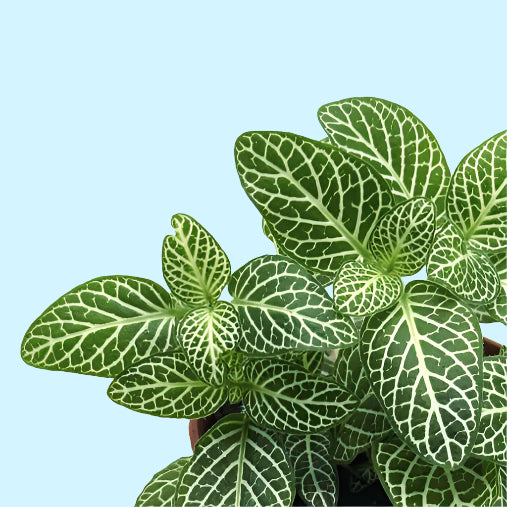
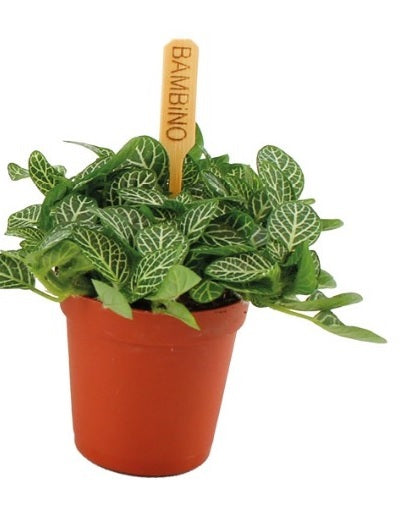
Fittonia albivenis Baby is a low-growing nerve plant that forms a compact, creeping mat with dark green leaves marked by a strong white, net-like vein pattern. Indoors it performs best in humid spots or closed terrariums and suits shelf or terrarium displays and pet-friendly homes, but it needs consistently even moisture and will droop if allowed to dry out.
- height Height
- 10 cm
- swap_horiz Pot Size
- 6 cm
- volunteer_activism Care
- Medium
- wb_sunny Light Needs
- Indirect light
- pets Pet Friendly
- water_drop Watering Needs
- Medium
check_circle In Stock
Quick care table
Plant care at a glance
- Botanical name
- Fittonia albivenis
- Common name
- nerve plant, mosaic plant, white nerve plant, painted-net plant, and Fittonia albivenis
- Difficulty
- Medium
- Light
- Indirect light
- Humidity
- Medium
- Pet safe
- Yes, non-toxic to pets
Compact white‑veined nerve plant for terrariums and shelves
This little plant shows a dense carpet of opposite, ovate leaves with a high‑contrast network of white veins that gives a mosaic or “nerve” effect across each blade. The foliage is relatively small and delicate in texture, forming a low, matting silhouette that reads as a lush carpet of green with crisp white reticulation rather than an upright, leafy stemmed habit.
As a houseplant it stays low and spreading rather than producing large or split leaves; the species keeps the same veined pattern from juvenile to mature growth and does not develop fenestration. Expect a creeping, groundcover behaviour that suits shallow pots and enclosed displays — it’s commonly sold and grown as a compact baby that will slowly spread across the substrate rather than climb.
In everyday ownership you’ll enjoy vivid vein contrast and a tight growth habit, but the trade‑off is that it prefers consistently high humidity and will wilt quickly if allowed to dry. Leaves can develop crispy edges in strong sun or low humidity, and stressed specimens are vulnerable to pests such as mealybugs or spider mites. It’s generally treated as non‑toxic to cats and dogs, though standard caution applies if a large amount is eaten.
Best suited to terrariums, humid bathrooms, or shaded shelves where its carpeted form can be appreciated. Supplied as a baby in a small pot, this makes it easy to tuck into displays; you can expect the same compact, spreading habit as it fills the surface over time. Compared with polka‑dot plants, it offers netted venation rather than spots, and unlike some red‑veined Fittonia selections (verschaffeltii group) it typically shows white veins.
Shipping Information
expand_more
- All orders are subject to a €25 minimum order value requirement
- All orders are hand-picked and shipped from the Netherlands
- Plastic-free materials when possible
- Orders are usually processed in 1-3 working days and shipped via DPD and their international partner carriers
- At times, orders may take up to 7 days to ship
- Orders to Germany Free shipping over €60. Free shipping all other EU countries* at €100 (Except Malta and Cyprus)
- Shipping costs are calculated at checkout based on delivery country:
See our FAQ and Shipping Guarantee for any further Questions!

Size: Baby - P6 H10
Plant questions, answered
Is this Fittonia albivenis suitable for closed terrariums or humid bathrooms?
expand_more
Yes — Fittonia albivenis thrives in high humidity and is commonly used in closed terrariums and humid bathrooms. It prefers humidity above about 60%, low-to-bright indirect light and steady moisture. Practical implication: keep the terrarium ventilated occasionally to avoid rot and avoid direct sun that can scorch the thin leaves.
How should I water and manage humidity to prevent drooping or crispy leaf edges?
expand_more
Keep the potting mix evenly and consistently moist and supply high humidity to prevent drooping or crispy edges. Fittonia albivenis does not tolerate long dry periods but is also vulnerable to waterlogging; brown edges often indicate low humidity or sun stress. Practical step: mist, use a humidifier or a terrarium, and ensure good drainage.
Is Fittonia albivenis safe for homes with pets and children?
expand_more
Generally non‑toxic to cats and dogs, but standard precautions apply. Authoritative resources list Fittonia species as non‑toxic, yet ingestion of a large amount could still cause problems. If a pet or child eats a significant quantity, contact your veterinarian or a poison‑control resource for guidance.
How does this Fittonia albivenis differ from a polka‑dot plant or other Fittonia trade names like verschaffeltii?
expand_more
Fittonia albivenis is the ‘nerve plant’ with a net‑veined (mosaic) leaf pattern, whereas Hypoestes (polka‑dot plant) shows spotted variegation. Retailers often use older group names (verschaffeltii) for similar selections; vein colour and cultivar labels vary in trade, so check the label if a specific vein colour or named selection matters.
What size will I receive and will this plant stay small?
expand_more
You will receive the listed Baby variant (Baby - P6 H10), supplied in a 6 cm pot and sold at about 10 cm tall. Fittonia albivenis is a low‑growing species that typically remains compact (around 10–15 cm high) and spreads slowly; repot only if roots become crowded or for a larger mixed display.
Plant care guide
Light
expand_more
Water
expand_more
Soil and repotting
expand_more
Humidity and temperature
expand_more
Feeding
expand_more
Growth and support
expand_more
Common concerns
expand_more
Wilting or drooping when allowed to dry (usually recovers after watering); crispy or brown leaf edges from low humidity or direct sun; yellowing from overwatering and poor drainage; occasional pests (mealybugs, spider mites, scale) on stressed plants.