

Secure packaging for delicate plants
Small business in Berlin
★★★★★ 4.87 Avg. Review


Goeppertia (Calathea) 'Beauty Star'
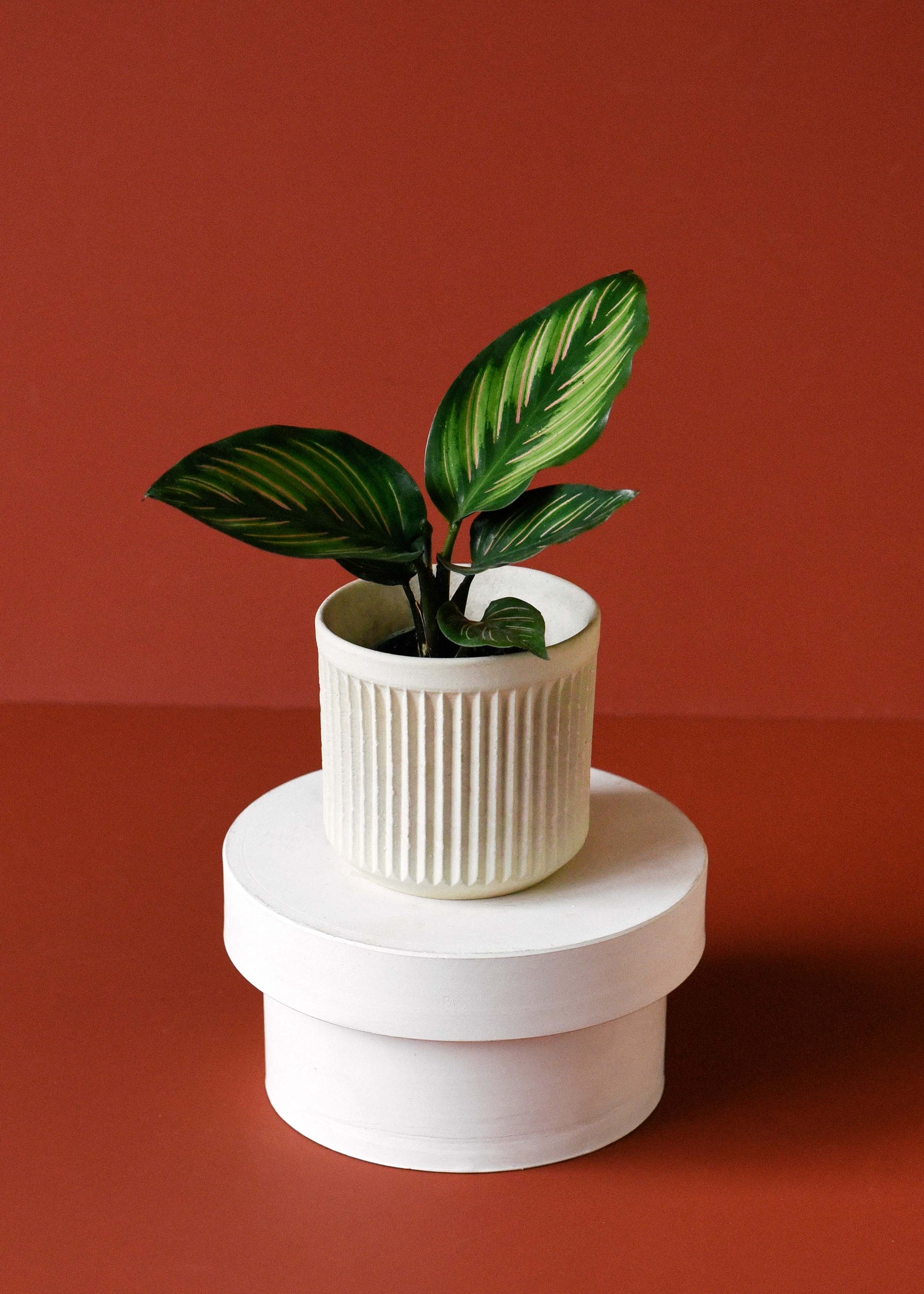
Goeppertia (Calathea) 'Beauty Star' (Goeppertia ornata 'Beauty Star') is a compact, clumping upright rosette houseplant and an established nursery selection, sought for its feathery pinstripe variegation with a lighter central wash and purple undersides. It grows as a decorative indoor clumper suited to collectors or anyone wanting showy pinstripe foliage, is non‑toxic to cats and dogs, but needs consistently high humidity to avoid brown tips.
- height Height
- 12 cm
- swap_horiz Pot Size
- 6 cm
- volunteer_activism Care
- Medium
- wb_sunny Light Needs
- Indirect light
- pets Pet Friendly
- water_drop Watering Needs
- Medium
check_circle In Stock
Quick care table
Plant care at a glance
- Botanical name
- Goeppertia ornata 'Beauty Star'
- Common name
- Beauty Star Calathea, Pinstripe Calathea, Pinstripe plant, and Prayer plant
- Difficulty
- Medium
- Light
- Indirect light
- Water
- Medium
- Humidity
- Medium
- Pet safe
- Yes, non-toxic to pets
- Growth habit
- Compact, clumping Upright Rosette
- Best for
- Indoors
Feathery pinstripe variegation: Goeppertia (Calathea) 'Beauty Star'
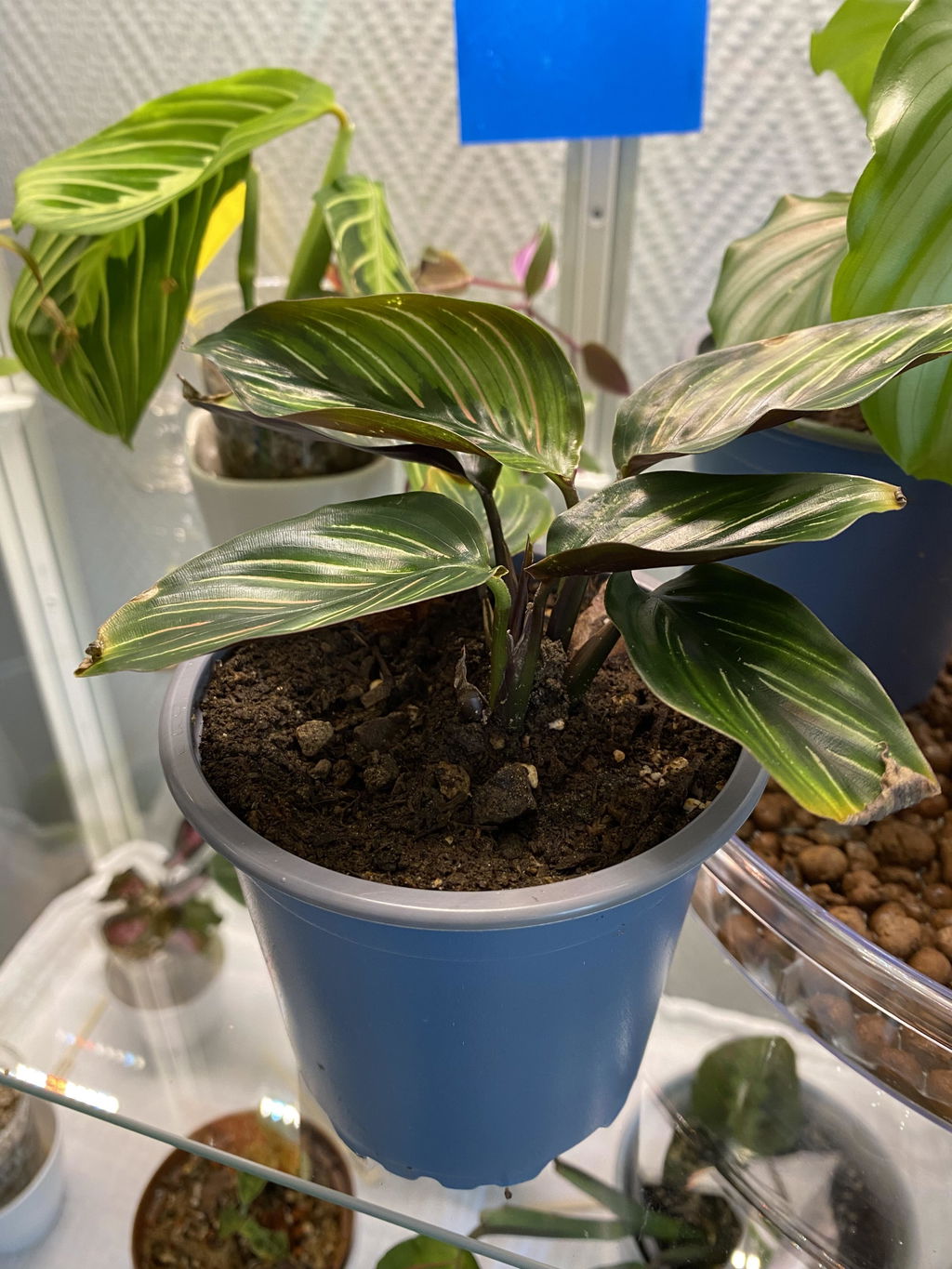
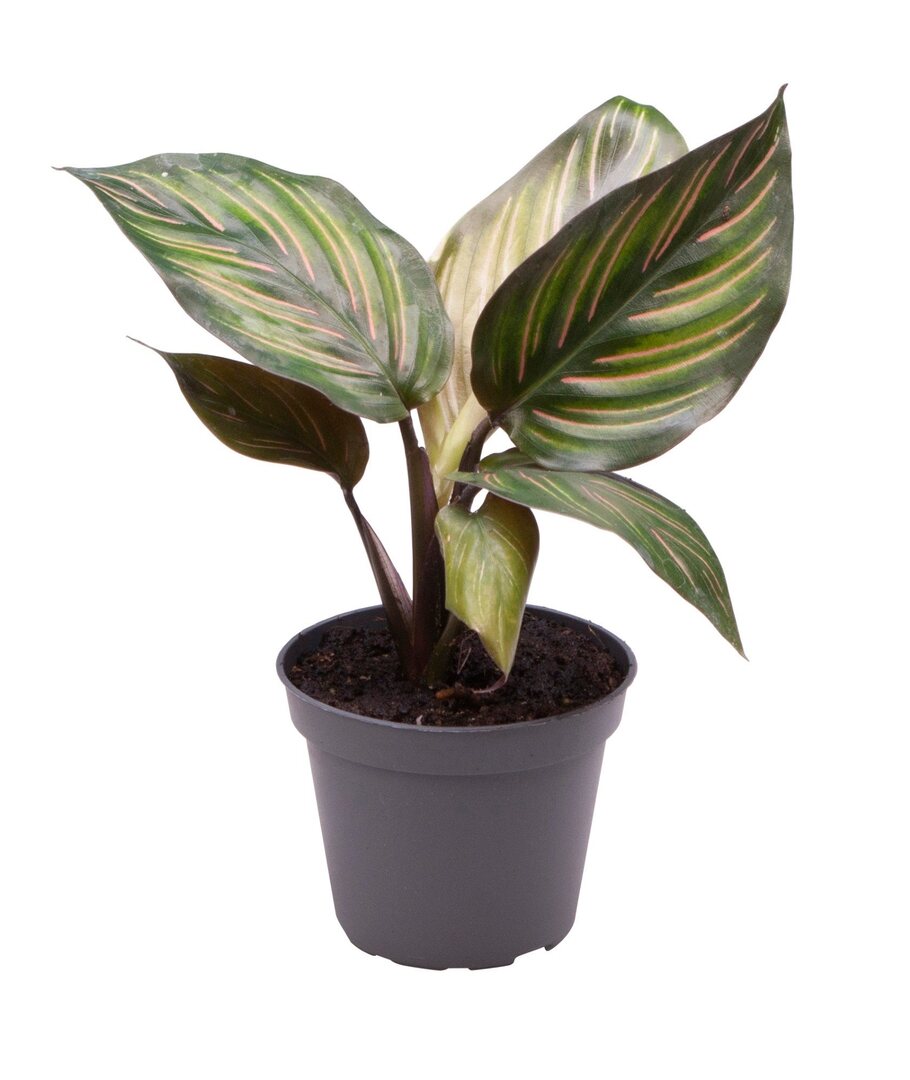
Long, lance-shaped leaves form a neat rosette with a lighter, pale‑green central wash and fine, feathery pinstripes in cream to pale‑pink that radiate from the midrib. Darker green margins frame each leaf and the undersides are a noticeable purple to deep‑maroon — a combination that gives the plant a layered, painterly look and a soft, arching silhouette on a compact plant.
This is a compact, clumping upright rosette that stays well behaved on a shelf or table rather than climbing or trailing. Stripe intensity can change as leaves mature and between individual plants: juvenile foliage sometimes shows subtler striping while older leaves reveal the characteristic brushstroke pattern more clearly. There is no leaf splitting or fenestration — the interest is wholly in the surface pattern and contrast.
In everyday ownership expect a decorative but somewhat fussy foliage plant: it favours bright to medium indirect light and higher humidity, and low humidity or hard water commonly causes brown tips and occasional spider‑mite or scale problems. It’s sold as a selected cultivar in nursery trade and noted for reliable vegetative propagation; it is non‑toxic to cats and dogs. One trade‑off is that the delicate striping can vary by source, so visual tone may shift as the plant grows.
Best for humid rooms, well‑lit living spaces or grouped plant displays where steady moisture and airflow are achievable. Supplied here as a baby (small potted starter), you’re buying a compact young plant that will develop fuller, more pronounced striping with time and consistent conditions. Pinstripe Calathea (common name) works well where its patterned leaves can be seen up close.
Shipping Information
expand_more
- All orders are subject to a €25 minimum order value requirement
- All orders are hand-picked and shipped from the Netherlands
- Plastic-free materials when possible
- Orders are usually processed in 1-3 working days and shipped via DPD and their international partner carriers
- At times, orders may take up to 7 days to ship
- Orders to Germany Free shipping over €60. Free shipping all other EU countries* at €100 (Except Malta and Cyprus)
- Shipping costs are calculated at checkout based on delivery country:
See our FAQ and Shipping Guarantee for any further Questions!
Size: Baby - P6 H12

Plant questions, answered
What makes Goeppertia ornata 'Beauty Star' different from a standard pinstripe (Goeppertia/Calathea ornata)?
expand_more
Goeppertia ornata 'Beauty Star' is a selected cultivar with feathery pinstripe variegation set against a lighter central wash and contrasting dark margins, plus purple undersides. Unlike darker 'pinstripe'/'Sanderiana' forms, 'Beauty Star' usually shows cream‑to‑pale‑pink linear stripes and an overall brighter leaf tone, making it visually distinct and popular with collectors.
Is the Beauty Star Calathea safe around pets?
expand_more
Yes, Goeppertia (Calathea) species including 'Beauty Star' are listed as non‑toxic to cats and dogs by authoritative pet‑safety sources. This means it's generally safe to keep around pets, though any plant material ingestion can still upset a stomach, so normal precautions and supervision are advised.
What light and humidity conditions suit this cultivar and where should I place it indoors?
expand_more
Bright to medium indirect light and high humidity suit Goeppertia ornata 'Beauty Star'. Avoid direct sun, which can scorch leaves, and very dry rooms that cause brown tips. Practically, place it in a well‑lit room out of direct sun or a humid spot like a bright bathroom or near a humidifier for best leaf quality.
Why do the stripe colours and intensity vary between leaves or between plants?
expand_more
Stripe intensity and the central wash commonly vary within and between plants of 'Beauty Star'. This cultivar’s pattern-based (non‑chimeric) variegation is reproducible by vegetative propagation but tone depends on clone, growth stage and growing conditions, so juvenile leaves often look different from mature foliage and some variation is normal.
What are the common problems to watch for with Goeppertia 'Beauty Star' and how can I prevent them?
expand_more
Common issues are brown leaf tips or edge browning from low humidity, hard water/mineral buildup, direct sun or underwatering, and pest outbreaks like spider mites and scale in dry conditions. Prevent these by keeping stable high humidity, avoiding prolonged direct sun, using low‑mineral water where possible, and checking leaves regularly for pests.
Plant care guide
Light
expand_more
Water
expand_more
Soil and repotting
expand_more
Humidity and temperature
expand_more
Feeding
expand_more
Growth and support
expand_more
Common concerns
expand_more
- Brown leaf tips: Often caused by low humidity or mineral-rich tap water — raise humidity and use filtered or rain water; trim damaged tips.
- Leaf edge browning: Caused by direct sun or underwatering — move to bright, indirect light and water evenly when the surface begins to dry.
- Pests (spider mites and scale): More likely in dry, low-humidity conditions — increase humidity, wipe leaves regularly and treat infestations with appropriate contact insecticidal measures.
Pet safety
expand_more
You might also like
Calathea Beauty Star Baby
Well packed, very nice size with 6 leaves and 1 more in few days: I am very happy with it, I recommend! (Picture 2 weeks after reception)