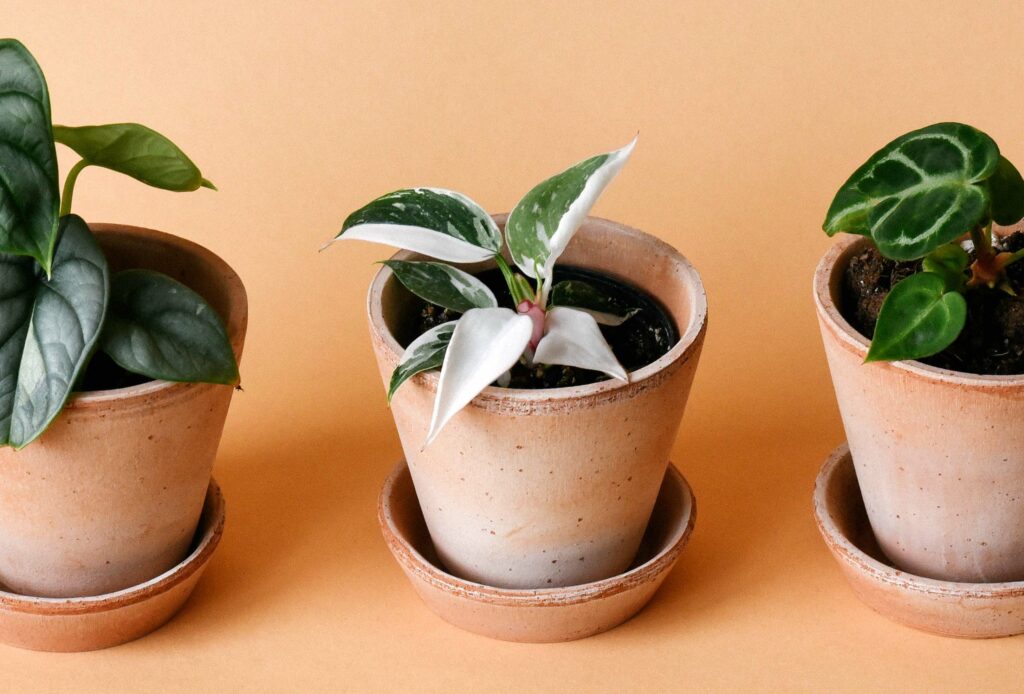



Pet Friendly Plants
Secure packaging for delicate plants
Small business in Berlin
★★★★★ 4.87 Avg. Review
Secure packaging for delicate plants
Small business in Berlin
★★★★★ 4.87 Avg. Review
Secure packaging for delicate plants
Small business in Berlin
★★★★★ 4.87 Avg. Review


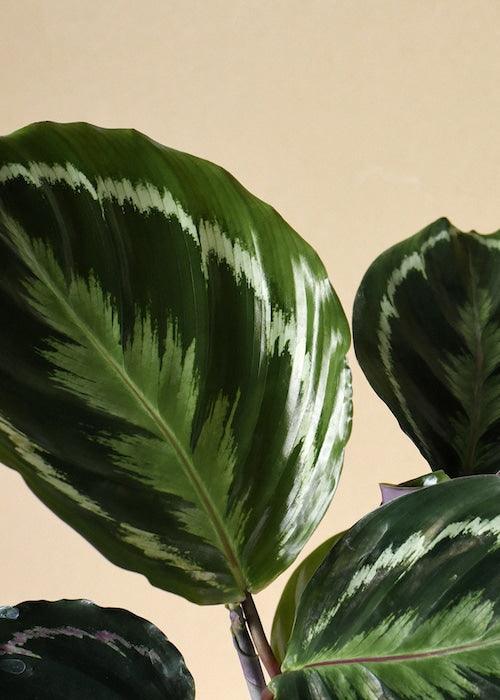
Goeppertia (Calathea) 'Medallion' is an evergreen, upright clumping prayer plant (Goeppertia roseopicta 'Medallion') with round leaves showing a lighter central “medallion” and vivid magenta undersides. It makes an attractive indoor foliage plant with nightly leaf-folding, suitable for living rooms and pet households (commonly reported non-toxic), but needs consistently moist soil and high humidity so expect attentive watering and humidity care.
check_circle In Stock
Quick care table
Goeppertia (Calathea) 'Medallion' shows broadly rounded, glossy leaves with a lighter central “medallion” or silvery banding that contrasts with a darker green outer margin. The undersides are a vivid magenta to deep purple, and the midrib and veins are visible, giving a brush‑stroke effect across the blade. The overall silhouette is upright and clumping, with leaves forming a compact, arching rosette.
Young plants carry smaller, less pronounced medallion markings; as it matures the leaves grow larger and the central contrast becomes more defined. Leaves demonstrate classic prayer‑plant movement — they fold or lift at night (nyctinasty) — and the plant keeps an upright, non‑vining habit that does not require staking.
This selected cultivar is widely traded and popular with collectors for its clear central pattern and colourful undersides. In everyday ownership expect to manage humidity and even moisture: inconsistent watering or dry air commonly causes leaf‑edge browning and curling, and the plant is sensitive to prolonged waterlogging which can lead to root rot. It is generally reported as non‑toxic to cats and dogs, but it can attract pests like spider mites or mealybugs if conditions are poor.
Best suited to bright, indirect light on a shelf, side table or desk; choose a medium size for a compact desk or grow‑on option and a larger size for a fuller display with more mature leaves and stronger pattern impact.
Shipping Information
expand_moreSee our FAQ and Shipping Guarantee for any further Questions!

Size: Medium - P14 H50


What makes Goeppertia (Calathea) 'Medallion' different from other Calatheas?
expand_moreThis selected cultivar is prized for a pronounced lighter central 'medallion' on rounder leaves combined with a deep magenta underside, rather than the feathered patterns of some relatives. Goeppertia (Calathea) roseopicta 'Medallion' is an established, widely traded cultivar; pattern contrast and leaf size typically increase as the plant matures, and it needs moderate humidity and consistent moisture.
Is Goeppertia (Calathea) 'Medallion' safe for pets?
expand_moreYes — Goeppertia (Calathea) 'Medallion' is commonly reported as non‑toxic to cats and dogs and the Calathea/Goeppertia group is listed as non‑toxic by the ASPCA. Still take normal precautions: chewing can cause stomach upset, and individual animal reactions can vary.
Why are the leaf edges browning or curling?
expand_moreLeaf‑edge browning or curling is usually caused by low humidity or inconsistent watering. Other contributors include fluoride/salts in tap water, poor drainage that stresses roots, and pests such as spider mites or mealybugs. Check humidity, water quality and potting‑mix drainage and adjust conditions rather than changing light levels.
Are the leaves supposed to fold at night?
expand_moreThis is normal: Goeppertia (Calathea) 'Medallion' performs nyctinastic movement — its leaves fold or lift at night like other prayer plants. The nightly movement is natural and not a sign of poor health; it also reveals the vivid magenta underside and can enhance the plant's visual impact.
Which size should I choose: Medium (P14 H50) or Large (P19 H80)?
expand_moreMedium (P14 H50) suits a shelf, side table or desk and offers a compact display, while Large (P19 H80) delivers a fuller focal plant with greater visual impact. Choose Medium for smaller spaces or to start a collection, and Large when you want a stronger living‑room presence.
How does Medallion compare to the so‑called 'Peacock plant' (Goeppertia makoyana)?
expand_moreMedallion differs from Goeppertia makoyana by its singular central 'medallion' pattern and rounder leaves; makoyana shows a repeating feather‑like pattern across the blade. If you prefer bold central contrast and a striking magenta underside, Goeppertia (Calathea) 'Medallion' offers that clearer visual effect.
Light
expand_moreWater
expand_moreSoil and repotting
expand_moreHumidity and temperature
expand_moreFeeding
expand_moreGrowth and support
expand_moreCommon concerns
expand_moreNormal night-time leaf folding (nyctinasty); leaf-edge browning or curling from low humidity, fluoride/salts in water, or inconsistent watering; root rot if kept waterlogged or in poorly draining mix; susceptibility to common pests such as spider mites and mealybugs.
Pet safety
expand_moreBe the first to know about newly stocked plants and accessories, sales and exclusive offers.