


Secure packaging for delicate plants
Small business in Berlin
★★★★★ 4.87 Avg. Review


Hypoestes Phyllostachya Pink
Hypoestes Phyllostachya Pink (Hypoestes phyllostachya 'Pink') is a selected cultivar of the polka‑dot plant, a compact evergreen subshrub grown as a small, bushy houseplant and widely sold. Distinguished by dominant pink blotches on small ovate green leaves, it forms a dense mound indoors when regularly pinched, suits buyers seeking a strong pink foliage accent (and pet owners, as the species is listed non‑toxic), but colour fades and stems go leggy in low light.
- height Height
- 12 cm
- swap_horiz Pot Size
- 6 cm
- volunteer_activism Care
- Easy
- wb_sunny Light Needs
- Bright indirect light
- pets Pet Friendly
- water_drop Watering Needs
- Medium
cancel Sold out
Quick care table
Plant care at a glance
- Botanical name
- Hypoestes phyllostachya 'Pink'
- Common name
- Polka dot plant, Pink polka-dot plant, Freckle-face plant, Measles plant, and Hypoestes Phyllostachya Pink
- Difficulty
- Easy
- Light
- Bright indirect light
- Humidity
- Medium
- Pet safe
- Yes, non-toxic to pets
- Best for
- Indoors
Dominant pink foliage with broad blotches and a compact mound
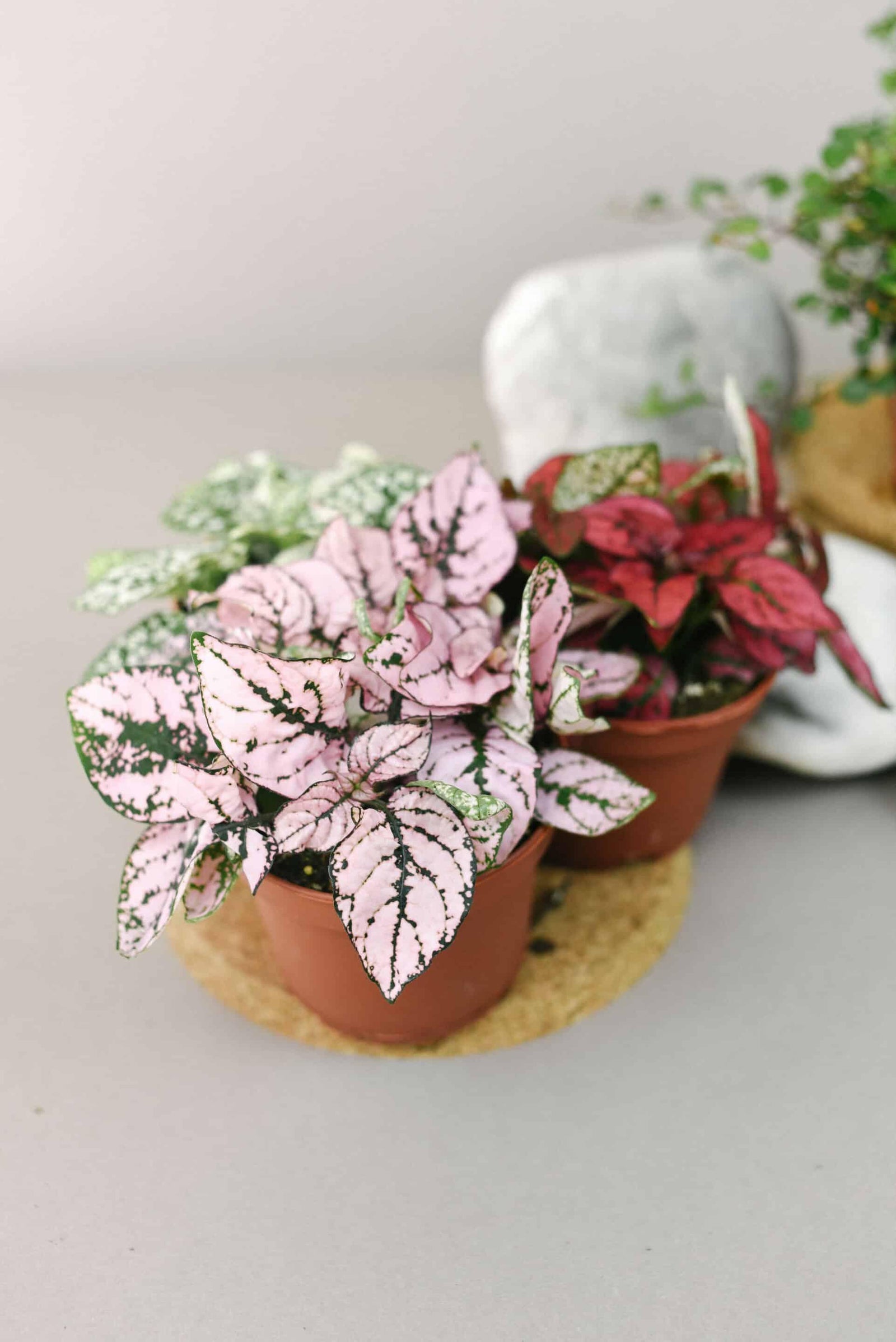
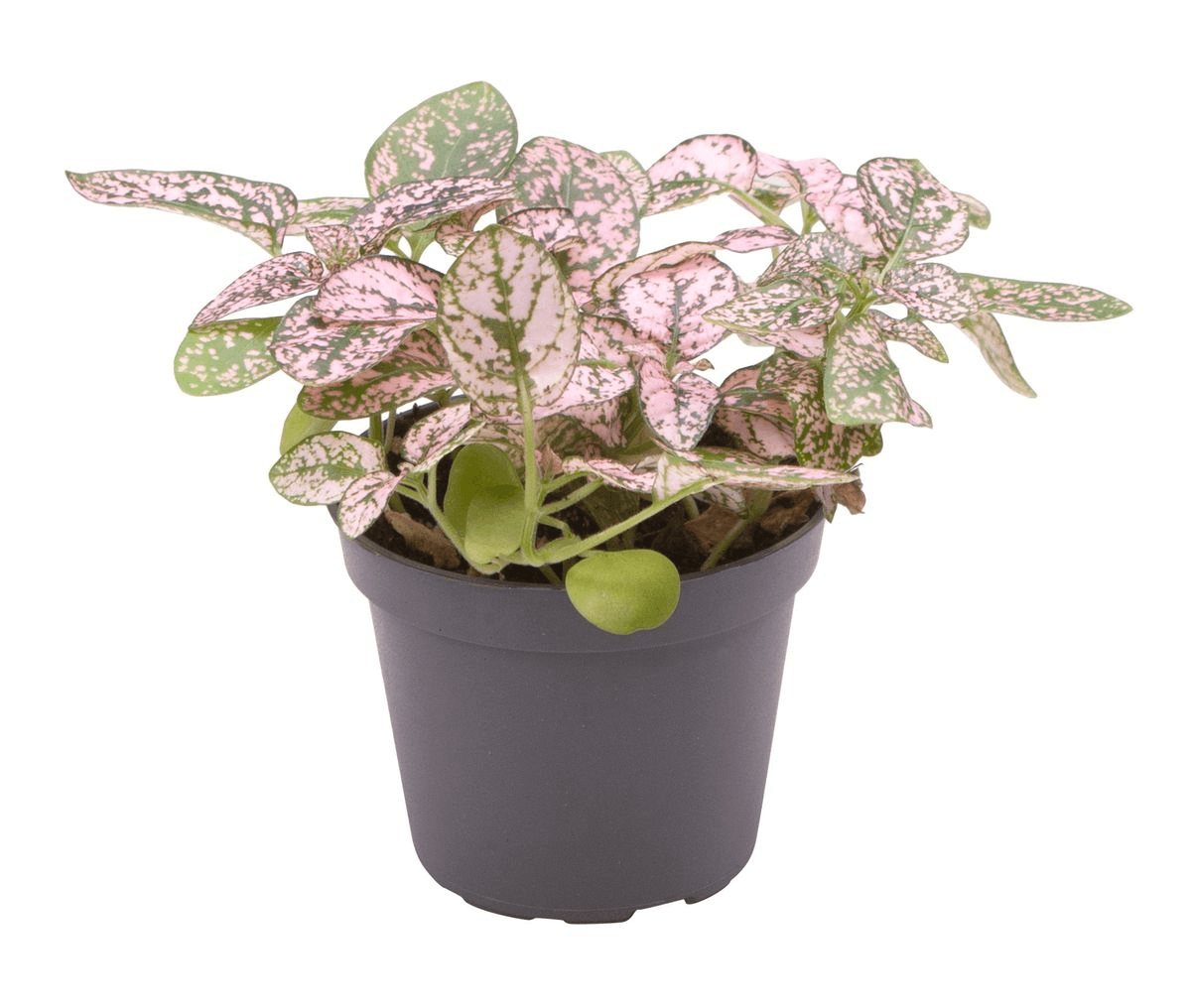
Leaves are ovate to broadly elliptic and generally small (commonly around 2–5 cm long), with a thin, soft texture and a green background punctuated or overlaid by rose‑pink spots and larger blotches. Venation remains green and visible against the coloured areas, and occasional small tubular lavender‑pink flowers appear but are botanically inconspicuous. This selected cultivar, Hypoestes Phyllostachya Pink, emphasises a strong pink wash rather than the finer speckling seen in other lines.
Indoors it grows as a compact, bushy subshrub when you pinch regularly; otherwise stems can elongate and the plant becomes leggy. Colour intensity is light‑dependent — brighter indirect light brings out the pink pigment, while low light tends to dull the marks and encourage greener leaves. There’s no dramatic shift in leaf shape with age and no fenestration (no splits or holes).
In real ownership expect a lively, colourful houseplant that rewards routine grooming: pinch tips to keep a dense silhouette, keep soil evenly moist during growth, and watch for increased openness if left unpruned. An honest trade‑off is that the pink fades and stems elongate under low light, so it needs sufficient bright, indirect light to keep its pattern and compact form. It’s listed as non‑toxic to cats and dogs by the ASPCA, which can be helpful for pet households.
Best suited to bright windowsills, mixed container groups and tabletop displays where its pink coverage reads clearly; supplied as a baby potted plant, it’s delivered compact and ready to grow on, so buyers can shape its habit with early pinching. Compared with the 'Splash' types, expect broader blotches and a denser colour wash rather than fine speckling.
Shipping Information
expand_more
- All orders are subject to a €25 minimum order value requirement
- All orders are hand-picked and shipped from the Netherlands
- Plastic-free materials when possible
- Orders are usually processed in 1-3 working days and shipped via DPD and their international partner carriers
- At times, orders may take up to 7 days to ship
- Orders to Germany Free shipping over €60. Free shipping all other EU countries* at €100 (Except Malta and Cyprus)
- Shipping costs are calculated at checkout based on delivery country:
See our FAQ and Shipping Guarantee for any further Questions!

Size: Baby - P6 H12
Plant questions, answered
What makes Hypoestes phyllostachya 'Pink' different from other polka‑dot plants?
expand_more
It is a selected cultivar emphasising strong pink coverage on a green leaf background. Hypoestes phyllostachya 'Pink' typically shows broader blotches or larger areas of rose‑pink pigment compared with finer‑speckled 'Splash' types, giving a denser, more immediate pink accent in containers and indoor displays.
How bright should I place this polka‑dot plant to keep its pink colour strong?
expand_more
Bright, indirect light produces the most intense pink pigment. Hypoestes phyllostachya 'Pink' will fade to greener, less‑marked leaves and become leggier in low light, so place it where it gets good ambient light but avoid prolonged harsh direct sun; colour intensity can still vary with room conditions.
Will my Hypoestes 'Pink' stay compact or become leggy as it grows?
expand_more
It will usually stay dense if regularly pinched back. The compact, mounding juvenile habit of Hypoestes phyllostachya 'Pink' becomes more open and can lignify with age or outdoor perennial growth, so routine pinching and removal of flower spikes helps maintain a bushy, compact indoor form.
Is the pink polka‑dot plant safe for homes with pets?
expand_more
It is listed as non‑toxic to cats and dogs by the ASPCA, but ingestion of any plant can cause mild gastrointestinal upset in some animals. Hypoestes phyllostachya 'Pink' is generally considered pet‑safe, though you should still discourage pets from chewing on foliage.
What size plant will I receive and what should I expect on arrival?
expand_more
You will receive the Baby - P6 H12 option: a young Hypoestes phyllostachya 'Pink' in a small nursery pot (about 6 cm pot, roughly 12 cm height). Expect a juvenile, compact plant whose leaf pattern and pink intensity may vary with light; minor variation from photos is normal.
Plant care guide
Light
expand_more
Water
expand_more
Soil and repotting
expand_more
Humidity and temperature
expand_more
Feeding
expand_more
Growth and support
expand_more
Common concerns
expand_more
Fading leaf colour in low light; leggy growth if not regularly pinched; root rot from persistent overwatering or poor drainage; occasional pests such as whitefly, aphids or mealybugs in indoor/greenhouse settings.
Pet safety
expand_more
You might also like
Nice