


Secure packaging for delicate plants
Small business in Berlin
★★★★★ 4.87 Avg. Review


Macodes Petola
Macodes Petola (Macodes petola) is a terrestrial jewel orchid with dark, velvety leaves marked by metallic golden, lightning‑like reticulate veins. It grows as a low, compact rosette ideal for terraria or humid shelves, is generally non‑toxic to cats and dogs, and suits collectors seeking dramatic foliage; its main limitation is a sustained need for high humidity and careful, well‑draining moisture management.
- height Height
- 7 cm
- swap_horiz Pot Size
- 6 cm
- volunteer_activism Care
- Medium
- wb_sunny Light Needs
- Bright indirect light
- pets Pet Friendly
- water_drop Watering Needs
- Medium
cancel Sold out
Quick care table
Plant care at a glance
- Botanical name
- Macodes petola
- Common name
- Macodes petola and Jewel orchid
- Difficulty
- Medium
- Light
- Bright indirect light
- Humidity
- Medium
- Pet safe
- Yes, non-toxic to pets
- Best for
- Kitchen, Bathroom, Living room, Hallway, and Bedroom
Metallic golden veining on velvet rosette — Macodes Petola
Dark, velvety oval leaves form a compact low rosette shot through with metallic, lightning‑like reticulate veins that read as gold or copper against a deep green background. The texture is soft to the eye rather than glossy, and the netted venation runs across the whole leaf blade rather than simple stripes — a look often sold as a jewel orchid in trade.
This plant stays ground‑dwelling indoors: expect slow, conservative spread by short rhizomes or stolons and no climbing, trailing or split leaves. Small, pale flowers are occasional and unobtrusive; foliage remains the main show. Leaf contrast can change with light levels — brighter indirect light may lessen the dark background and reduce the high‑contrast effect of the veins.
Real ownership means careful humidity and watering: Macodes petola is a species prized for its foliage and commonly grown in terraria or humid shelf environments. It prefers consistently moist but well‑aerated substrate and higher humidity, so it is more demanding than many average houseplants — overwatering in poorly draining mixes risks root rot. Collectors value it for its leaf display and provenance, and some buyers check source or paperwork because orchids are subject to international trade rules.
Supplied as small "Baby" pots, these plants suit a small shelf, desk or a closed terrarium as a grow‑on option; their compact juvenile size lets you build humidity and culture them on to a fuller rosette. Compared with Ludisia discolor, Macodes petola is distinguished by metallic golden reticulation and usually needs slightly higher humidity for best contrast.
Shipping Information
expand_more
- All orders are subject to a €25 minimum order value requirement
- All orders are hand-picked and shipped from the Netherlands
- Plastic-free materials when possible
- Orders are usually processed in 1-3 working days and shipped via DPD and their international partner carriers
- At times, orders may take up to 7 days to ship
- Orders to Germany Free shipping over €60. Free shipping all other EU countries* at €100 (Except Malta and Cyprus)
- Shipping costs are calculated at checkout based on delivery country:
See our FAQ and Shipping Guarantee for any further Questions!

Size: Baby - P6 H7


Plant questions, answered
Is Macodes petola suitable for a closed terrarium or humid shelf display?
expand_more
Yes — Macodes petola is well suited to closed terrariums and humid shelf displays. The jewel orchid prefers high humidity (commonly 60–90%) and low to medium indirect light; this preserves its dark, velvety leaf background and metallic venation. Practical implication: provide a moisture‑retentive but aerated substrate and occasional ventilation to avoid fungal leaf spots.
How does Macodes petola differ from Ludisia discolor?
expand_more
Macodes petola is distinguished by metallic/golden reticulate veins on dark, velvety leaves, whereas Ludisia discolor typically shows different venation colour and is often more tolerant of lower humidity. Choose Macodes for striking golden ‘lightning‑like’ venation in compact terrarium displays; choose Ludisia if you need a slightly easier humidity tolerance.
What are the main watering, humidity and disease concerns for Macodes petola?
expand_more
Macodes petola needs consistently moist but well‑aerated substrate; the main risks are root rot from waterlogging and fungal leaf issues if leaves stay wet. Use a loose terrestrial/orchid mix (sphagnum, fine bark, leaf litter) and avoid prolonged standing water. If fungal gnats appear, allow slight surface drying and improve surface airflow.
Is Macodes petola safe around pets?
expand_more
There is no evidence that Macodes petola is toxic to cats or dogs. Orchids are generally listed as non‑toxic in veterinary sources, but species‑specific testing is limited. Practical caution: prevent pets eating potting mix, fertilisers or pesticides, and consult a veterinarian if ingestion or unusual symptoms occur.
What size plant will I receive and where does it fit best?
expand_more
You will receive a 'Baby' Macodes petola in a 6 cm pot, listed with a reported height of about 7 cm or 8 cm depending on the variant. This compact size is ideal for small shelves, desks, or terrarium displays where its veined foliage provides high visual impact without taking much space.
Plant care guide
Light
expand_more
Water
expand_more
Soil and repotting
expand_more
Humidity and temperature
expand_more
Feeding
expand_more
Growth and support
expand_more
Common concerns
expand_more
Main issues are root rot from poor drainage or prolonged waterlogging; fungal leaf spots if leaves remain wet or air circulation is poor; stress or decline if ambient humidity is too low; and fungal gnats in overly damp organic media.
Pet safety
expand_more
You might also like
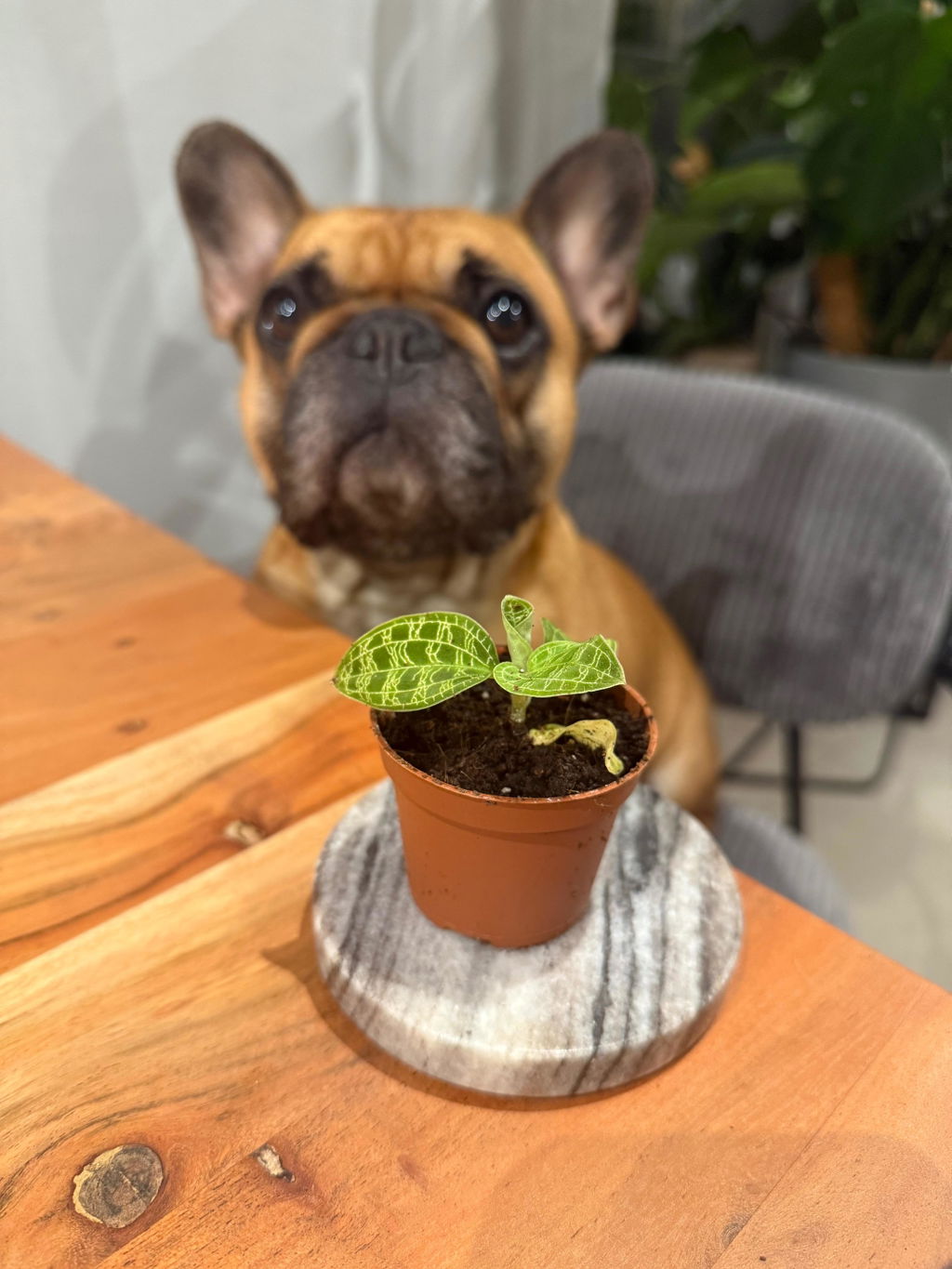
This plant sparkles like tiny lightning and I am convinced it is secretly glowing for me. I sat next to it quietly because beauty like this demands respect (and silence, very rare for me).
👌Perfect!
Gracias!
:-)
Reviews in Other Languages
Tiptop. Sehr schöne Pflanze:) Vielen Dank
Bei meiner Bestellung lief alles gut, auch die kleine, die nachgeliefert wurde ,war gut und sicher verpackt...die Pflanzen sind alle schön kräftig und die babyplants sehen sehr gut aus...Ich hoffe sie werden bei mir auch lange leben .
