


Secure packaging for delicate plants
Small business in Berlin
★★★★★ 4.87 Avg. Review


Musa 'Dwarf Cavendish'
Musa 'Dwarf Cavendish' is a selected dwarf banana (Musa acuminata 'Dwarf Cavendish') — an upright, clumping houseplant notable for its compact, stocky pseudostem (a false trunk of overlapping leaf bases) and large glossy paddle-shaped leaves. Indoors it forms a tight crown and produces basal pups, making it ideal for shoppers who want a tropical statement, but it needs bright light, consistent moisture and higher humidity.
- height Height
- 95 cm
- swap_horiz Pot Size
- 21 cm
- volunteer_activism Care
- Medium
- wb_sunny Light Needs
- Bright indirect light
- pets Pet Friendly
- water_drop Watering Needs
- Medium
cancel Sold out
Quick care table
Plant care at a glance
- Botanical name
- Musa acuminata (AAA Group) 'Dwarf Cavendish'
- Common name
- Dwarf Cavendish, Dwarf Cavendish banana, dwarf banana, banana plant (dwarf Cavendish), and Musa 'Dwarf Cavendish'
- Difficulty
- Medium
- Light
- Bright indirect light
- Humidity
- Medium
- Pet safe
- Yes, non-toxic to pets
- Best for
- Living room, Bedroom, and Office
Dwarf habit and compact crown — Musa 'Dwarf Cavendish'
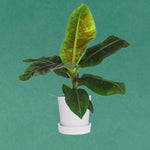
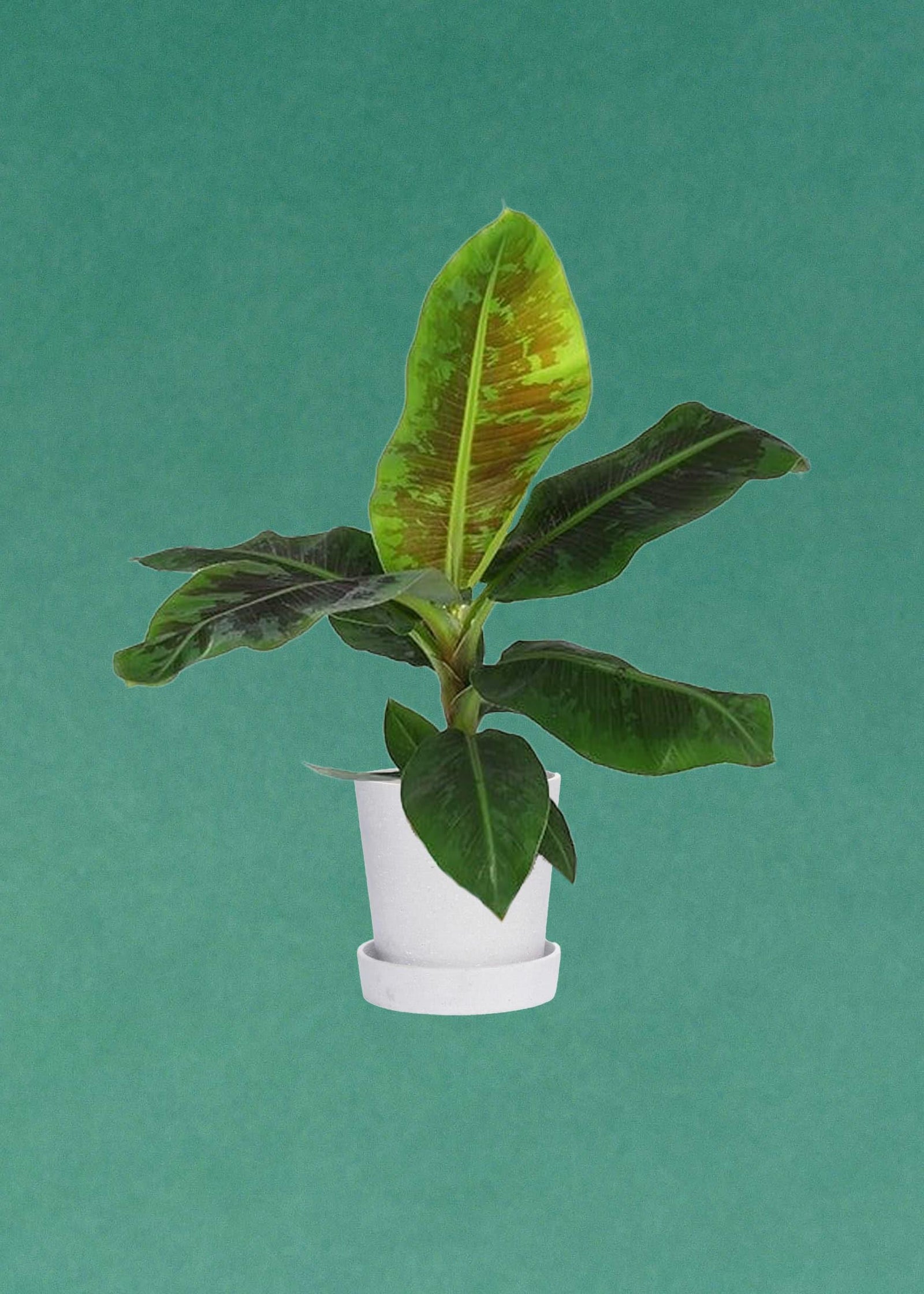
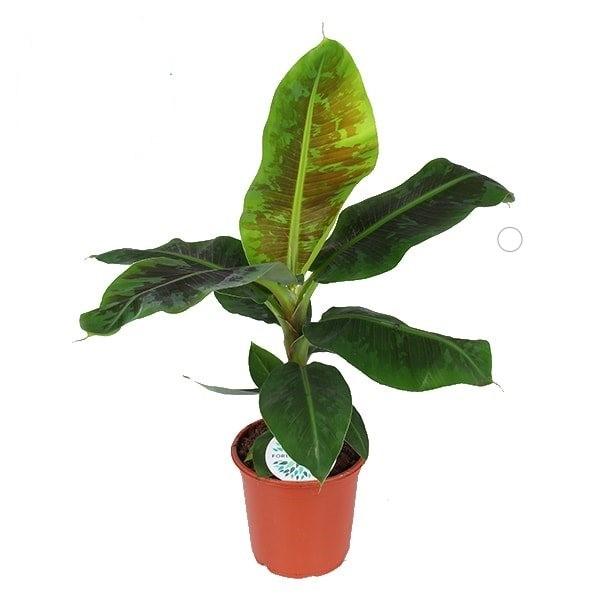
Broad, glossy, paddle‑shaped leaves form a tight, architectural crown around a stout, layered pseudostem. New leaves appear as tightly rolled spears that unfurl into large green blades; the surface is smooth and tropical in feel while older leaves commonly show longitudinal tears from handling or air movement (a normal trait). Expect clear, classic banana foliage rather than variegation or spotted patterns.
Indoor development is clumping rather than climbing: the plant produces basal pups (suckers) that form a denser cluster over time, and individual pseudostems may flower and fruit once before that stem naturally senesces. In containers the dwarf architecture keeps the plant noticeably shorter and stockier than many Cavendish clones, with a tighter crown of leaves rather than the open, taller silhouette of Giant/Grand Nain types.
Ownership brings a lush tropical look but also predictable needs: this cultivar rewards bright light, consistent moisture and higher humidity and will show brown margins if air is too dry. It can become top‑heavy in a small pot and benefits from repotting as the clump develops. One honest trade‑off is that a flowering/fruiting pseudostem will decline afterward, so long‑term clump management by separating pups is part of ownership.
This is an established, historically cultivated Cavendish selection valued for its compact habit and suitability for containers; it is commonly available in trade. Supplied as a large potted specimen (Large - P21 H95), the plant offers immediate presence and may need a sturdy stand or pot as it fills out.
Shipping Information
expand_more
- All orders are subject to a €25 minimum order value requirement
- All orders are hand-picked and shipped from the Netherlands
- Plastic-free materials when possible
- Orders are usually processed in 1-3 working days and shipped via DPD and their international partner carriers
- At times, orders may take up to 7 days to ship
- Orders to Germany Free shipping over €60. Free shipping all other EU countries* at €100 (Except Malta and Cyprus)
- Shipping costs are calculated at checkout based on delivery country:
See our FAQ and Shipping Guarantee for any further Questions!
Size: Large - P21 H95

Plant questions, answered
How does Musa 'Dwarf Cavendish' differ from other Cavendish bananas?
expand_more
Musa 'Dwarf Cavendish' is a compact Cavendish selection with a shorter, stockier pseudostem and a tighter, clumping crown than standard Cavendish clones (for example 'Grand Nain'). This dwarf architecture makes it easier to keep in containers and living rooms while still offering the classic large paddle‑shaped banana leaves.
Is Musa 'Dwarf Cavendish' safe for homes with pets?
expand_more
Musa 'Dwarf Cavendish' is listed as non‑toxic to cats and dogs (ASPCA/banana entries). It is generally safe to have around curious pets, but chewing can damage the foliage and create a mess, so supervise persistent nibblers and keep the pot out of reach if needed.
What light, water and humidity does this banana plant need indoors?
expand_more
It prefers bright light to full sun, consistently moist but well‑drained substrate and high humidity. Place near a south/west window or in a greenhouse for best leaf size, mist or use a humidifier to avoid brown leaf margins, and avoid prolonged dryness or waterlogging to keep the plant vigorous.
Will my Musa 'Dwarf Cavendish' produce bananas indoors?
expand_more
A mature pseudostem can flower and produce fruit, but indoor specimens commonly do not set edible bunches. If a pseudostem does fruit it typically senesces afterward; pups from the clump continue growth, so plan care around pup management rather than expecting reliable indoor fruiting.
What size will I receive and how large will it get in my home?
expand_more
You will receive the Large variant (P21, H95) delivered in a 21 cm pot at approximately 95 cm tall. In container culture the plant commonly stays much shorter than field specimens; with excellent light and care it can grow taller over years, but repotting and pup management determine final size.
Plant care guide
Light
expand_more
Water
expand_more
Soil and repotting
expand_more
Humidity and temperature
expand_more
Feeding
expand_more
Growth and support
expand_more
Common concerns
expand_more
Leaf browning or crispy margins from low humidity or inconsistent watering; spider mites, aphids and mealybugs in dry/greenhouse conditions; leaves commonly tear along veins (normal); rootbound growth if not repotted regularly.
Pet safety
expand_more
You might also like
Nice plant