


Secure packaging for delicate plants
Small business in Berlin
★★★★★ 4.87 Avg. Review


Peperomia 'Pepperspot' Baby
Peperomia 'Pepperspot' Baby is an established nursery cultivar of trailing Peperomia with very small glossy round green leaves on thin red wiry stems, ideal as a delicate cascader on shelves, in hanging baskets or terraria. It’s pet-safe (non‑toxic to cats and dogs) and suits shoppers wanting a compact trailing houseplant, but it is sensitive to overwatering and may drop leaves with rough handling.
- height Height
- swap_horiz Pot Size
- 6 cm
- volunteer_activism Care
- Medium
- wb_sunny Light Needs
- Bright indirect light
- pets Pet Friendly
- water_drop Watering Needs
- Medium
check_circle In Stock
Quick care table
Plant care at a glance
- Botanical name
- Peperomia pepperspot
- Common name
- Peperomia 'Pepperspot'
- Difficulty
- Medium
- Light
- Bright indirect light
- Humidity
- Medium
- Pet safe
- Yes, non-toxic to pets
- Best for
- Indoors
Tiny glossy coins on red trails — Peperomia 'Pepperspot' Baby
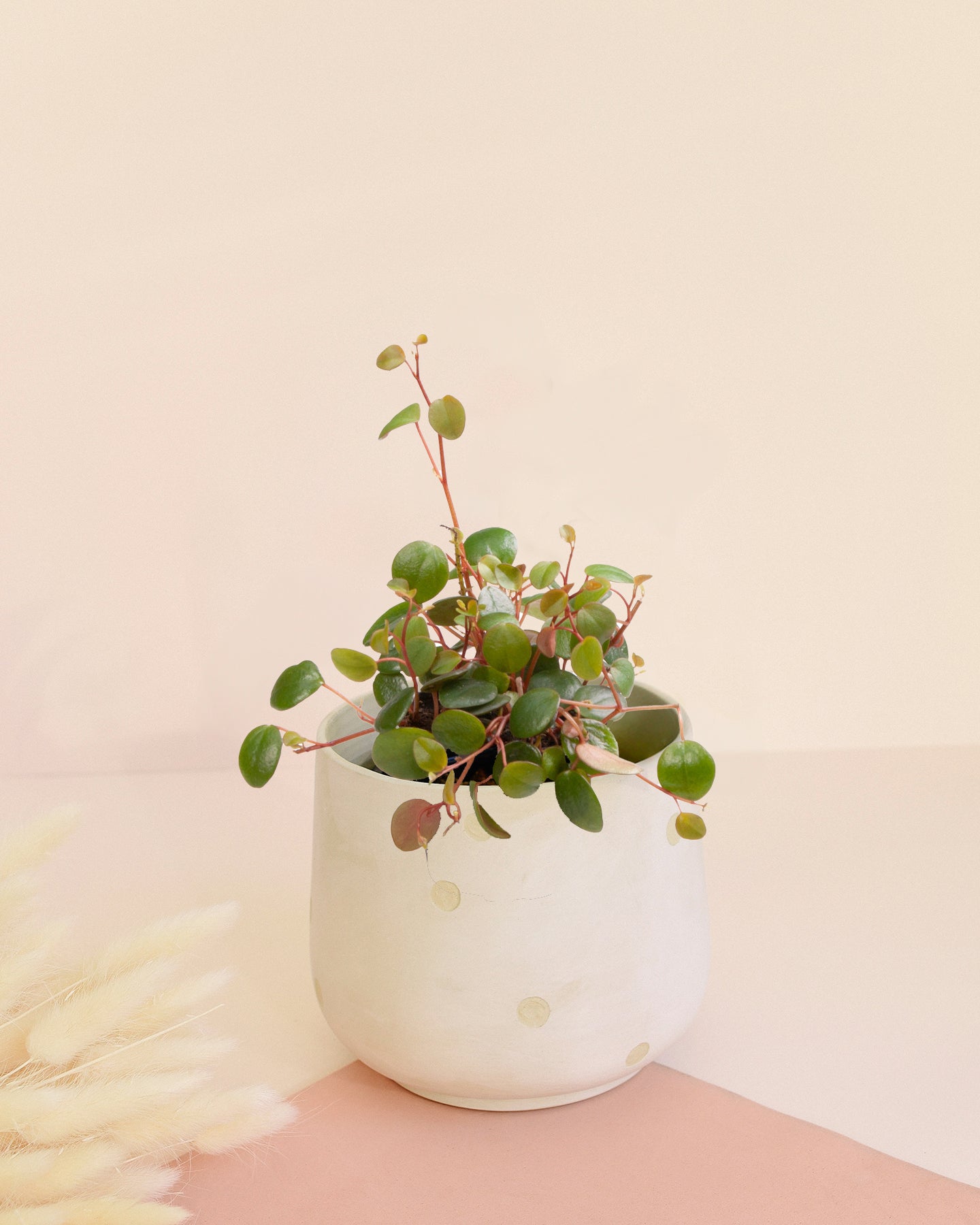
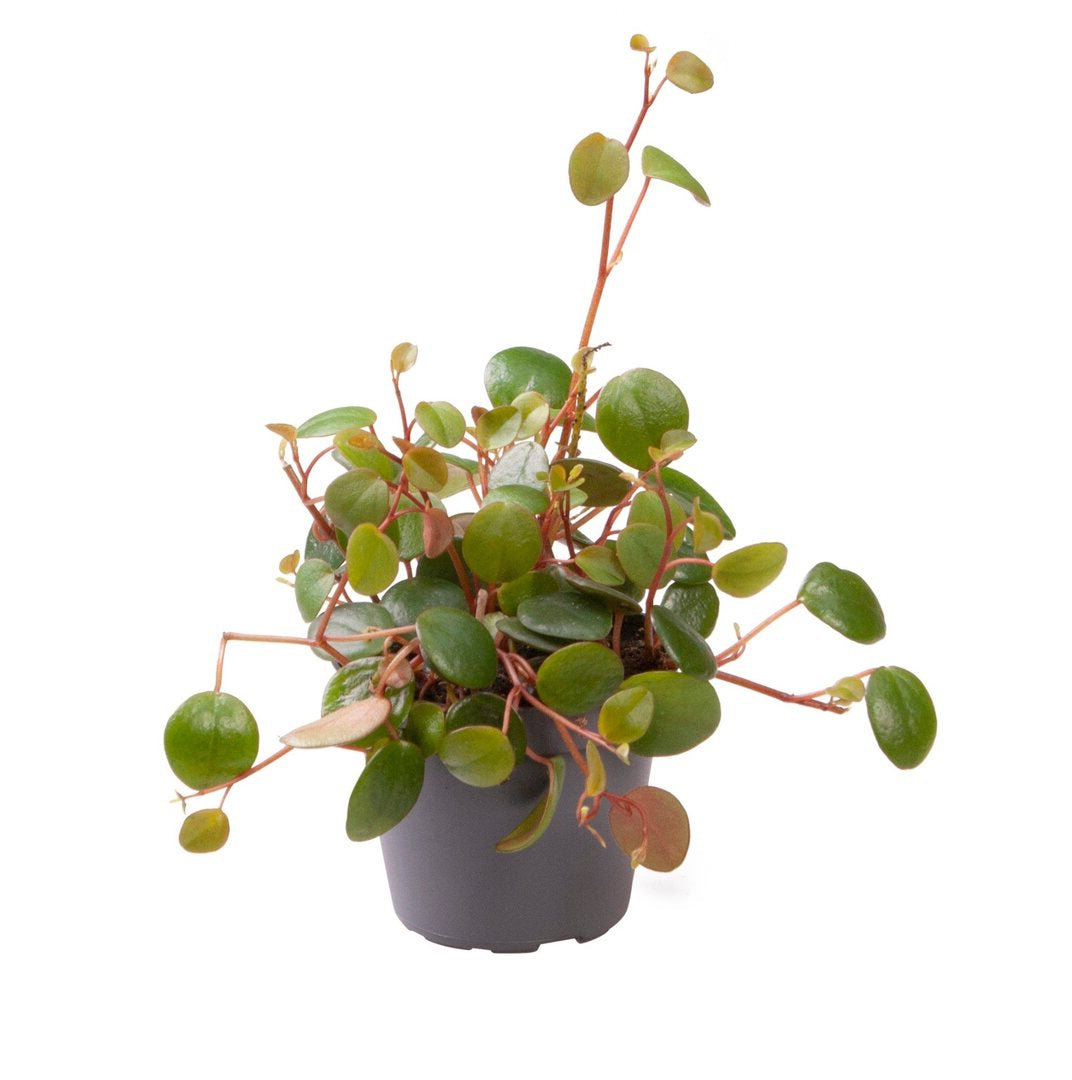
This selected cultivar is defined by very small, roughly round glossy green leaves (about 1 cm or smaller) set along thin, wiry stems that have a reddish cast. The leaves are slightly fleshy to the touch and arranged along flexible chains, producing a soft, delicate cascade rather than a bushy silhouette. There’s no variegation or patterned markings—uniform green coins on red trails are the visual hook.
Indoors it develops as a true trailer: long, thin stems that spill neatly from shelves, hanging pots or terraria. It does not climb; instead it forms trailing chains that lengthen and branch with time. Compared with the standard Peperomia rotundifolia, this cultivar is sold for its thinner red stems and tighter, unpatterned round leaves rather than the beadier spacing or patterned surfaces you might see in related selections.
In everyday ownership you’ll notice it prefers bright, indirect light and dislikes being kept constantly wet—overwatering increases the risk of root rot and fungus gnats, which is the main trade-off to expect. Leaves can drop if handled roughly or moved into low light. It is treated as pet-safe in trade listings, and nursery sources show it is commonly available across European growers.
Best suited for a small hanging basket, a high shelf, or a closed terrarium where its fine trailing stems can be admired. Supplied as a compact baby in a small pot, it arrives ready to display and will gradually trail and fill its space over time.
Shipping Information
expand_more
- All orders are subject to a €25 minimum order value requirement
- All orders are hand-picked and shipped from the Netherlands
- Plastic-free materials when possible
- Orders are usually processed in 1-3 working days and shipped via DPD and their international partner carriers
- At times, orders may take up to 7 days to ship
- Orders to Germany Free shipping over €60. Free shipping all other EU countries* at €100 (Except Malta and Cyprus)
- Shipping costs are calculated at checkout based on delivery country:
See our FAQ and Shipping Guarantee for any further Questions!

Plant questions, answered
What makes Peperomia 'Pepperspot' different from other trailing Peperomias?
expand_more
Peperomia 'Pepperspot' is a selected cultivar noted for very small, glossy round leaves on thin, reddish wiry stems rather than variegation or patterned foliage. Compared with Peperomia rotundifolia or P. prostrata, it is chosen for the tiny uniform “coin” leaves and red stems, which suit delicate hanging or terrarium displays.
Is Peperomia 'Pepperspot' safe to keep around cats and dogs?
expand_more
Yes — Peperomia 'Pepperspot' is treated as pet-safe in trade and the Peperomia genus is listed as non-toxic to cats and dogs by the ASPCA. That makes it suitable for pet-friendly homes, though you should still discourage chewing and keep soil and fertilizers out of pets' reach.
Where should I place my Peperomia 'Pepperspot' for the best look and health?
expand_more
Place Peperomia 'Pepperspot' where its trailing stems can cascade from a shelf, hanging basket or terrarium. It prefers bright, indirect light and tolerates moderate light; avoid strong direct midday sun. It also adapts well to closed or humid small displays but tolerates average indoor humidity.
Why is my Peperomia 'Pepperspot' dropping leaves and how can I help it recover?
expand_more
Leaf drop on Peperomia 'Pepperspot' commonly follows rough handling, low light or sudden changes in conditions. Check for overwatering (which can cause root rot and fungus gnats) and for low light; move to steadier, brighter indirect light, reduce excess moisture, and trim damaged stems to encourage new growth.
Is Peperomia 'Pepperspot' rare or a collector’s specialty plant?
expand_more
No — Peperomia 'Pepperspot' is an established nursery cultivar commonly available across European retailers. Collectors value it for its tiny round leaves and red stems, but it is not rare; its availability in grower catalogues makes it a regular choice for shelves, terraria and hanging displays.
Plant care guide
Light
expand_more
Water
expand_more
Soil and repotting
expand_more
Humidity and temperature
expand_more
Feeding
expand_more
Growth and support
expand_more
Common concerns
expand_more
Overwatering can cause root rot and increase fungus gnat risk; leaf drop may occur after rough handling or low light; occasional sap‑sucking pests (mealybugs, scale) can appear if plants are stressed.