


Secure packaging for delicate plants
Small business in Berlin
★★★★★ 4.87 Avg. Review


Peperomia Prostrata 'String of Turtles'
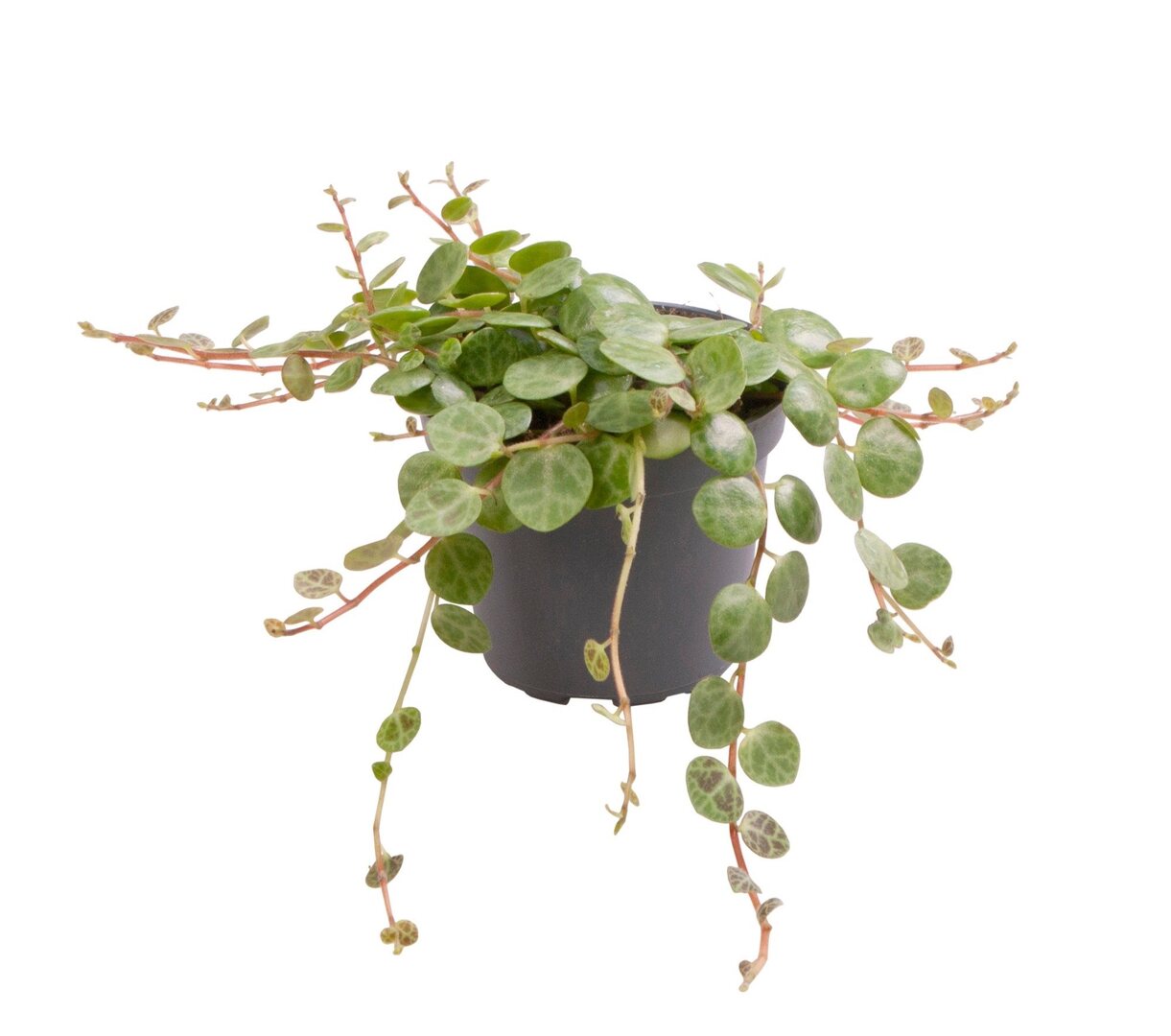
Peperomia Prostrata 'String of Turtles' is a low-growing, trailing houseplant noted for its tiny, button-like leaves with silvery tortoise‑shell venation. Indoors it forms delicate cascading mats that can root at nodes and suits terrariums, hanging baskets or pet-friendly homes, but it dislikes waterlogged soil and is sensitive to overwatering.
- height Height
- 10 cm
- swap_horiz Pot Size
- 6 cm
- volunteer_activism Care
- Easy
- wb_sunny Light Needs
- Bright indirect light
- pets Pet Friendly
- water_drop Watering Needs
- Medium
check_circle In Stock
Quick care table
Plant care at a glance
- Botanical name
- Peperomia prostrata 'String Of Turtles'
- Common name
- String of Turtles, Trailing Peperomia, Turtle Vine (trade), and Peperomia Prostrata 'String of Turtles'
- Difficulty
- Easy
- Light
- Bright indirect light
- Water
- Medium
- Humidity
- Medium
- Pet safe
- Yes, non-toxic to pets
- Best for
- Indoors
Miniature turtle‑shell leaves for terraria and shelves
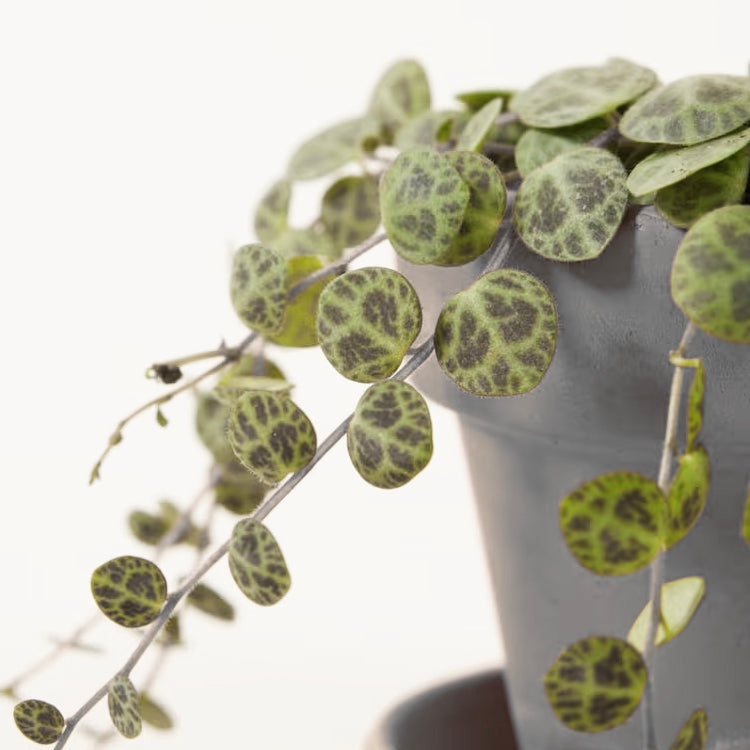
Peperomia Prostrata 'String Of Turtles' wears tiny, button-like leaves patterned with a silvery, reticulate “turtle‑shell” network over a darker green ground. The leaves are thick and semi‑succulent, set along thin, flexible stems that often show reddish tones. The overall silhouette is a low, trailing mat that catches the eye for its fine, high‑detail foliage rather than flowers.
Indoors this plant stays compact but will lengthen into slender, cascading stems rather than producing distinct juvenile versus adult leaf shapes — older plants mainly show denser, longer trails. Stems readily root at nodes when they touch the soil and can produce strands reaching toward that commonly reported trailing length, while its tiny rat‑tail flower spikes are inconspicuous and not grown for bloom.
Real ownership means enjoying a slow‑growing, decorative trailer that rewards bright, indirect light with crisper leaf patterning; in lower light the pattern softens and growth can become leggy. Expect sensitivity to prolonged wet soil — overwatering is the most common problem. Collectors prize the patterned leaves, and while this is widely traded it’s best to be cautious with variegated selections as their marking can be unstable.
Best suited to hanging baskets, shelves or terraria, this listing is supplied as Baby - P6 H10, a small, ready‑to‑establish plant that’s easy to place into a display. If you like highly patterned, miniature foliage for close‑up displays, this species delivers a unique, pet‑friendly option compared with plain‑green relatives such as Peperomia rotundifolia.
Shipping Information
expand_more
- All orders are subject to a €25 minimum order value requirement
- All orders are hand-picked and shipped from the Netherlands
- Plastic-free materials when possible
- Orders are usually processed in 1-3 working days and shipped via DPD and their international partner carriers
- At times, orders may take up to 7 days to ship
- Orders to Germany Free shipping over €60. Free shipping all other EU countries* at €100 (Except Malta and Cyprus)
- Shipping costs are calculated at checkout based on delivery country:
See our FAQ and Shipping Guarantee for any further Questions!

Size: Baby - P6 H10
Plant questions, answered
How is Peperomia prostrata 'String of Turtles' different from Peperomia rotundifolia?
expand_more
Peperomia prostrata 'String of Turtles' shows pronounced reticulate, silvery venation on tiny orbicular leaves, producing the characteristic “turtle‑shell” look. By contrast, Peperomia rotundifolia is typically solid green with different leaf proportions and a bead‑like appearance. Taxonomic confusion exists in some sources, so use visual traits (venation and leaf pattern) as the practical differentiator when buying.
Is Peperomia prostrata safe for pets?
expand_more
Not known to be toxic to cats or dogs. The Peperomia genus is listed as non‑toxic by the ASPCA, which supports the product’s pet‑safe claim at the genus level. Still, avoid deliberate ingestion and consult a veterinarian if a pet eats large amounts — standard caution applies even for non‑toxic houseplants.
How should I water this plant and what problems should I watch for?
expand_more
Allow the topsoil to partly dry between waterings; Peperomia prostrata behaves semi‑succulently and dislikes prolonged waterlogging. Overwatering is the most common cause of decline (root rot). Use a free‑draining mix and a pot with drainage; stressed plants are more prone to mealybugs, spider mites or scale.
Will the turtle‑shell leaf pattern stay vivid indoors?
expand_more
Bright, indirect light helps keep the turtle‑shell reticulate venation crisp; low light often causes leggy growth and a faded pattern. Variegated or more strongly marked selections (sold separately) are less stable and need brighter light to maintain markings, so expect some variation depending on light and plant selection.
What size plant will I receive and where is it best placed?
expand_more
You will receive the Baby - P6 H10 option as listed (potted in a P6 pot, dispatched around 10 cm height). This compact Peperomia prostrata suits terraria, shelves, hanging baskets or small containers. With age and good conditions it can trail and form mats, commonly reaching longer trailing lengths in indoor culture.
Is this cultivar rare or a collectors’ specialty?
expand_more
No — Peperomia prostrata 'String of Turtles' is widely offered by mainstream and specialist nurseries and is not intrinsically rare. Collectors prize it for its miniature, highly patterned leaves; truly scarce items are typically variegated selections, which are less common and treated as specialty stock by some growers.
Plant care guide
Light
expand_more
Water
expand_more
Soil and repotting
expand_more
Humidity and temperature
expand_more
Feeding
expand_more
Growth and support
expand_more
Common concerns
expand_more
Most common issues are overwatering leading to root rot, leggy growth from insufficient light, and occasional pests (mealybugs, spider mites, scale) on stressed plants. Variegated or highly patterned foliage may fade under low light.
Pet safety
expand_more
You might also like
Reviews in Other Languages
Very nice!