


Secure packaging for delicate plants
Small business in Berlin
★★★★★ 4.87 Avg. Review


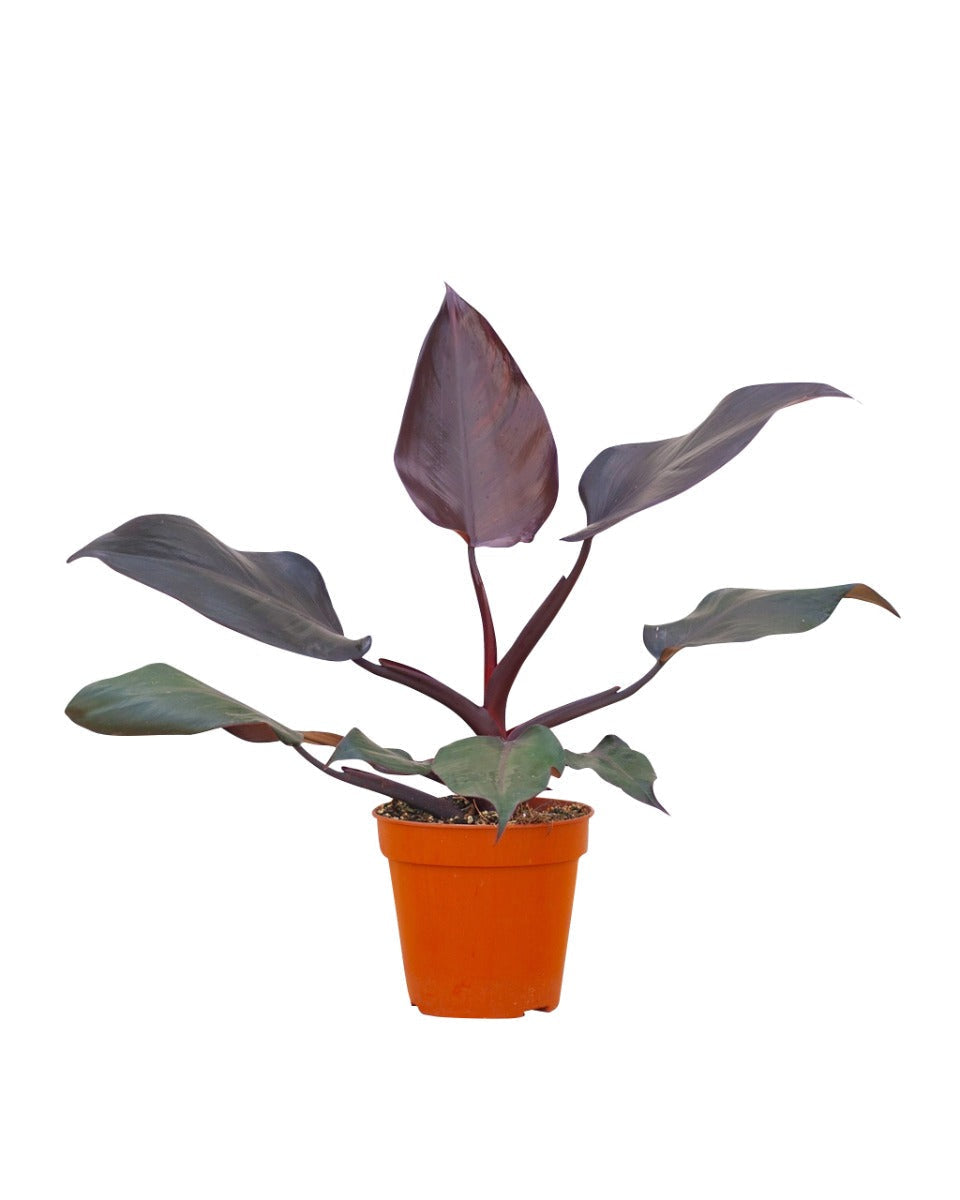
Philodendron 'Burgundy Princess'
Philodendron 'Burgundy Princess' (Philodendron erubescens 'Burgundy Princess') is a self-heading, upright houseplant selected for predominantly deep burgundy, glossy leaves that sometimes show pale pink surface variegation. It grows as a compact indoor specimen suited to beginners and collectors who want dramatic dark foliage, but variegation can be unstable and the plant is not pet-safe.
- height Height
- 25 cm
- swap_horiz Pot Size
- 12 cm
- volunteer_activism Care
- Medium
- wb_sunny Light Needs
- Bright indirect light
- water_drop Watering Needs
- Medium
check_circle In Stock
Quick care table
Plant care at a glance
- Botanical name
- Philodendron erubescens 'Burgundy Princess'
- Common name
- Philodendron 'Burgundy Princess' and Burgundy Princess
- Difficulty
- Medium
- Light
- Bright indirect light
- Humidity
- Medium
- Best for
- Indoors
Deep‑Burgundy Philodendron 'Burgundy Princess' with Occasional Pink Variegation
Leaves are a deep wine‑to‑burgundy on the upper surface with a glossy finish, producing a dark, dramatic block of colour in a room. Leaf blades are broadly heart‑ to arrow‑shaped, often with reddish tones on new petioles and new growth; some specimens show faint pink patches or splashes but mature leaves remain entire (no splits or holes). The overall silhouette is compact and head‑forming rather than trailing.
This is a self‑heading, upright selection of Philodendron erubescens — it does not naturally climb like some philodendrons. Juvenile leaves tend to be smaller and darker; with age and stronger indirect light the plant fills out and produces larger, glossier leaves. Variegation, when it appears, is usually surface‑level and can be intermittent rather than stable across every new leaf.
In everyday ownership expect the same moderate attention as other P. erubescens: bright indirect light helps keep the burgundy tones rich and good drainage reduces root‑rot risk. Be aware of one trade‑off: pink variegation is not guaranteed and many retail plants show low or unstable variegation (reversion to fully burgundy/green is common). Also note this cultivar is not pet‑safe and should be kept out of reach.
Best for apartments, shelves or darker foliage contrasts in mixed displays, it’s offered as a medium (P12) potted plant for a compact, ready‑to‑place head of leaves; larger specimens in time will develop noticeably bigger leaves. This is a selected retail cultivar with recent trade history — prized by some for its deep colour, while collectors seeking stable pink variegation may prefer authenticated 'Pink Princess' stock.
Shipping Information
expand_more
- All orders are subject to a €25 minimum order value requirement
- All orders are hand-picked and shipped from the Netherlands
- Plastic-free materials when possible
- Orders are usually processed in 1-3 working days and shipped via DPD and their international partner carriers
- At times, orders may take up to 7 days to ship
- Orders to Germany Free shipping over €60. Free shipping all other EU countries* at €100 (Except Malta and Cyprus)
- Shipping costs are calculated at checkout based on delivery country:
See our FAQ and Shipping Guarantee for any further Questions!

Size: Medium - P12 H25

Plant questions, answered
How does Philodendron 'Burgundy Princess' differ from Philodendron 'Pink Princess'?
expand_more
Philodendron 'Burgundy Princess' is selected for predominantly deep burgundy (wine) mature leaves rather than the prominent, stable pink surface variegation that defines Philodendron 'Pink Princess'. Burgundy Princess may show occasional pale pink patches and is sometimes trade-applied to reverted or low‑variegation Pink Princess material; collectors seeking reliable pink should prefer authenticated Pink Princess stock.
Will my 'Burgundy Princess' reliably show pink variegation?
expand_more
No—pink variegation is not guaranteed. Some plants show occasional or minimal pink patches, but variegation is often absent or unstable and plants can revert to fully burgundy/green leaves. If a persistent pink pattern is essential, choose authenticated Philodendron 'Pink Princess' rather than expecting consistent pink on Burgundy Princess retail stock.
What light and humidity will keep the leaves a strong burgundy colour?
expand_more
Bright, indirect light encourages stronger burgundy colouring; higher indirect light typically deepens the wine tones. Avoid prolonged direct sun to prevent leaf scorch. Philodendron 'Burgundy Princess' prefers moderate to high indoor humidity (roughly 50–70%); higher humidity and bright filtered light help develop larger, glossier leaves.
Does this cultivar need a support pole or will it stay compact?
expand_more
Usually sold as a self-heading, upright Philodendron erubescens — no moss pole is required. The cultivar typically remains compact and upright in retail form, though stems can become leggy with low light; you may add vertical support if legginess appears. It propagates readily from stem cuttings with at least one node.
Is Philodendron 'Burgundy Princess' safe around pets and children?
expand_more
No — not pet-safe. Philodendron 'Burgundy Princess' contains insoluble calcium oxalate crystals (raphides) common to Philodendron species; ingestion can cause oral irritation, drooling, swelling and vomiting in pets and humans. Keep the plant out of reach and place it where children and animals cannot nibble on the foliage.
Plant care guide
Light
expand_more
Water
expand_more
Soil and repotting
expand_more
Humidity and temperature
expand_more
Feeding
expand_more
Growth and support
expand_more
Common concerns
expand_more
Main issues: overwatering leading to root rot (ensure good drainage), pests such as spider mites, aphids and mealybugs (inspect regularly), and instability or loss of any pink variegation (reversion is common; many retail plants show minimal or no pink).
Pet safety
expand_more
You might also like
Pink princess is very beautiful, though I had ordered burgundy princess.
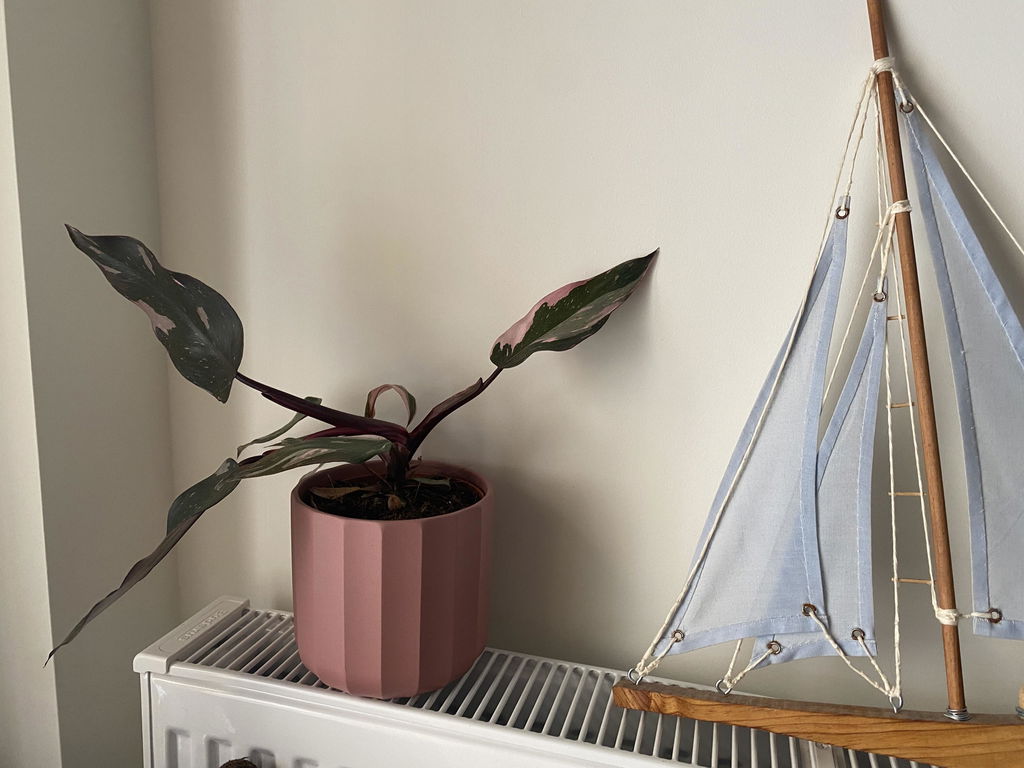
Hello Artemis! Thanks for all your lovely reviews of the plants you received! Means a lot ot us.
I see you got a pink princess instead of a burgundy princess - if you reach out to us at support@plantcircle.com we can help resolve this issue for you!
Thanks,
Plant Circle Team