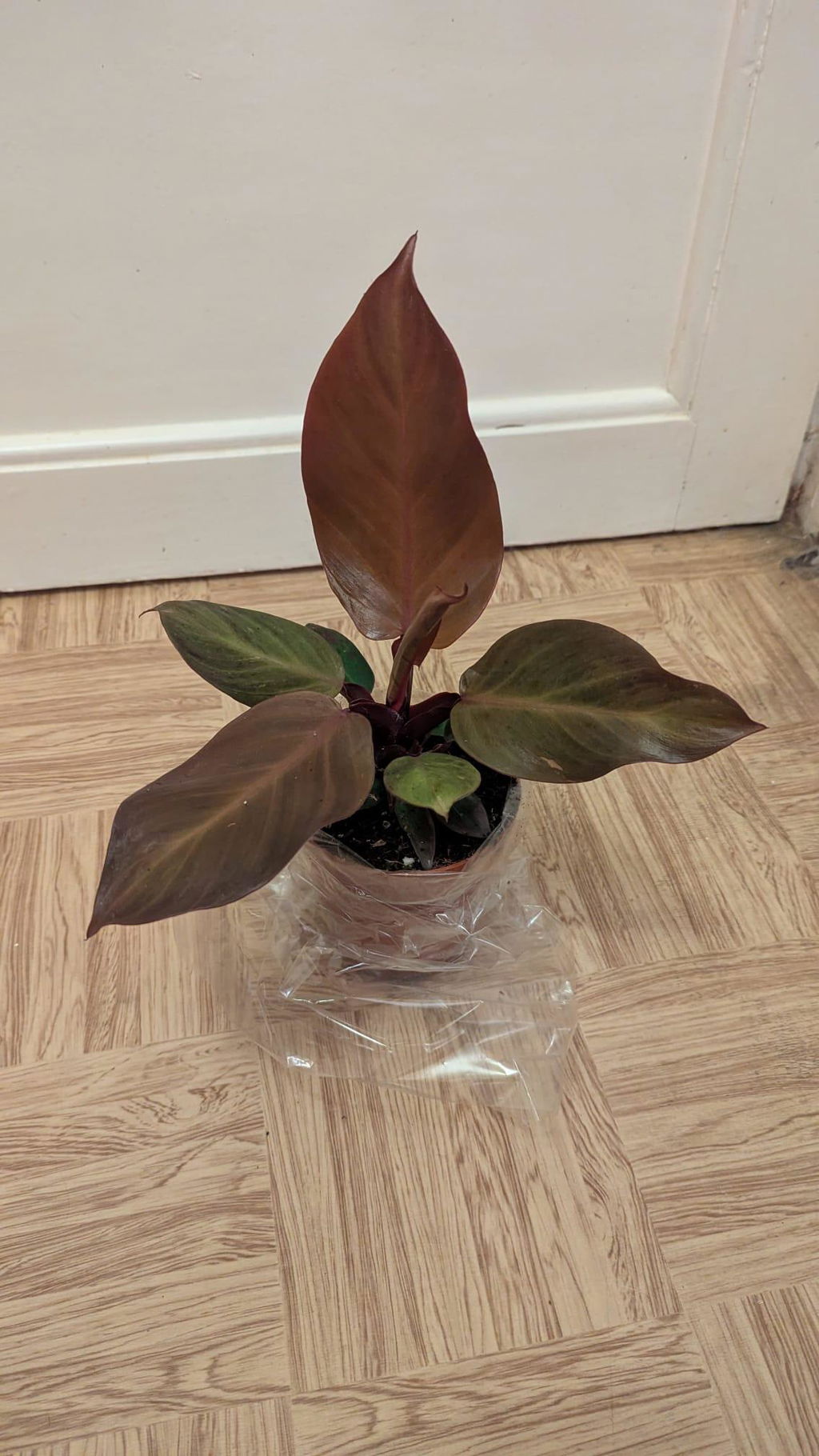


Secure packaging for delicate plants
Small business in Berlin
★★★★★ 4.87 Avg. Review


Philodendron 'Painted Lady'
Philodendron 'Painted Lady' (Philodendron erubescens 'Painted Lady') is a climbing philodendron cultivar—an established erubescens‑group selection—noted for its fine neon‑yellow/chartreuse speckling across the leaves and pink‑to‑red petioles. Indoors it will climb a moss pole or trellis and suits shoppers and collectors seeking bold, high‑impact foliage, but keep it away from pets and children as all parts are toxic if ingested.
- height Height
- 30 cm
- swap_horiz Pot Size
- 12 cm
- volunteer_activism Care
- Medium
- wb_sunny Light Needs
- Bright indirect light
- pets Not Pet Friendly
- water_drop Watering Needs
- Medium
check_circle In Stock
Quick care table
Plant care at a glance
| Care factor | Philodendron 'Painted Lady' |
|---|---|
| Botanical name | Philodendron erubescens 'Painted Lady' |
| Common name | Philodendron 'Painted Lady' and Painted Lady philodendron |
| Difficulty | Medium |
| Light | Bright indirect light |
| Humidity | Medium |
| Pet safe | No, toxic if ingested |
| Best for | Hallway, Office, Bedroom, Kitchen, Bathroom, and Living room |
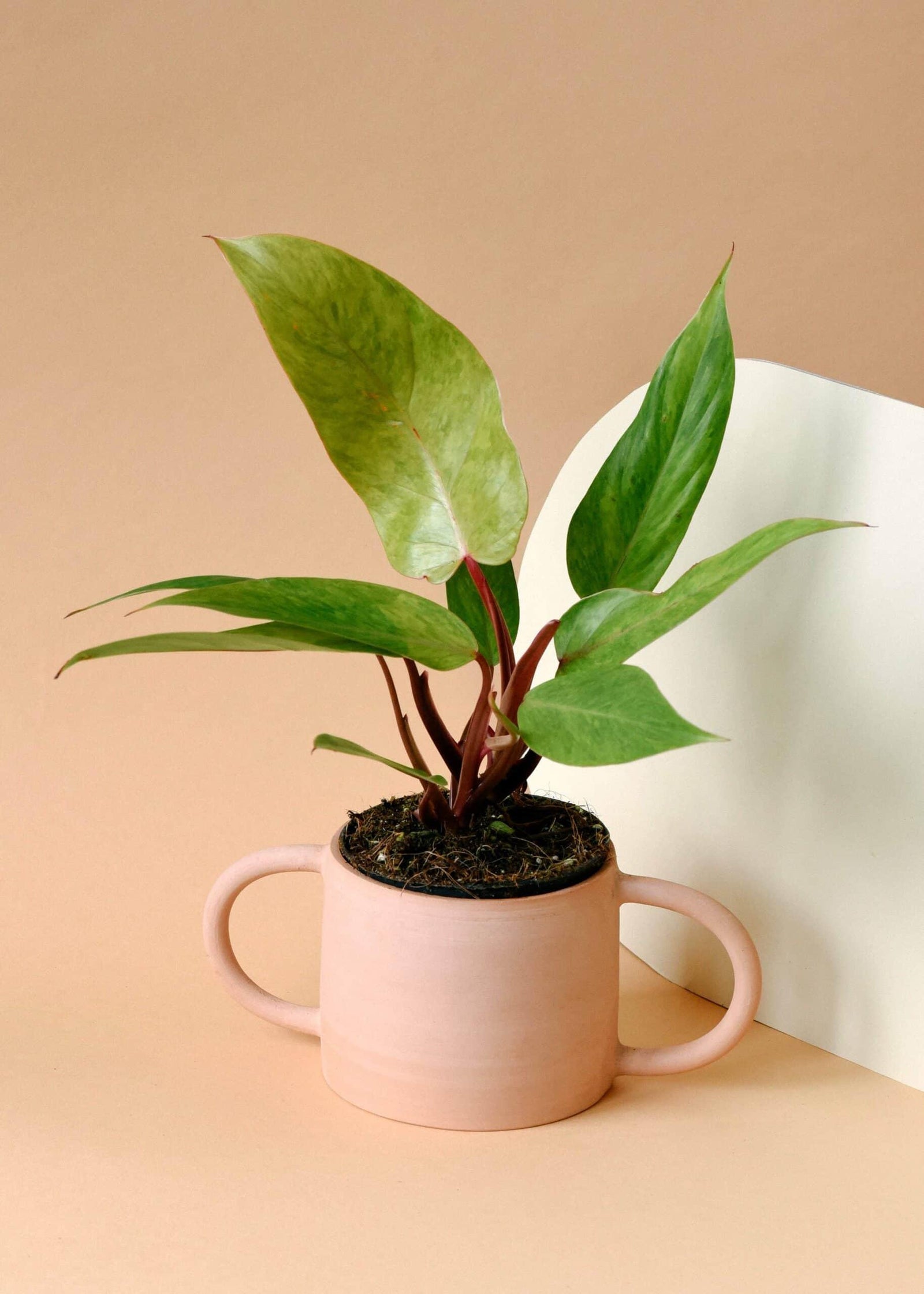
Neon-chartreuse speckled leaves with pink stems — Philodendron 'Painted Lady'
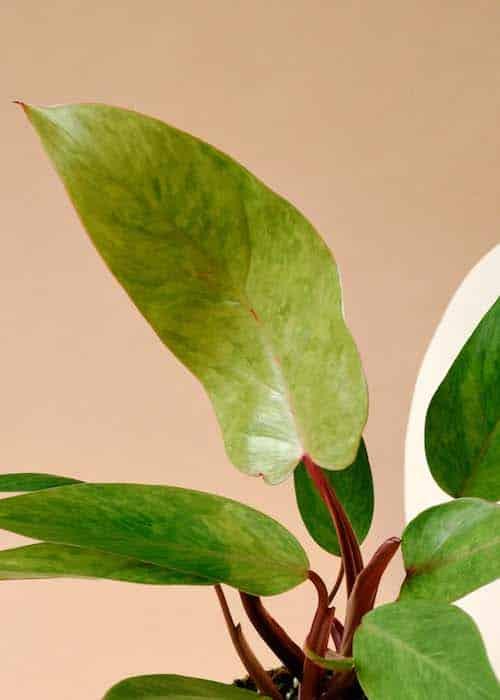
New leaves unfurl a bright neon-yellow/chartreuse and carry fine, granular speckling that gives each blade a mottled, hand-painted look. Leaves are broadly ovate to slightly heart-shaped with smooth margins and a glossy texture; stems, petioles and leaf sheaths often show pink-to-red tones that catch the eye against the lime-green foliage. The variegation is speckled rather than large cream sectors, so the overall visual effect is a luminous, finely freckled canopy.
This plant is a climbing erubescens-group selection and behaves like an indoor climber: younger shoots produce smaller, brighter, more heavily speckled leaves, while mature, supported stems develop larger, more elongated blades. It will readily ascend a moss pole or trellis using aerial roots; it does not produce leaf splits or holes (no fenestration), so expect continuous heart-shaped leaves rather than partitioned forms.
In everyday ownership you’ll notice the variegation intensity responds to light and provenance — brighter, indirect light keeps the speckles vivid, while low light can dull them. It prefers moderate watering and benefits from higher humidity, and dry indoor air can invite mealybugs or spider mites. All parts contain calcium oxalate and are irritating if ingested, so keep it away from children and pets. As a selected cultivar with established nursery availability, collectors value specimens with strong speckling and pink stems, though patterning varies between plants.
Best suited to a bright spot where it can be trained vertically, this medium potted option (P12, shown here) gives a compact, trainable starter plant that will grow up a support rather than sprawling across the floor.
Shipping Information
expand_more
- All orders are subject to a €25 minimum order value requirement
- All orders are hand-picked and shipped from the Netherlands
- Plastic-free materials when possible
- Orders are usually processed in 1-3 working days and shipped via DPD and their international partner carriers
- At times, orders may take up to 7 days to ship
- Orders to Germany Free shipping over €60. Free shipping all other EU countries* at €100 (Except Malta and Cyprus)
- Shipping costs are calculated at checkout based on delivery country:
See our FAQ and Shipping Guarantee for any further Questions!

Size: Medium - P12 H30

Plant questions, answered
What makes Philodendron 'Painted Lady' different from other philodendrons?
expand_more
Philodendron 'Painted Lady' (an erubescens‑group selection) is defined by neon‑yellow/chartreuse granular speckling across the blade plus pink‑to‑red petioles and sheaths. Unlike standard Philodendron erubescens, the variegation is fine and speckled rather than large sectoral patches, giving a consistently bright, granular appearance prized by collectors.
Will the speckled variegation stay the same on my plant?
expand_more
Variegation intensity varies — Painted Lady’s speckling is influenced by light and provenance. Bright, indirect light usually enhances chartreuse speckling, while low light often causes reduced speckling. Expect pattern and intensity to differ between retail specimens rather than identical markings across every plant.
Is Philodendron 'Painted Lady' suitable to grow on a moss pole indoors?
expand_more
Yes, Philodendron 'Painted Lady' is a climber and responds well to a moss pole or trellis. A support lets aerial roots grip and encourages larger, more mature leaves and a more vertical, compact habit, which is helpful in apartments and indoor displays.
Is Philodendron 'Painted Lady' safe around pets and children?
expand_more
No — all parts of Philodendron 'Painted Lady' contain calcium oxalate raphides and are irritating or toxic if ingested. Handle the plant with care and keep it out of reach of curious pets and children; wash hands after handling to avoid skin or eye irritation.
What problems should I watch for with this cultivar?
expand_more
Watch for loss of speckling in low light, leaf scorch from strong direct sun, yellowing from prolonged waterlogging, and pests like mealybugs or spider mites in dry conditions. Philodendron 'Painted Lady' benefits from balanced light, adequate humidity and routine leaf checks to catch issues early.
How common is Philodendron 'Painted Lady' and is it of interest to collectors?
expand_more
Uncommon to moderately available: Painted Lady is widely offered by specialty nurseries but collectors prize specimens with strong speckling and vivid pink stems. It's an established cultivar rather than an extremely rare sport, so quality and provenance determine collector interest and value.
Plant care guide
Light
expand_more
Water
expand_more
Soil and repotting
expand_more
Humidity and temperature
expand_more
Feeding
expand_more
Growth and support
expand_more
Common concerns
expand_more
Loss of speckling in low light; leaf scorch from strong direct sun; yellowing from overwatering; mealybugs or spider mites in dry conditions. As a selected cultivar, variegation intensity and stem colour vary with light and provenance—expect differences between specimens.
Pet safety
expand_more
You might also like
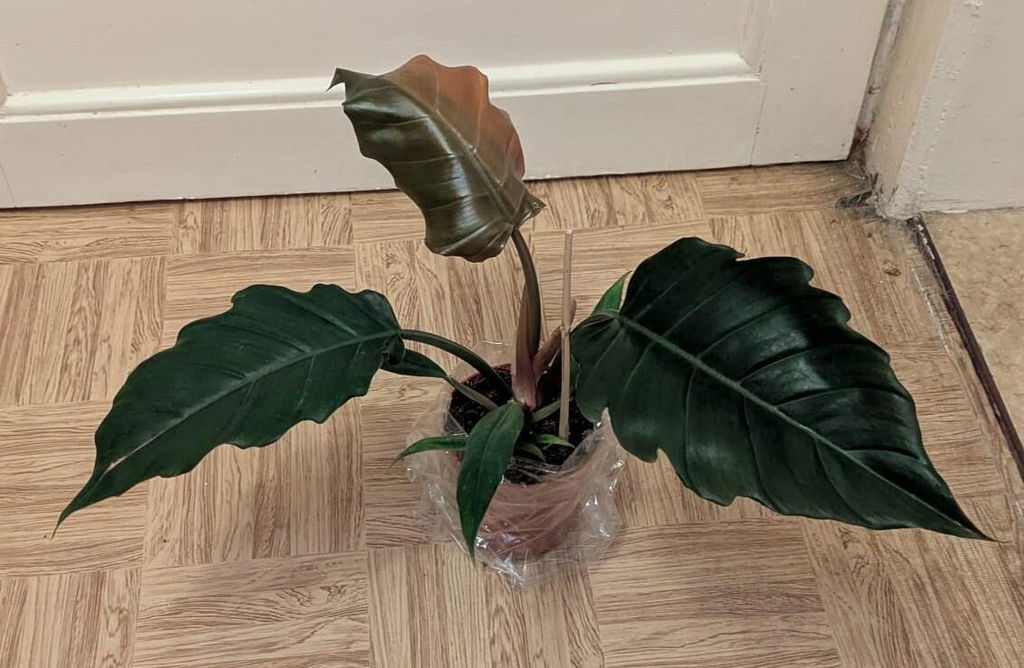
The Philodendron ‘Prince of Orange’ arrived safely and was well packed. The plant looked healthy and had beautiful colors. It adapted well after shipping and I’m very happy with it. It is also growing very well — in almost two months it has already produced three new leaves, maybe even four.
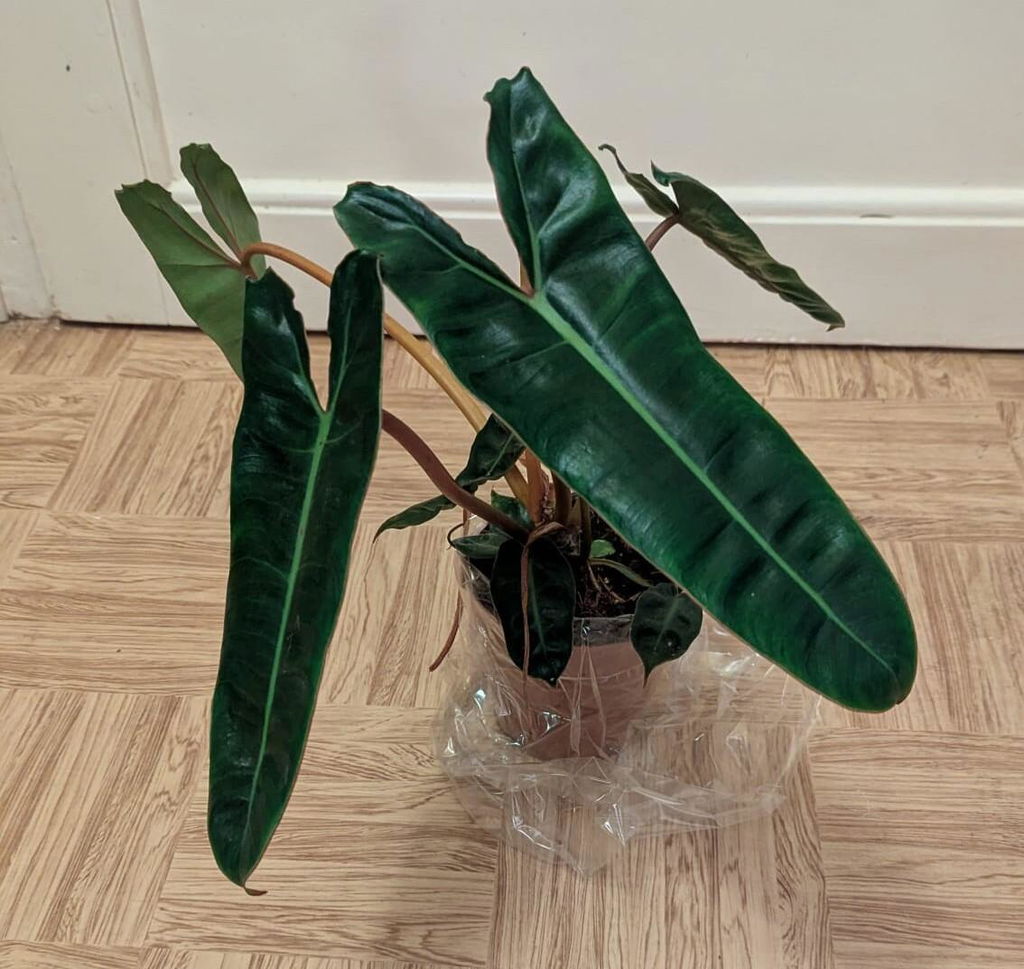
The Philodendron Billietiae arrived in good condition and was packed carefully. It is a beautiful plant with lovely leaves and strong potential. I’m very happy to have it in my collection.
It have got two new big leaves 🫶
Very pretty
👍
It traveled during winter and survived(unluckily the other philo didnt make it and plant circle gave it another try🙏🏻)
It seems to be hard to kill, beautiful, fast growing! I really loved it!
Reviews in Other Languages
Sehr schöne gesunde Pflanze. Ich bin sehr auf ihre nächsten Blätter gespannt.
Sehr schöne gesunde Pflanze. Ich hoffe, sie wird sich bei mir wohlfühlen.
Sehr schöne gesunde Pflanze. Ich hoffe, sie wird sich bei mir wohlfühlen.