


You will automatically receive an order confirmation email once you place your order. If you need an invoice, please contact our customer service at support@plantcircle.com.
verified_user
Quality Guaranteed
Secure packaging for delicate plants
Shipped to Germany and EU
diversity_1
Queer Owned
Small business in Berlin
favorite
20,000+ Customers
★★★★★ 4.87 Avg. Review
All FAQ
chevron_left
chevron_right
FAQ – by Plant Circle
Can I add something to my existing order?
No, we are no longer able to add products or make other changes to existing orders.
Read more
FAQ – by Plant Circle
Can I combine my orders to save on shipping?
No, we cannot combine existing orders. Best if you can cancel and place as 1 order.
Read more
FAQ – by Plant Circle
Can I pick up my order at the store?
Our orders are shipped directly from the Netherlands and we do not have a Plant Circle brick and mortar store at the moment.
Read more
FAQ – by Plant Circle
Can you reserve an upcoming plant for me?
Whilst we would love to put plants on hold, this is not something we do. Plant Circle sells on a first come first served basis.
Read more
FAQ – by Plant Circle
Can you ship my order at a later date?
No, we can not put orders on hold. It is best if you wait to place your order if you need the shipping delayed.
Read more
FAQ – by Plant Circle
Do you offer gift cards? How can I use a gift card for my purchase?
Yes, we do! You can buy gift cards in our online store here When purchasing a gift card online, you have two options: Use the recipient’s email on the product page, where it says “to…”, which will immediately inform them that they have been given a gift. Use your own email address if you don’t want the recipient to know yet. That way, you give the gift voucher when you choose. The gift card code will be sent to the provided email address as soon as the order has been placed. Please note that you don’t receive an actual physical card when you purchase gift cards online, only the digital receipt.
Read more
FAQ – by Plant Circle
Do you offer plant installation and design services?
Yes, we do! Please contact us at hi@plantcircle.com and tell us about your project or visit Plant Circle for Business if it is a commercial project!
Read more
FAQ – by Plant Circle
Do you sell wholesale?
No, we do not offer wholesale plants. You are welcome to purchase from us for your business, however we are not able to offer special wholesale prices.
Read more
FAQ – by Plant Circle
How can I subscribe to your newsletter?
See the Join the Plant Circle Community email sign up below!
Read more
FAQ – by Plant Circle
How do you package plants?
All plants are carefully packaged in cardboard boxes which were designed specifically for shipping plants and prevent them from moving around in the parcel and potentially damaging their precious foliage. In winter, we add heat packs as well as insulating material to our packaging, so the plants won’t freeze in colder weather. This is why shipping during the colder months might be more expensive. However, even though we use special packaging during winter, we might pause shipping should temperatures drop below 5 degrees Celsius, since then it is too cold to ship tropical plants, even with the right packaging.
Read more
FAQ – by Plant Circle
How long will the delivery take?
We understand your anticipation to embrace your new green companions, and we’re here to shed light on our processing times. Typically ranging from 1 to 7 days, we ensure a smooth journey from grower to your doorstep. While the majority of orders dance into processing within two days, unique situations may occasionally extend this period. It’s important to note that our plants embark on their journey from the lush gardens of the Netherlands, and the swiftness of their voyage is contingent upon the grower’s preparation and transit to our packing hub. Rest assured, less than 10% of orders extend to 7-10 days, as we prioritize bringing botanical bliss to your world promptly. In these cases we will try to proactively notify you, but in isolated cases we may miss sending you an update. If your order has not arrived within 10 working days after it has been shipped please contact us at support@plantcircle.com.
Read more
FAQ – by Plant Circle
How much does the shipping cost?
Delivery Costs Delivery costs are based on the shipping destination and are calculated in the cart according to the table below. We offer free delivery for orders above: €60 within Germany €100 within the EU * Cyprus and Malta qualify for €15 shipping at €100 order value Destination Delivery Cost Germany €7.99 Austria and Netherlands €5.99 Rest of EU €15.99 Malta and Cyprus €35.00
Read more
FAQ – by Plant Circle
I am looking for a plant that is not listed online, can you help me?
All plants available currently are listed on the online store. We love to hear what types so reach out social media to let us know your dream plants. We will do polls and interactions there to see what new plants we stock next!
Read more
FAQ – by Plant Circle
I made a mistake in the delivery address. What can I do?
Please contact our customer service at support@plantcircle.com immediately. We can only handle changes as long as the order has not been shipped, so requests need to be made on the same day the order was placed. The request has to be received during our office hours (Mo-Thu 9-17 and Fr 9-15) and have the subject line “Address change for order no. #xxxxxx” in order to be dealt with. Please note that, if a parcel cannot be delivered and is returned to us due to a mistake in the delivery address, Plant Circle is not responsible for the additional costs associated with sending the parcel again.
Read more
FAQ – by Plant Circle
I want to return a plant. Will I receive a return label from you?
Yes, we offer free return shipping as long as the plant is returned in the same condition as delivered—unreplanted, untreated, and with packaging suitable for safe return. If your plant arrived damaged or there was an issue during shipping, please contact us at support@plantcircle.com Before sending anything back, please contact our customer service at support@plantcircle.com. We’ll provide you with the return label, address, and step-by-step instructions for your return.
Read more
FAQ – by Plant Circle
My order is still in transit, can you give me an update?
A confirmation email with a tracking number is automatically sent when your order has been shipped. Please refer to the tracking link for all shipping updates and allow at least 24 hours for tracking updates. Plant Circle is not able to investigate the location of your shipment. If your order is in transit longer than expected, we kindly ask for your patience until the order is delivered. If your order has not arrived within 10 working days after it has been processed please contact us at support@plantcircle.com
Read more
FAQ – by Plant Circle
My parcel could not be delivered and is being returned to Plant Circle. What to do now?
There can be several reasons for parcels getting returned. We will contact you as soon as we receive a return. If a parcel was damaged by the courier during the transport process, it will be returned to us instead of being delivered. In this case, we will inspect the state of the products upon receiving them. If they are fit to be shipped again, we will dispatch them again as soon as possible without any costs occurring for you. If a parcel cannot be delivered and is returned to us due to a mistake in the delivery address, Plant Circle is not responsible for the additional costs associated with sending the parcel again. It is the responsibility of the customer to accept the delivery of a parcel or pick it up at an acceptance point. If a parcel was returned to us because it was not picked up from a parcel shop, post office or Pack station in time, the customer will bear the damages that might occur to the plants during the long time in the parcel.
Read more
FAQ – by Plant Circle
My tracking number doesn’t work, what can I do?
First allow up to 2 days for your tracking number to be activated upon receiving it. DPD will send you an email with a tracking link once your order has been dispatched. You will then be able to track your parcel further with the tracking number provided. Should your tracking link not work after 48hrs contact support@plantcircle.com and we will gladly assist you!
Read more
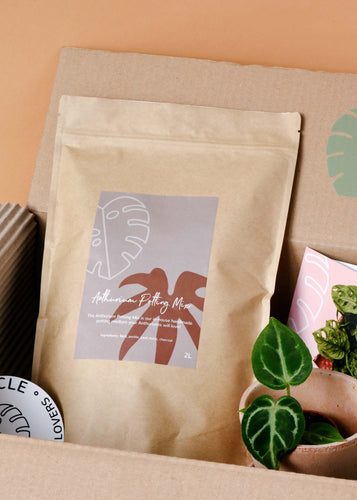
FAQ – by Plant Circle
Shipping Information
Shipping information for Plant Circle Orders
Read more

FAQ – by Plant Circle
The Ultimate Guide to Identifying Philodendrons: How to Tell Your Pink Princess from Your White Knight
If you've ever stood in a plant shop (or scrolled through our collection) feeling completely overwhelmed by the sheer number of philodendron varieties, you're not alone. With over 450 species and countless hybrids, philodendrons are one of the most diverse and beloved houseplant families – and honestly? They can be confusing as hell to tell apart.But here's the thing: once you know what to look for, identifying philodendrons becomes way easier. Whether you're trying to figure out if that cutting you got from a friend is actually a Pink Princess or just a very optimistic Birkin, this guide will help you become a philodendron identification pro.What Actually Makes a Philodendron a Philodendron?Before we dive into specific varieties, let's talk about what all philodendrons have in common. Philodendrons are part of the Araceae family (same as Monstera, Anthurium, and Alocasia), and they're native to the tropical Americas. The name literally means "tree-loving" in Greek, which makes sense because most species are climbers or epiphytes in their natural habitat.Key philodendron characteristics: Cataphylls: These are protective sheaths that cover new leaves as they emerge. They're usually papery and fall off as the leaf matures – a telltale philodendron trait. Aerial roots: Most philodendrons produce aerial roots along their stems, especially climbing varieties. Leaf shape diversity: From heart-shaped to deeply lobed, philodendron leaves come in wild variety. Growth habit: They're either climbers (vining types) or self-heading (upright, non-vining types). Climbing vs. Self-Heading: The Two Main Growth TypesUnderstanding whether your philodendron is a climber or self-heading is the first step in identification.Climbing Philodendrons (Vining Types)These produce long vines and need support to grow upward. In nature, they climb trees using aerial roots. Examples include Philodendron hederaceum (heartleaf), Pink Princess, White Knight, and Brasil. They typically have smaller leaves when juvenile that get larger as they climb.Self-Heading Philodendrons (Upright Types)These grow in a rosette pattern from a central point without vining. Examples include Birkin, Black Cardinal, Prince of Orange, Imperial Green, and Moonlight. They tend to be more compact and bushier.The Variegated Royalty: Pink Princess, White Knight, White Wizard & Caramel MarbleThese are probably the most commonly confused philodendrons because they're all variegated climbing types. Here's how to tell them apart:Philodendron Pink PrincessKey identifiers: Pink variegation on dark green to burgundy leaves Variegation appears in splashes, sectors, or half-moon patterns New leaves emerge burgundy-brown before developing pink Stems are often burgundy or dark green Leaf shape: elongated heart shape with pointed tips Shop Pink Princess →Philodendron White KnightKey identifiers: White to cream variegation on dark green leaves Burgundy to dark red stems and petioles (this is the giveaway!) New leaves emerge with reddish cataphylls Variegation tends to be more sectoral than splashy Leaf undersides often have burgundy tones Shop White Knight →Philodendron White WizardKey identifiers: White variegation on green leaves (similar to White Knight) GREEN stems and petioles (this is how you tell it from White Knight!) Often more stable variegation than White Knight Variegation can be speckled, sectoral, or marbled Generally lighter green base color than White Knight Pro tip: If the stems are burgundy, it's White Knight. If they're green, it's White Wizard. That's literally the main difference.Shop White Wizard →Philodendron Caramel MarbleKey identifiers: Cream, yellow, and pink variegation (not pure white or hot pink) Marbled, swirled pattern rather than sectoral blocks New leaves emerge peachy-orange before maturing Base color is lighter green than Pink Princess The variegation has a softer, more pastel quality Shop Caramel Marble →The Self-Heading Squad: Birkin, Black Cardinal, Prince of Orange & MoonlightThese upright philodendrons are easier to tell apart because they have very distinct coloring and leaf patterns.Philodendron BirkinKey identifiers: White pinstripe variegation on dark green leaves Variegation appears as thin lines radiating from the midrib Compact, upright growth habit New leaves emerge solid green, develop stripes as they mature Can revert to solid green (it's a sport of Philodendron 'Rojo Congo') Fun fact: Birkin is actually unstable and can produce leaves that are half-reverted, creating cool patterns.Shop Birkin →Philodendron Black CardinalKey identifiers: Deep burgundy to almost black new leaves Mature leaves turn dark green with burgundy undersides Compact, self-heading rosette growth Leaves are broad and oval-shaped No variegation – just moody, dark vibes Shop Black Cardinal →Philodendron Prince of OrangeKey identifiers: New leaves emerge bright orange to peachy-coral Mature leaves fade to lime green, then dark green Self-heading, compact growth Creates a gradient effect with different-aged leaves No variegation – the color change is natural maturation Shop Prince of Orange →Philodendron MoonlightKey identifiers: New leaves emerge bright neon yellow-green Mature leaves are lime to medium green Self-heading, upright growth Leaves are more elongated than Prince of Orange The whole plant glows in bright light (hence "Moonlight") How to tell Moonlight from Prince of Orange: Moonlight is yellow-green, Prince of Orange is peachy-orange. Easy!Shop Moonlight →The Heartleaf Family: Hederaceum VarietiesPhilodendron hederaceum (also called scandens or heartleaf philodendron) is THE classic trailing philodendron. It has several popular varieties:Standard Green HeartleafSolid green, heart-shaped leaves on long trailing vines. This is the OG, the classic, the plant your grandma probably had.Philodendron BrasilSame as standard heartleaf but with yellow-lime variegation down the center of each leaf. The variegation creates a stripe pattern that's super distinctive.Philodendron Hederaceum VariegataKey identifiers: White to cream variegation (not yellow like Brasil) Variegation is more random and marbled Can have half-moon or sectoral variegation Much rarer and more expensive than Brasil Shop Hederaceum Variegata →The Velvet-Leaved Beauties: Gloriosum, Verrucosum & GigasThese philodendrons are known for their velvety leaf texture and stunning veining. They're crawlers rather than climbers.Philodendron GloriosumKey identifiers: Large, heart-shaped velvety leaves Prominent white or pink veining Crawling growth habit (grows horizontally along the ground) Leaves can get HUGE (30-90cm in ideal conditions) Dark form has deeper green leaves with more contrast Shop Gloriosum Dark Form →Philodendron VerrucosumKey identifiers: Velvety leaves with iridescent sheen Fuzzy, hairy petioles (stems) – this is the giveaway! Climbing growth habit (unlike Gloriosum) Leaves have prominent pale veining Can have reddish undersides How to tell from Gloriosum: Verrucosum climbs and has fuzzy stems. Gloriosum crawls and has smooth stems.Shop Verrucosum →Philodendron GigasKey identifiers: Copper-toned new leaves that mature to dark green Velvety texture similar to Gloriosum Climbing growth habit Leaves are more elongated than Gloriosum's heart shape Can develop stunning coppery iridescence Shop Gigas →The Weird & Wonderful: Unique Leaf ShapesSome philodendrons have such distinctive leaf shapes that they're impossible to confuse with anything else.Philodendron Hastatum 'Silver Sword'Key identifiers: Long, narrow, sword-shaped leaves Silvery-blue-green coloring Climbing growth habit Juvenile leaves are more arrow-shaped, mature leaves elongate Absolutely unmistakable once you see it Shop Silver Sword →Philodendron MayoiKey identifiers: Deeply lobed, palm-like leaves Reddish petioles and stems Climbing growth habit Leaves have 5-7 distinct lobes Often confused with Pedatum but Mayoi has redder stems Shop Mayoi →Philodendron JoepiiKey identifiers: Bizarre tri-lobed leaves that look almost alien Three distinct sections per leaf Climbing growth habit Discovered in 1991 in French Guiana Absolutely nothing else looks like this Shop Joepii →Philodendron Rugosum (Pigskin Philodendron)Key identifiers: Heavily textured, pebbled leaf surface (like pigskin, hence the name) Elongated heart-shaped leaves Climbing growth habit The texture is the dead giveaway – run your fingers over it and you'll know Shop Rugosum →Rare & Collector VarietiesPhilodendron Billietiae VariegataKey identifiers: Long, narrow leaves (similar to hastatum but wider) Bright orange petioles (this is THE identifier for Billietiae) Yellow to cream variegation (in the variegated form) Climbing growth habit Extremely rare and expensive Shop Billietiae Variegata →Quick Identification ChecklistWhen trying to ID a philodendron, ask yourself these questions: Is it climbing or self-heading? This narrows it down immediately. What's the leaf shape? Heart, elongated, lobed, or something weird? Is there variegation? What color? Pink, white, yellow, cream? What color are the stems/petioles? Green, burgundy, orange, fuzzy? What's the leaf texture? Smooth, velvety, pebbled? How do new leaves emerge? What color are they before maturing? Are there any unique features? Fuzzy stems, iridescence, specific vein patterns? Common Identification MistakesMistake #1: Confusing White Knight and White WizardSolution: Check the stems. Burgundy = White Knight. Green = White Wizard.Mistake #2: Thinking all pink variegation is Pink PrincessSolution: Caramel Marble has softer, peachy-pink tones. Pink Princess has hot pink on dark leaves.Mistake #3: Confusing Gloriosum and VerrucosumSolution: Feel the stems. Fuzzy = Verrucosum. Smooth = Gloriosum. Also, Gloriosum crawls, Verrucosum climbs.Mistake #4: Thinking Brasil is just a variegated heartleafSolution: It is! But the variegation pattern is specific – yellow-lime stripe down the center, not random white splashes.Mistake #5: Confusing juvenile and mature formsSolution: Many climbing philodendrons have completely different leaf shapes when juvenile vs. mature. Always check if it's climbing – mature leaves will be larger and more dramatic.Why Identification Matters (Beyond Just Knowing What You Have)Knowing exactly which philodendron you have isn't just about bragging rights (though let's be real, it's nice to correctly identify your White Knight). Different species have different care needs: Climbing vs. self-heading: Climbers need support and will get leggy without it. Self-heading types stay compact. Velvet-leaved types: Need higher humidity and are more sensitive to water quality. Variegated varieties: Need more light to maintain variegation and grow slower. Rare species: Often have specific temperature or humidity requirements. The Bottom LinePhilodendron identification gets easier with practice. Start by learning the major categories (climbing vs. self-heading, variegated vs. solid), then dive into the specific characteristics that make each variety unique. Pay attention to stem color, leaf texture, growth habit, and how new leaves emerge – these are your best clues.And remember: even experts sometimes need to wait for a plant to mature or produce new growth before making a definitive ID. If you're unsure, take photos of the whole plant, close-ups of leaves (top and bottom), stems, and new growth, then ask the plant community. We're all learning together.Ready to start your philodendron collection? Browse our complete philodendron collection and find your next plant baby. Every variety comes with care instructions and expert packaging for safe EU shipping.Happy identifying, plant nerds! 🌿✨
Read more
FAQ – by Plant Circle
What can I do if an item I ordered is missing from my parcel?
If you are missing one of the products you ordered upon delivery, please fill out the Returns-Replacements form here
Read more
FAQ – by Plant Circle
What countries do you deliver to?
BG-Bulgaria EE-Estonia DK-Denmark GR-Greece HU-Hungary IE-Ireland IT-Italy HR-Croatia LV-Latvia LT-Lithuania AT-Austria PL-Poland PT-Portugal RO-Romania SI-Slovenia SK-Slovakia ES-Spain * CZ-Tsjechie SE-Sweden FI-Finland NL-Netherlands DE-Germany FR-France LU-Luxembourg BE-Belgium MT-Malta*We are unable to ship plants to the Canary Islands due to import regulations.
Read more
FAQ – by Plant Circle
What couriers do you use?
All orders are shipped via DPD or their country specific Partner, who hand orders over to their partner courier services in the specific delivery country.
Read more
FAQ – by Plant Circle
What if my plants arrive damaged?
We will always gladly accept claims for damaged orders. Please fill out the form here. We will process your replacement as quickly as possible.
Read more

FAQ – by Plant Circle
What if my plants arrive damaged?
We will always gladly accept claims for damaged orders. When contacting us regarding these claims, please be sure to include the following: – Your order # in the subject, – Attach multiple images of the damaged product, – thoroughly explain the state of the plant, care you gave it and any extra information you believe will assist us in addressing your claim. Once we have received your email we will begin a claim assessment immediately and will respond to you as soon as this assessment is completed. Please be patient while we carry out your assessment. These claims can often be complex (due to the nature and scope of plant related problems) the response time may be longer, however we will respond as soon as the assessment is complete and do our best to find the best solution for our customers. Thank you for your patience whilst we address your concerns.
Read more
FAQ – by Plant Circle
Where are orders dispatched from?
In order to ensure the best quality and shorten the transit time for plants, we ship all of our plants directly from our growers in the Netherlands.
Read more

FAQ – by Plant Circle
Will I receive an invoice for my order?
You will automatically receive an order confirmation email once you place your order. If you need an invoice, please contact our customer service at support@plantcircle.com.
Read more