Baby Carnivorous Plant Trio – Venus Flytrap & Sarracenia
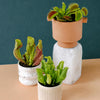
Meet three of the plant world’s most fascinating little predators. This carnivorous plant trio combines a baby Dionaea muscipula Venus Flytrap with two compact Sarracenia pitcher plants, each supplied in a P6 nursery pot.
Despite their unusual appearance, these plants all share a similar lifestyle. They naturally grow in nutrient-poor, boggy habitats and have evolved ingenious ways to catch insects instead. The Venus Flytrap uses fast-closing traps, while the Sarracenia lure insects into their tubular pitchers.
What’s Included
-
1 × Dionaea muscipula: The iconic Venus Flytrap with hinged, tooth-edged traps.
-
1 × Sarracenia purpurea-type: A compact pitcher plant with upright, beautifully veined traps.
-
1 × Sarracenia psittacina-type: A lower-growing pitcher plant with distinctive hooded traps.
-
Pot size: Each plant is supplied as a baby plant in a P6 nursery pot.
Why You’ll Love Them
-
Three different trapping styles: Discover the fascinating adaptations carnivorous plants use to catch insects.
-
Perfect starter collection: A fun introduction to growing several carnivorous species together.
-
Compact size: Baby plants are ideal for sunny windowsills, balconies, terrariums with strong ventilation or small bog displays.
-
They grow with you: Given plenty of sunlight and the right water, these small plants can develop into impressive mature specimens.
Care at a Glance
-
Light: Give them as much direct sunlight as possible, ideally at least 6 hours per day. Strong light also helps develop richer red colouration.
-
Water: Use only rainwater, distilled water or reverse-osmosis water. Keep the substrate constantly moist by standing the pots in a shallow tray of water.
-
Substrate: Use only nutrient-poor carnivorous plant substrate. Standard houseplant soil is unsuitable.
-
Feeding: Fertiliser is not required. The plants can catch their own insects when conditions allow.
-
Humidity: Normal household humidity is usually sufficient as long as the substrate remains consistently wet and airflow is good.
-
Winter: These temperate carnivorous plants benefit from a cool winter dormancy. Growth may slow considerably and older traps can naturally die back.
Good to Know
Do not trigger the Venus Flytrap traps unnecessarily, as each trap can only close a limited number of times before it dies back. Likewise, there is no need to manually fill the pitcher plants with insects.
These plants are best treated more like miniature bog plants than conventional houseplants. Plenty of sunlight, permanently moist substrate and mineral-free water are the keys to keeping the whole trio healthy.
As these are living baby plants, the exact shape, colour and number of traps or pitchers will naturally vary from plant to plant.