


The Final Touch: How Plants Turn a New Apartment into a Home
You've unpacked the boxes. The furniture is in place. The art is on the walls. And yet — something still feels off. The space looks right, but it doesn't quite feel like yours yet.
This is one of the most common experiences people have after moving into a new apartment, and it has very little to do with what's missing from a furniture catalogue. What a newly furnished room often lacks is something living. Something that moves slightly in a breeze, that grows, that changes with the seasons. Plants don't just decorate a space — they complete it.
This guide walks you through exactly how to use plants to make a new apartment feel like home: which plants to choose, where to place them, and how to match them to your light, your shelves, and your life.
Why a newly furnished apartment can still feel unfinished
Interior designers talk about this often. A room can be perfectly styled — the right sofa, the right rug, the right lighting — and still feel like a showroom rather than a home. The reason is usually the absence of organic texture. Furniture has hard edges and fixed shapes. Plants introduce irregularity, softness, and a sense that the space is inhabited rather than staged.
There's also something psychological at work. Living things signal permanence. When you bring a plant into a new apartment, you're not just decorating — you're committing to the space. You're saying: I live here now.
Use one statement plant to anchor the room
Every room benefits from a focal point — something that draws the eye and gives the space a sense of intention. In a new apartment, a large statement plant does this better than almost anything else, because it adds height, volume, and presence without requiring renovation.

The Monstera Deliciosa is the classic choice for good reason. Its split leaves are immediately recognisable, it grows large enough to fill an empty corner, and it works in almost any interior style — from minimal Scandinavian to warm maximalist. Place it near a window with indirect light and it will reward you quickly with new growth, which is exactly the kind of feedback a new space needs.
Care snapshot: Bright to medium indirect light. Water when the top 3–4 cm of soil are dry. Wipe leaves occasionally to keep them glossy.
Soften shelves and hard architectural lines with trailing plants
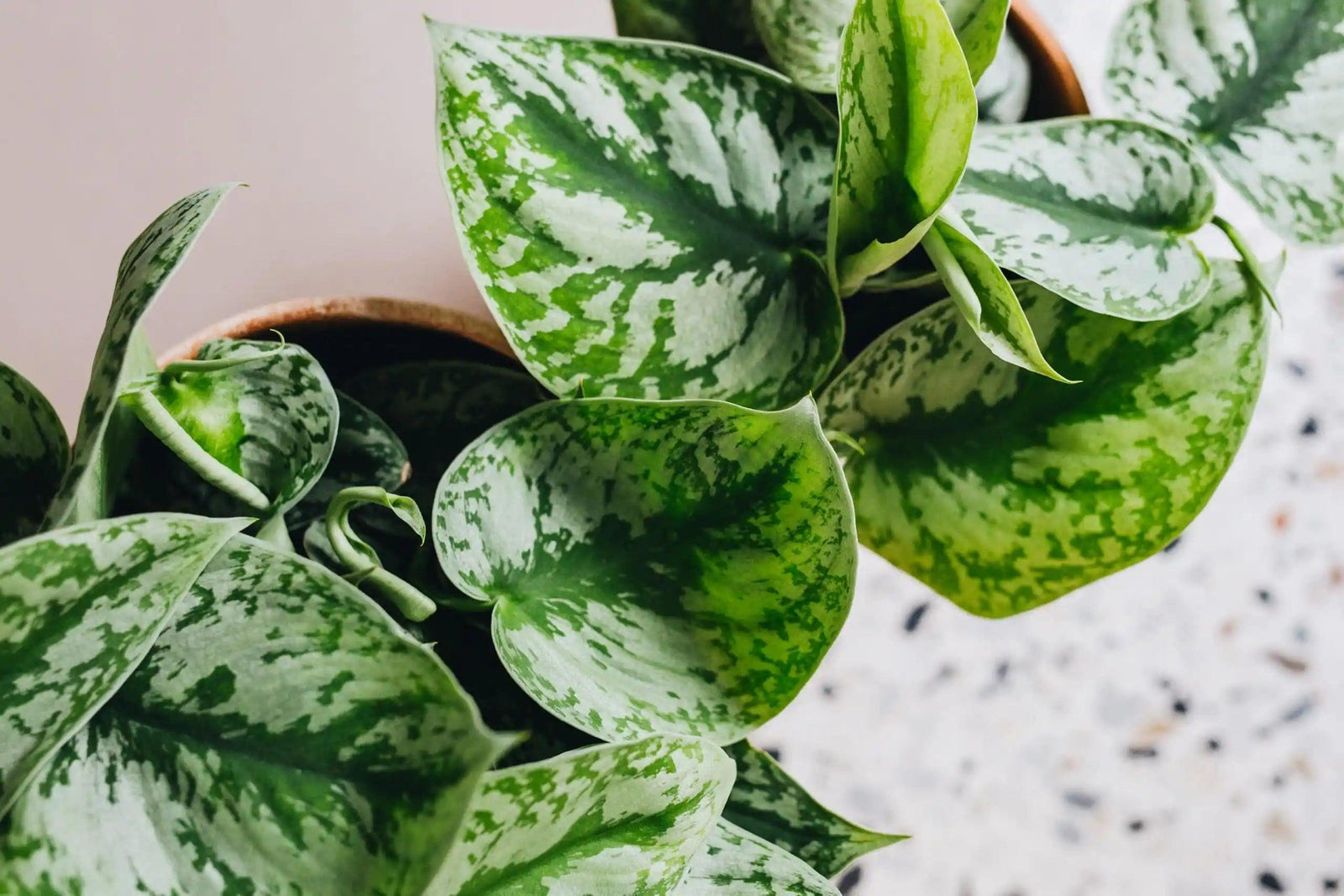
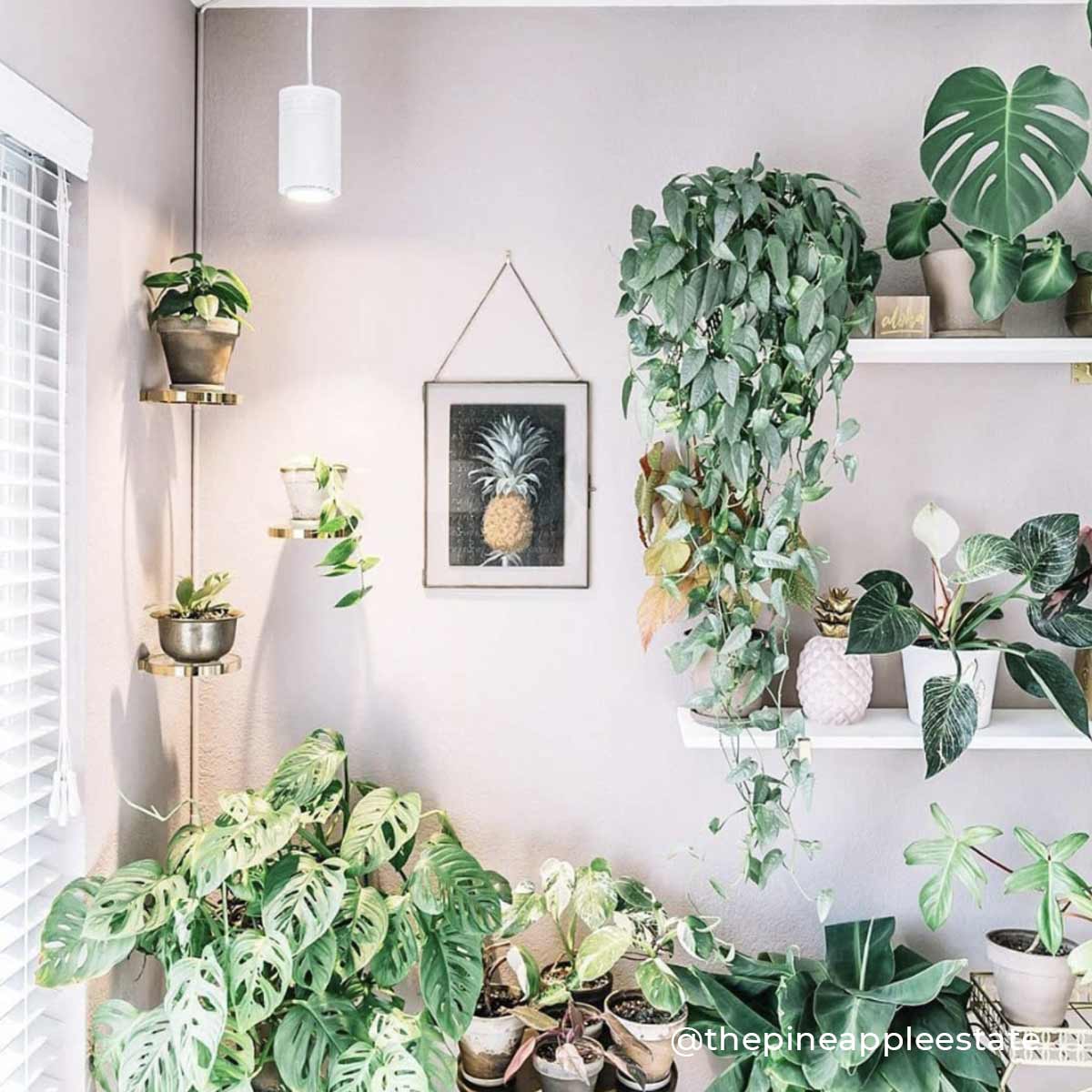
New apartments often have a lot of straight lines — bookshelves, window ledges, kitchen units — that can make a space feel rigid. Trailing plants are one of the most effective ways to soften these edges and add a sense of movement.
The Epipremnum aureum 'Neon' — commonly known as Neon Pothos — is ideal for this. Its chartreuse-yellow leaves are vivid enough to read from across the room, and it trails naturally from shelves, hanging planters, or the top of a wardrobe. It's also one of the most forgiving plants you can own, which matters when you're still settling in and your routine isn't fully established yet.
Care snapshot: Tolerates low to bright indirect light. Water when soil is mostly dry. Grows quickly — expect to see new leaves within weeks.
Add structure where the space feels empty
Some corners of a new apartment resist decoration. They're too narrow for furniture, too far from a window for art, too awkward for anything obvious. A tall, architectural plant is often the answer.
The Dracaena (Sansevieria) Zeylanica — sometimes called the Zeylanica Snake Plant — is built for exactly these situations. Its upright, sword-shaped leaves grow vertically, making it ideal for narrow spaces, hallways, and bedroom corners. It's also one of the best plants for bedrooms specifically, as it continues to process CO₂ at night.
The Dracaena fragrans 'Hawaiian Sunshine' works similarly but with a softer, more tropical character. Its broad, arching leaves in deep green with a lime centre bring warmth to a room that might otherwise feel cool or sparse. It's particularly effective in living rooms and home offices where you want presence without drama.
Care snapshot (both Dracaenas): Low to medium indirect light. Water sparingly — every 2–3 weeks is often enough. Avoid direct sun.
Match plants to the apartment's actual light
One of the most common mistakes when buying plants for a new home is choosing based on appearance rather than light conditions. Before you buy, spend a day noticing where the light actually falls — and when.
- Bright indirect light (near south or west-facing windows, set back from the glass): Monstera Deliciosa, Neon Pothos
- Medium indirect light (north or east-facing rooms, or further from windows): ZZ Plant, Dracaena Zeylanica, Hawaiian Sunshine
- Low light (hallways, bathrooms, rooms with small windows): ZZ Plant, Peace Lily
The Zamioculcas Zamiifolia 'ZZ Plant' XL deserves special mention here. It is genuinely one of the most light-tolerant plants available, and its glossy, dark green leaves look expensive in any setting. If you have a room that feels too dark for plants, the ZZ Plant is almost always the answer.
Care snapshot: Low to medium indirect light. Water very sparingly — once every 3–4 weeks in lower light. Extremely drought-tolerant.
Choose pots that connect the room's colours and materials
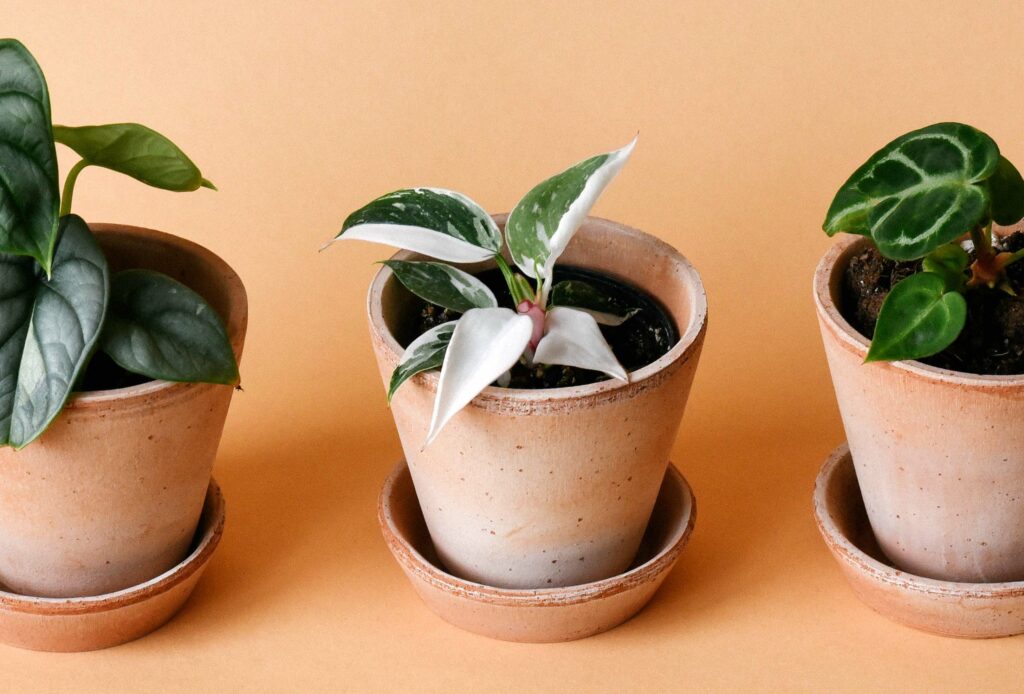
The plant is only half the picture. The pot connects the plant to the room — and in a new apartment where you're still building a visual language, this matters more than people expect.
A few principles that work consistently:
- Repeat one material from the room — if you have wooden furniture, a terracotta or matte ceramic pot echoes that warmth
- Use neutral pots for bold plants — a Monstera or Neon Pothos already has strong visual presence; a simple white or stone pot lets the plant lead
- Use a statement pot for quieter plants — a ZZ Plant or Dracaena in a textured or coloured pot becomes a design object in its own right
Easy plants for people still settling in
Moving is exhausting. The first weeks in a new apartment are full of admin, logistics, and adjustment. The last thing you need is a plant that demands daily attention.
The Spathiphyllum 'Sensation' XL — the Peace Lily — is one of the most rewarding low-maintenance plants you can own. It tells you when it needs water (the leaves droop slightly, then recover within hours of being watered), it flowers indoors without any special treatment, and it thrives in the lower light conditions common in apartments. It also has a particular quality that's hard to quantify: it makes a room feel calm.

Care snapshot: Low to medium indirect light. Water when leaves begin to droop slightly. Keep away from cold draughts.
A room-by-room plant checklist
Living room
- Statement anchor: Monstera Deliciosa
- Trailing accent: Neon Pothos (shelf or hanging)
- Floor filler: Dracaena 'Hawaiian Sunshine'
Bedroom
- Architectural corner: Dracaena Zeylanica
- Calm presence: Peace Lily XL
Home office / study
- Low-maintenance floor plant: ZZ Plant XL
- Trailing shelf plant: Neon Pothos
Hallway / low-light areas
The plants that make it feel like yours
A new apartment becomes a home gradually — through the routines you build, the objects you accumulate, and the small decisions that reflect who you are. Plants are one of the fastest ways to accelerate that process, because they're alive, they change, and they respond to how you care for them.
Start with one statement plant. Add a trailing plant to a shelf. Put something in the corner that felt empty. Within a week, the space will feel different — not just decorated, but inhabited.