


Secure packaging for delicate plants
Small business in Berlin
★★★★★ 4.87 Avg. Review


Dracaena fragrans ‘Janet Lind’
Dracaena fragrans ‘Janet Lind’ is an upright, cane-forming houseplant with slender woody stems topped by tufted rosettes of glossy, spear-shaped dark‑green leaves that arch into a layered crown. It works well as a floor or office specimen in medium indirect light with moderate watering, suiting shoppers after a classic corn‑plant look; be aware it is toxic to cats and dogs.
- height Height
- 140 cm
- swap_horiz Pot Size
- 27 cm
- volunteer_activism Care
- Easy
- wb_sunny Light Needs
- Low light
- pets Not Pet Friendly
- water_drop Watering Needs
- Medium
check_circle In Stock
Quick care table
Plant care at a glance
- Botanical name
- Dracaena fragrans 'Janet Lind'
- Common name
- Dracaena fragrans ‘Janet Lind’ and Dracaena 'Janet Lind'
- Difficulty
- Easy
- Light
- Low light
- Water
- Medium
- Humidity
- Medium
- Pet safe
- No, toxic if ingested
- Growth habit
- Upright cane-forming with tufted Rosettes at cane tips; produced as single or multi-stem canes for indoor display.
Classic cane-form Dracaena with glossy green rosettes
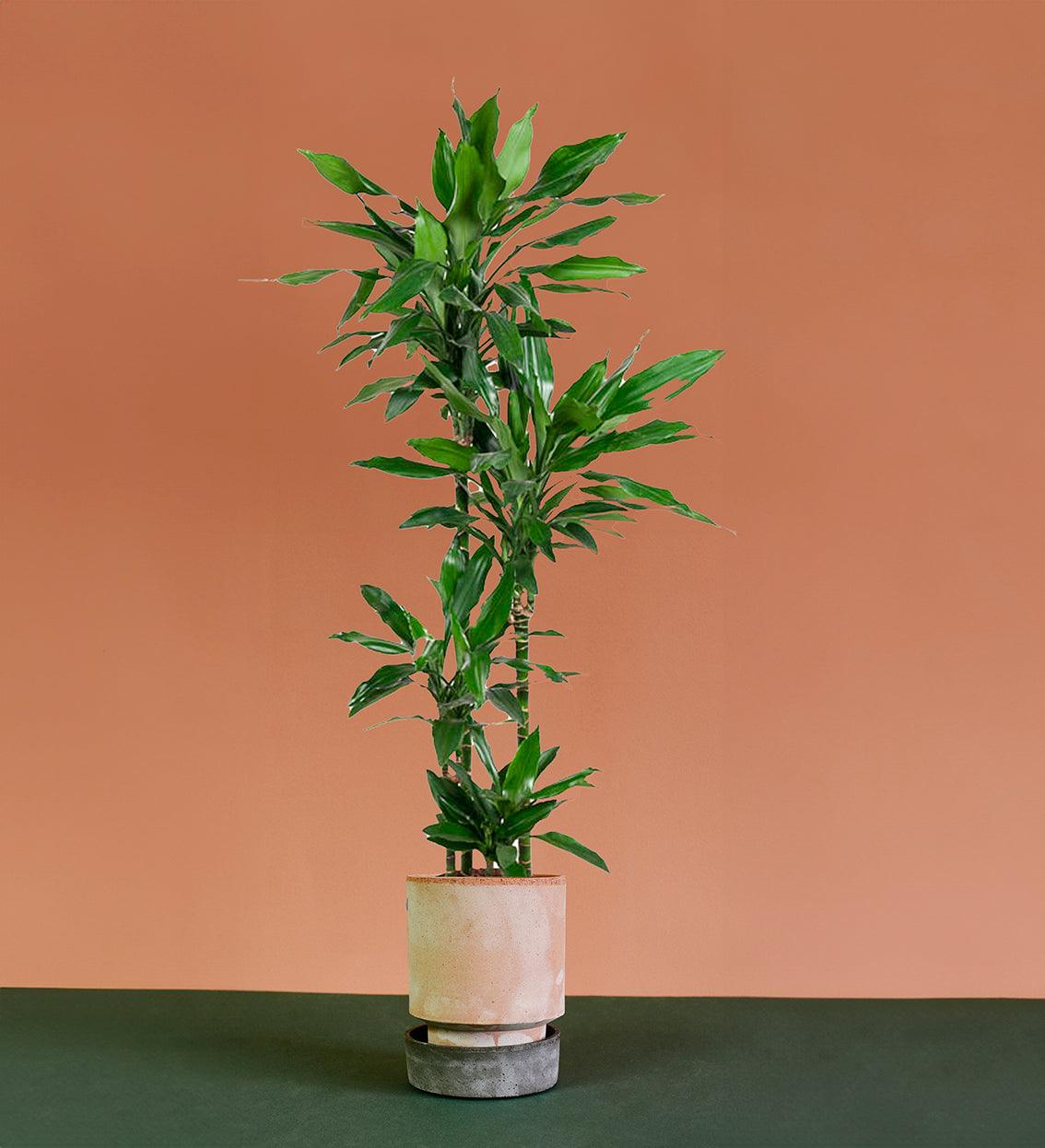
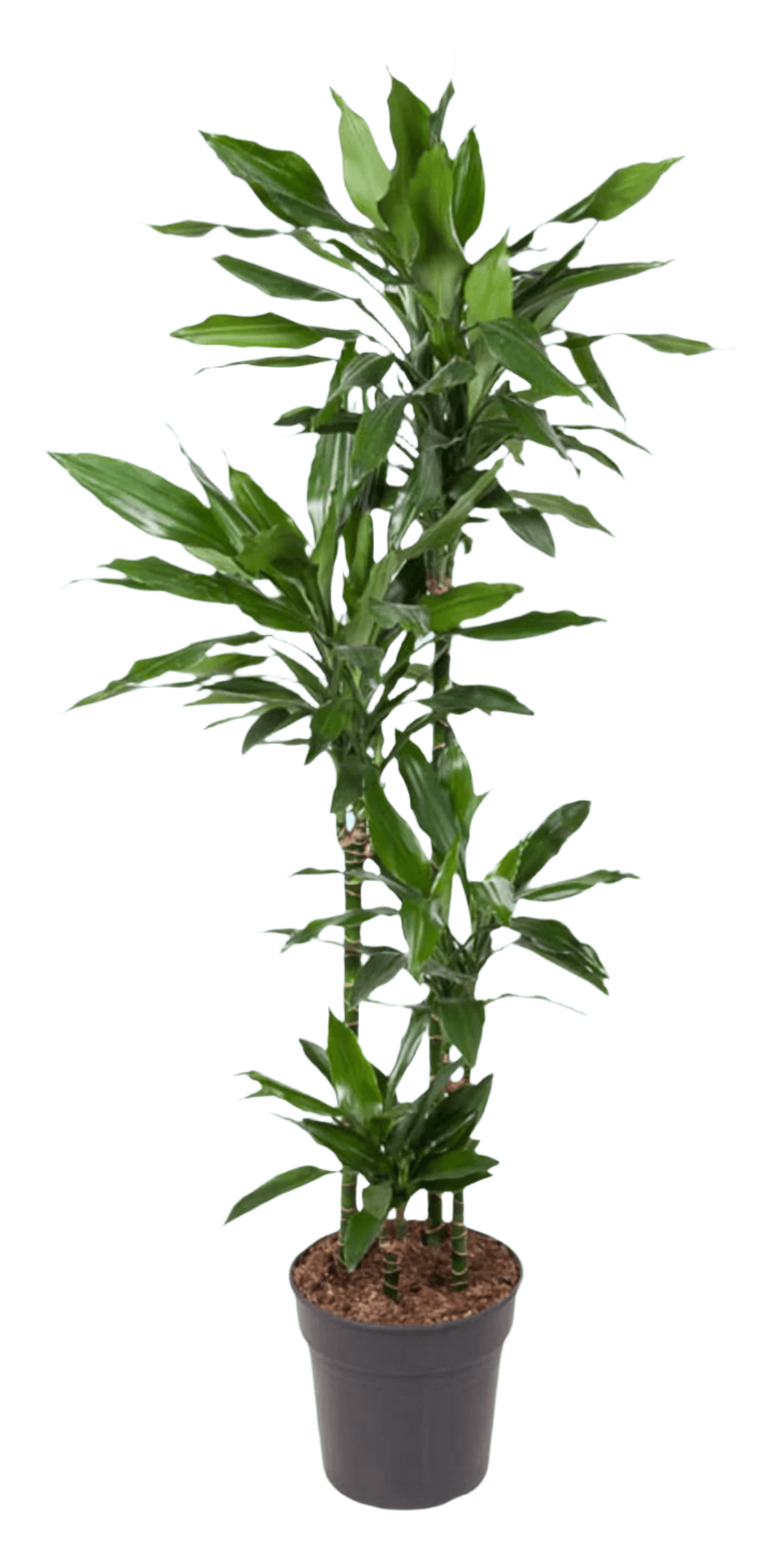
Dracaena fragrans ‘Janet Lind’ shows layered, arching lance-shaped leaves that form glossy rosettes at the tips of slender, woody canes. The overall silhouette is columnar but soft at the top, with a loose crown of darker green blades; some nursery stock can show faint, lengthwise lighter-green striping while others appear uniformly deep green.
Indoors it develops as single or multiple upright canes topped by those tufted leaf rosettes. You can prune canes above a node to encourage lower branching and a fuller, multi‑headed crown; flowering is rare in normal home conditions. The plant’s growth habit makes it a true floor specimen rather than a small tabletop choice.
In everyday ownership expect a low‑to‑moderate watering rhythm and sensitivity to waterlogged soil — root rot is the common practical concern. One clear trade‑off: Dracaena is toxic to cats and dogs, so it isn’t suitable for homes where pets nibble foliage. It’s a selected, widely traded cultivar used in interior landscaping for its dependable cane form rather than unusual variegation.
Best for living rooms, corridors or offices where a tall, columnar green form is wanted. This listing’s XXL option arrives as a large floor specimen with established canes and a full crown, so you receive immediate presence rather than a slow‑growing young pot plant.
Shipping Information
expand_more
- All orders are subject to a €25 minimum order value requirement
- All orders are hand-picked and shipped from the Netherlands
- Plastic-free materials when possible
- Orders are usually processed in 1-3 working days and shipped via DPD and their international partner carriers
- At times, orders may take up to 7 days to ship
- Orders to Germany Free shipping over €60. Free shipping all other EU countries* at €100 (Except Malta and Cyprus)
- Shipping costs are calculated at checkout based on delivery country:
See our FAQ and Shipping Guarantee for any further Questions!
Size: XXL - P27 H140

Plant questions, answered
Does Dracaena fragrans 'Janet Lind' have variegated leaves?
expand_more
Mostly no — 'Janet Lind' is sold as a dark‑green, glossy selection. Some nursery and RHS sources report faint lengthwise lighter‑green striping on certain batches, so leaf pattern can vary between suppliers. If you need strong, predictable variegation, choose a named variegated cultivar (for example 'Massangeana' or tricolour selections) instead.
What light, water and humidity does Dracaena fragrans 'Janet Lind' need?
expand_more
Medium indirect light, moderate watering and medium humidity suit 'Janet Lind' best. Avoid prolonged waterlogged soil to reduce root‑rot risk; very low light can cause slow growth and yellowing. Brown leaf tips often indicate salt/fluoride in tap water, low humidity or irregular watering, so adjust care accordingly.
Is Dracaena fragrans 'Janet Lind' safe around pets?
expand_more
No — Dracaena fragrans 'Janet Lind' is toxic to cats and dogs (Dracaena species are listed by the ASPCA). Keep the plant well out of reach from curious pets and children and seek veterinary advice if ingestion is suspected; this risk applies to the species, not a single cultivar.
How can I make my Dracaena 'Janet Lind' fuller or bushier?
expand_more
Prune above a node to encourage branching — 'Janet Lind' forms woody canes with tufted crowns, and cutting the cane typically stimulates basal or lower‑stem shoots. Prune selectively to create multi‑headed specimens, and avoid overwatering while the plant regrows to reduce stress and root problems.
What size and form will I receive for the XXL option listed?
expand_more
This listing is for the XXL variant produced as a tall floor specimen (pot P27, height H140 as supplied in the product record). Plants are cane‑forming with single or multiple slender stems; exact leaf density and any faint striping may vary between nursery batches and cannot be guaranteed from the photo.
Plant care guide
Light
expand_more
Water
expand_more
Soil and repotting
expand_more
Humidity and temperature
expand_more
Feeding
expand_more
Growth and support
expand_more
Common concerns
expand_more
- Overwatering: avoid prolonged wet soil; allow the top few centimetres of compost to dry between waterings and use a free‑draining mix to prevent root rot.
- Brown leaf tips: may result from fluoride/salts in tap water, low humidity or irregular watering — use filtered water or let tap water stand, increase humidity, and water consistently.
- Slow growth / yellowing leaves: very low light or salt buildup can reduce vigour — move to brighter indirect light and refresh compost if salts accumulate.
Pet safety
expand_more
You might also like
Arrived in great shape and was bigger than expected