


Easy Care Plants
Secure packaging for delicate plants
Small business in Berlin
★★★★★ 4.87 Avg. Review
Secure packaging for delicate plants
Small business in Berlin
★★★★★ 4.87 Avg. Review
Secure packaging for delicate plants
Small business in Berlin
★★★★★ 4.87 Avg. Review


Philodendron 'Imperial Red' is best known for its dramatic burgundy new leaves that open brown‑maroon and mature to a dark green‑maroon, with red‑purple petiole sheaths that give striking contrast in a compact, self‑heading rosette. You’ll get a tidy, non‑climbing specimen ideal for tabletops or small pots; give bright, filtered light and moderate watering in a free‑draining mix to keep the foliage looking rich and healthy.
check_circle In Stock
Quick care table
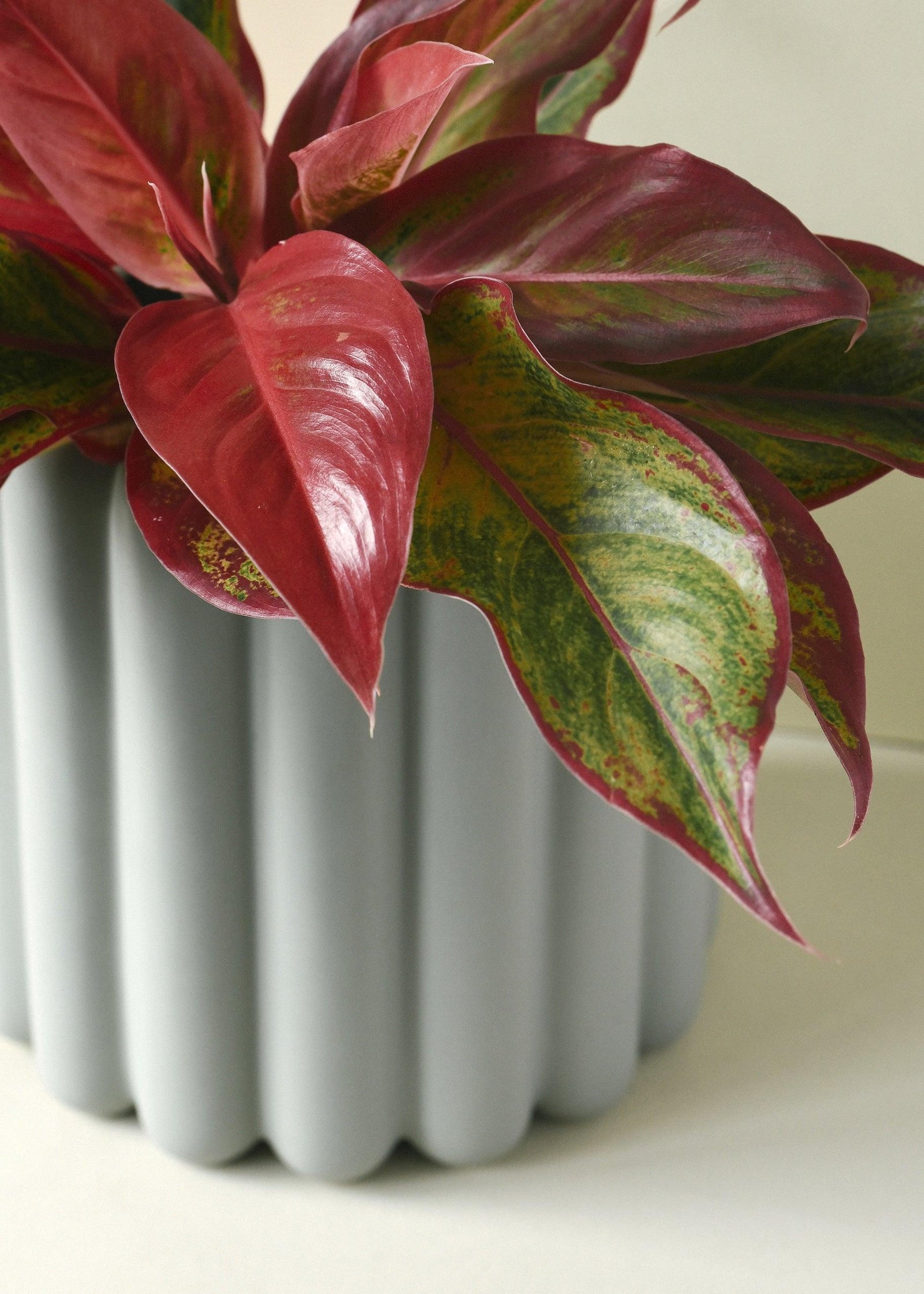
You’ll notice the colour story first: new leaves emerge a deep burgundy to brown‑maroon before settling into a rich dark green with a maroon wash. The leaves are broadly elliptic with a gently wavy edge and a less‑concave face than some related ‘Imperial’ selections, while the petiole shows red‑purple sheathing and fine striations — a clear, textural contrast between stem and blade.
This is a self‑heading rosette, so it stays a compact clump rather than scrambling up a stake. Juvenile foliage is the showpiece, progressively changing tone as leaves mature; the plant keeps closely spaced internodes that create a dense, architectural silhouette ideal for tabletops or small corners. Compared with climbing Philodendron erubescens forms, this cultivar is selected to remain non‑climbing and to hold strong juvenile colour longer.
In everyday care you’ll find it forgiving and beginner‑friendly: it likes bright, filtered light, moderate watering and reasonable indoor humidity. Be honest about one trade‑off — all parts are toxic if eaten or on contact, so it’s not suited to homes with curious pets or young children. Like many red‑leaf philodendrons it can suffer from overwatering and occasional pest issues such as scale or spider mite if conditions stay dry or stagnant.
This listing is for the Medium P14 H30 size, a ready‑to‑display plant that highlights the burgundy new growth and compact rosette form. Its established cultivar history (patented and widely tissue‑cultured) means nursery stock tends to be consistent in colour and habit, making it a dependable choice for those seeking vivid new foliage in a small footprint.
Shipping Information
expand_moreSee our FAQ and Shipping Guarantee for any further Questions!

Size: Medium P14 H30


What makes Philodendron 'Imperial Red' different from other red philodendrons?
expand_morePhilodendron 'Imperial Red' is a selected cultivar noted for strong burgundy/brown‑maroon juvenile leaves that age to dark green‑maroon, red‑purple petiole sheaths and a compact self‑heading rosette habit. The cultivar was described in U.S. plant patent US PP6337 and is prized by collectors for its showy new growth and consistent tissue‑culture propagation, so you can expect reliable colour and form from nursery stock.
Will this plant climb or need a support?
expand_moreNo — Philodendron 'Imperial Red' is self‑heading and remains a compact, non‑climbing rosette. It produces closely spaced internodes and forms a clump rather than sending out climbing stems, so you won’t need a moss pole or trellis; it’s well suited to tabletop or floor placement in a small pot and can be left to hold its compact shape.
How much light does Philodendron 'Imperial Red' need to look its best?
expand_moreBright, filtered or indirect light is ideal for Philodendron 'Imperial Red'. It tolerates partial shade but does best where new burgundy growth is visible without harsh direct sun. In lower light the plant may grow more slowly and show less intense juvenile colour, so aim for a bright windowsill with a sheer curtain or a well‑lit room.
Is Philodendron 'Imperial Red' safe around pets and children?
expand_moreNo — Philodendron 'Imperial Red' is toxic to pets and humans. Like other Philodendron cultivars it contains calcium oxalate crystals that cause oral and mucous‑membrane irritation if chewed and can irritate skin or eyes on contact. Keep the plant out of reach, and seek veterinary or medical advice promptly if ingestion or significant exposure occurs.
What problems should I watch for with Philodendron 'Imperial Red'?
expand_moreOverwatering and pests are the main concerns for Philodendron 'Imperial Red'. The plant prefers a moist but well‑drained substrate — persistent waterlogging can cause root rot. Watch leaves and stems for scale and glasshouse red spider mite and reduce watering in cooler or low‑light periods. Inspect regularly and treat pests early to keep the compact rosette healthy.
What size will I receive if I order this listing?
expand_moreThis listing is for the Medium (P14 H30) size — supplied in a 14 cm pot with an approximate plant height of 30 cm. Pot and height are typical nursery dimensions; individual plants may vary slightly in foliage fullness and exact height depending on recent growth and shipping timing.
Light
expand_moreWater
expand_moreSoil and repotting
expand_moreHumidity and temperature
expand_moreFeeding
expand_moreGrowth and support
expand_moreCommon concerns
expand_morePet safety
expand_moreBe the first to know about newly stocked plants and accessories, sales and exclusive offers.