
Quality Guaranteed

Secure packaging for delicate plants

Shipped to Germany and EU

Queer Owned

Small business in Berlin

20,000+ Customers

★★★★★ 4.87 Avg. Review

chevron_left chevron_right

Plant care guides: Pflanzenpflege

Browse all Plant Circle guides tagged Pflanzenpflege.

View

3 simple tips for beginner plant parents

by Plant Circle

3 simple tips for beginner plant parents

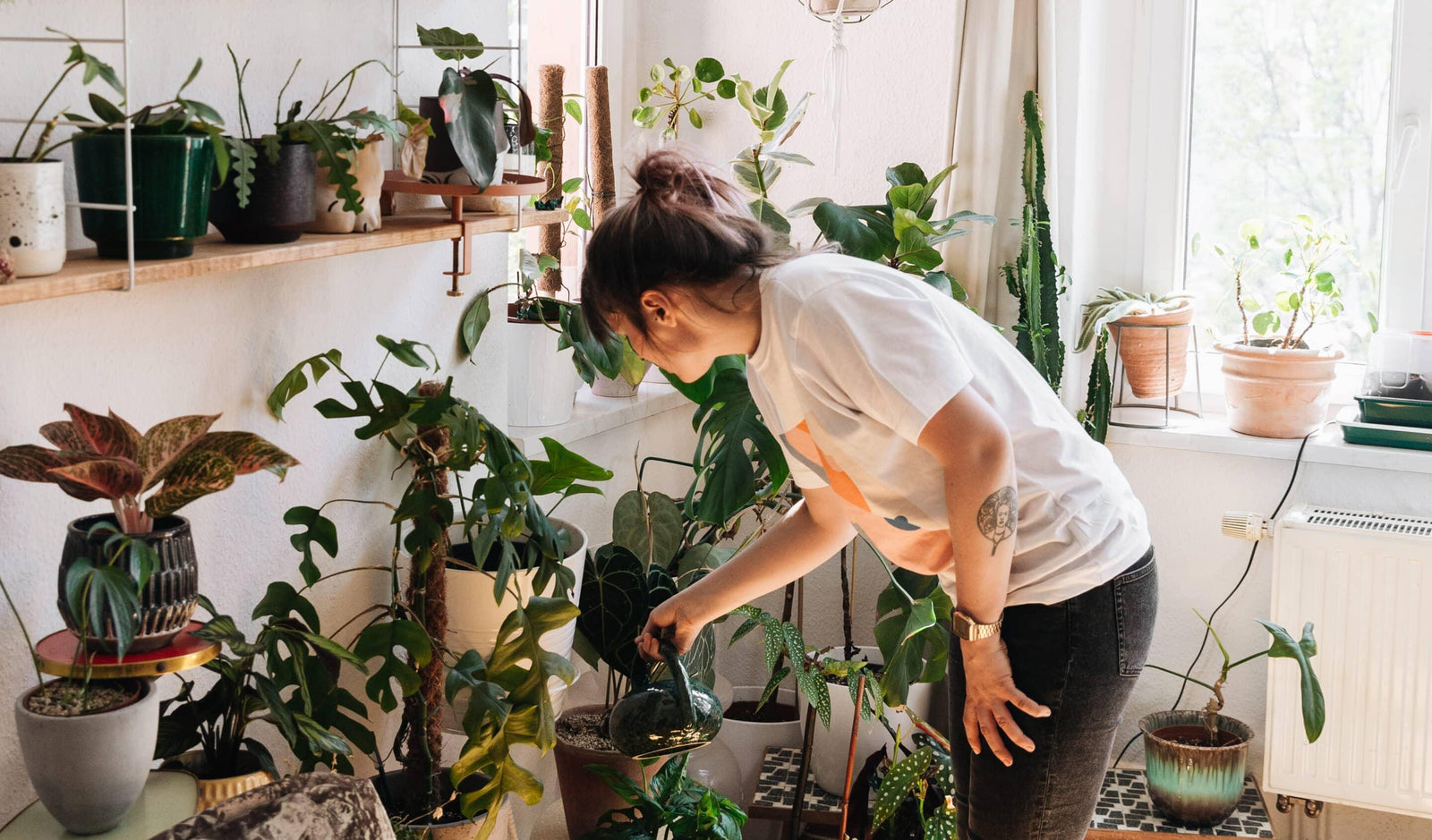
Have you been wanting to start a plant collection of your own this year? If so, we wanna get you off to a good start with some simple tips for beginner plant parents that will make you feel successful from the get go! Experienced plant owners can read along too! If you are new to growing plants indoors you might find yourself reading a lot of conflicting information online on how to care for your green buddies. After years of running workshops and answering your questions in person, as well as online, we have decided to put together our top 3 simple tips for beginner plant parents that can be universally applied to all plants in all sorts of conditions! 1. Give your plant sufficient light. Bright enough light for houseplants won’t be found in rooms or hallways that have no windows, or if plants sit in corners more than 1,5 m from windows. Please keep your plants close to windows or under (grow) lights. That being said, a lot of popular plants grown at home do not tolerate direct sunlight, it can literally burn their leaves! In practice, this means that if you have south or west facing windows, it could be dangerous to place your philodendron or monstera directly on the window sill during spring or summer. Most plants can withstand, and will even enjoy, a few hours of morning sun, but the afternoon sun can be a deadly. Please always google your specific plant’s light requirements before deciding on the perfect spot! 2. Learn how much water your plant needs. There is no universal watering advice for plants, and whatever you’ve been told about the plant you bought might not work for the conditions in your home. How often you need to water your plants depends on how much light they get, but also on the potting mix and planter it sits in. In order to determine how often to water your plant, please observe it as it will get droopy when it’s time for watering, and always check the soil with your finger, or a moisture meter, before watering. 3. Treat your plant to a quality potting mix. Plants tend to come in poor quality potting mixes, and we highly recommend always repotting them. But wait approximately 1-2 weeks after bringing them home before repotting them, so they have a chance to get acclimated! There is no universal potting mix recipe for all plants, but we find that just by adding a part orchid mix, part perlite and some charcoal you will improve the likelihood of your plant thriving in your home immensely!


Read more

How to grow your Christmas tree past Christmas

by Plant Circle

How to grow your Christmas tree past Christmas

For many people the only acceptable tree for Christmas is a live one and we get that! Nothing smells more like Christmas than a live spruce at home.  The argument continues about which kind of Christmas tree is the most sustainable: fake or real. While both come with a footprint, and their own list of pros and cons, we are here to talk about the latter ones. Namely potted, real trees, and how to make sure they survive Christmas and continue bringing us joy year by year. Roughly 27 million trees are cut down every year in Germany just for Christmas. Buying potted trees is a fantastic alternative to cutting them down. However, a few things have to be kept in mind to make sure the tree stays alive past Christmas. 1. Pick a tree that is suitable for growing in a container. Like for example Picea Pungens “Super Blue”, also known as Colorado Spruce. Why is this one suitable? Because spruce has very shallow roots, which makes it a perfect tree for a container! 2. Do not keep your live, potted tree indoors for longer period than 10-14 days. 3. Choose the right spot. Spruce will enjoy a cool spot, away from the heating, that is semi bright to shady. 4. Water your tree every few days with lukewarm water when the top soil feels dry to the touch, and in addition, use a water bottle to spray it and moisten the needles. which protects them from drying out from the warm, heated air. Be sure not to drench the soil. You do not want it to be soaking wet, nor should it be left to sit in water, as this could drown, and eventually rot, the tree. 5. Don’t put too many heavy decorations on your tree. Please! 6. Before you place your tree back outside, slowly introduce it to colder environment by for example keeping it in the coldest room in your house for a few days, or near a window that you open regularly. Once your tree is back, outside remember to fertilise it after the first frost. Spruce is an extremely slow grower and it will take it about 25 years to reach a height of 5 meters!

Read more

How to water your plants

by Plant Circle

How to water your plants

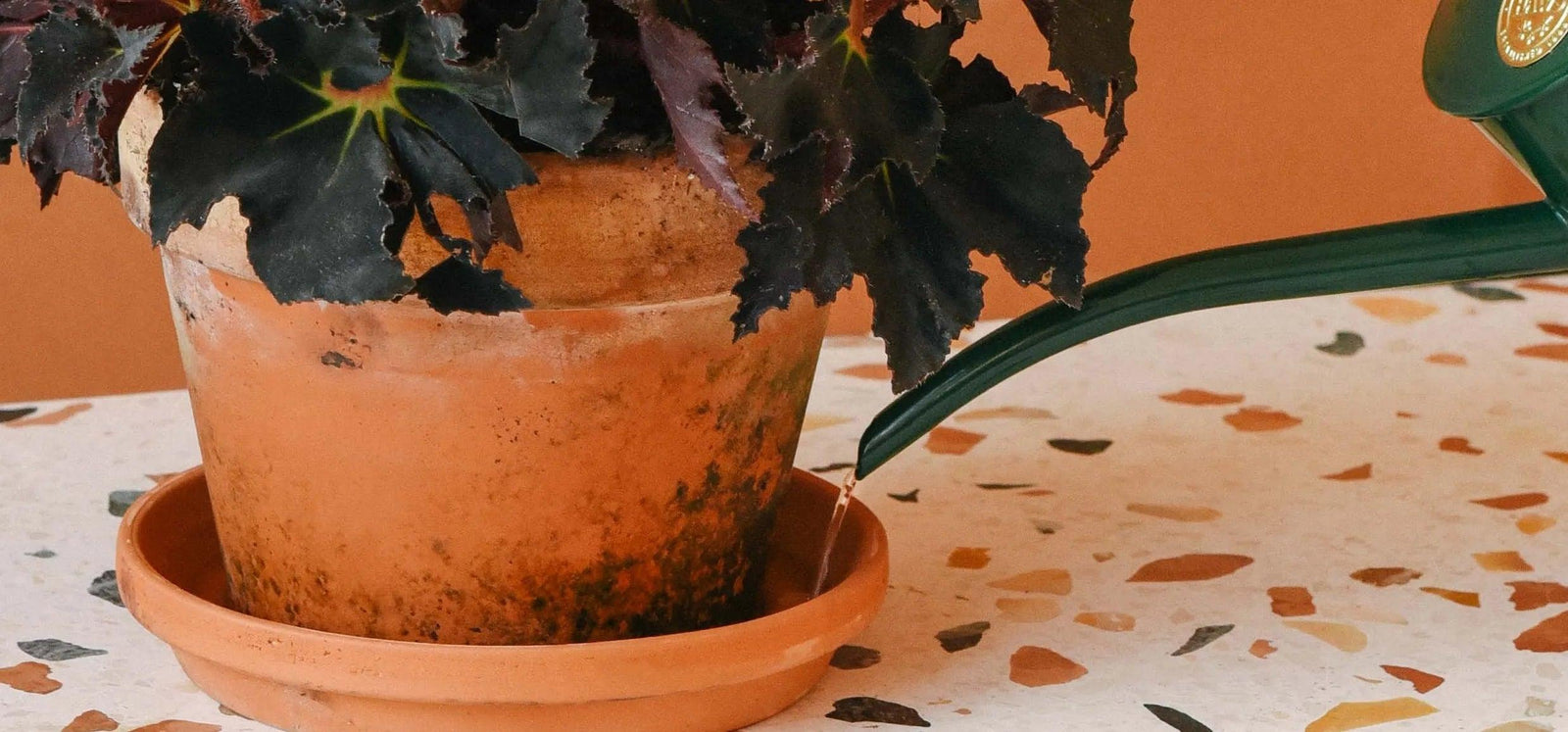
It’s no secret that the number one cause of death among houseplants is overwatering. This bad watering habit usually develops when well meaning plant parents give their plants just a little too much love and attention. Let’s explore how to water your plants… properly! Don’t feel bad, we’ve all been there. And most of us learned the hard way how to not water our plants! But whether you’re new to plant parenthood, or a seasoned plant parent, there’s no reason for you to make the same mistakes we did. And although all plants are different and have various watering needs, there are some good practices that you can apply all across the board. To help you out, we’ve compiled our top ten tips on how to water your plants here! 1. Sufficient lightYes, this post is about watering, but we can’t talk about watering without mentioning light! If your plants are not getting the sufficient, optimal light they need, they’ll also require less water than the internet, the sales assistant, or your friend says. Adjust your watering routine to the conditions you have! 2. Observe your plants They’ll tell you when they’re thirsty. All plants wilt when they’re dehydrated, and you’ll either notice rolled up leaves or some droopiness. Notice how many days it’s been since the last time you watered your plants, and now you know when your plant is overdue for a drink! Please note: some plants can take under watering quite badly, and will get burnt edges on the leaves, or even drop a few… looking at you, Ficus! If you want to avoid that, simply water them a day or two sooner the next time. Based on your previous observations you should now have a good idea of when the wilting is expected to occur! 3. The finger methodSimply stick your finger into the soil and check whether it’s wet or dry. If the top 3-4 cm of the potting mix are dry, you are safe to water your plants. 4. Bottom wateringSome plants, like Saintpaulia or Begonia, prefer bottom watering, as they don’t like getting water on their leaves. Do a little research about your new plant to find out if it has any special preferences! 5. Filtered water In a lot of places, like for example Berlin, tap water is really hard. Hard water has a negative impact on plants, therefore we recommend to always use either filtered, distilled, or rain water if possible. If those options aren’t available to you, then just let your water sit in the watering can for couple of days before using it. Read more about hard water here! 6. Showering your plantsOnce in a while it’s beneficial to give your plants a good shower! Not only will you clean dust off of the leaves, which is important for optimal light absorption, you’ll also take care of potential bugs and pests that could be hiding under the leaves. Furthermore, a thorough showering can wash out any mineral residue from the potting mix! We recommend this technique for the summer months. 7. Potting mixWhat potting mix your plants are in is crucial for keeping the roots healthy. The vast majority of plants will appreciate a well draining potting mix that will dry out between watering. Never use garden soil for your house plants, as it will turn into mud when watered and suffocate the roots. Read more about potting mixes here. 8. SeasonsAs the lighting situation changes with the seasons, it’s also important to change your watering routine. A good rule of thumb is to cut your watering in half in winter, meaning if you watered your plants weekly in summer, you can switch to watering every two weeks in winter. This, of course, doesn’t apply to for example cacti, if you’re hibernating them, or ferns that would rather stay kind of moist all the time. 9. Know the difference between moist and wetSome plants love for the potting mix to stay moist, but this doesn’t mean wet! Learn the difference, and never let your plants sit in water as it promotes root rot. 10. Drainage holesWe will forever recommend that you keep your plants in pots with drainage holes. No matter what! Drainage holes are actual lifesavers, as they make sure excess water doesn’t stay in the soil and damage the plant’s roots. When watering, make sure that you lift your pot up afterwards and let the excess water run through. Also, keeping your plants in plastic pots with drainage inside ceramics, promotes airflow around the roots. To make the conditions even better, you can put a few rocks under the plastic pot to lift it up a bit, and don’t forget to make sure that the ceramic planter is a few centimeters bigger than the plastic pot itself.

Read more