


Low Light Plants
Secure packaging for delicate plants
Small business in Berlin
★★★★★ 4.87 Avg. Review
Secure packaging for delicate plants
Small business in Berlin
★★★★★ 4.87 Avg. Review
Secure packaging for delicate plants
Small business in Berlin
★★★★★ 4.87 Avg. Review


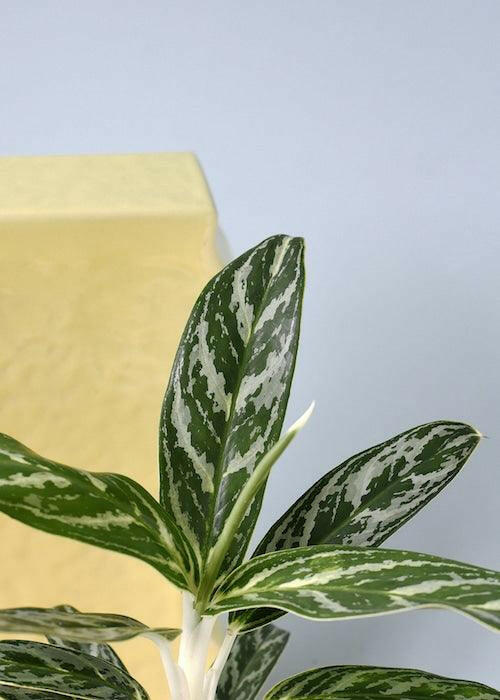
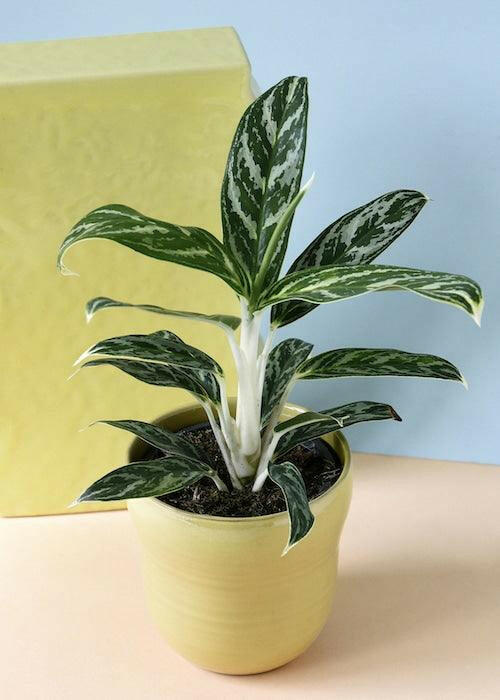
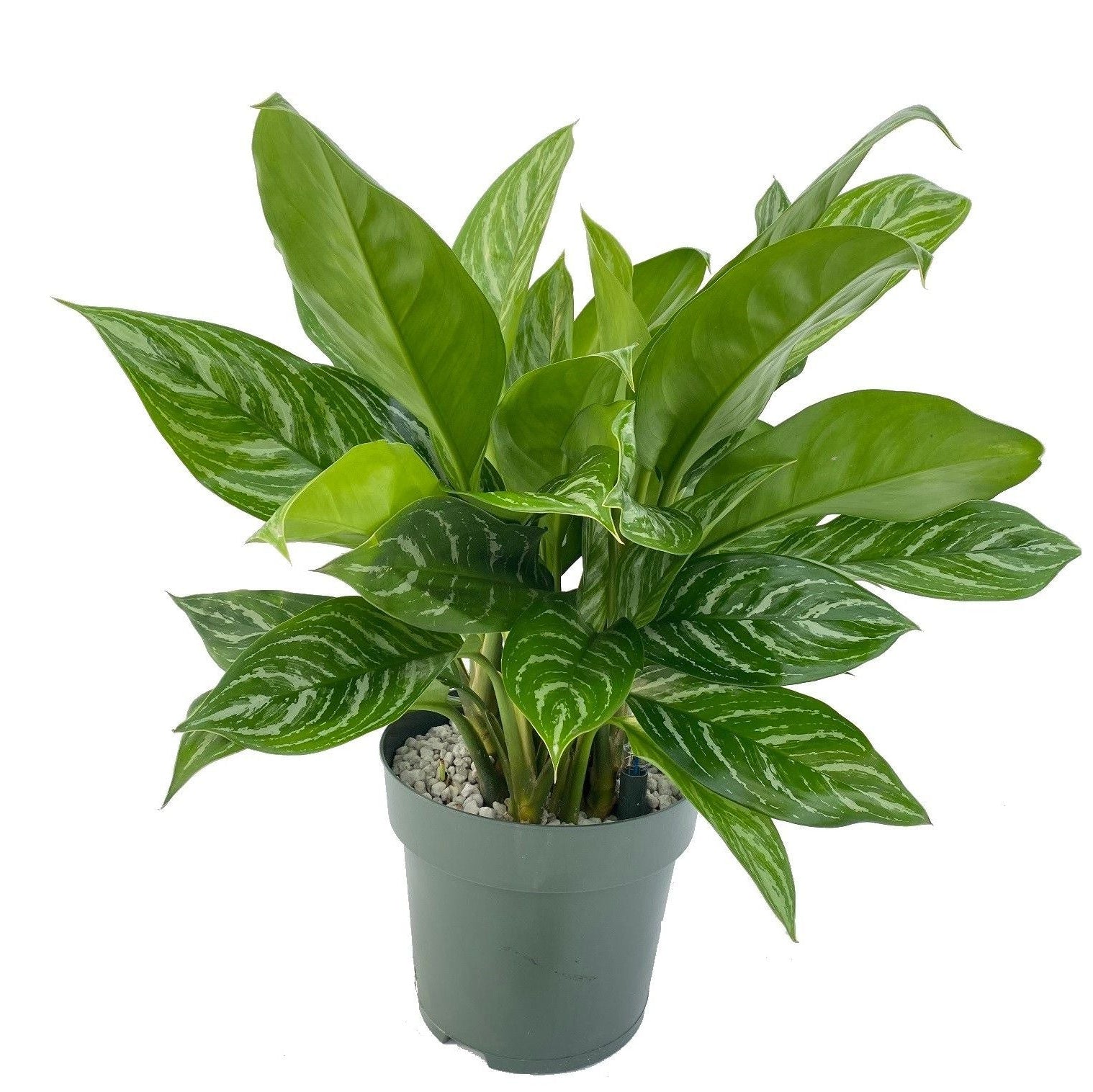
Aglaonema 'Stripes' (Aglaonema × 'Stripes') is a hybrid Chinese evergreen with an upright, clumping habit and distinctive broad silvery‑white bands along the lateral veins that give its green leaves a striped look. It grows happily as a freestanding indoor houseplant in low to bright indirect light, ideal for shoppers wanting a bold, low‑light tolerant specimen, but it contains calcium oxalate crystals and is toxic to pets and can irritate skin or mouth if chewed.
check_circle In Stock
Quick care table
Broad, upright leaves catch the eye first: glossy green blades crossed by strong silvery‑white bands that run along the lateral veins. The leaves are noticeably long and narrow—about 2.5 times as long as they are wide—and mature specimens can produce individual leaves in the 30–35 cm range, giving a bold, architectural silhouette from a distance.
This is a clumping, upright grower that keeps a neat, freestanding shape as it develops. Young plants show the same striped pattern but the contrast changes with light—brighter indirect light keeps the silver crisp, while lower light tends to darken the green and increase contrast against the bands. It won’t trail or climb; instead expect upright shoots and a bushy habit that fills a pot over time.
Aglaonema × 'Stripes' is a horticultural hybrid released and trademarked through formal trials in the 1980s, chosen for its pronounced lateral‑vein striping that combines patterns from parents like 'Manila' and A. nitidum 'Curtissii'—the result is an intermediate plant size with clearer lateral silver bands than many relatives. In real rooms it’s forgiving of lower light and occasional missed waterings, but one trade‑off is that the silvery stripes can dull if kept too dark. Note: tissues contain calcium‑oxalate crystals and are irritating if chewed—keep out of reach of pets and children.
A distinct, stable striped look that tolerates lower light, an upright clumping form that makes a strong focal plant, and leaves with clear, lateral silver bands that set it apart from other silver‑striped Aglaonema.
Shipping Information
expand_moreSee our FAQ and Shipping Guarantee for any further Questions!

Size: Large - P17 H60

What is Aglaonema × 'Stripes' and how does it differ from other Aglaonema cultivars?
expand_moreAglaonema × 'Stripes' is a named hybrid (Chinese evergreen 'Stripes') released through formal trials and tissue‑culture propagation. It’s notable for strong silvery‑white bands concentrated along the lateral veins, an intermediate plant size and an upright, clumping habit that combines traits from 'Manila' and A. nitidum 'Curtissii'. That stripe pattern is the feature collectors and shoppers buy it for.
Is Aglaonema 'Stripes' safe for pets and children?
expand_moreNo — Aglaonema × 'Stripes' should be treated as toxic. Like other Aglaonema, its tissues contain insoluble calcium oxalate crystals that can irritate mouths and mucous membranes if chewed and may cause skin or eye irritation on contact. Keep the plant out of reach, avoid letting pets or small children chew leaves, and use gloves if handling damaged foliage.
How much light does Aglaonema 'Stripes' need to keep its silver stripes distinct?
expand_moreAglaonema × 'Stripes' tolerates low to medium indirect light, and its striping responds to light level. Brighter filtered light generally enhances variegation, while moderate shading can increase contrast because leaves stay darker green. Very dim locations may dull the silvery bands, so place it where it gets stable natural light but not hot direct sun.
Which size should I choose: Large (P17 H60) or XL (P27 H70)?
expand_moreChoose the Large (P17 H60) if you want an upright, marketable plant that fits shelves, side tables or desks — it’s the currently available option. The XL (P27 H70) provides a fuller display and greater visual impact but is currently out of stock; wait for the XL if you want a larger focal plant for a fuller display area.
What common problems should I watch for with Aglaonema 'Stripes' and how can I prevent them?
expand_moreThe main issues are overwatering (leading to root rot) and sap‑sucking pests like mealybugs and spider mites. Watch for yellowing, soft stems or fine webbing and inspect undersides of leaves regularly. Let the top of the potting mix dry between waterings, keep conditions stable, and isolate any infested plants promptly to limit spread.
Light
expand_moreWater
expand_moreSoil and repotting
expand_moreHumidity and temperature
expand_moreFeeding
expand_moreGrowth and support
expand_moreCommon concerns
expand_morePet safety
expand_moreIt was received in good condition, in a very sufficient package and remains good.
Ist alles einfach super !
Be the first to know about newly stocked plants and accessories, sales and exclusive offers.