

Secure packaging for delicate plants
Small business in Berlin
★★★★★ 4.87 Avg. Review


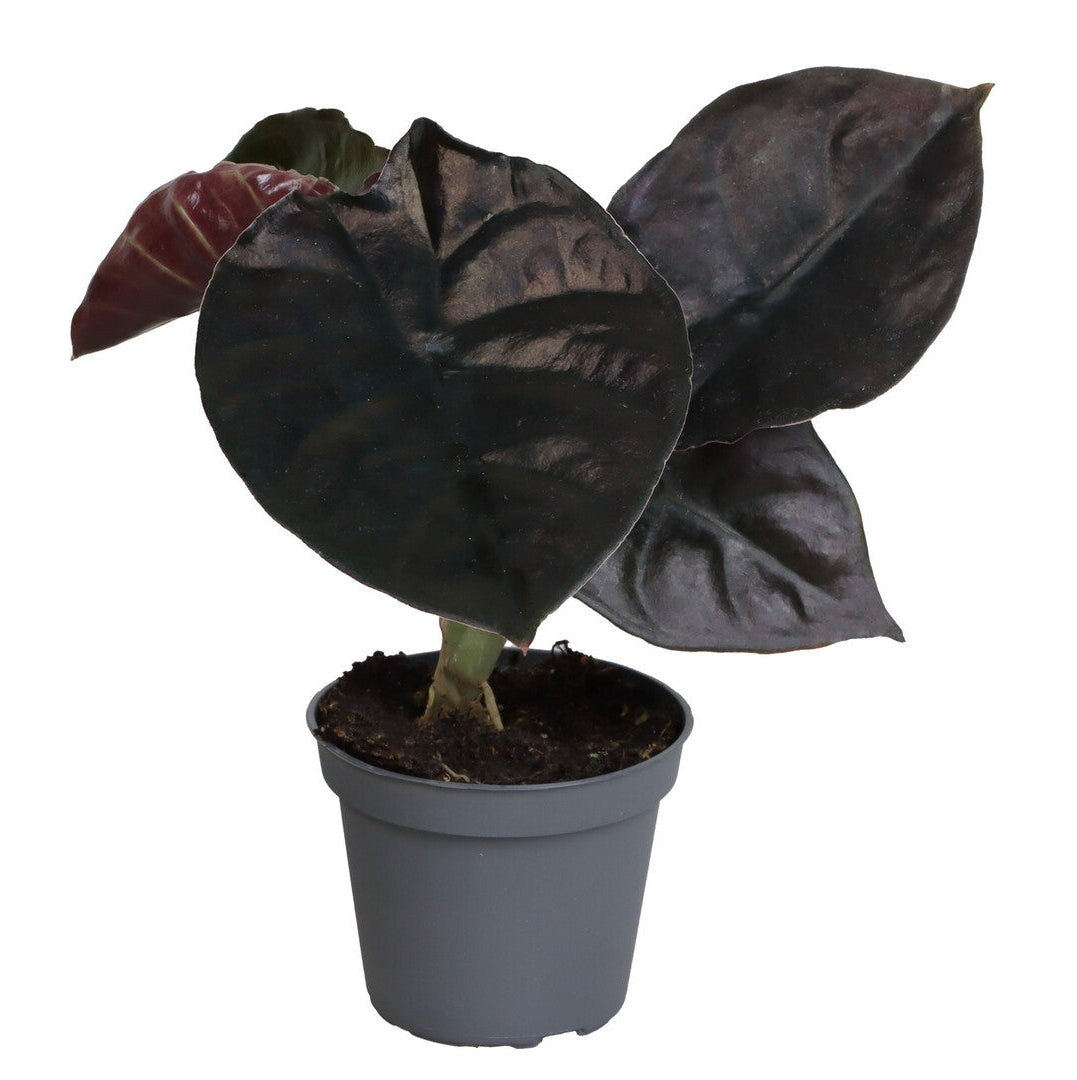
Alocasia Infernalis 'Black Magic'
- height Height
- 15 cm
- swap_horiz Pot Size
- 6 cm
- volunteer_activism Care
- Medium
- wb_sunny Light Needs
- Indirect light
- pets Not Pet Friendly
- water_drop Watering Needs
- Medium
cancel Sold out
Quick care table
Plant care at a glance
- Difficulty
- Medium
- Light
- Indirect light
- Humidity
- Medium
- Pet safe
- No, toxic if ingested
- Best for
- Indoors
Alocasia Infernalis 'Black Magic' — The Darkest Jewel Alocasia
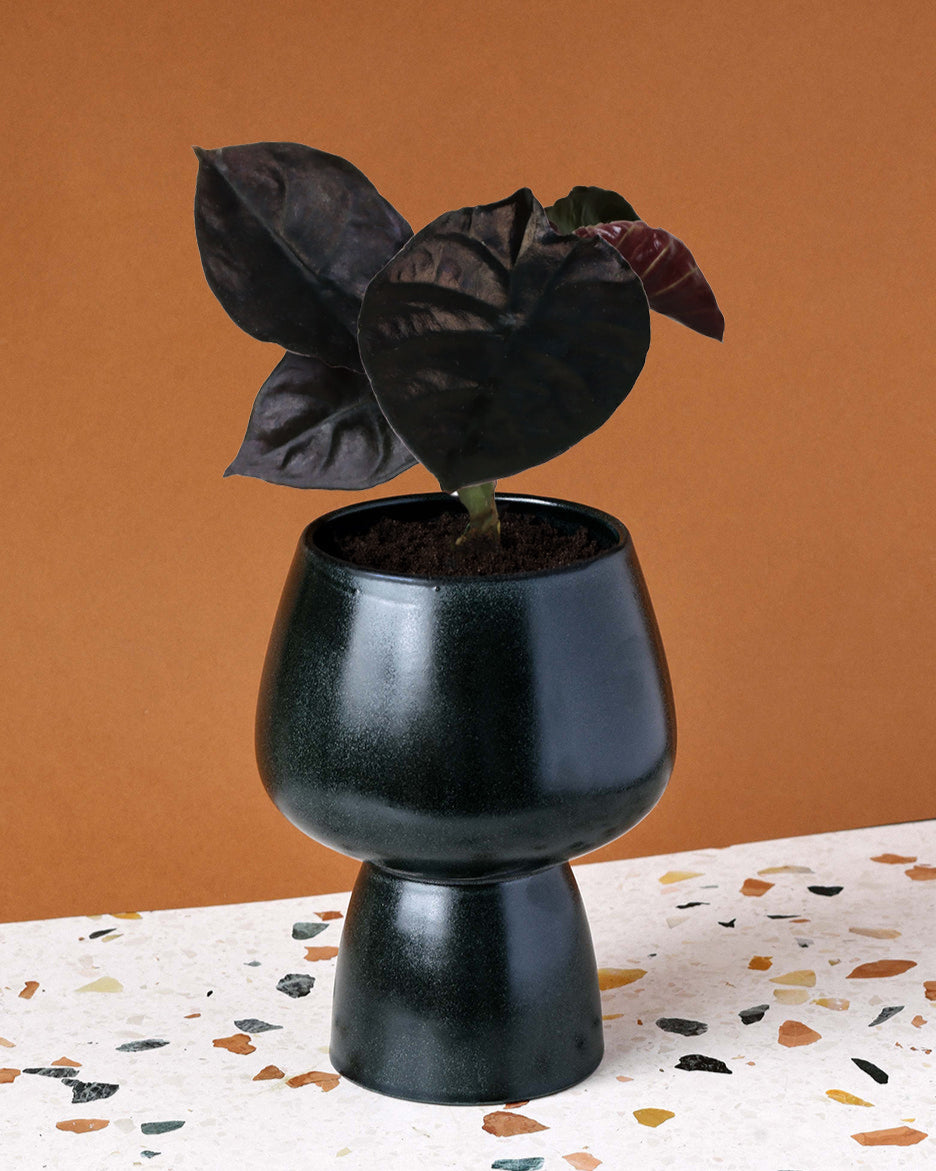
Alocasia infernalis 'Black Magic' is one of the most visually arresting jewel alocasias in cultivation. Endemic to the limestone karst forests of Sabah, Malaysian Borneo, it produces small, intensely dark leaves with a near-black, iridescent upper surface and a deep burgundy-purple underside — a combination that appears almost metallic under directional light. The 'Black Magic' cultivar represents a selected form with particularly saturated pigmentation. As a Baby specimen, it is at the beginning of its journey: compact, establishing, and highly responsive to the micro-climate you provide from day one.
This is not a beginner plant. Alocasia infernalis demands stable, precise conditions and a substrate that eliminates any risk of corm saturation. In the right environment — a greenhouse cabinet, enclosed grow tent, or a well-humidified dedicated plant space — it is a rewarding, long-lived specimen that intensifies in colour as it matures.
Cultivation Parameters for European Conditions
- Temperature: 20–26°C, stable. Avoid proximity to radiators, cold windowsills, and draughty window frames. Below 18°C, growth stalls; below 15°C, corm stress and rot risk increase significantly.
- Humidity: 70–85% relative humidity is the functional minimum. Central heating in German and Dutch apartments typically reduces ambient RH to 30–45% between October and March — a calibrated hygrometer and active humidification (ultrasonic humidifier with humidistat) are essential, not optional.
- Light: Bright, diffuse indirect light. The dark pigmentation of A. infernalis is a natural adaptation to low-light forest floor conditions — it tolerates lower light than many aroids, but direct sun will bleach and scorch the foliage irreversibly. Approx. 500–1,200 lux on leaf surface is the target range. Supplement with a full-spectrum grow lamp during the low-light months (November–February) on a 12-hour photoperiod.
- Substrate: A highly porous, soilless mineral mix is non-negotiable. The corm must never sit in sustained moisture. We recommend our DIY Soil-Free Alocasia Mix – Ultra Airy Mineral Blend, formulated specifically for this genus: coarse orchid bark, perlite, coco husk chips, sphagnum moss, and activated charcoal in a ratio that ensures rapid drainage and maximum root-zone oxygenation.
- Watering: Allow the top 3–5 cm of substrate to approach dryness before rewatering. In winter, with reduced light and lower evapotranspiration, extend intervals significantly — every 14–21 days is typical for a Baby specimen in a 6–8 cm pot. Use room-temperature, low-mineral water (RO or rainwater preferred) to avoid tip burn from fluoride accumulation.
- Airflow: Gentle, consistent air circulation prevents fungal pathogen development (Botrytis, Pythium) in the high-humidity environment this species requires. A small fan on a timer at low speed is sufficient.
- Fertilising: During the active growing season (April–September), apply a balanced liquid fertiliser (NPK 3-1-2) at quarter-strength with every second watering. Cease fertilisation from October through February.
Acclimation After EU Delivery
Plant Circle ships from Berlin across the EU. During cold weather transit (below 12°C ambient), heat packs are included to protect the specimen. Upon arrival:
- Open the package promptly and inspect the corm and roots — firm and pale indicates a healthy specimen.
- Do not repot immediately. Allow 2–4 weeks of acclimation in your target environment before disturbing the root system.
- Place directly into your target micro-climate (cabinet or high-humidity space) — do not acclimatise gradually at lower humidity.
- Moisten the substrate lightly; do not saturate. Roots are transport-stressed and temporarily more susceptible to rot.
- Leaf drop or temporary wilting during the first 1–2 weeks is normal. Provided the corm remains firm, the plant will establish and produce new growth.
Seasonal Care in European Homes
Summer (April–September): Active growth phase. Higher evapotranspiration means substrate dries faster — monitor closely and water when the top 3 cm approaches dryness. Fertilise bi-weekly at quarter-strength. Natural light supplemented with indirect positioning near a north or east-facing window is ideal.
Winter (October–March): Critical reduction phase. Reduce watering frequency significantly. Activate grow lamp on 12-hour photoperiod. Maintain cabinet humidity above 70% RH despite central heating. Do not fertilise. Inspect the corm monthly — any softening or discolouration warrants immediate investigation and treatment.
Related Plant Circle Products & Collections
- DIY Soil-Free Alocasia Mix – Ultra Airy Mineral Blend — the substrate formulated for this species
- Alocasia clypeolata 'Green Shield' XS Baby — another compact jewel alocasia for the collector
- Alocasia 'Ninja' Variegata Tricolor Baby — rare variegated form for advanced collections
- Full Alocasia Collection — all cultivated alocasia specimens at Plant Circle
- Rare Houseplants — collector-grade specimens across genera
- Baby Houseplants — compact starter specimens for growing collections
- XS Baby Plant Plugs — the smallest available size for propagation-stage collectors
Collector FAQ
Is Alocasia Infernalis 'Black Magic' Baby suitable for European indoor conditions?
Yes — with the right infrastructure. The primary challenge in German, Dutch, and UK homes is the combination of low winter light (November–February) and central heating, which reduces ambient humidity to 30–45% RH, far below the 70–85% this species requires. A dedicated enclosed growing environment — greenhouse cabinet, Milsbo-style vitrine, or grow tent — with active humidification and a supplemental grow lamp is strongly recommended. In well-managed conditions, Alocasia infernalis 'Black Magic' is a stable, long-lived specimen that deepens in colour intensity as it matures through the seasons.
Why does Alocasia Infernalis lose its dark colouration indoors?
Pigmentation loss in A. infernalis is almost always caused by one of three factors: excessive light intensity (direct sun or grow lamp too close), humidity below 60% RH causing cellular stress, or nutrient deficiency during the active growing season. Ensure the specimen receives bright but fully diffuse light, maintain RH consistently above 70%, and fertilise at quarter-strength every two weeks from April through September. New leaves will emerge with full pigmentation if conditions are corrected.
What is the correct substrate for Alocasia Infernalis to prevent corm rot?
A soilless, mineral-dominant substrate with a minimum of 50% coarse perlite and orchid bark by volume. The corm of A. infernalis is particularly sensitive to sustained moisture — standard potting soil, even with added perlite, compacts over time and creates the anaerobic conditions that cause corm rot. Our DIY Soil-Free Alocasia Mix is formulated specifically for this genus and eliminates the guesswork.
How do I care for Alocasia Infernalis 'Black Magic' during a Northern European winter?
Reduce watering frequency to every 14–21 days for a Baby specimen, allowing the top 3–5 cm of substrate to approach dryness. Activate a full-spectrum grow lamp on a 12-hour photoperiod to compensate for the reduced daylight hours (as low as 7–8 hours in northern Germany and the Netherlands). Maintain cabinet humidity above 70% RH using an ultrasonic humidifier with humidistat. Cease fertilisation entirely from October through February. Monthly corm inspection is advisable — any softening warrants immediate action.
Shipping Information
expand_more
- All orders are subject to a €25 minimum order value requirement
- All orders are hand-picked and shipped from the Netherlands
- Plastic-free materials when possible
- Orders are usually processed in 1-3 working days and shipped via DPD and their international partner carriers
- At times, orders may take up to 7 days to ship
- Orders to Germany Free shipping over €60. Free shipping all other EU countries* at €100 (Except Malta and Cyprus)
- Shipping costs are calculated at checkout based on delivery country:
See our FAQ and Shipping Guarantee for any further Questions!
Size: Baby - P6 H15
You might also like
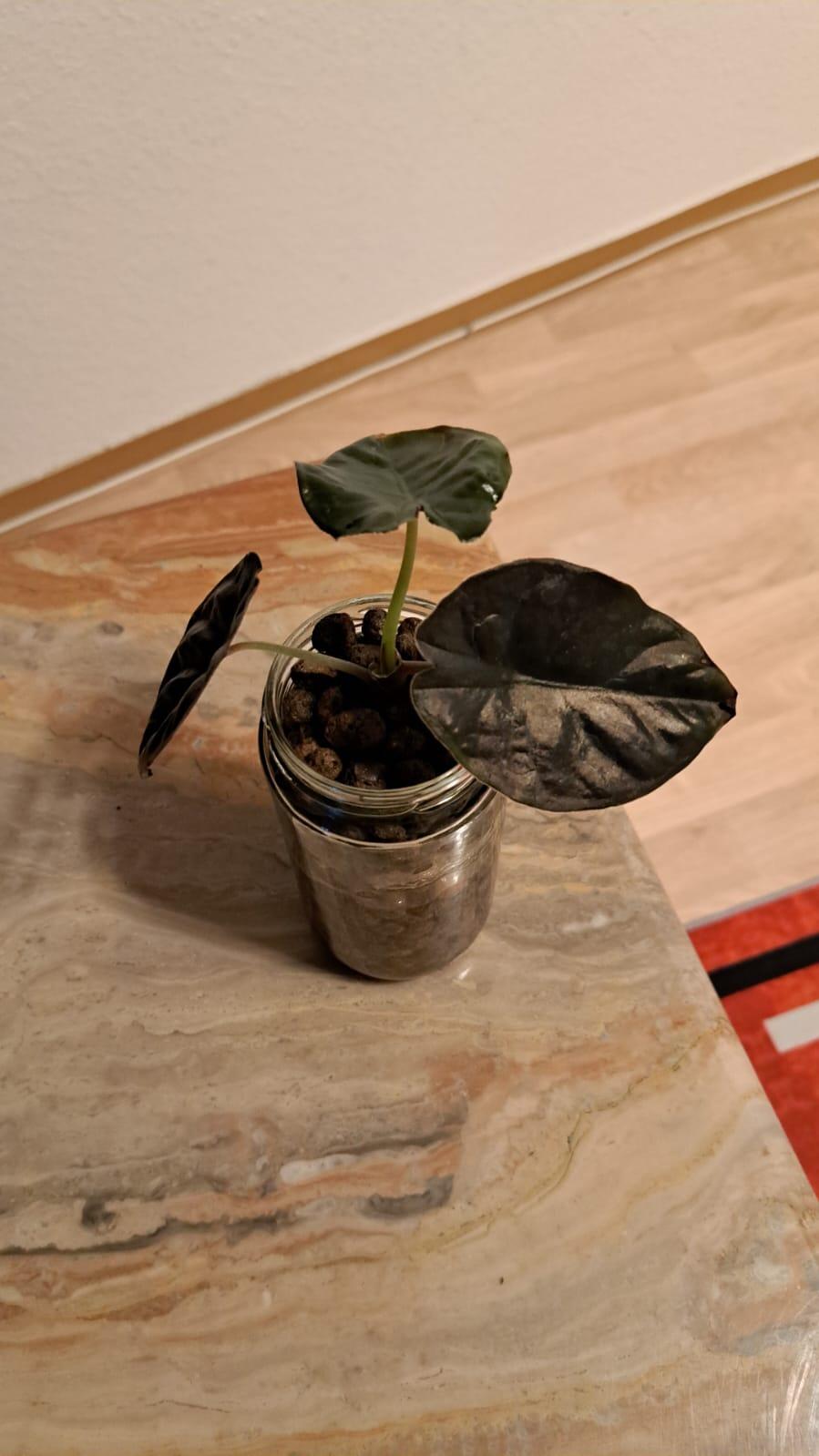
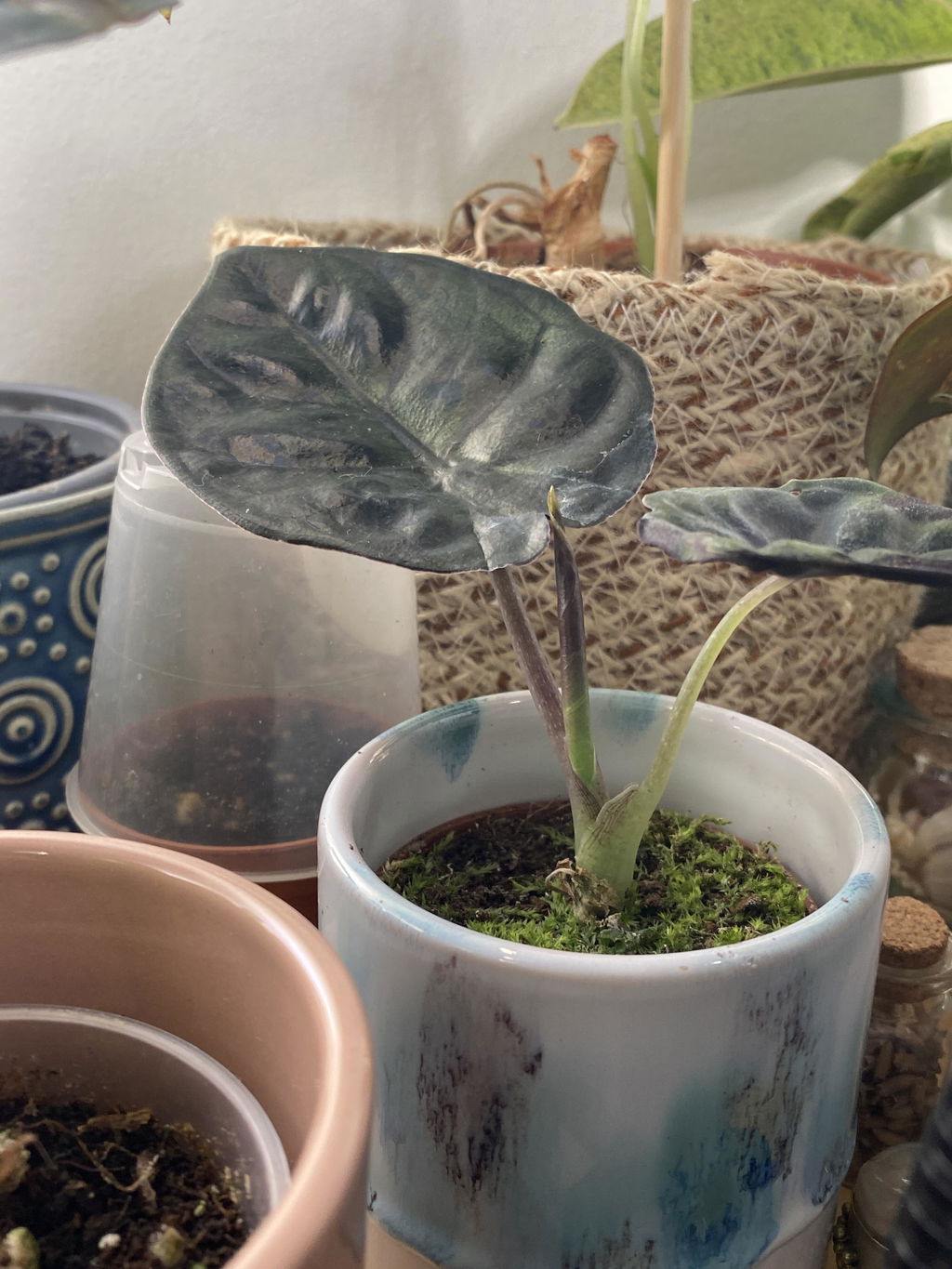
Plant arrived healthy and strong and is already putting out new leaves even though it arrived just a week ago.
The leaves were wrinkled from shipping.
Top planten
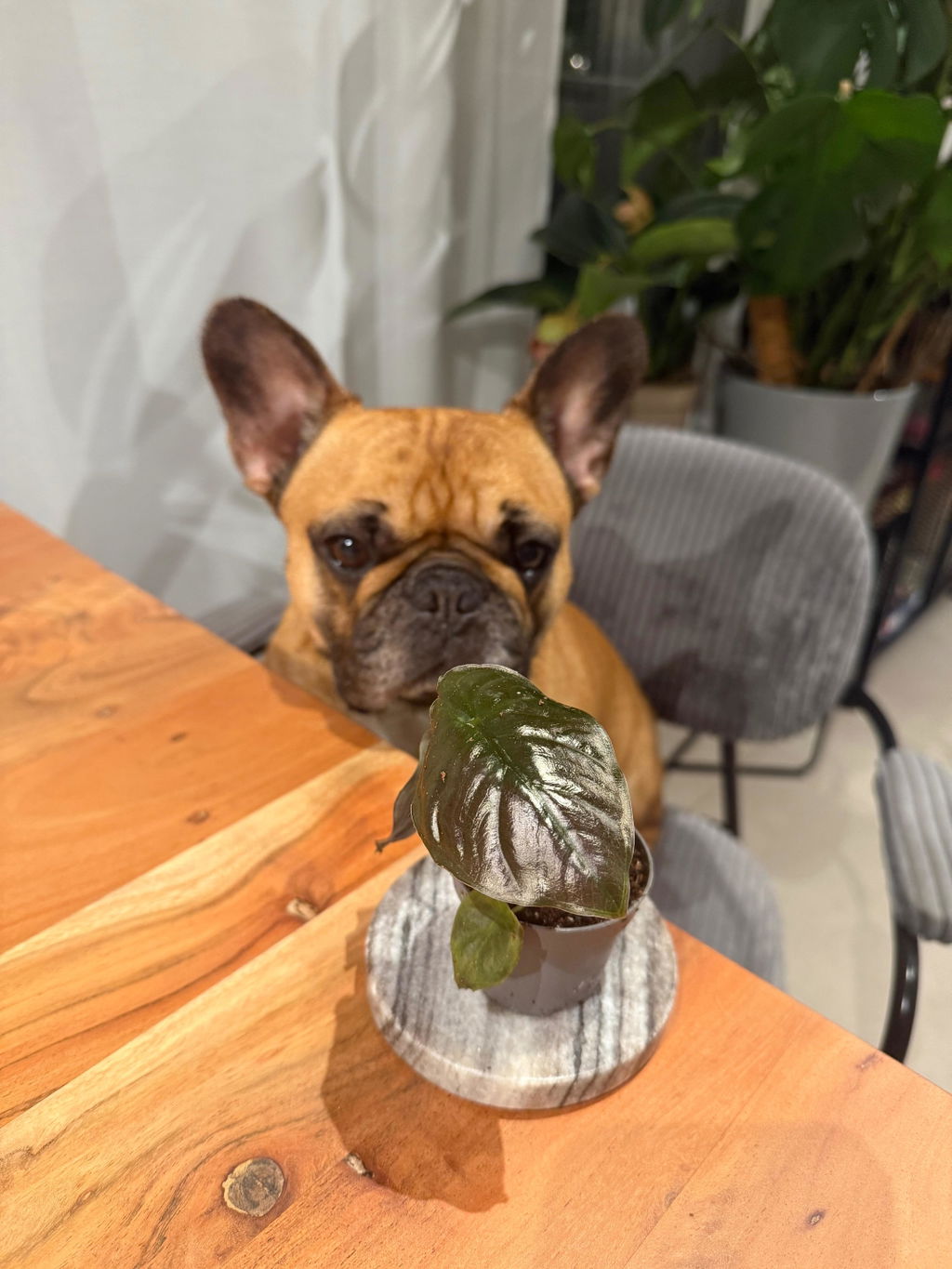
I thought it was magic and maybe a little spell, but it did not bark back so it is safe. Dark, shiny, dramatic — just like me when I want attention.
Super!