


Aroid Houseplants
Secure packaging for delicate plants
Small business in Berlin
★★★★★ 4.87 Avg. Review
Secure packaging for delicate plants
Small business in Berlin
★★★★★ 4.87 Avg. Review
Secure packaging for delicate plants
Small business in Berlin
★★★★★ 4.87 Avg. Review


Alocasia reginula 'Ninja' is a miniature clumping jewel Alocasia with near‑black, velvety leaves marked by bold cream‑white albo variegation — a recent trade selection that’s uncommon and collector‑sought. Indoors it forms a compact upright cluster in bright, indirect light and high humidity, so it suits collectors and small‑space plant lovers; be aware it’s toxic if chewed and the sap can irritate skin.
check_circle In Stock
Quick care table
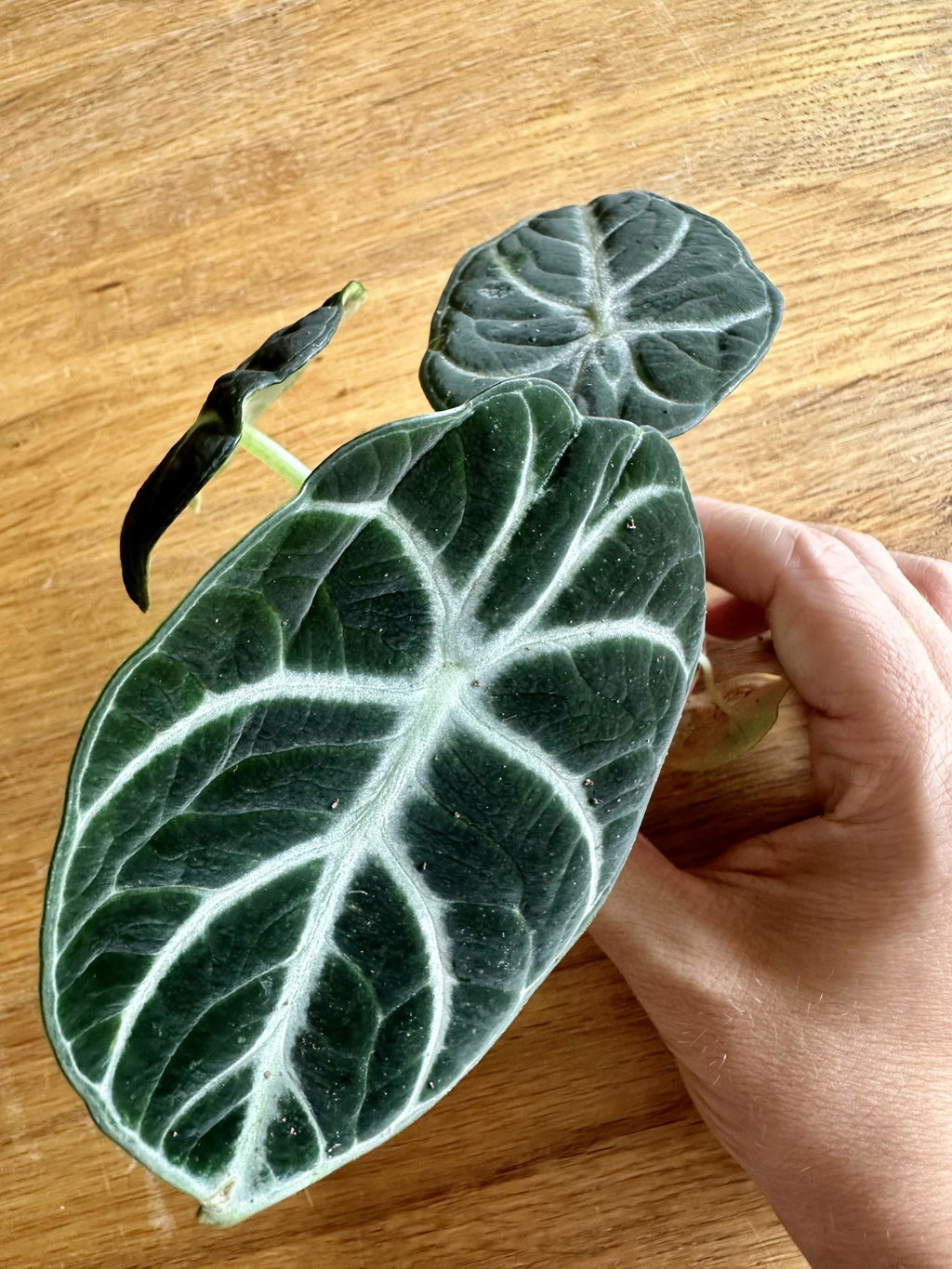
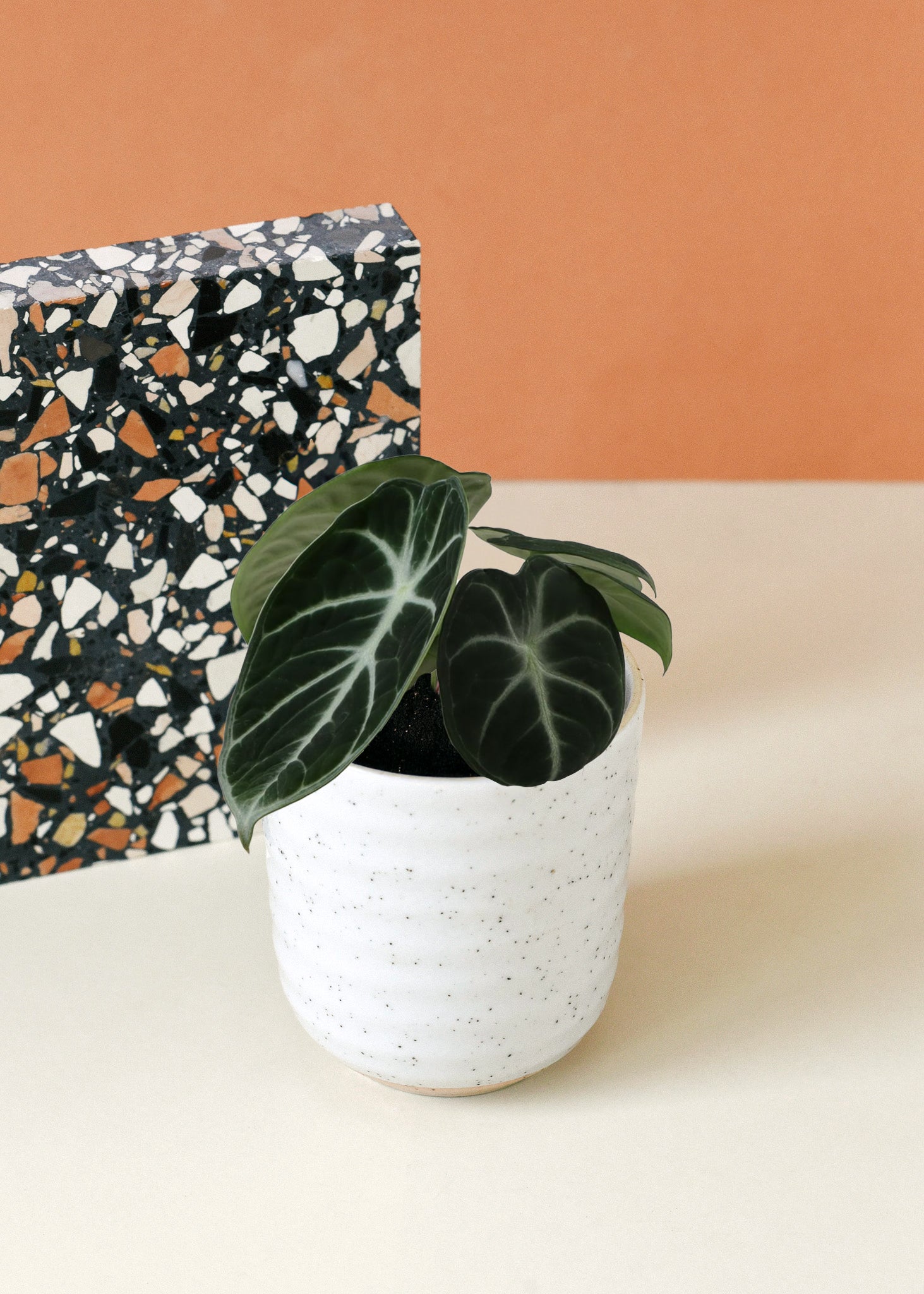
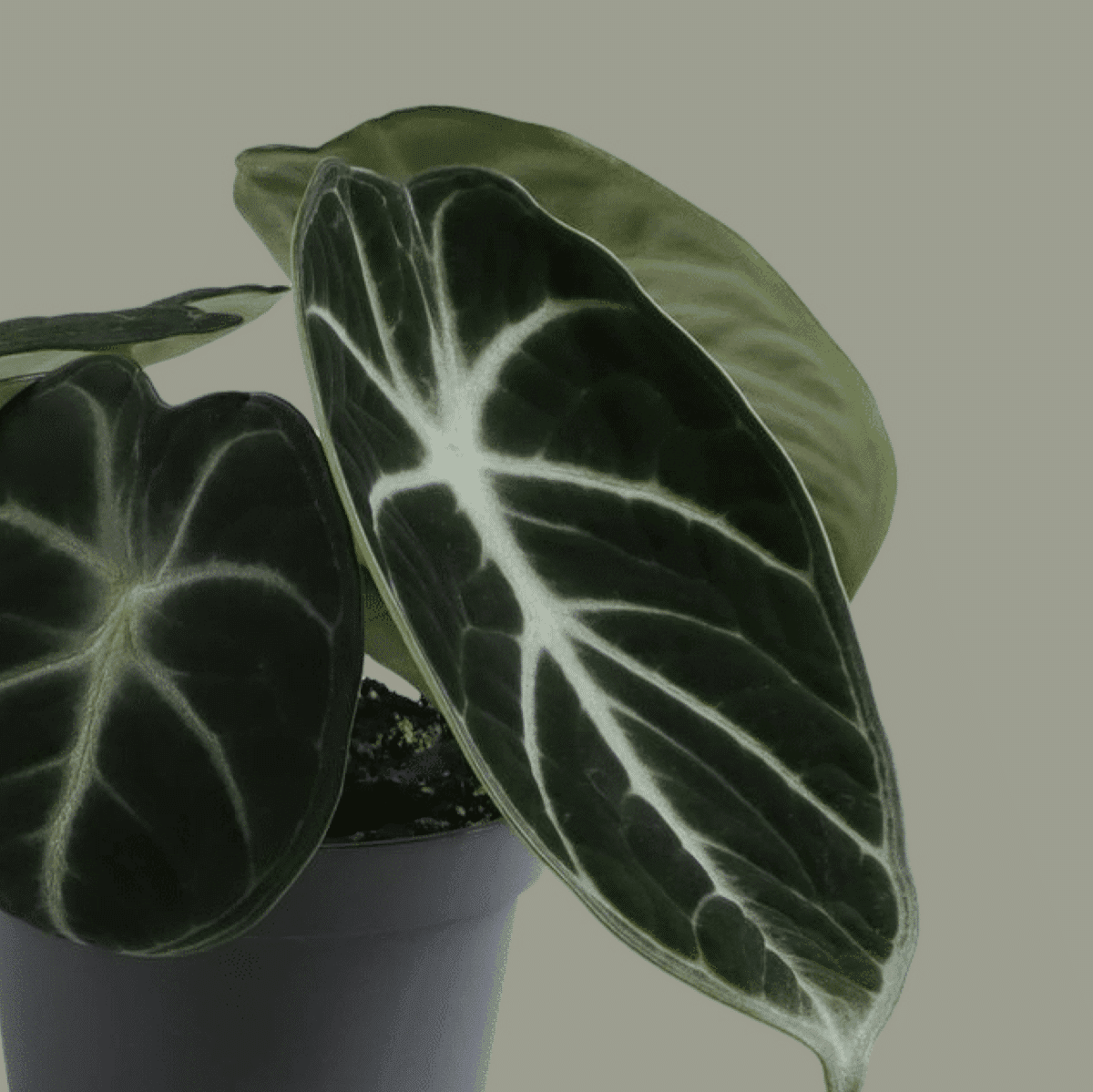
Alocasia reginula 'Ninja' shows a dramatic, near‑black velvety leaf ground shot through with pale veins and irregular cream‑white patches. The small, upright leaves have a matt, embossed texture that catches light differently across each blade, so the plant reads like a living monochrome print on a compact, upright silhouette.
This is a true miniature, clumping Alocasia rather than a climber: expect a tight cluster of petiolate leaves that emerge slowly. Variegated plants produce fewer leaves and develop more slowly than non‑variegated forms; some growers also note thicker, more embossed leaves and clear double marginal veins in 'Ninja' clones. Compared with the standard Alocasia reginula 'Black Velvet', the variegated selection stands out for its high‑contrast cream markings and sometimes denser leaf texture.
In daily ownership you’ll notice its sensitivity: bright, indirect light and consistent humidity help keep the pale patches crisp, while low light can cause reversion or slower growth. The trade‑off is clear—those high‑contrast variegated leaves are showy but slower to replace and more light‑demanding. Also note this genus can irritate skin or be toxic if chewed, so store it where curious pets and children can’t reach it.
Best for a bright shelf, desk or north/east window in a bathroom or humid corner, this listing is supplied as a baby (P6, ~10 cm tall in a 6 cm pot). Buying a baby gives you that compact aesthetic immediately, but plan for patient, steady growth as the variegation matures.
Shipping Information
expand_moreSee our FAQ and Shipping Guarantee for any further Questions!
Size: Baby - P6 H10


How does the variegated Alocasia reginula 'Ninja' differ from the standard 'Black Velvet' form?
expand_moreThe variegated Alocasia reginula 'Ninja' displays high‑contrast cream or white (albo‑type) patches on the species' near‑black, velvety leaves. Growers also report slightly thicker, more embossed leaves on some 'Ninja' selections. It’s a commercial/collector selection rather than a universally registered cultivar, so expect variation between nursery stocks.
What light does Alocasia reginula 'Ninja' need to keep its variegation?
expand_moreBright, indirect light is best to maintain the variegation and leaf health. Direct sun can bleach pale patches and scorch leaves, while too little light often causes fading or reversion to non‑variegated growth. Place it near an east or north window and avoid dark corners for best results.
Is Alocasia reginula 'Ninja' safe around pets or children?
expand_moreNo — Alocasia species are considered toxic due to calcium oxalate crystals that can irritate mouth, skin and eyes. The product's marketing claim of being “pet‑safe” conflicts with authoritative veterinary guidance, so keep this Alocasia out of reach and seek veterinary or medical advice promptly if ingestion or heavy contact occurs.
How quickly will a variegated 'Ninja' grow, and will new leaves keep the variegation?
expand_moreVariegated 'Ninja' usually grows more slowly than non‑variegated Alocasia reginula; new leaves can be variable and may take longer to appear. Variegation can be unstable and may revert under low light. Expect gradual development, patience, and occasional loss of pattern; divisions and offsets may retain the variegation but can also vary.
What should I expect to receive if I order the Baby (P6, H10) size?
expand_moreYou will receive a baby Alocasia reginula 'Ninja' in a P6 (6 cm pot), approximately 10 cm tall. This small, compact plant suits desks and shelves; it may be a single rosette or a small cluster. Plan to repot in spring when roots fill the pot, usually every 12–18 months under normal indoor conditions.
Light
expand_moreWater
expand_moreSoil and repotting
expand_moreHumidity and temperature
expand_moreFeeding
expand_moreGrowth and support
expand_moreCommon concerns
expand_morePet safety
expand_moreBeautiful plants and excellent customer service
Diese Alocasia gefällt mir bis jetzt am besten. Sie hatte kaum Versandstress und sieht sehr schön aus.
Be the first to know about newly stocked plants and accessories, sales and exclusive offers.