

Red Indoor Houseplants
Secure packaging for delicate plants
Small business in Berlin
★★★★★ 4.87 Avg. Review
Secure packaging for delicate plants
Small business in Berlin
★★★★★ 4.87 Avg. Review
Secure packaging for delicate plants
Small business in Berlin
★★★★★ 4.87 Avg. Review


Coleus 'Magnificent Mile' (Coleus scutellarioides 'Magnificent Mile') is a compact, upright coleus cultivar prized for its two-toned leaves — a warm pink/coral or burgundy central blotch framed by green and cream margins. It grows as a bushy indoor container plant that keeps colour in bright indirect light and responds well to regular pinching, making it great for beginners who want striking foliage; note it’s toxic to pets if chewed.
cancel Sold out
Quick care table
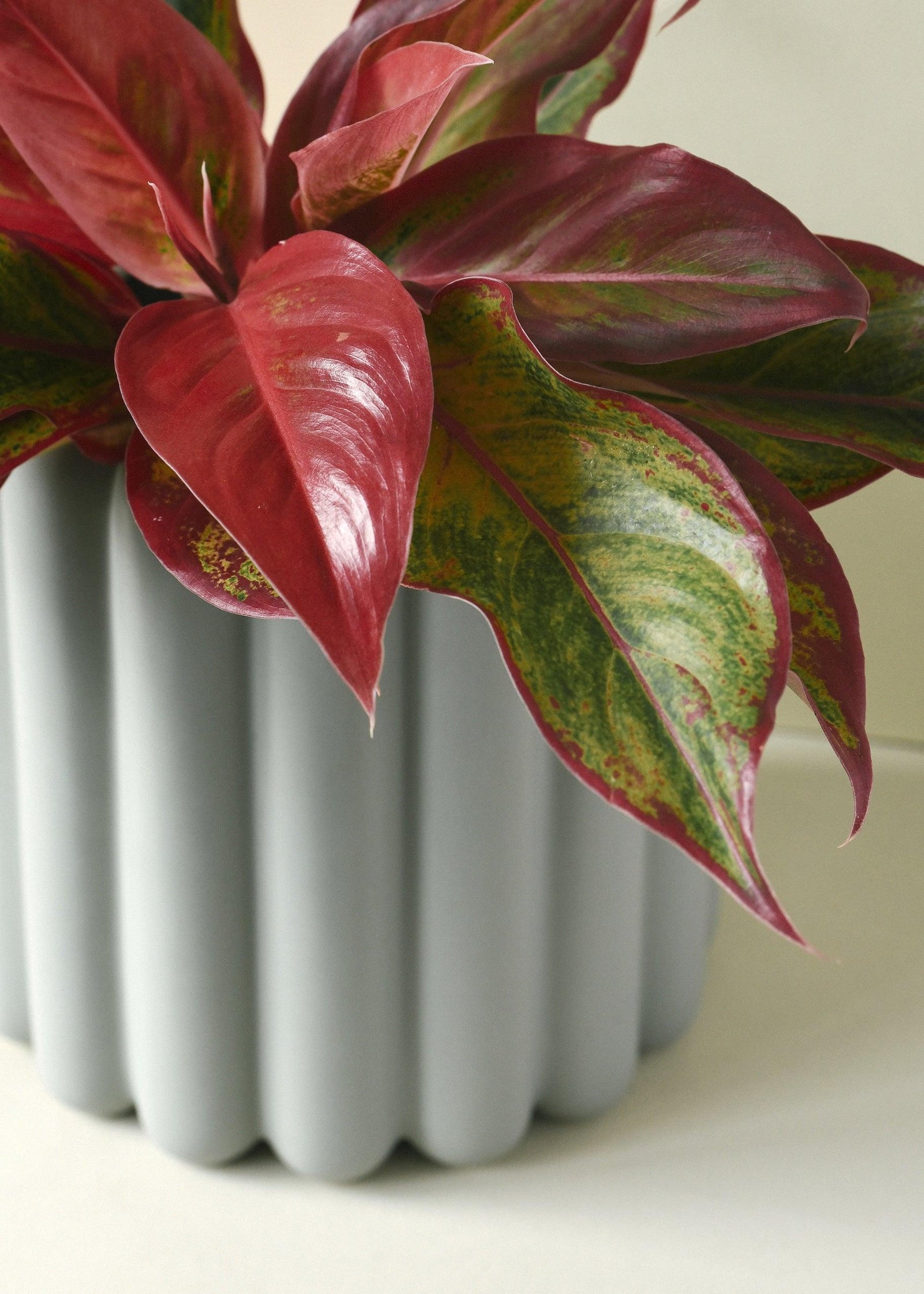
A bold, two-tone leaf makes this selection immediately noticeable: a warm pink‑to‑coral or deep burgundy blotch sits at each leaf’s centre, framed by green and cream margins. Leaves are broadly ovate with a gently scalloped, toothed edge and a soft, slightly velvety texture that catches light. The overall silhouette is compact and upright, giving a plate‑of-colour effect in mixed pots or on a sunny shelf.
Young shoots show the same pattern but smaller leaves; under brighter light the centre‑to‑margin contrast becomes richer, while low light can soften the colours and encourage longer stems. It stays a bushy, erect plant when you pinch back growing tips — otherwise it will tend to become leggy. It can produce slender flower spikes, though most owners remove them to keep the foliage looking its best.
In everyday care you’ll notice rapid colour response to light and an honest limitation: leaves wilt quickly if left to dry but recover after watering. It’s easy to grow for a beginner who keeps soil evenly moist and provides good light and air circulation, yet be mindful this coleus is toxic to pets and can cause mild skin irritation in sensitive people. Pests like aphids or spider mites are the common nuisances in stagnant, overly wet conditions.
Best for bright windowsills, small containers, or layered summer displays, this cultivar is a selected variety from the Stained Glassworks series prized for its bicolor pattern. Supplied as a compact, ready‑to‑display plant (single size option from this listing), it’s ideal when you want immediate colour without a large footprint.
Shipping Information
expand_moreSee our FAQ and Shipping Guarantee for any further Questions!

Size: Medium - P13 H27


What makes Coleus scutellarioides 'Magnificent Mile' different from other coleus?
expand_moreIt's a selected cultivar noted for a high‑contrast bicolor leaf pattern. Coleus scutellarioides 'Magnificent Mile' typically shows a warm pink/coral or burgundy central blotch framed by green and cream margins, a trait marketed in the breeder's 'Stained Glassworks' series. Buyers choose it for that striking foliage pattern and compact, upright habit rather than flowers.
How much light does Coleus 'Magnificent Mile' need to keep its colours vivid?
expand_moreBright indirect light or partial shade brings out the strongest colour contrast. Under brighter light the pink/coral and margin colours intensify, while low light makes tones duller and encourages legginess. Avoid prolonged hot midday sun to prevent leaf scorch; a bright east or shaded west window usually works well.
Is Coleus 'Magnificent Mile' safe around pets and children?
expand_moreNo — Coleus scutellarioides 'Magnificent Mile' is considered toxic to pets. Ornamental coleus contains essential oils and diterpenoid compounds that can cause oral and gastrointestinal irritation in animals and may cause mild skin irritation in sensitive people. Keep it out of reach and contact your vet or a poison‑control service if ingestion is suspected.
How do I keep this coleus compact and prevent it from getting leggy?
expand_moreRegular pinching and light pruning maintain a dense, bushy habit. Pinch back growing tips during the active season and remove upright flower spikes to redirect energy into foliage. This preserves the compact form and better displays the bicolor pattern; if stems start stretching, pinch lower growth to stimulate branching.
What size plant will I receive?
expand_moreYou will receive the Medium - P13 H27 variant: a 13 cm nursery pot with plants around 27 cm tall. This is a typical retail nursery size; individual specimens may vary and will fill out with pinching and normal growth. Leaf pattern and color intensity can also vary slightly between plants.
Are there particular pests or diseases I should watch for with this coleus?
expand_moreYes — watch for common soft‑leaf pests and fungal problems in wet, poorly ventilated conditions. Coleus 'Magnificent Mile' can attract aphids, whiteflies and spider mites, and over‑wet soil or crowding can lead to Botrytis or root rot. Keep soil evenly moist, ensure good air circulation and treat pests promptly if they appear.
Light
expand_moreWater
expand_moreSoil and repotting
expand_moreHumidity and temperature
expand_moreFeeding
expand_moreGrowth and support
expand_moreCommon concerns
expand_morePet safety
expand_moreBe the first to know about newly stocked plants and accessories, sales and exclusive offers.