


Rare and Variegated Plants
Secure packaging for delicate plants
Small business in Berlin
★★★★★ 4.87 Avg. Review
Secure packaging for delicate plants
Small business in Berlin
★★★★★ 4.87 Avg. Review
Secure packaging for delicate plants
Small business in Berlin
★★★★★ 4.87 Avg. Review


Monstera deliciosa 'Thai Constellation' is a selected cultivar prized for tissue‑culture‑stabilised cream‑marbled, pepper‑like variegation on glossy dark green leaves. This tropical climbing aroid (vining plant) produces split, fenestrated leaves as it climbs, grows more slowly than the plain green Monstera and needs bright, indirect light; pale areas are fragile and the plant is toxic if chewed, so keep it away from pets and small children.
check_circle In Stock
Quick care table
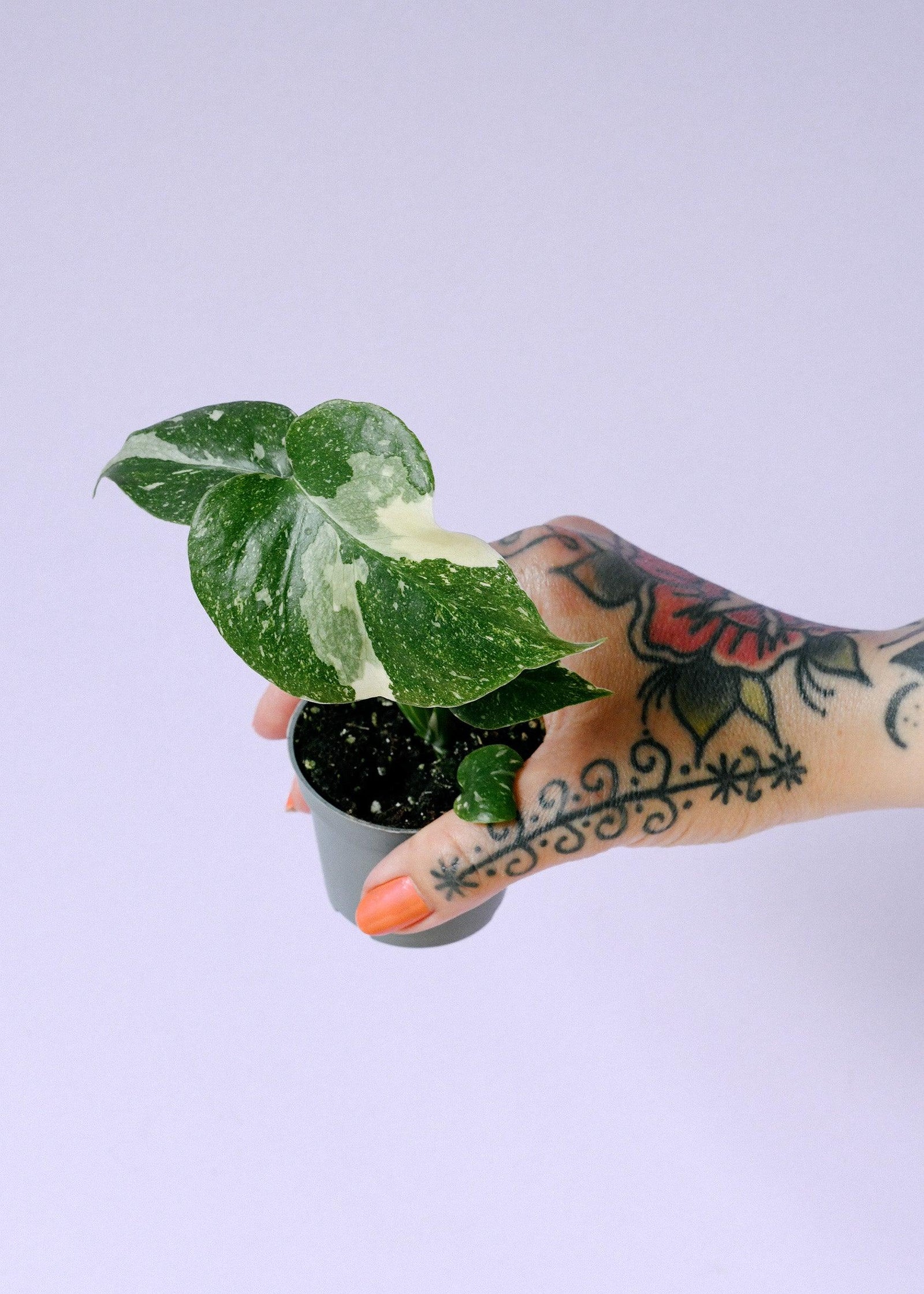
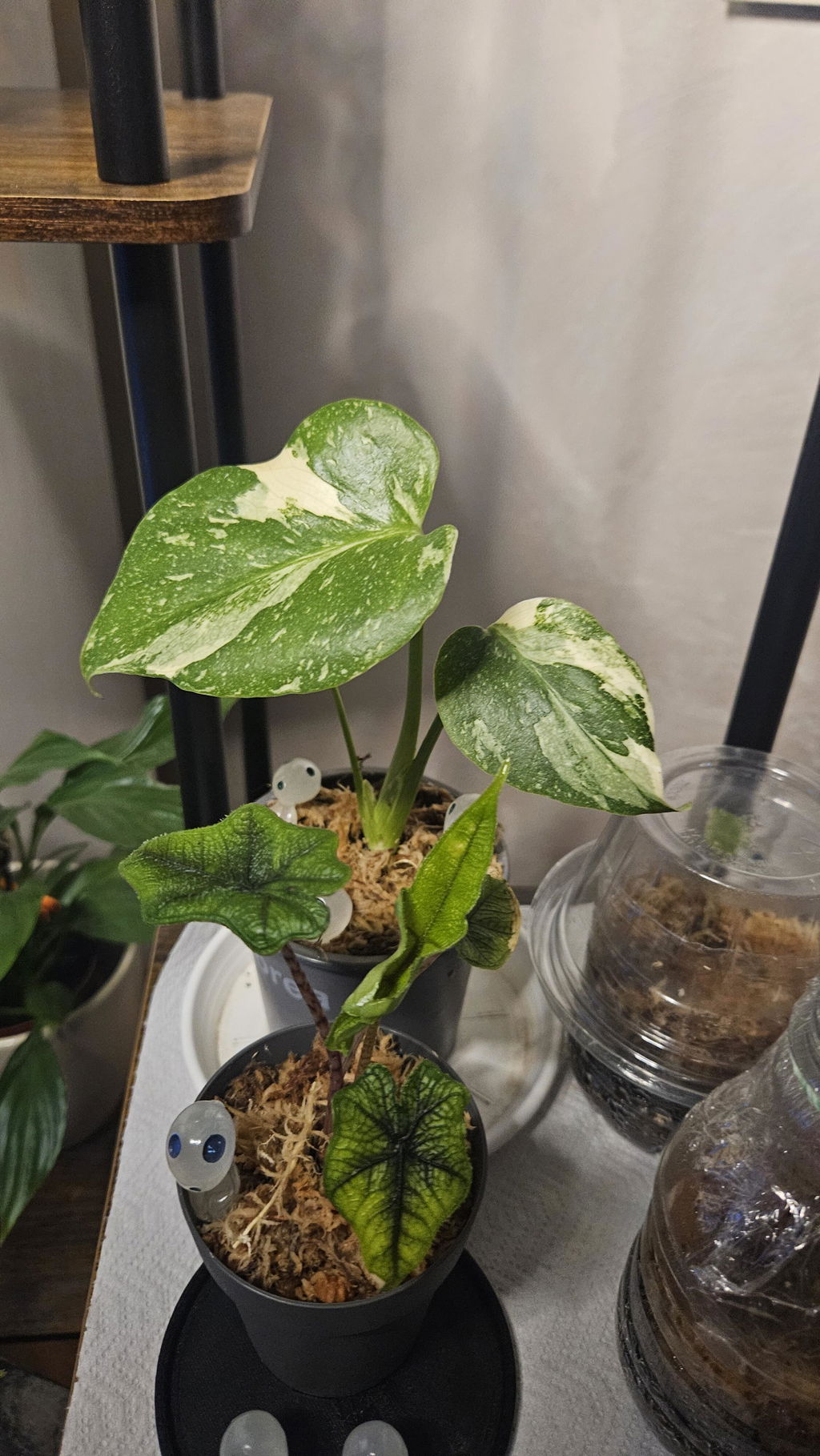
Leaves are dark glossy green shot through with cream‑yellow speckles and fine marbling that give each leaf a peppered, ‘constellation’ look. The lamina is leathery and glossy, and mature leaves develop deep lobes and oblong perforations that create a dramatic, layered silhouette as the plant ages.
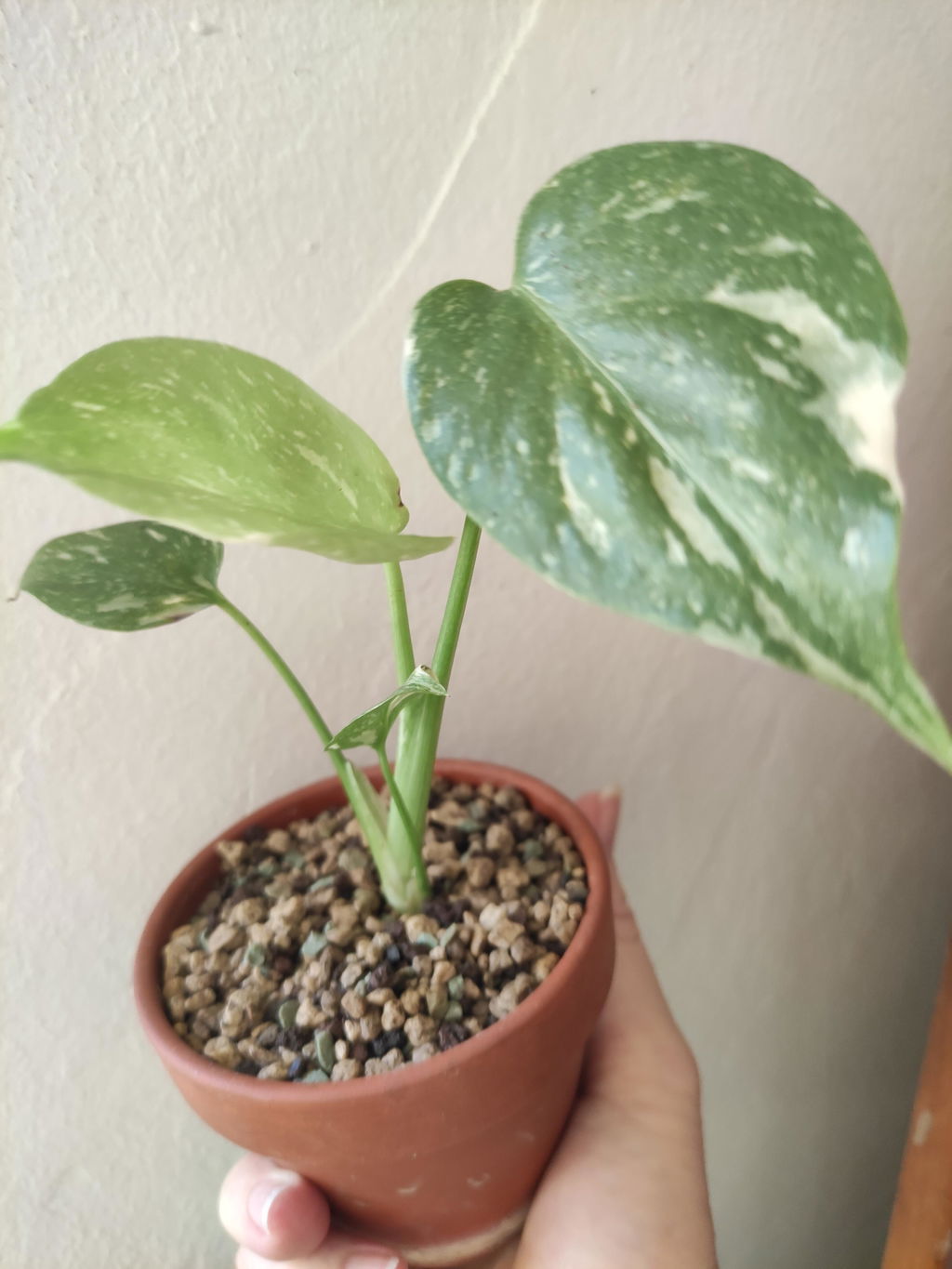
Young plants produce smaller, entire leaves; as it climbs and gains height the foliage broadens and more pronounced splits and fenestrations appear. This is a selected cultivar stabilised through tissue‑culture propagation, so the cream‑marbled pattern tends to recur across retail specimens, though the density of speckles varies from leaf to leaf.
Expect slower, steadier growth than a plain green Monstera and a need for bright, consistent light; pale tissue is more sensitive and can brown with dry air, inconsistent watering or harsh sun. It will climb with a moss pole or stake and needs space to produce larger, divided leaves. Keep out of reach of pets and small children — all parts are irritant if chewed.
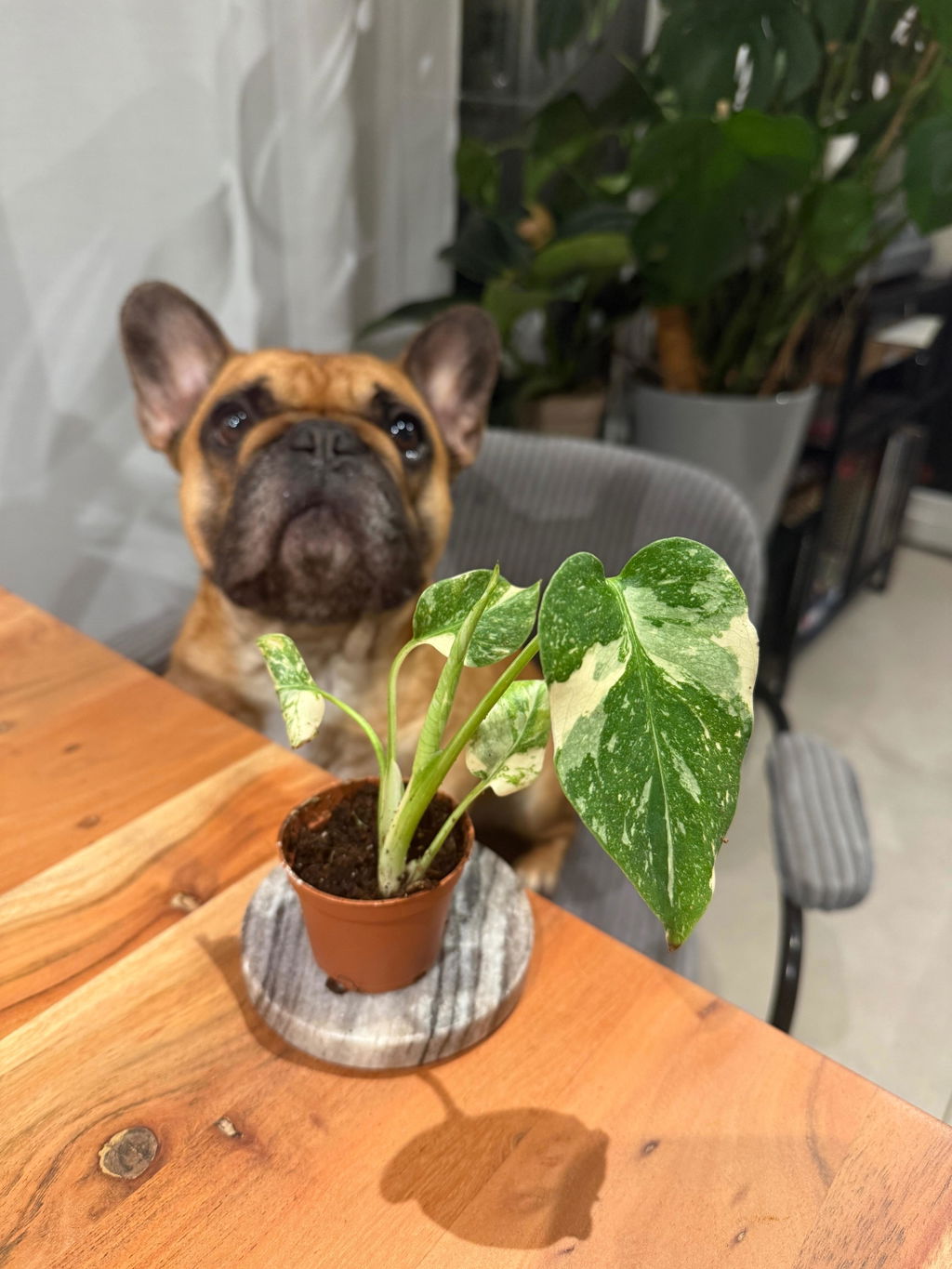
Monstera deliciosa 'Thai Constellation' is offered as Baby (small shelf, desk, grow‑on option) or Medium (shelf, side table; fuller display and greater visual impact). Choose a Baby to enjoy new leaves developing over time, or a Medium for an immediate, mature look in a bright spot.
Shipping Information
expand_moreSee our FAQ and Shipping Guarantee for any further Questions!

Size: Baby - P6 H14


What makes Monstera deliciosa 'Thai Constellation' different from a standard green Monstera?
expand_moreMonstera deliciosa 'Thai Constellation' is a tissue‑culture‑stabilised cultivar with cream to cream‑yellow speckling and marbling across the leaf lamina, rather than the solid green of the species. This pepper‑like variegation and reduced chlorophyll slow growth and increase light needs, producing a distinctive, collectible foliage display as the plant matures and fenestrates.
Why are the pale (cream/white) parts of the leaves turning brown?
expand_morePale variegated tissue is more sensitive and often browns from dry air, inconsistent watering or intense direct sun. For Monstera deliciosa 'Thai Constellation', steady humidity, consistent moisture and protection from harsh afternoon sun reduce browning; very pale leaves are especially fragile and may darken or die back if stressed.
Is Monstera deliciosa 'Thai Constellation' toxic to pets?
expand_moreYes. Monstera deliciosa 'Thai Constellation' is toxic if chewed or ingested because all parts contain insoluble calcium oxalate crystals. Keep the plant out of reach of cats, dogs and small children and avoid contact that could lead to ingestion; seek veterinary advice if a pet chews the plant.
Is Monstera deliciosa 'Thai Constellation' suitable for a beginner plant owner?
expand_moreIt has moderate care needs and can suit a determined beginner who provides bright, consistent indirect light and steady watering. The cultivar grows more slowly than a green Monstera and needs protection for its pale tissue, so new owners should watch light exposure, drainage and humidity to avoid leaf browning.
Can Monstera deliciosa 'Thai Constellation' lose its variegation or revert to green?
expand_moreVariegation in 'Thai Constellation' is generally stable because it is propagated by tissue culture, but intensity varies between leaves and specimens. You may see changes in variegation degree over time; bright, consistent light helps maintain patterning, but no seller can guarantee a specimen will never change its variegation distribution.
Which plant size should I buy: Baby (P6 H14) or Medium (P12 H40)?
expand_moreChoose Baby (P6 H14, 6 cm pot, ~14 cm height) as a small shelf, desk or grow‑on option to enjoy development; choose Medium (P12 H40, 12 cm pot, ~40 cm height) for a fuller display on a shelf, side table or desk. Larger plants give more immediate visual impact and fenestration potential.
Light
expand_moreWater
expand_moreSoil and repotting
expand_moreHumidity and temperature
expand_moreFeeding
expand_moreGrowth and support
expand_moreCommon concerns
expand_moreCream/white leaf areas can brown from dry air, inconsistent watering or intense sun; multiple yellow leaves usually indicate too‑wet substrate or poor drainage; expect slower growth than solid‑green Monstera and take care with very pale, highly variegated leaves as they are more fragile.
Pet safety
expand_moreThe plant arrived beautiful and healthy, growing beautifully. Thank you. You were perfect. I will definitely buy from you again.
Big fancy leaves with stars?! I gasped, snorted, and gasped again. It looks like the sky fell into a pot and I am in love.
Great quality plant. I've repotted it in leca and it's doing fine so far, I hope it will keep on growing well! Sadly, one plant out of my five plant order I had to throw away because I found severe root rot that had spread onto the plant stem while repotting, but that's only one plant out of five.
Hello - Thanks for the reivew of Plant Circle - we appreciate the feedback and are glad most of your order is doing well! If you could reach out to us at support@plantcircle.com we'd love to send a replacement for the plant with root rot - we guarantee all plants arrive in good condition so hope we can get you a healthy plant!
Warmly,
Plant Circle
Monstera deliciosa 'Thai Constellation' Baby – Baby, Approx. 14.0cm height – 6.0cm Pot
Though it was tiny, but there she is, growing.
Planta e superba si o iubesc. Sper sa ii placa si ei de mediul pe care il offer si sa creasca mare. E sanatoasa si pana acum totul e OK. Am transferat-o in pon ( i-am vazut radacinile sanatoase) si avea o frunzulita nedesfacuta care s-ar desfacut ...
Sehr schönes, kleines, gesundes Pflänzchen
Be the first to know about newly stocked plants and accessories, sales and exclusive offers.