

Secure packaging for delicate plants
Small business in Berlin
★★★★★ 4.87 Avg. Review


Philodendron 'Pink Princess Marble'
Philodendron 'Pink Princess Marble' (Philodendron erubescens 'Pink Princess Marble') is a commercially selected variegated philodendron with a climbing/vining habit, prized for its marble-type pink and cream speckled variegation on glossy dark green leaves. Indoors it can be trained up a support or left to trail, suits collectors and anyone wanting a colourful focal plant, and is toxic to pets so keep out of reach.
- height Height
- 12 cm
- swap_horiz Pot Size
- 6 cm
- volunteer_activism Care
- Medium
- wb_sunny Light Needs
- Bright indirect light
- pets Not Pet Friendly
- water_drop Watering Needs
- Medium
cancel Sold out
Quick care table
Plant care at a glance
- Botanical name
- Philodendron 'Pink Princess Marble'
- Common name
- Philodendron 'Pink Princess Marble' and Marble Pink Princess
- Difficulty
- Medium
- Light
- Bright indirect light
- Water
- Medium
- Humidity
- Medium
- Pet safe
- No, toxic if ingested
- Growth habit
- Climbing / Vining (semi-scandent climber)
- Best for
- Hallway, Office, Bedroom, Kitchen, Bathroom, and Living room
Marbled pink-and-cream variegation on glossy dark leaves
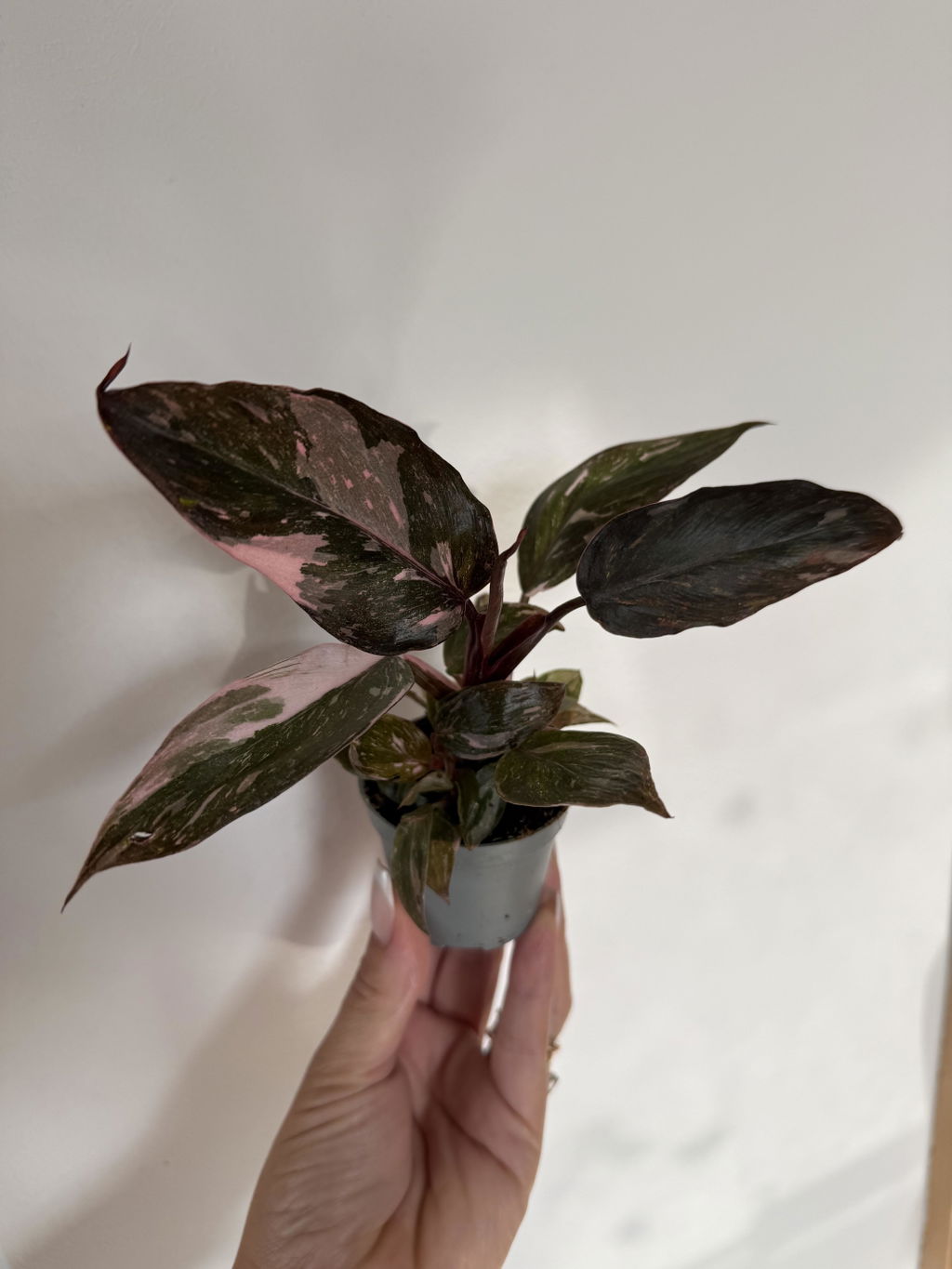
Glossy, slightly heart-shaped leaves carry a marbled mix of dark green with fine pink and cream speckling that gives each blade a painterly, speckled look. Petiole and stem tones often pick up pink to burgundy hints, and the leaf surface is leathery and reflective—a selected cultivar prized for this marble-type pink + cream variegation. Philodendron 'Pink Princess Marble' shows variegation as flecks and streaks rather than large solid patches, so each leaf is visually different.
As a semi-scandent climber the plant will develop from a compact juvenile form into longer, vining stems when given support. New growth frequently emerges with stronger pink that can age to cream or fade depending on light, and mature leaves enlarge while keeping an unpredictable marbled pattern. It can be trained on a moss pole or allowed to trail; aerial roots are produced on climbing stems.
In real homes expect a slow to moderate grower that performs best with bright, indirect light and steadier humidity to keep the pink tones lively. One honest trade-off: variegation is inconsistent—some shoots may revert to mostly green—so visual appearance can change over time. Also note it is not pet-safe due to calcium oxalate crystals.
Best for small to medium indoor displays, desks or grouped shelves, this listing is supplied as a baby plant in a small nursery pot (baby size), which shows finer marbling and compact growth. Over time a buyer will see larger leaves and shifting patterns as the plant matures—part of its collector appeal, while availability can fluctuate among specialist growers.
Shipping Information
expand_more
- All orders are subject to a €25 minimum order value requirement
- All orders are hand-picked and shipped from the Netherlands
- Plastic-free materials when possible
- Orders are usually processed in 1-3 working days and shipped via DPD and their international partner carriers
- At times, orders may take up to 7 days to ship
- Orders to Germany Free shipping over €60. Free shipping all other EU countries* at €100 (Except Malta and Cyprus)
- Shipping costs are calculated at checkout based on delivery country:
See our FAQ and Shipping Guarantee for any further Questions!

Size: Baby - P6 H12


Plant questions, answered
What is Philodendron 'Pink Princess Marble' and how does it differ from the standard 'Pink Princess'?
expand_more
Philodendron 'Pink Princess Marble' is a selected Philodendron erubescens cultivar prized for marble-type pink + cream variegation. Unlike the standard 'Pink Princess' that shows larger solid pink sectors, the Marble form displays finer speckled or streaked pink-and-cream marbling across dark glossy blades. Collectors value its blended, unpredictable patterns and market rarity.
Will my Philodendron 'Pink Princess Marble' keep its pink variegation forever?
expand_more
Not guaranteed. Philodendron 'Pink Princess Marble' expresses variegation unpredictably—new growth can show strong pink that later fades to cream or green, and some shoots may revert to mostly green. Bright indirect light and stable humidity favour stronger pink tones, but genetic variation means appearance will change between leaves and over time.
Is the Baby size suitable for small apartments, and how will it develop?
expand_more
Yes — the Baby (P6, H12) version is compact for desks and windowsills but is a semi-scandent climber that will produce larger leaves and benefit from a moss pole or support as it matures. Expect juvenile, finely marbled leaves to change as stems age; keep its climbing habit in mind when choosing placement.
Is Philodendron 'Pink Princess Marble' safe for homes with pets or children?
expand_more
No — Philodendron 'Pink Princess Marble' is not pet-safe. Like other Philodendrons it contains insoluble calcium oxalate crystals that can irritate if chewed or ingested. Keep the plant well out of reach of pets and children and avoid placing it where curious animals can nibble foliage.
What common problems should I watch for with this cultivar?
expand_more
The main problems are loss of pink, yellowing leaves and brown tips. Loss of pink usually means insufficient light; yellowing often signals overwatering or poor drainage; brown tips point to low humidity or inconsistent watering. Variegation can also be unpredictable, with some stems reverting to green, so monitor light, moisture and humidity.
Plant care guide
Light
expand_more
Water
expand_more
Soil and repotting
expand_more
Humidity and temperature
expand_more
Feeding
expand_more
Growth and support
expand_more
Common concerns
expand_more
- Loss of pink: increase bright indirect light and avoid shaded corners to help maintain pink/cream marbling.
- Yellowing leaves: reduce watering and improve drainage; allow the top ~2 cm of soil to dry between waterings to avoid overwatering.
- Brown tips: raise humidity to 50–70% and maintain consistent watering to prevent dry-air damage.
- Reverting variegation: expect some shoots to produce less pink; prune or propagate strongly variegated stems and keep bright light to favour pink expression.
Pet safety
expand_more
You might also like
Nice
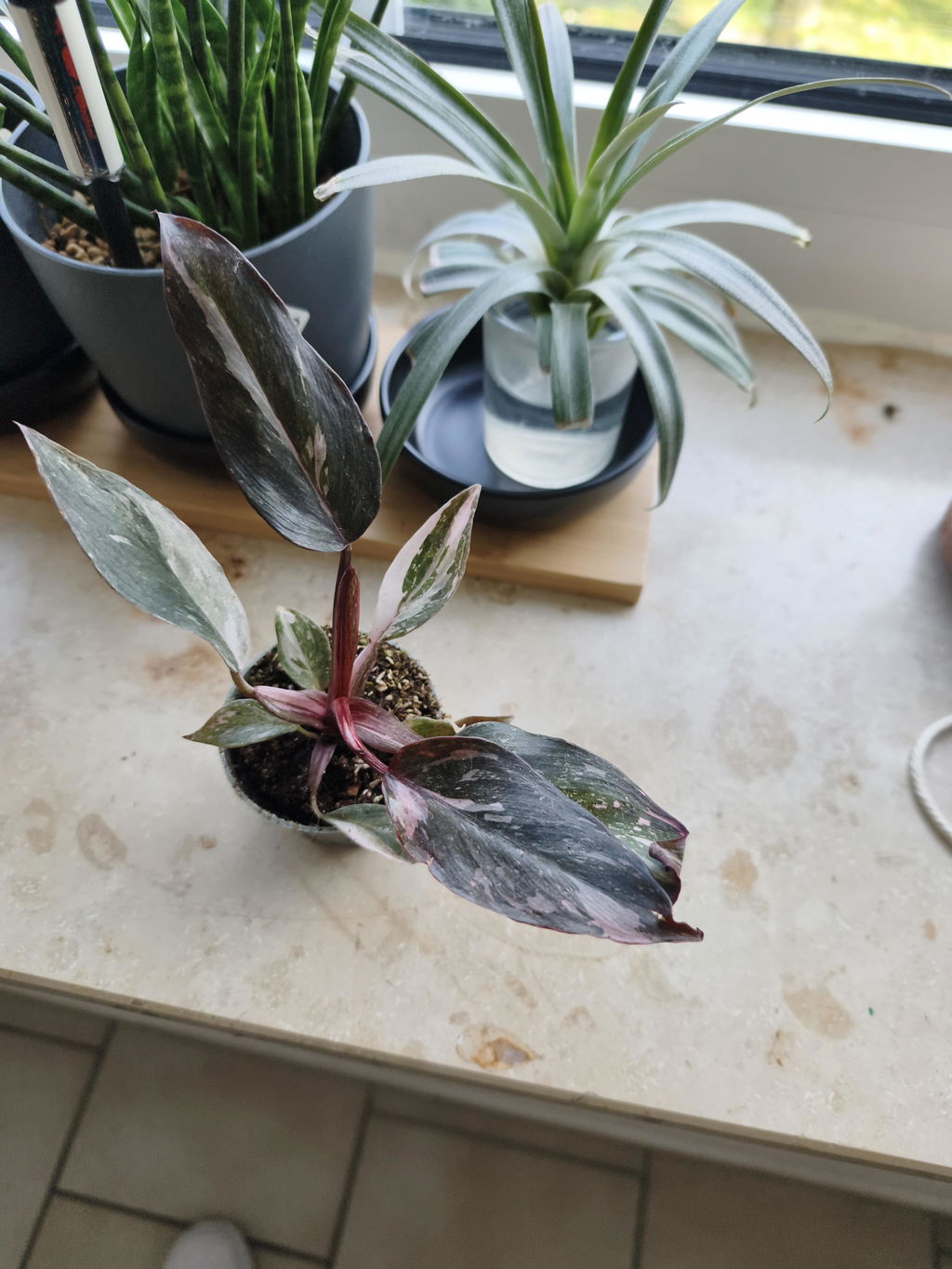
Very cute and healthy baby plant, already giving me a new super pink leaf!
Reviews in Other Languages
Ich bin sehr Glücklich
Top! Ich liebe sie
Alle 3 pflanze sehr schön Gut verpackt geschützt gewesen