

Secure packaging for delicate plants
Small business in Berlin
★★★★★ 4.87 Avg. Review

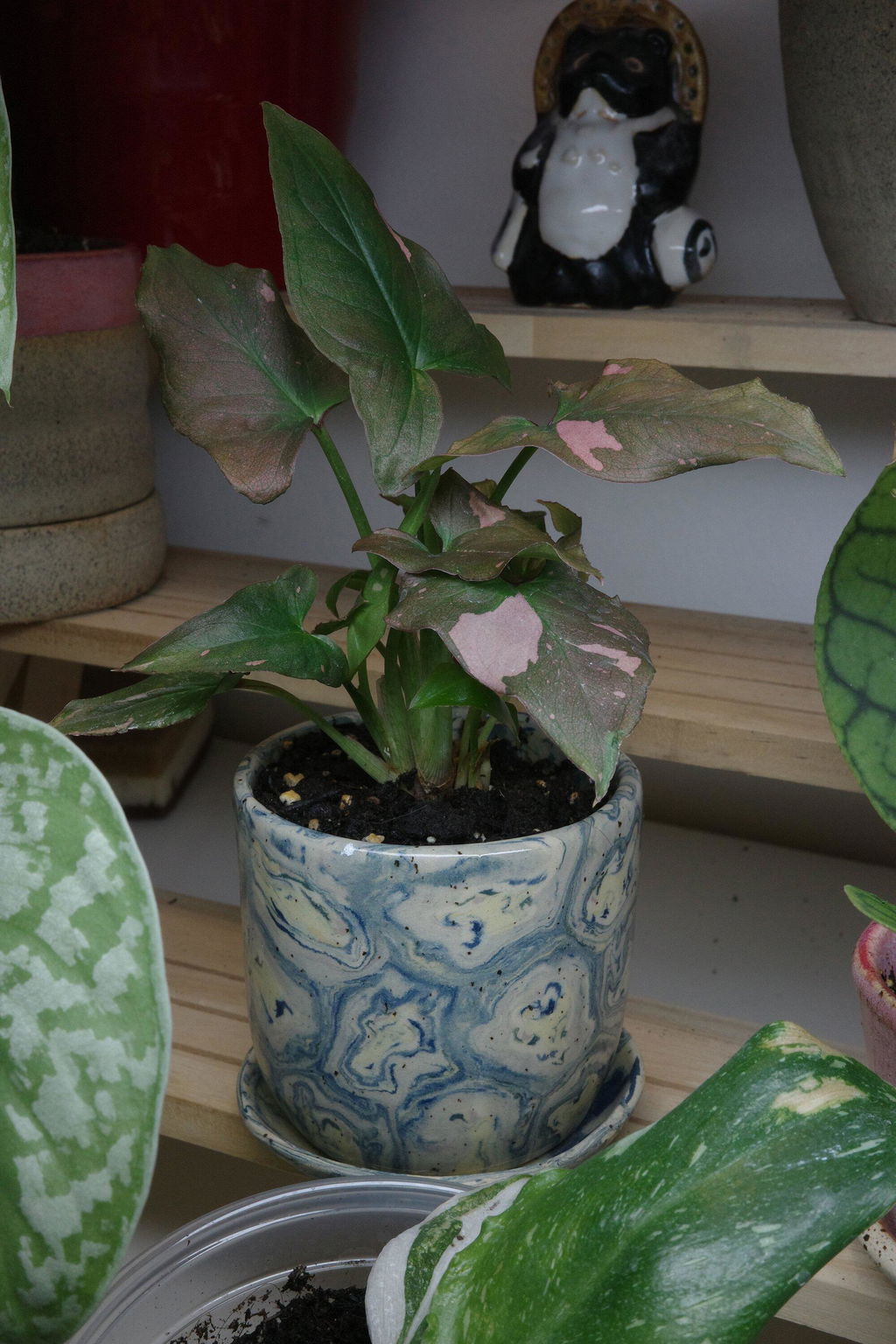
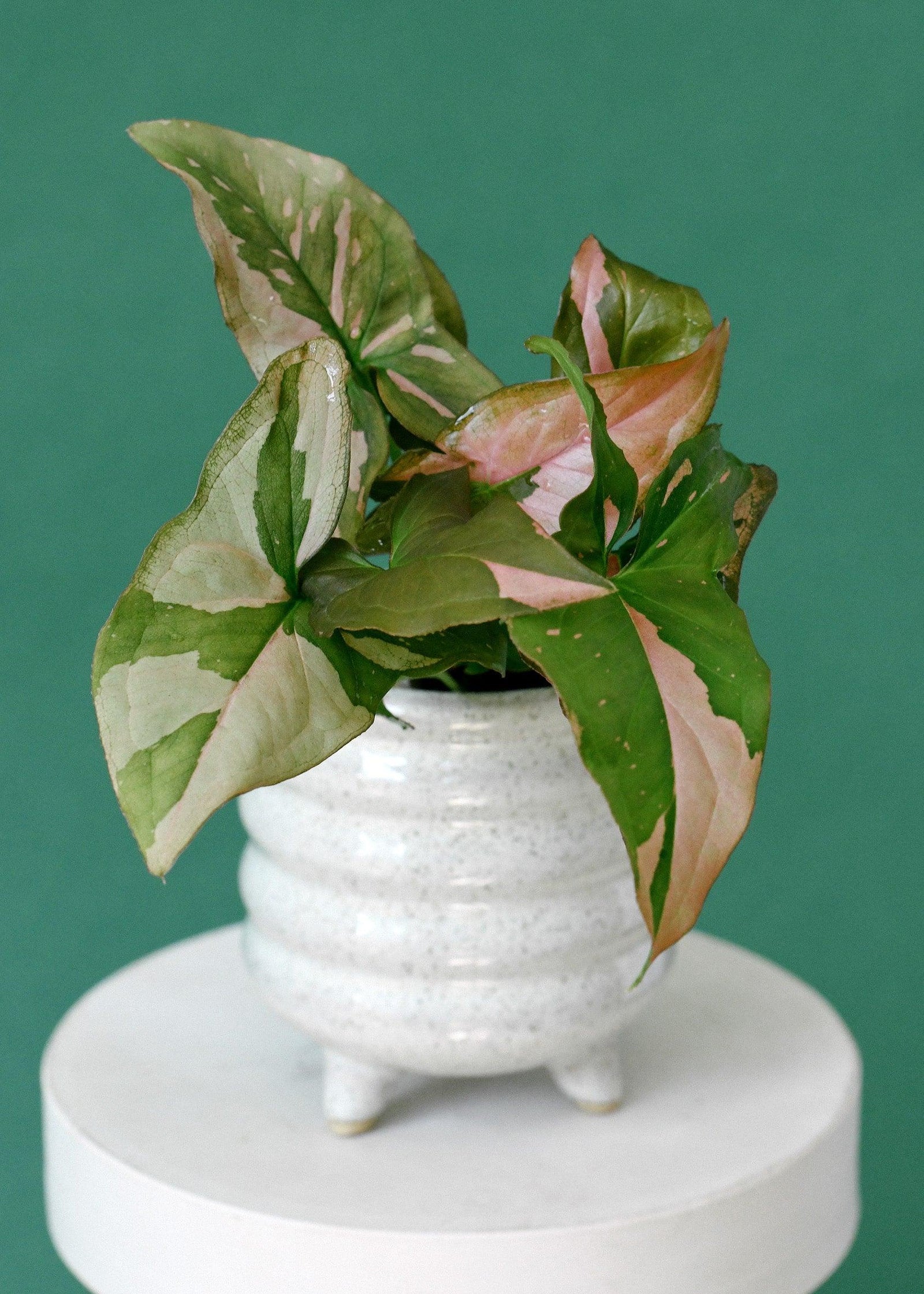
Syngonium Red Spot
Syngonium Red Spot is a commercially selected Syngonium podophyllum trade cultivar with a compact juvenile, shrubby/trailing growth habit suited to small pots and terrariums. Its distinctive pink–red splash variegation on small arrowhead leaves shows best in bright, indirect light; colour can vary or revert, and the plant is toxic if ingested so keep it away from pets and children.
- height Height
- 15 cm
- swap_horiz Pot Size
- 6 cm
- volunteer_activism Care
- Easy
- wb_sunny Light Needs
- Bright indirect light
- pets Not Pet Friendly
- water_drop Watering Needs
- Medium
cancel Sold out
Quick care table
Plant care at a glance
- Botanical name
- Syngonium podophyllum 'Red Spot'
- Common name
- Syngonium Red Spot, Arrowhead plant, and Arrowhead vine
- Difficulty
- Easy
- Light
- Bright indirect light
- Water
- Medium
- Humidity
- Medium
- Pet safe
- No, toxic if ingested
- Best for
- Hallway, Office, Bedroom, Kitchen, Living room, and Bathroom
Pink–red splashed Syngonium in a compact juvenile habit
This cultivar shows small, arrowhead-shaped juvenile leaves with a soft green background splashed with clear pink–red blotches across the leaf surface. Leaves are smooth in texture, tightly arranged on short stems and present a playful, speckled effect that reads colourful but not overwhelming. Colour intensity is typically strongest on new growth and in brighter indirect light.
As a young plant it stays compact and shrubby or will trail slightly in a small pot; if you provide a support and allow stems to climb it can eventually produce longer stems and the lobed adult leaves Syngonium plants are known for. Expect the most vivid pink on fresh leaves — variegation can shift as leaves mature and some shoots may return to greener tones over time.
Ownership notes: this selection is sold in the trade under the name Syngonium Red Spot but appears to be a commercial/selected trade name rather than a formally registered cultivar. Collectors value it for the pink–red splash variegation and compact baby habit, and tricolour mutations are particularly sought after. Practical limitations: the pink markings are variable between plants and shipments and can fade or revert, and like other Syngonium it is toxic if ingested.
Best for small displays, terrariums or desk pots where its compact habit can be appreciated. Supplied here as a baby (P6, short juvenile height) so you can enjoy compact growth immediately or train it to climb later as it matures.
Shipping Information
expand_more
- All orders are subject to a €25 minimum order value requirement
- All orders are hand-picked and shipped from the Netherlands
- Plastic-free materials when possible
- Orders are usually processed in 1-3 working days and shipped via DPD and their international partner carriers
- At times, orders may take up to 7 days to ship
- Orders to Germany Free shipping over €60. Free shipping all other EU countries* at €100 (Except Malta and Cyprus)
- Shipping costs are calculated at checkout based on delivery country:
See our FAQ and Shipping Guarantee for any further Questions!

Size: Baby - P6 H15
Plant questions, answered
What exactly is Syngonium 'Red Spot' and how does it differ from a standard arrowhead Syngonium?
expand_more
Syngonium podophyllum 'Red Spot' is a trade‑selected Syngonium with pink–red splash variegation on juvenile arrowhead leaves. It differs from the standard green or silvery Syngonium mainly by these pink/red blotches. Cultivar status is uncertain in formal registries, so similar trade names and variegation levels can vary between nurseries.
Will the pink‑red splashes stay the same over time?
expand_more
No — the pink–red splashes are variable and can fade, redistribute, or revert to greener leaves. Colour intensity is influenced by production batch, light and leaf age; new growth often shows the strongest pink. Expect variation between specimens and over time rather than a guaranteed permanent pattern.
What light and placement will best maintain the cultivar's pink/red colour?
expand_more
Bright, indirect light helps keep the pink/red colour most intense. Syngonium 'Red Spot' tolerates medium light but colours typically fade in lower light; avoid direct sun to prevent leaf scorch. Place it on a bright windowsill out of harsh sun or in a humid terrarium for richer tones.
How will the plant develop as it matures — will leaf shape change?
expand_more
Juvenile Syngonium 'Red Spot' has compact, arrowhead (hastate) leaves; if allowed to climb it will produce longer stems and adult lobed leaves. This species‑level dimorphism is normal, and providing a support will encourage larger, lobed adult foliage and different overall habit over time.
Is Syngonium 'Red Spot' safe around pets and children?
expand_more
No — Syngonium 'Red Spot' is toxic if ingested. Like other Syngonium, it contains insoluble calcium oxalate raphides that can cause oral and dermal irritation in people and pets. Keep the plant out of reach of children and animals and avoid handling leaves if you have skin sensitivity.
What should I expect when ordering the 'Baby - P6 H15' variant?
expand_more
Expect a compact juvenile specimen labelled 'Baby - P6 H15' (small pot, pot size 6 cm and height about 15 cm) with small arrowhead leaves and some pink–red splashes. Colour intensity and pattern vary between plants and shipments, so the exact variegation on arrival may differ from product photos.
Plant care guide
Light
expand_more
Water
expand_more
Soil and repotting
expand_more
Humidity and temperature
expand_more
Feeding
expand_more
Growth and support
expand_more
Common concerns
expand_more
Yellowing leaves often indicate overwatering or poor drainage. Watch for pests such as spider mites and aphids. Pink/red variegation can be variable and may fade or revert to greener growth over time.
Pet safety
expand_more
You might also like
The flower arrived to me in good condition. It produced many leaves in a month.