



Sansevieria (Snake Plants)
Secure packaging for delicate plants
Small business in Berlin
★★★★★ 4.87 Avg. Review
Secure packaging for delicate plants
Small business in Berlin
★★★★★ 4.87 Avg. Review
Secure packaging for delicate plants
Small business in Berlin
★★★★★ 4.87 Avg. Review


Sansevieria Laurentii is an upright, clumping houseplant with erect, sword-shaped leaves edged in clear golden-yellow margins — an established, long-standing horticultural variety prized for its architectural contrast. Dracaena trifasciata var. laurentii grows indoors as a slow-growing clump that produces offsets, suits beginners or busy households seeking low-maintenance vertical structure, but the leaves are toxic to pets and avoid overwatering.
check_circle In Stock
Quick care table
| Care factor | Sansevieria Laurentii |
|---|---|
| Botanical name | Dracaena trifasciata 'Laurentii' |
| Common name | Snake plant 'Laurentii', Snake plant, Mother‑in‑law's tongue, Laurentii, Bogenhanf, Lengua de suegra, Sansevieria, and Sansevieria Laurentii |
| Difficulty | Easy |
| Light | Partial shade |
| Water | Low |
| Humidity | Medium |
| Pet safe | No, toxic if ingested |
| Growth habit | Upright, clumping, rhizomatous perennial with erect sword‑shaped leaves |
| Best for | Indoors |
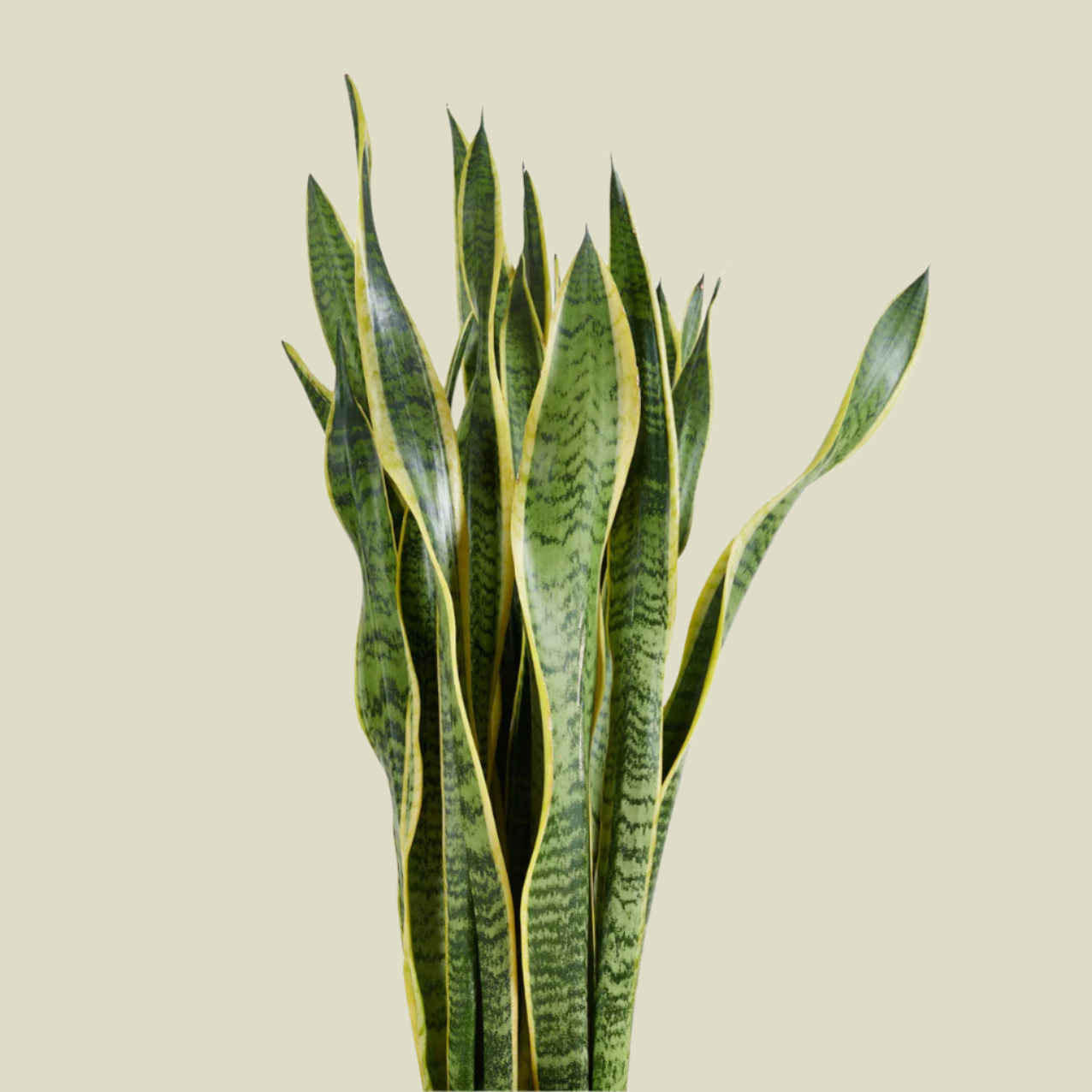
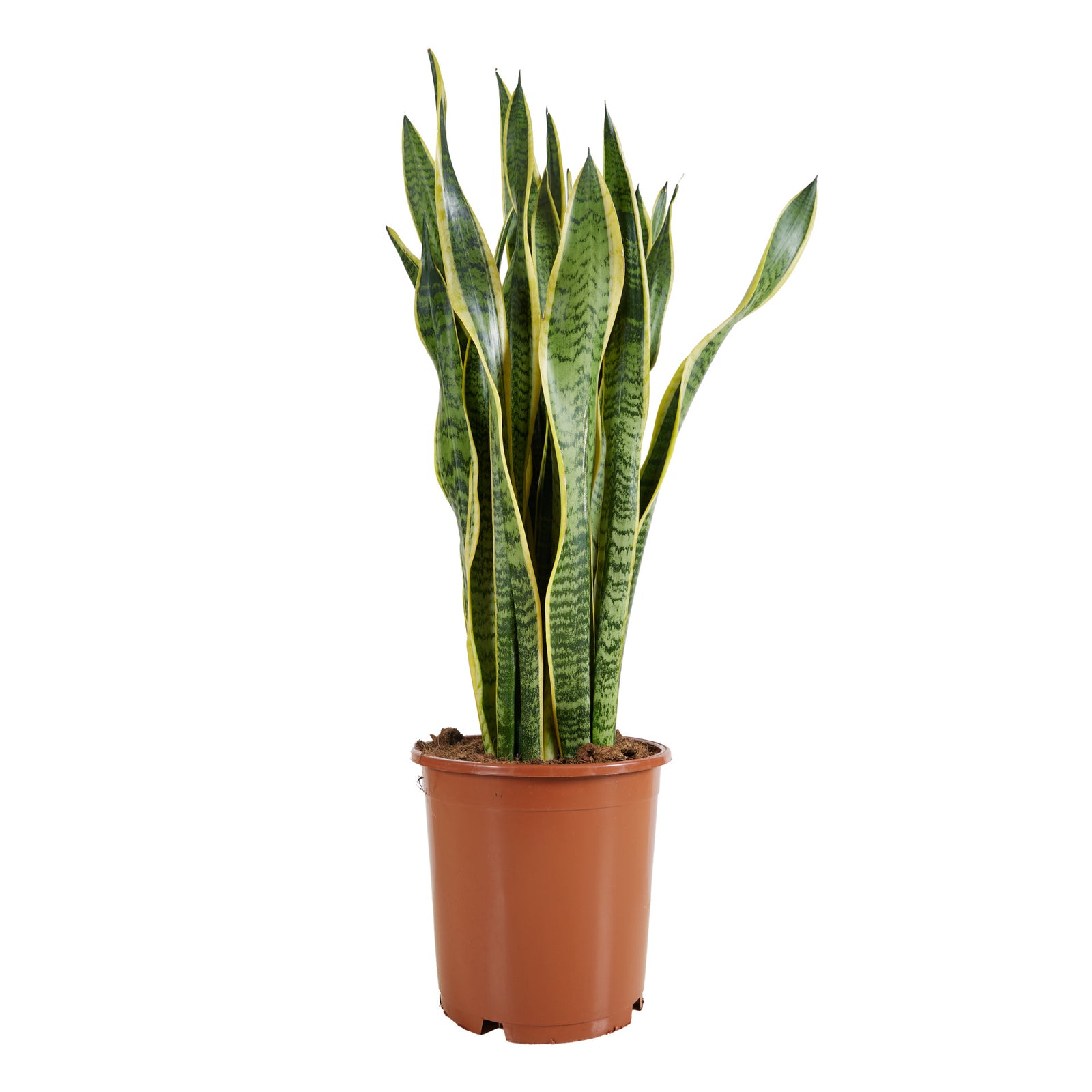
This plant is instantly recognisable for its erect, sword‑shaped leaves framed by clear golden‑yellow margins and darker green horizontal banding. The blades are stiff and architectural, forming upright clusters that give a strong vertical silhouette — a decorative, high‑contrast look you see at a glance. Sansevieria Laurentii is the trade name many shops use for this gold‑edged form.
Indoors it stays slow‑growing and clumping, sending up new shoots from its rhizome to form a denser clump over time. Young leaves look much like the mature ones — the marginal variegation is a stable feature when plants are propagated by division — and leaves can lean if light is uneven. Unlike low, rosette types such as ‘Hahnii’, ‘Laurentii’ keeps tall, upright foliage rather than forming a compact nest.
In everyday ownership you’ll find it low‑effort: tolerant of moderate indoor conditions and a good choice where you want vertical structure. One honest limitation is safety around animals and small children — this taxon contains saponins and is considered toxic if chewed or eaten. Also be mindful that sitting in soggy mix can cause basal rot, so it’s less forgiving of overwatering than some houseplants.
Best for corners, floor displays or a tall shelf, this variety suits modern and minimalist interiors. We offer two large pot options (P17 and P21) at the same height: the smaller pot works for tighter spots or a ‘grow‑on’ choice, while the larger pot makes a fuller, more impactful display.
Shipping Information
expand_moreSee our FAQ and Shipping Guarantee for any further Questions!

Size: Large - P21 H80


Is Sansevieria ‘Laurentii’ safe around cats and dogs?
expand_moreNo — Dracaena trifasciata var. laurentii (Snake plant 'Laurentii') is listed as toxic to cats and dogs. The plant contains steroidal saponins that can cause drooling, vomiting and diarrhoea if ingested. Retail copy sometimes says “pet‑safe,” but authoritative poison‑control sources contradict that; keep the plant out of reach and contact your vet or poison control if ingestion occurs.
How does 'Laurentii' differ from a standard snake plant (green form)?
expand_more'Laurentii' is the long‑established gold‑margined variety of Dracaena trifasciata, distinguished by clear golden‑yellow leaf margins framing darker, horizontally banded blades. Unlike the solid green form, the marginal variegation gives a higher‑contrast, architectural look; it’s valued by collectors for that decorative impact and is common rather than rare.
Will the golden margins be preserved if I propagate this plant?
expand_moreVariegation is usually preserved when you propagate by dividing rhizomes or offsets. If you try leaf cuttings, the margin variegation often reverts to solid green, so division at repotting is the reliable method to keep the 'Laurentii' appearance and to share true‑to‑type offsets with friends.
What light does Sansevieria 'Laurentii' prefer and will the colour fade?
expand_moreBright, indirect light keeps the golden margins and horizontal banding most vivid; the plant tolerates moderate to low light but the variegation may become less distinct in dim conditions. Avoid hot, direct afternoon sun to prevent leaf scorching and rotate the clump occasionally for even growth.
What size will I receive and where is a good place to put an 80 cm specimen?
expand_moreYou’ll receive a large Sansevieria 'Laurentii' about 80 cm tall in either a P17 (17 cm) or P21 (21 cm) pot; the P21 option usually looks slightly fuller. Both suit floor displays, corners or larger shelves — choose P21 for a stronger visual impact, P17 if you need a neater, slightly lighter presentation.
What common problems should I watch for with this snake plant?
expand_moreThe main risks are basal rot from overwatering and brown leaf tips from moisture stress or damage. Dracaena trifasciata var. laurentii can also attract mealybugs and scale. Use a well‑draining mix, allow the soil to dry between waterings, repot if rootbound and check leaves regularly for pests.
Light
expand_moreWater
expand_moreSoil and repotting
expand_moreHumidity and temperature
expand_moreFeeding
expand_moreGrowth and support
expand_moreCommon concerns
expand_morePet safety
expand_moreBe the first to know about newly stocked plants and accessories, sales and exclusive offers.


