Quality Guaranteed

Secure packaging for delicate plants

Shipped to Germany and EU

Queer Owned

Small business in Berlin

20,000+ Customers

★★★★★ 4.87 Avg. Review

chevron_left chevron_right

Plant care guides: substrates-soils

Browse all Plant Circle guides tagged substrates-soils.

View

Beginner Plant Care 101: Light, Water, Soil & Signs Your Plant Needs Help

by Plant Circle

Beginner Plant Care 101: Light, Water, Soil & Signs Your Plant Needs Help

Becoming a new plant parent is exciting—but it can also feel overwhelming. Whether you're buying your first plant or just trying to keep one alive, we’re here to make it easier. At Plant Circle, we believe anyone can grow happy, healthy houseplants. Here's your Beginner Plant Care guide to the four basics: light, watering, soil & food, and spotting stress early. 1. Light: What Type Does My Plant Need? Plants need light to survive, but not all plants love the same kind. Here’s a quick guide to understanding different light levels and how to tell what you have in your home. 🌿 Types of Light: Low light: Areas with no direct sunlight. Rooms with north-facing windows or spots several feet away from a window. Medium light: Bright, indirect light. Near east-facing windows or a bit farther from a south-facing window. Bright direct light: Sunlight shines directly on the plant for several hours. Think sunny window sills, especially those facing south or west. 🪟 How to Tell What Light You Have: Stand near your plant and at eye level. If you look towards the light do you have to squint? Is it bright enough to read a book easily? If not, it’s probably low light. Is the sun actually hitting the floor or wall? That’s direct light. If it’s bright but you don’t see any harsh sunbeams, that’s medium or indirect light. 🌱 Common Plants for Each Light Level: Low light: Aglaonema, ZZ Plant, Snake Plant, Pothos – perfect easy plants to care for Medium (Indirect) light: Philodendron, Peperomia, Calathea Bright direct light: Succulents, Fiddle Leaf Fig, Cactus 🔍 Tip: Ask yourself, “How much light does my plant need?” and match it to your space before choosing your plant. 2. Watering: Not Too Much, Not Too Often One of the most common beginner mistakes is overwatering—but not in the way you might think. 💧 What Is Overwatering, Really? It’s not about how much water you give your plant. It’s about how frequently you do it. Most houseplants prefer to dry out a bit between waterings. Use your finger to test the top 2–5cm of soil. If it’s dry, it’s time to water. Always empty any excess water from the pot or saucer—no soggy roots! 🚱 Signs of Overwatering: Yellowing leaves Mushy stems Fungus gnats 🔄 Let the soil guide you, not the calendar! For More in depth on watering read our Blog Post: How to water your plants! 3. Spotting Plant Stress and Fixing It Even high quality rare house plants can show stress when they move into a new home. Your job? Keep an eye out for the signs and make small changes. 🔥 Too Much Light: Bleached or crispy leaves Move your plant further from the window or add a sheer curtain. 🌑 Not Enough Light: Leggy growth, small new leaves Try moving it to a brighter spot or rotating the plant weekly. 💦 Too Much Water: Yellow, soft leaves, root rot smell Let soil dry out more between watering. 🏜️ Not Enough Water: Drooping, dry, crispy leaves Water deeply and regularly check soil moisture. 🪳 Pests - Check out our pest guides! If other factors are good, yellowing leaves, sticky residue, webs, no lack of new growth can be indicators you have little buggies sucking up your plants strength. Look for tiny webs across the edge of leaves (spider mites) -especially with Alocasia Tiny Thrips will stunt your plant growth and new leaves will come out already yellowing. Confirm by seeing the tiny pale white devils on the underside of your leaves. 🧠 Observation is the best plant-care tool you have. 4. Soil & Food: What Your Plant Eats Matters 🌱 Soil: Why It’s Different at Home At the nursery, plants thrive in warm, humid greenhouses with perfect light. That’s why they can survive in dense, compact soil. In your home? Not so much. A chunky, well-draining soil mix is best. Use soil specific to your plant type (e.g. aroid mix for philodendron) Add perlite, bark, or pumice for better airflow Avoid compact garden soil in pots 🍽️ Plant Food: When and How to Feed Most houseplants benefit from feeding during spring and summer Use a balanced, water-soluble fertilizer once a month In winter, most plants rest—skip the food 🌟 Pro Tip: Your philodendron will thrive in a chunky soil mix and light monthly feeding during active growth!

Read more

Roots of Success: Mastering the Art of Water Rooting Cuttings!

by Plant Circle

Roots of Success: Mastering the Art of Water Rooting Cuttings!

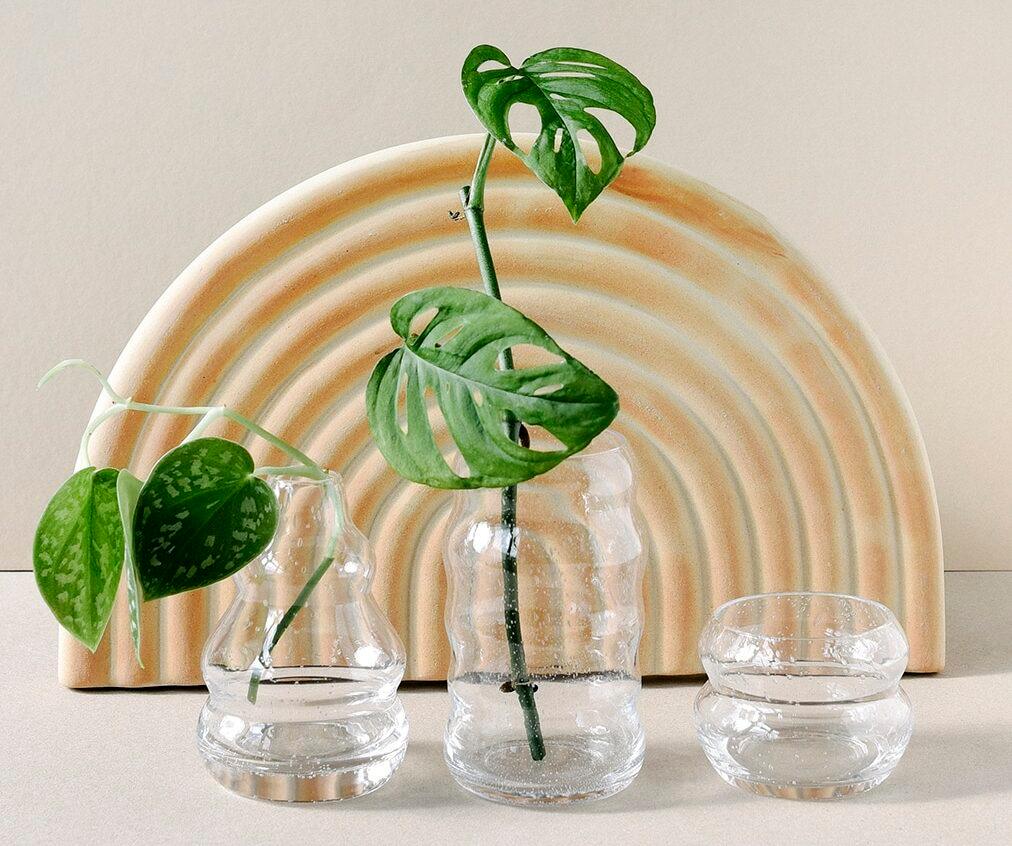
As spring ushers in new life and vibrant greenery, many plant parents look forward to propagating their beloved plants through cuttings. Sharing these cuttings with friends is not only a great way to spread the joy of gardening but also allows us to multiply our plant collections without spending a fortune. One popular and relatively easy method of propagation is water rooting. In this blog post, we will explore the best practices for propagating plants through cuttings and successfully rooting them in water. Start with Clean and Disinfected Tools.Before embarking on your propagation journey, it’s essential to ensure that your tools are clean and ideally disinfected. Use sharp scissors or a knife to make clean cuts, as jagged or torn edges may hinder successful rooting. Allow the Cut to Heal Once you’ve taken a cutting, it’s crucial to let the wound heal before placing it in water. Freshly cut stems are prone to becoming mushy and rotting in water. Most plants require a few hours on the counter to heal the cut, while succulents or cacti may need a few days for the cut to callous over. Change the Water Regularly or Use Activated CharcoalTo prevent bacterial growth and maintain a healthy environment for rooting, remember to change the water in the container every few days. Alternatively, you can add a small amount of activated carbon pellets to the water, which helps keep it bacteria-free. Provide Light for Root DevelopmentChoose a glass container for your cuttings, allowing the roots to receive some light. Light exposure promotes photosynthesis, helping the cuttings develop stronger root systems. However, be mindful of excessive direct sunlight, as it can overheat the water and damage the delicate roots. Consider Rooting Hormone Although not always necessary, using a rooting hormone formulated for foliage application can boost the success rate of your water-rooted cuttings. Apply it according to the product instructions, as improper use can be counterproductive. Wait for a Strong Root Network Patience is key when propagating plants through cuttings. Wait until your cutting has developed a healthy network of roots before proceeding. Rushing the process could lead to transplant shock or the failure of the cutting to establish itself. Choose the Right Pot and Potting Mix When your cutting has developed sufficient roots, it’s time to transition it to soil. Select a small pot that provides stability for the cutting. Ensure that all the roots are covered with potting mix, but be cautious not to choose a pot that is too large, as excess soil can lead to overwatering and root rot. We have substrates (potting soils) for all types of plants. Provide Bright Indirect Light Place your newly potted cutting in an area with bright indirect light. This will allow the plant to photosynthesize and promote healthy growth. Avoid placing it in direct sunlight initially, as it may be too intense for the tender roots. Water and Fertilize with Care In the first few weeks, be mindful of watering your newly potted cutting. Overwatering can drown the young roots, while underwatering can lead to dehydration. Find the right balance and adjust your watering schedule based on the needs of the specific plant. Additionally, provide a balanced fertilizer to nourish the growing cutting but avoid over-fertilization, as it can cause root burn. Propagation through cuttings and water rooting is an exciting and rewarding way to expand your plant collection and share the joy of gardening with friends. By following these best practices, you can increase your chances of success and ensure the healthy establishment of your propagated plants. So, grab your disinfected tools, prepare your glass containers, and embark on a propagating adventure this spring. Happy propagating!

Read more

Plant care: Potting mix

by Plant Circle

Plant care: Potting mix

Many longtime plant parents started out thinking that dirt is dirt, and plants will grow in anything. No? Was that just us? Well, luckily thanks to information being more widely available, we now know that plants in fact need high quality potting mixes to really thrive, and to make understanding the ingredients and compositions easier for you, we've gathered them here! Having a good quality potting mix tailored to the needs of the plant is every bit as important as providing your plant with water or sufficient light. In fact, most common plant related issues, like overwatering and root rot, come from using an average quality potting mix... or worse.Let's start by getting into the two most frequently used terms when it comes to this topic: 'potting soil' and 'potting mix'. Though these terms are used interchangeably, there is a difference. Potting soil may contain soil, while potting mix is strictly a soilless medium. Technically, potting soil is nothing but dirt that no longer has the adequate elements necessary to support the growth of potted plants, or indoor plants. Potting mix, however, is sterile, which makes it safer for plants because it's guaranteed to not contain pathogens such as fungus or other diseases. Why is having a good quality potting mix so important? The main reason is that potting mixes are designed to not get too compacted, something that can suffocate the roots of a plant, or impede the flow of water and nutrients, and in the worst cases, cause root rot. A high quality potting mix will be lightweight and fluffy, with the ability to hold moisture. For the roots to grow deeply, good aeration is necessary and recommended. Aeration requires puncturing the soil with tiny holes in order for the water, air, and nutrients to penetrate the roots. To achieve that effect without the physical labour, you simply add bark to the potting mix, which creates little air pockets! Now that we've established the importance of a good potting mix, and what it does for the health of your plant, let's get into the the most common components that can be added to your potting mix! Perlite. Perlite is the name of a naturally occurring mineral. In nature, it exists as a type of volcanic glass, created when the volcanic obsidian glass gets saturated with water over a long period of time. And since fertile, volcanic areas have been settled due to fertile soils since biblical times, humans have been aware of perlite at least since Third Century BC. Other uses of perlite include masonry construction, cement, gypsum plasters, and loose-fill insulation. Horticultural perlite is made by exposing perlite to heat, which causes the trace water contained in the perlite to expand, 'popping' the perlite like popcorn and expanding it to 13 times its former size, resulting in an incredibly lightweight material! Since it is a naturally occurring, mined mineral, perlite is a nonrenewable resource. Perlite is an excellent potting mix additive, and is also an effective rooting medium. Please note: Perlite dust can aggravate existing respiratory conditions and cause eye irritation. Eye and mouth protection are recommended to prevent the dust from being ingested. Want to go deeper? Read an exhaustive article on perlite here! Vermiculite. Vermiculite is the name of a group of hydrated laminar minerals (aluminum-iron magnesium silicates) which look like mica. Horticultural vermiculite is processed with massive heat that expands it into accordion shaped pellets composed of multiple layers of thin plates. It will not rot, deteriorate, or mold, and is enduring, odorless, non-toxic, and sterile. It is however not a renewable source. Just as perlite, vermiculite is an excellent potting mix additive, and can also be used as rooting medium! This article further explores the topic of vermiculite! Activated charcoal. Activated charcoal prolongs the life of soil media by balancing pH levels and sweetening the soil of potted plants and terrariums. It also eliminates odour, absorbs salt residue, and breaks down the build-up of bacteria. We love to add activated charcoal to any potting mix, and we also add it to the water when rooting a plant! Coconut Coir. Firstly, what exactly is coconut coir? Actually everything in between the shell and the outer coating of the coconut seed is considered coco coir! While most people mainly think of the edible parts when they think of this fruit, coconuts actually have many applications in horticulture! Coco coir is known to be one of the most moisture retaining growing medias, and can absorb up to 10 times its weight in water. On the market coco coir is available in three forms: coco peat, coco fibres, and coco chips. It's very common to grow tropical plants in coco coir in Asia; in fact, that's how most of our imported plants arrive from there. We are however not big fans of coco coir as the only potting medium, and therefore suggest using it in potting mixes in combination with other ingredients. For example, you can use coco chips instead of bark, or coco peat instead of peat moss! Bark. We love bark! Namely pine bark shreds. You can easily improve drainage and aeration of your potting mix by adding some bark to it. We recommend it for pretty much all mixes, besides succulent ones. Sand. Sand is super helpful when creating a potting mix for succulents and cacti, as it it increases drainage ability. Please note: we advice not using sand taken directly from the beach, as this type of sand has a high salt content, and could severely damage your plants roots! Ideally you should only use horticultural sand. Worm humus. Worm humus, also known as vermicast, is the final product of decomposed material excreted by the king of the soil: the mighty earthworm! Packed with water soluble nutrients and bacteria, worm humus is a very nutritious organic fertilizer, and excellent all-round soil improver. Worm humus is perfect for refreshing a potting mix, or adding to substrate mixtures already in use. The ideal proportions to aim for are a blend of 10 – 15% worm humus to 85 – 90% substrate. Spaghnum moss. Spaghnum moss is generally used more for cuttings and propagations, however, some Anthuriums can be grown in it, but this is generally only recommended for people who check on their plants daily, as spaghnum moss can dry out quickly, and might require you to check on your plants every day. Read more about this, and other types of moss, in our post dedicated to Anthuriums! Last but not least, and maybe this goes without saying, but don't plant your plant into a pot without drainage holes! Leave it in the plastic nursery pot, and always check for excess water to get rid of after watering. You'll also want your ceramic planter to be a tad bigger than your plastic nursery pot, as the little gap between the two will allow a better airflow around the roots. We hope this gave you an idea of how to provide your plant with the best potting mix, and if you're still in doubt, we recommend starting out with our handmade Aroid Potting Mix! It's suitable for most tropical house plants, and contains a high quality ingredients such as bark, perlite and activated charcoal.Happy potting, plant lovers!


Read more